Hair clip logo placement looks simple until a buyer sees the first sample. A logo that looked clean in a presentation can become too small, too curved, too close to the clip teeth, hidden by hair, blocked by the backing card or unclear after printing. For beauty GWP buyers, the safe route is to approve logo file, size, position, method and packing as one sample file before bulk production.
This checklist is written for beauty brand sourcing, merchandising, product development and packaging teams that buy hair clips, claw clips, barrettes and small beauty accessories for GWP, retail gift, travel retail, spa or launch kit programs. It supports the main Ecorivta hair clip supplier page 1 and the acetate claw clips page 2 without changing their Title or H1. The product pages carry the inquiry. This article explains how buyers should approve logo placement before sampling and bulk.
Quick Summary
- Do not approve logo placement from a flat mockup only. Hair clips and claw clips have curved, narrow and hidden surfaces that change real visibility.
- Send AI or PDF vector logo files. JPG or PNG files can look acceptable on screen but print unclear on small clips, labels or backing cards.
- Approve logo size together with the method. Silkscreen, pad print, laser mark, metal plate, woven label and backing card logo each have different limits.
- Packing is part of the branding file. Backing card, insert card, barcode, hangtag, sleeve and carton mark can change logo position and sample approval.
- Ecorivta should review use, quantity, target price and launch date before sample. Those details help choose between existing style, semi-custom and full OEM routes.
Review Hair Clip Logo Placement
Use this route when product surface, logo size, method and sample approval need checking before production.
Why logo placement fails on small beauty accessories
Small beauty accessories give buyers less branding space than a cosmetic bag or tote. A clip may have a curved shell, teeth, spring, hinge, metal bar, openwork pattern or glossy acetate surface. A barrette may have a narrow face. A comb may have a long shape but very little clean logo area. A backing card may show the logo clearly, but the clip itself may hide the logo once it is worn.
That is why the buyer should not approve logo position only from a front-view render. The approval should answer practical questions. Will the logo remain visible when the clip is attached to hair? Does the print sit on a flat enough area? Will a small serif font fill in after printing? Does a gold metal plate conflict with the acetate color? Does the logo fight with the backing card? Does the barcode or warning label push the brand mark into the wrong area?
Ecorivta handles these projects inside the broader custom branded beauty accessories 3 and beauty GWP accessories 4 route. The useful manufacturing question is not only “Can you put my logo here?” It is “Can this logo still look clear, brand-safe and production-ready after material, method, card, barcode, carton mark and launch timing are considered?”
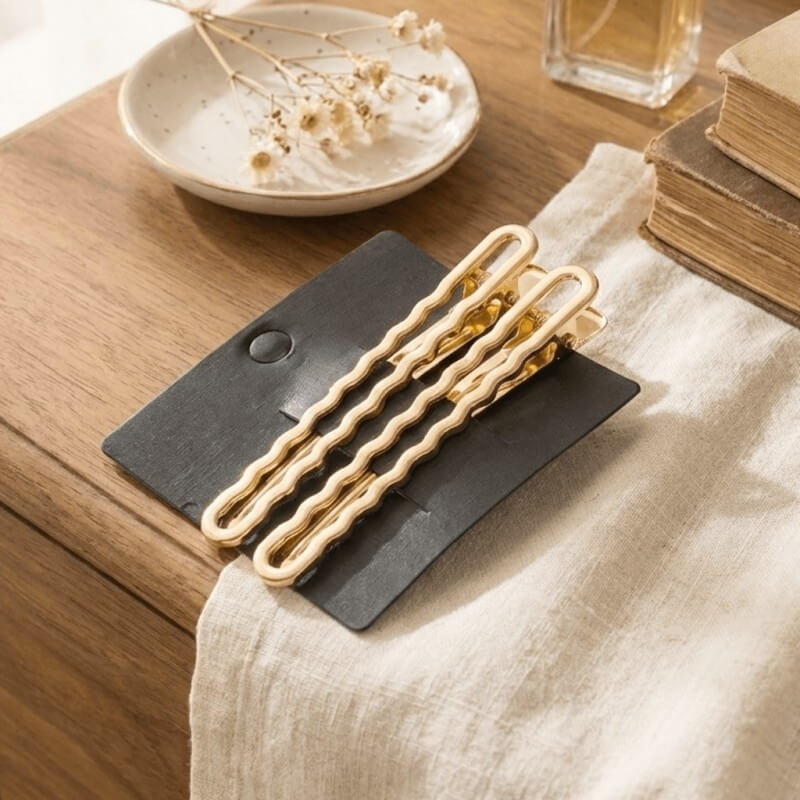
The buyer also needs to separate product logo from packing logo. A quiet logo on a clip can work well if the backing card carries the stronger brand signal. A large clip logo may look attractive in a mockup but become expensive, risky or visually heavy on the real product. In many beauty GWP programs, the best brand balance is a small product mark plus a clear card or insert.
What buyers should send before asking for a logo sample
A quote-ready logo placement brief should be short, but it should not be vague. The factory needs enough information to recommend a route before the sample is made. If the buyer sends only a logo image and asks for “custom logo,” the supplier may choose a method that fits the image file but not the final GWP program.
If the buyer needs a broader file handoff before this placement review, use Ecorivta’s hair accessory logo and packing file guide 5 first. That guide explains what files to prepare; this checklist explains how to approve the logo position on a real clip, card and sample.
| Buyer detail | What to send | Why it matters |
|---|---|---|
| Product route | Claw clip, barrette, comb, banana clip, clip set, carded set or mixed accessory kit. | Different shapes have different logo zones, fixture points and packing needs. |
| Quantity and SKU split | Total pieces, color split, style count and whether each SKU has the same logo. | SKU split affects printing setup, packing labels, carton mark and MOQ planning. |
| Target price | A target price or budget band before sampling. | Logo method and packing route can be adjusted before money is spent on the wrong sample. |
| Launch date | Sample approval date, bulk deadline, event date and shipment window. | Some logo routes need more sample or artwork time. |
| Logo file | AI, PDF or other editable vector artwork, plus color references. | Editable files help avoid blurry print, distorted scaling and unclear small text. |
| Packing file | Backing card, insert card, sleeve, barcode, market version and carton mark needs. | Card and retail files may carry more brand information than the small clip surface. |
| Approval owner | Who approves product, logo, card, barcode and final sample. | Small accessory programs slow down when product and packaging approvals are split. |
The most common problem is a JPG or PNG logo file. Those formats can help the supplier understand visual direction, but they are not enough for reliable production. A small print area needs editable vector artwork, especially when the logo has thin lines, small words, a gradient, a symbol with tight spacing or a brand mark that must be reduced. If the buyer cannot provide a vector file, the factory should tell the buyer before the first sample that artwork redraw may be needed.
Color also needs a shared language. Buyers may use Pantone references to communicate target colors across clip, print, card and packaging, and Pantone color systems for graphic design 6 can be used as an external reference for this approval discipline. Even then, the real sample must be checked because acetate, metal, ink, paper and fabric can show the same color target differently.
Logo placement zones by product type
Each product type has different logo risk. Buyers should ask the factory to mark the suggested logo zone on a real product photo or sample drawing, not only on a clean graphic template.
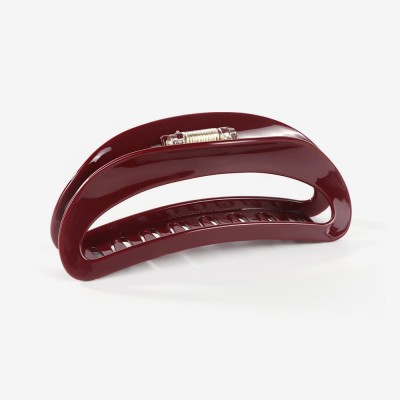
| Acetate claw clips Review front curve, side face, hinge area and the part visible when worn. Avoid placing detailed logos near teeth, spring or strong curves. |
French barrettes Review the narrow top face, metal tone, plating color and card layout. A centered mark may work, but small text can disappear. |
| French combs Review whether the logo should sit on the top ridge, card, pouch or insert. Comb teeth leave little room for clear branding. |
Banana clips Review long narrow placement, open and closed view, and whether the logo reads from left to right after display packing. |
| Small charm or key ring route When a charm is part of a beauty set, approve front face, back face, ring direction and backing card together. Do not publish a separate keychain route until the product page is live. |
Carded accessory set Review product logo and card logo together. Sometimes the card should carry the large logo while the accessory keeps a quiet mark. |
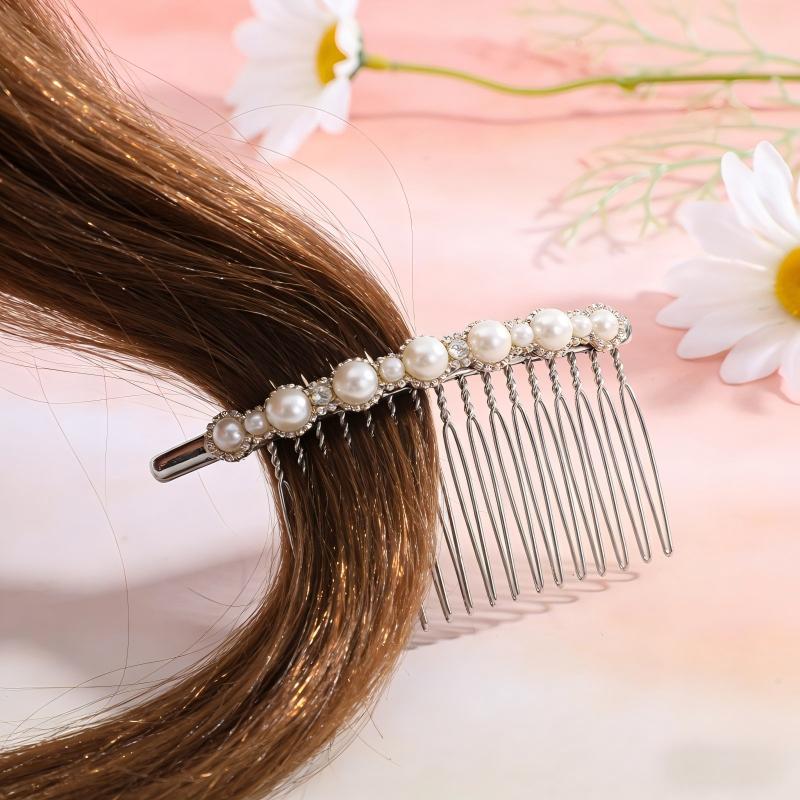
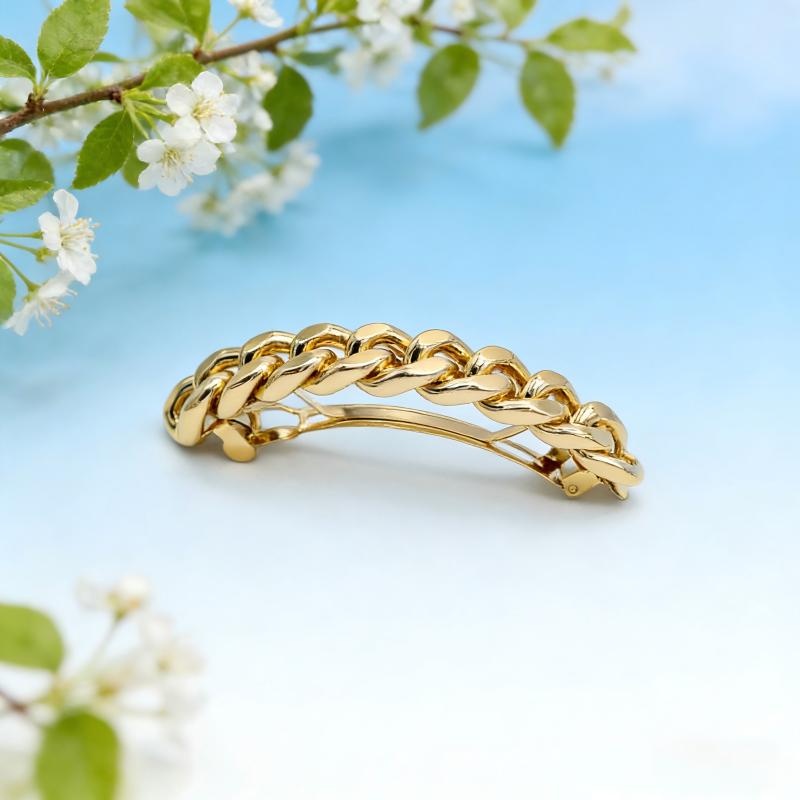
The important point is visibility in use. A logo that is clear in a product photo may face downward in hair, sit behind a curl, disappear inside a spring area or compete with a card graphic. The buyer should ask for one sample photo from product front, side, worn or use angle when possible, and packed view before approving the final route.
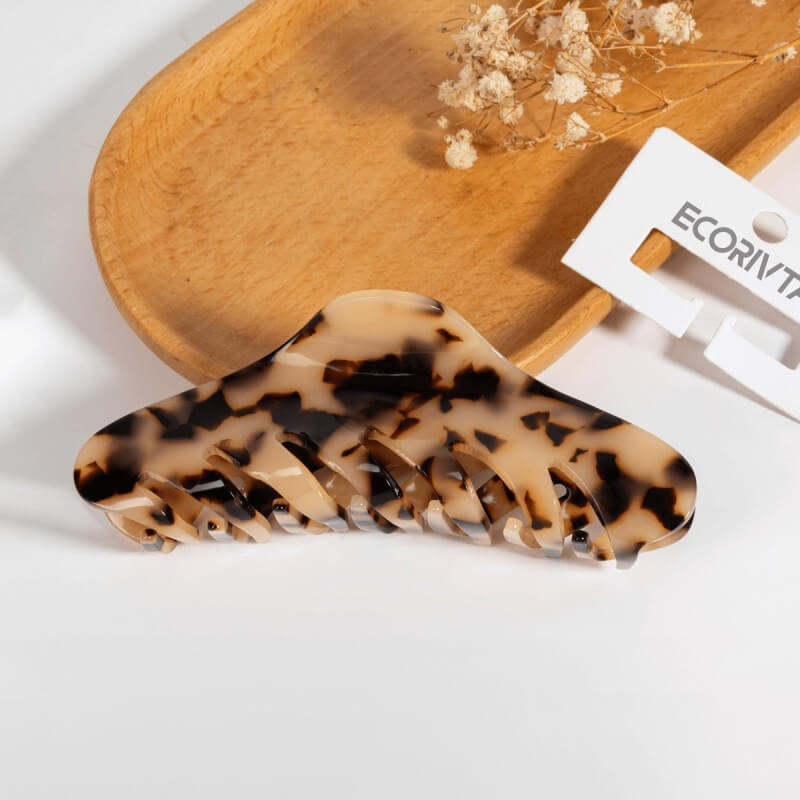
For a claw clip, logo scale should also respect the shell pattern. Tortoise, marbled acetate and translucent materials can reduce contrast. A dark logo on dark acetate may look subtle in a premium way, but it may also be too quiet for a GWP buyer who needs strong brand recall. A white print may pop, but it can feel less premium on some designs. These are sample decisions, not just design preferences.

Choose the logo method before the artwork is approved
The logo file and logo method should be reviewed together. A buyer may ask for one logo position, but the right route depends on material, surface, quantity, target price, color, card design and how visible the logo needs to be.
| Logo route | Useful for | Approval risk |
|---|---|---|
| Silkscreen or pad print | Simple logo, flat or semi-flat area, clean one-color branding. | Fine text, curves and glossy surfaces can reduce clarity. |
| Laser or engraved mark | Subtle tone-on-tone mark on some hard accessory surfaces. | Contrast may be too quiet for GWP visibility. |
| Metal plate or small emblem | Premium look when the product has enough clean area. | Cost, attachment, plating tone and position must be sampled. |
| Woven or printed label | Soft accessories, pouch sets or carded kits that include fabric elements. | Small logos need simplified artwork and stitch/edge review. |
| Backing card logo | Retail display, GWP carded set and beauty launch kit presentation. | Card may carry the brand well, but product logo still needs approval. |
| Insert card or sleeve | When the product should stay clean but the kit needs brand story. | Barcode, legal text, claim wording and market version can crowd the design. |
For small beauty accessories, less can be stronger. A large product logo can make a premium hair clip look promotional in a weak way. A small product logo plus a well-designed card can look more brand-led. The right choice depends on whether the item is meant for retail shelf, GWP giveaway, travel retail gift, spa program, haircare launch kit or influencer package.
If the buyer asks for sustainable, recycled, eco or other environmental wording on the card or pouch, claim language needs separate review. The FTC Green Guides 9 are a useful external reference for claim-safe thinking in the US market. Ecorivta should not treat environmental wording as decoration; it should be checked against material route, document scope and buyer market.
If a woven label, ribbon, fabric card or small textile packing component is part of the accessory program, buyers may also ask about textile safety documents. OEKO-TEX STANDARD 100 8 can be used as an external reference when the buyer wants to understand textile testing context. That does not mean every order automatically carries the same document. The order scope still needs review.
Review Claw Clip Logo and Packing
Use this route when acetate clip, backing card, barcode and carton mark must be approved together.
Backing card, barcode and carton mark handoff
For beauty GWP hair clips, the backing card can decide whether the product looks like a branded gift or a generic accessory. The card also carries practical information: SKU name, market version, barcode, product story, material wording, warning text, batch reference and sometimes retailer notes. If these details arrive after sample approval, the sample may need a second review.
Buyers should send card size, display method, hang hole, logo placement, barcode position, market version, insert card text and carton mark needs before bulk production. Retail barcode handling should not be left to the last week. When barcode is required, references such as GS1 UK barcode guidance 7 can help buyers understand why barcode handoff needs clear owner and placement.

Carton mark also belongs in the early brief. A hair clip order may be small, but if it has multiple colors, multiple cards, multiple market versions or mixed cartons, the shipment file can become messy. The buyer should tell the supplier whether each color needs a separate SKU label, whether card versions differ by market, and whether the carton mark should show product name, PO number, destination, gross weight, net weight or carton count.
The right packing handoff protects both sides. It helps the buyer avoid late design changes, and it helps the factory avoid rework after the production line has already prepared cards or labels. For Ecorivta, card and carton mark review is part of the RFQ route, not a decoration step after price confirmation.
Sample approval checks before bulk production
The approved sample should become a production standard. For a hair clip logo placement project, the buyer should ask the factory to record product style, color, surface, logo method, logo size, logo position, card design, barcode position, packing count and carton mark. If the buyer approves only the front product photo, too many details remain open.
Use this pre-bulk checklist before production starts:
- Check logo file. Confirm AI or PDF vector artwork, simplified small-size version and color reference.
- Check placement on real product. Review flat view, side view, curve, hinge, tooth area and visibility when worn or packed.
- Check method and target price. Confirm print, plate, engraving, label or card route fits the quantity and budget.
- Check backing card. Confirm card size, logo hierarchy, hang hole, barcode, insert copy and market version.
- Check production evidence. Ask for first pieces, packing photos, carton mark and final shipment evidence when the program needs that level of control.
For responsible sourcing questions, branded buyers may also ask about factory or supplier audit context. Sedex SMETA 10 can be a useful external reference when buyers ask what kind of audit language may apply to supplier evaluation. Audit language should still be separated from product logo approval, material documents and buyer-specific tests.
Best fit and less suitable requests
Best fit
Best fit is a beauty, haircare, skincare, spa, retail, travel retail or GWP buyer planning a branded hair clip, acetate claw clip, barrette, comb or small accessory program with a defined bulk-order target, a real launch window, sample-first approval, logo or packing needs and a target price direction. The buyer should be able to share quantity, SKU split, logo file, card or packing requirement, target market and approval owner.
Less suitable
Less suitable requests include single-piece consumer purchases, no-brand resale sourcing, urgent stock-only buying, price-only small orders, unclear logo ownership, no target use, no quantity, no launch timing or requests that ask for a premium custom logo route without sample approval time. If the buyer cannot provide logo file, product route, target price or packing need, Ecorivta can still ask clarifying questions, but the first quote may need a wider range.
Approve Logo Placement on a Full-Scale Mockup
Place the logo on a 1:1 clip outline before sampling. Check the visible area when the clip is worn, the distance from edges, springs, hinges or teeth, and whether the artwork remains readable at the proposed size.
For fine lettering or narrow strokes, compare engraving, printing, foil or a logo plate instead of assuming every detail can be reproduced on a hard accessory.
Record the vector artwork, logo size in millimeters, position from the nearest edge, color or finish, mechanism clearance, body curvature, wear-view photo, packing-view photo and approval date.
Evidence status: this is an approval method, not an anonymous customer quotation. A real logo-placement case will be inserted only after the source order or sample record and public limits are confirmed.
Related Ecorivta pages and guides
- Beauty GWP Hair Clip Supplier – use this as the main product and inquiry page for clips, barrettes and combs.
- Acetate Claw Clips for Beauty GWP – use this for claw clip structure, spring strength and retail presentation.
- Custom Branded Beauty Accessories – use this when logo and packing file ownership crosses several small accessories.
- Beauty GWP Accessories Hub – use this when the clip is part of a broader beauty accessory route.
- Hair Accessory Supplier Logo & Packing File Guide – use this for broader file preparation before logo placement approval.
Check Logo Clearance on Side Combs Before Sampling
For a side comb or French twist comb, logo placement must be reviewed together with the comb curve, insertion direction and the area hidden by hair. A full-scale artwork mockup should show the printable area after the comb is positioned, not only when it is lying flat. If the usable area is too narrow for fine lettering, move the main brand mark to the backing card instead of reducing it until it becomes unreadable.
FAQ
Where should a logo be placed on acetate hair clips?
The safest logo zone depends on clip shape. For claw clips, check the front curve, side face, hinge and visible area when worn. For barrettes, check the narrow top face and carded display. The buyer should approve placement on a real product photo or sample, not only a flat mockup.
Can Ecorivta use a JPG logo file for hair clip samples?
A JPG can help explain the visual direction, but it is not ideal for production. Buyers should send AI or PDF vector artwork when possible. Small logos, thin text and curved clip surfaces need editable files so the factory can check size and print clarity before sampling.
Is it better to put the logo on the clip or backing card?
It depends on brand style, target price, product surface and retail display. A small logo on the clip plus a stronger backing card logo is often a practical route for beauty GWP programs. The buyer should approve product and card together.
What logo methods work for hair clips and barrettes?
Common routes include silkscreen, pad print, engraving, metal plate, woven label for soft elements, backing card logo and insert card branding. The right method depends on material, surface, logo size, quantity, budget and sample approval timing.
What packing details should be confirmed with logo placement?
Confirm backing card, hang hole, insert card, sleeve, barcode, SKU label, market version, carton mark and packing count. These details can change how the product logo appears and whether the card can carry the brand message clearly.
What should buyers send before requesting a quote?
Send product type, quantity, SKU split, target price, launch date, target market, logo file, color reference, packing method, barcode or carton mark need and approval owner. This helps Ecorivta recommend a realistic existing style, semi-custom or OEM route.
Can this checklist apply to small keychain or charm accessories?
Yes, the logo approval logic can apply to small charm or key ring components inside a beauty GWP set. The product page for that route should be live before using it as the main linked money page, so this article keeps hair clips and claw clips as the primary path.
Send the logo placement brief
Use the contact route when you already have a beauty GWP hair clip, claw clip or small accessory program and need Ecorivta to review logo placement before sampling. Include quantity, SKU split, target price, launch date, target market, logo file, color reference, product type, packing method, barcode or carton mark needs and approval timing.
Send a Small Accessory Branding RFQ
Use this route when the program includes clips, carded sets or mixed beauty accessories.
About the author
By Lina Lv, Sales Manager at Ecorivta | Updated July 19, 2026
Lina reviews buyer briefs for branded beauty accessories and writes practical guidance on product route, logo, packing, sample approval and RFQ handoff. This article does not claim a customer result unless a traceable inquiry, sample or order record has been approved for publication.
-
hair clip supplier page – Use the hair clip product page as the main inquiry page for acetate clips, barrettes, combs and beauty GWP clip programs: hair clip supplier page ↩︎
-
acetate claw clips page – Use the claw clips page when the buyer needs larger acetate claw clip structure, spring strength and retail presentation review: acetate claw clips page ↩︎
-
custom branded beauty accessories – Use the custom branded beauty accessories page when logo route, packing file and cross-category branding are the main sourcing question: custom branded beauty accessories ↩︎
-
beauty GWP accessories – Use the beauty GWP accessories hub when the clip is part of a sewn or soft accessory launch kit rather than a stand-alone clip order: beauty GWP accessories ↩︎
-
hair accessory logo and packing file guide – Use the hair accessory logo and packing file guide for broader file preparation, then use this article for placement and approval details: hair accessory logo and packing file guide ↩︎
-
Pantone color systems – Pantone color systems can help buyers communicate color targets, but real material and print samples still need approval: Pantone color systems ↩︎
-
GS1 UK barcode guidance – GS1 barcode guidance is useful when backing cards, hangtags, carton labels or retail market versions need barcode handoff: GS1 UK barcode guidance ↩︎
-
OEKO-TEX STANDARD 100 – OEKO-TEX STANDARD 100 can be used as a textile safety reference when woven labels, ribbons or fabric packing parts are discussed: OEKO-TEX STANDARD 100 ↩︎
-
FTC Green Guides – FTC Green Guides are useful when environmental wording on the card, pouch or claim line needs careful review: FTC Green Guides ↩︎
-
Sedex SMETA audit guide – Sedex SMETA can support responsible sourcing discussion when branded beauty buyers ask about factory or supplier audit context: Sedex SMETA audit guide ↩︎