Quick Buyer Summary
A hair tool bag sample approval should be tied to the exact powered-off tool and the way it will be loaded, stored and removed. A photograph or empty-bag measurement cannot confirm cord routing, closure clearance or every possible contact zone.
- Identify the exact tool model, dimensions, plug, cord and attachments before sampling.
- Approve loading direction and finished fit with the real powered-off tool inside the sample.
- Map cord and plug positions before freezing pockets, seams and closure.
- Review lining, seams, binding, zipper tape, labels and print wherever the tool may touch.
- Keep sample approval separate from any heat-performance claim or bulk inspection plan.
Send a tool and sample-fit brief
Start hair tool bag sample approval with the exact tool
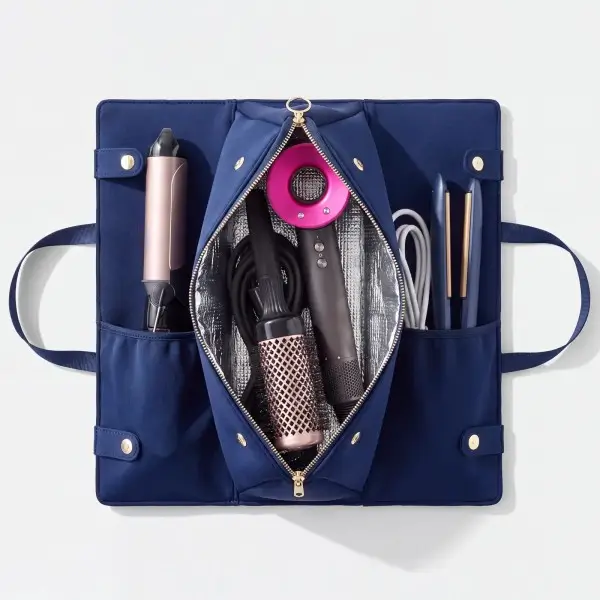
The brief should name the tool type and model or provide a physical sample plus measured dimensions. Record the powered-off storage condition expected by the buyer. A straightener stored flat, a curling tool placed diagonally and a dryer packed with a detachable nozzle create different loads even when their overall lengths look similar.
Do not approve from the tool body alone. Include the plug, strain relief, full cord length and every attachment that must travel in the bag. If the project will cover several tool models, list each one and state whether one common bag or separate fitted versions are required.
| Approval input | What to freeze | What to check on the sample |
|---|---|---|
| Tool | Model, overall dimensions and powered-off condition | Loading direction, removal and internal movement |
| Plug and cord | Plug type, cord length and strain-relief position | Bend radius, pocket fit and closure clearance |
| Attachments | Quantity, dimensions and whether detachable | Retention, separation and abrasion risk |
| Bag format | Sleeve, pouch, mat-pouch hybrid or organizer | Finished shape when fully loaded |
If the file is still incomplete, buyers can WhatsApp the tool list for a first route check and use the Contact form for drawings or larger files.
Fit is more than finished length and width
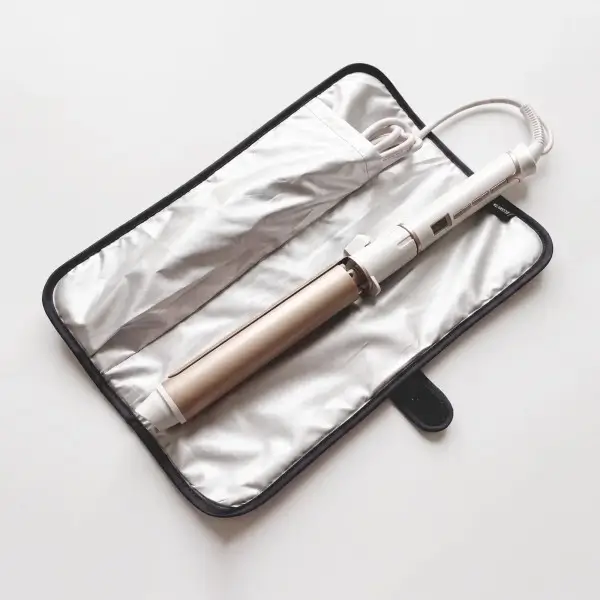
Finished external dimensions are only one part of fit. Padding, lining, binding, zipper construction and seam allowance all reduce usable internal space. A sample can match the drawing and still be difficult to load or close.
During hair tool bag sample approval, load the tool in the intended direction and close the bag without forcing the cord, plug or attachments. Then remove the tool using the same motion expected in normal use. Record whether the buyer accepts free movement, a fitted hold or separate retention loops. These are different design decisions, not minor production tolerances.
- Opening: confirm the tool can enter without scraping the closure or folding the cord sharply.
- Internal clearance: check the narrowest point after lining, padding and binding are assembled.
- Closure: close the zipper, flap or snap with the full pack inside.
- Removal: confirm the user can grip and remove the tool without pulling on the cord.
- Filled shape: inspect distortion, bulging and handle balance on the loaded sample.
Map the cord before freezing pockets and seams
A cord pocket is useful only when it matches the actual cord and does not push the plug into the tool body. Freeze whether the cord is wrapped, folded or laid along the tool. Mark where the plug sits, where the strain relief bends and whether the user needs a separate cable tie.
For a multi-tool organizer, approve the placement sequence as a complete layout. Moving one loop or pocket can change the pressure on the next component. Photograph the approved loaded arrangement and add the photo to the sample record so bulk inspection has a visible reference.
Treat every possible contact zone as controlled construction
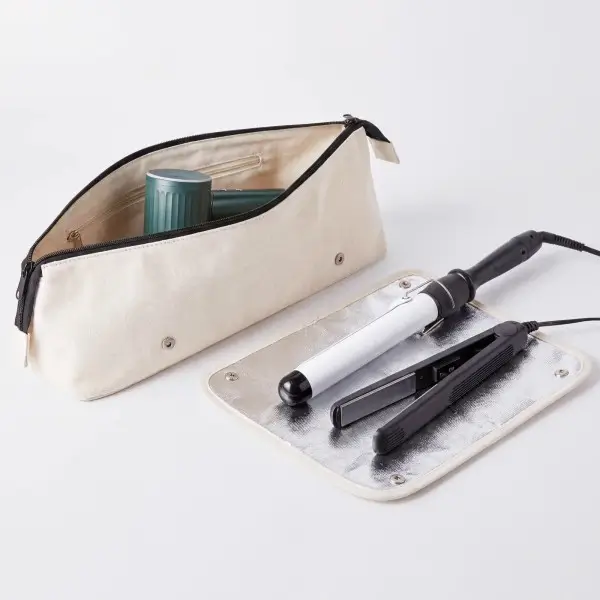
The lining is not the only part that may touch the tool. Depending on the format, contact can extend across seams, binding, zipper tape, labels, hook-and-loop parts, snaps and printed areas. Mark those zones on the approved sample instead of assuming the main lining represents the whole construction.
| Zone | Sample question | Approval evidence |
|---|---|---|
| Main lining | Does it cover the intended tool-contact area? | Marked sample photo and material reference |
| Seams and binding | Can a tool edge or barrel reach them? | Close-up photos in the loaded state |
| Zipper tape and puller | Does closure hardware touch or press the tool? | Closed-sample photo and clearance note |
| Labels and print | Are they inside a possible contact path? | Approved position and artwork version |
This map does not establish a temperature rating. A visible “heat resistant” statement requires a separate, agreed condition: tool and storage state, temperature basis, contact area, duration, sample construction and evaluation method. The powered-off appliance should also be allowed to cool according to its manufacturer’s instructions before storage.
Separate sample approval, performance claims and bulk inspection
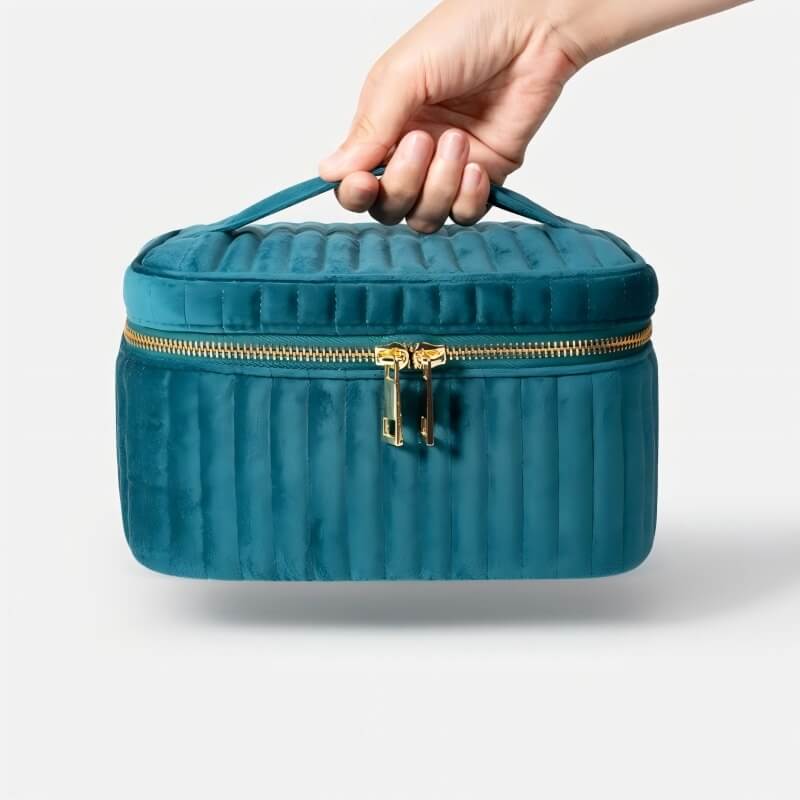
The approved development sample establishes construction and buyer acceptance for that version. It does not by itself prove a heat-performance claim, a certification result or conformity of every bulk unit. If the project needs lot-by-lot inspection, sampling level and acceptance criteria should be defined separately. ISO 2859-1:2026 1 describes acceptance sampling schemes indexed by AQL for lot-by-lot inspection.
Reopen approval when the buyer changes the tool model, lining, padding, binding, closure, pocket arrangement, print position or supplier route. The change may look small on a drawing but can alter usable space, contact zones or the loaded shape.
Minimum approval record
- Approved tool, plug, cord and attachment list.
- Finished sample measurements and loaded photographs.
- Opening, closure and removal observations.
- Material, trim, label and artwork references.
- Contact-zone map and any separately agreed evaluation condition.
- Named approver, date and version number.
Send a sample approval brief
Send the tool model or physical sample, dimensions, plug and cord details, attachments, desired bag format, packing route, quantity and target market. If a heat-performance statement is requested, also state the temperature basis, contact area, duration and evaluation method your team expects to approve.
Send the contact-zone requirements
FAQ
Can a hair tool bag sample be approved from dimensions only?
No. Finished dimensions help start the pattern, but approval should use the exact powered-off tool, plug, cord and required attachments because assembled lining, padding and closure reduce usable space.
Should the cord be stored with the tool during approval?
Yes, if the final product is expected to carry it. Freeze the cord-folding route and plug position so the approved sample represents the real packed condition.
Does an approved sample prove the bag is heat resistant?
No. Construction approval and a heat-performance statement are separate. Any visible claim should match an agreed tool state, temperature basis, contact area, duration, sample construction and evaluation method.
When should hair tool bag sample approval be reopened?
Reopen it when the tool model, lining, padding, binding, closure, pocket layout, print position or supplier route changes in a way that can affect fit, contact or loaded shape.
Is AQL inspection the same as sample approval?
No. Development sample approval freezes an accepted construction and reference. AQL-based inspection is a separate lot-inspection plan with defined sampling and acceptance criteria.
Related Ecorivta pages and guides
- Heat-Resistant Hair Tool Bags for product formats, project fit and RFQ requirements.
- Quality Control for sampling, approval and bulk QC context.
- Certifications for document-scope questions that must be confirmed by project and material.
Evidence Used in This Brief
-
ISO 2859-1:2026 – Official reference for AQL-indexed acceptance sampling schemes for lot-by-lot inspection. This is separate from development sample approval. ↩︎