Turning a unique hair clip idea into a physical product can feel overwhelming. The path from a great design to a market-ready inventory seems filled with technical hurdles and unknowns.
The journey from concept to finished hair clip involves a structured OEM/ODM process. It begins with a technical design review, moves through material selection and mold creation, includes rigorous sampling and testing, and finishes with scaled production and quality control. This guide breaks down each step.
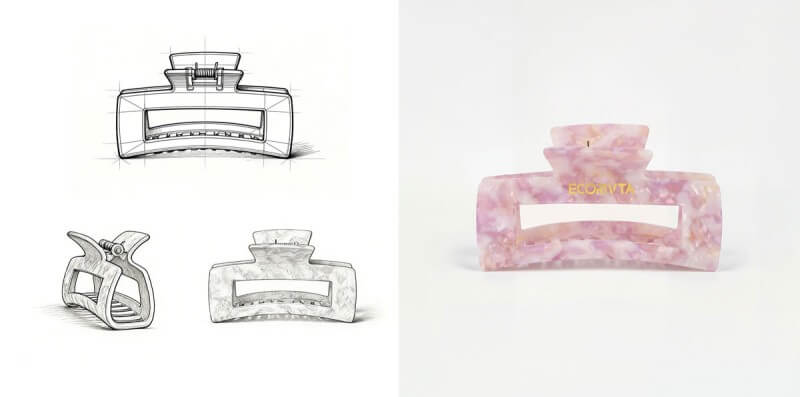
I’ve been in the manufacturing business for over thirty years. I’ve seen countless incredible ideas come across my desk. The ones that succeed are not just brilliant designs; they are born from a partnership with a manufacturer who understands how to translate that brilliance into a high-quality, tangible product. The process isn’t magic, it’s a systematic collaboration. This guide walks you through that exact system, from your initial sketch to the final box ready for shipment. It’s the journey I guide brands through every day as they build out their unique hair clip collections -> https://www.ecorivta.com/hair-clip/.
How does a design become a manufacturable product?
You have a perfect design, but does it work in the real world? Its lines might be too thin for the chosen material, or the clasp mechanism might be difficult to assemble.
First, a manufacturer’s engineering team performs a technical assessment on your design files. This review checks for structural integrity, material compatibility, and potential production challenges. The goal is to ensure the final product is both beautiful and functional, right from the start.
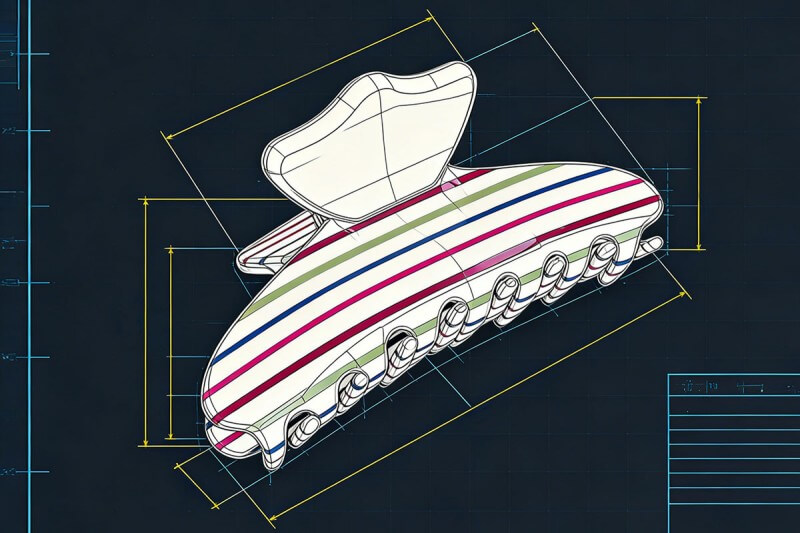
In my experience, this initial phase is the most critical for setting a project up for success. It’s about turning a creative vision into an industrial blueprint. We call this the Design for Manufacturability (DFM) process. This is a collaborative effort. Your vision meets our engineering expertise. We might suggest small adjustments to a curve to improve mold flow, or tweak a hinge design to increase its lifespan after thousands of uses. It’s not about changing your idea; it’s about making it stronger, more durable, and efficient to produce in large quantities.
Engineering & Optimization
This stage is a deep dive into the technical details. We use CAD (Computer-Aided Design) software to create precise 3D models. These models allow for digital simulations to test for stress points and potential weaknesses before any physical material is used.
Here are some key considerations we focus on:
- Structural Integrity: Will the clip arms withstand daily use without snapping? Where are the potential stress points?
- Mechanism Reliability: For clips with hinges or springs, we test the mechanism’s design for a high cycle count. A clip should open and close smoothly thousands of times.
- Assembly Efficiency: How do the parts fit together? A design that is simple to assemble reduces production time and cost.
For a brand, understanding these technical points helps in creating designs that are not just beautiful but also commercially viable. A small design change at this stage can save significant time and money later.
What materials and molds are the foundation of quality?
Choosing the wrong material can lead to breakage, fading, or a cheap feel. The mold is just as important; a poorly made mold results in inconsistent products and surface flaws.
The cornerstones of quality are material science and precision mold engineering. For hair clips, materials like cellulose acetate offer rich aesthetics, while metals provide durability. The choice directly impacts the look, feel, and performance. A high-precision steel mold is essential for achieving consistency and detail.
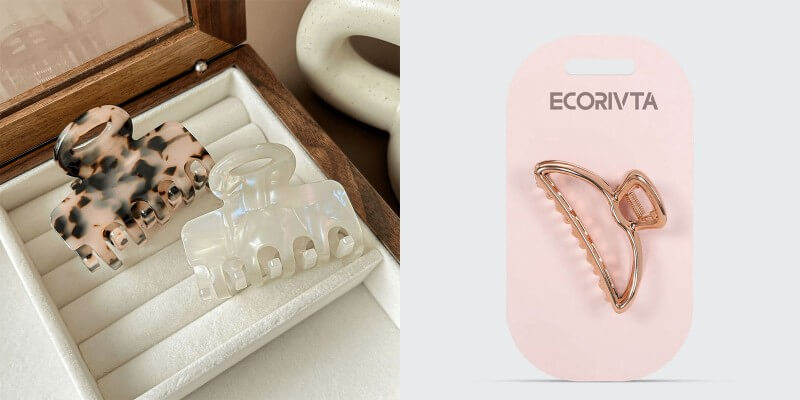
Selecting the right material is like choosing the right fabric for a garment. It defines the character of the final piece. I’ve worked with brands that want the vibrant, layered look of tortoise-shell, and for that, cellulose acetate is the perfect choice. Others need the sleek, modern feel of metal. The true art is knowing how to work with each material to bring out its best qualities through processes like CNC carving, polishing, or electroplating.
And none of it is possible without a masterfully crafted mold. Think of the mold as the heart of the production line. It’s a significant upfront investment, but a high-quality mold made from durable steel will produce hundreds of thousands of identical, flawless clips. A cheap mold wears out quickly, leading to defects and inconsistencies that ultimately damage a brand’s reputation.
Core Material Analysis
Different materials offer distinct advantages in aesthetics, durability, and cost. Understanding them is key.
- Cellulose Acetate: This is a plant-based thermoplastic known for its incredible color depth and shine. It’s not just a surface color; the patterns run through the material itself. It allows for rich textures like marble and tortoise-shell. It requires expert handling in cutting, shaping, and polishing to achieve a premium finish.
- Metal Alloys: Materials like brass, stainless steel, and zinc alloy provide strength and a premium metallic feel. They can be finished in various ways—like gold plating, PVD vacuum coating for durability, or a brushed texture for a modern look.
- Sustainable Innovations: The industry is moving towards greener options. We’re seeing growing demand for materials like bio-acetate (which is biodegradable) and recycled plastics like rPET. While they present unique manufacturing challenges, they are crucial for brands building a sustainable identity. If you’re looking to build an eco-conscious line, you’ll need the right partner, a topic we cover in Sourcing for Sustainability: How to Find and Vet an Eco-Friendly Hair Clip Factory -> [https://www.ecorivta.com/how-to-choose-a-reliable-hair-clip-manufacturer-the-ultimate-checklist/]
Here’s a simple comparison of common materials:
| Material | Key Characteristics | Best For | Common Finishes |
|---|---|---|---|
| Cellulose Acetate | Rich colors, high gloss, lightweight, durable | High-end fashion clips, intricate patterns | Hand polishing, CNC carving |
| Zinc Alloy | Heavy feel, excellent for plating, detailed | Decorative clips, luxury market | Electroplating (gold, silver), enamel |
| Stainless Steel | Very strong, corrosion-resistant, sleek | Minimalist designs, functional clasps | PVD coating, brushing, mirror polishing |
| rPET (Recycled) | Eco-friendly, lightweight, versatile | Brands with a sustainability focus | Standard injection molding, can be colored |
Precision Mold Engineering
The mold is a critical investment. Its design determines the final product’s precision, surface finish, and consistency. A mold for injection molding, for example, has complex internal channels for plastic flow and cooling. The quality of the steel used and the precision of the CNC machining that creates the mold cavity are paramount. A well-made mold can last for over 500,000 cycles, ensuring your first hair clip is identical to your last. Investing in a superior mold prevents production delays and quality issues down the line. It’s a non-negotiable for serious brands.
How do you verify quality before mass production?
You’ve approved the design, but what if the first batch of 10,000 units has a flaw? Finding a mistake after production starts is a costly and stressful disaster for any brand.
The sample validation stage is your quality control checkpoint. A manufacturer creates pre-production samples for you to test and approve. This step allows you to physically feel the product, check its function, and request adjustments before committing to a full production run.
I always tell my partners that the sample is our promise. It’s the physical representation of all the design discussions and material choices we’ve made together. This is the moment you hold the product for the first time. Does the clasp feel secure? Is the weight right? Is the color exactly as you imagined? We perform our own rigorous in-house tests, but your feedback is the final word.
We conduct durability tests, like opening and closing a clip 5,000 times to test the spring. We do pull tests to ensure components are securely attached. We also start the compliance process here, checking against international standards like REACH or Prop 65 to ensure the materials are safe for consumers worldwide. Only after you sign the Sample Approval form does the project move forward. This step removes all the guesswork and ensures we are perfectly aligned on the final product.
The Iteration and Approval Cycle
This phase is a structured feedback loop designed to perfect the product.
- First Sample (T1): The manufacturer produces the first articles based on the finalized design and chosen tools. These are sent to you for review.
- Client Feedback: You provide detailed feedback. This can cover anything from the sharpness of an edge to the glossiness of the finish or the tension of the spring. Photos and clear comments are essential here.
- Engineering Adjustments: Based on your feedback, the manufacturer makes necessary tweaks. This might involve polishing the mold, adjusting a machine setting, or refining an assembly process.
- Revised Samples (T2, T3…): A new batch of samples is produced and sent for another round of review. This cycle continues until you are 100% satisfied.
- Signed Approval: Once the sample is perfect, you sign a formal Sample Approval, which becomes the “golden standard” that every piece in the mass production run will be measured against.
While multiple sample rounds might seem slow, it is the single most effective way to prevent large-scale problems. Taking an extra week here can save you months of delays and thousands of dollars. It’s a crucial sign that you’re working with a quality supplier, and you can learn more about what to look for in our guide on Beyond the Sample: 5 Signs of a Top-Rated Hair Clip Supplier for Bulk Orders -> [link-to-your-blog-post/beyond-the-sample]
How is quality managed during mass production?
Scaling from one perfect sample to 50,000 identical units presents new challenges. Without strict controls, quality can drift, leading to inconsistencies and defects across the production run.
Effective large-scale manufacturing relies on a Total Quality Management (TQM) system and advanced production technologies. This includes inspecting raw materials (IQC), monitoring quality during production (IPQC), and a final check before shipment (FQC), often supported by automation to ensure consistency.
Once you’ve approved the sample, our job is to replicate that perfection thousands of times over. This is where scale and process control become everything. It’s not about just making a lot of clips; it’s about making a lot of perfect clips. We use automated injection molding machines that ensure every part is formed under the exact same temperature and pressure. Laser cutters ensure every acetate shape is precise to the millimeter.
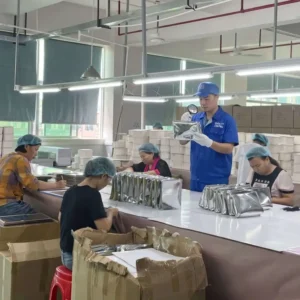
But automation is only part of the story. Our quality control team is present at every stage. They check the raw materials as they arrive. They pull products from the line at random intervals to check dimensions and function against the approved sample. And before anything is packed, every single clip goes through a final visual and functional inspection. This multi-layered approach is the only way to guarantee that the quality you approved in the sample is the quality you receive in your inventory.
The Production & Supply Chain Ecosystem
A modern factory integrates manufacturing, quality control, and logistics into a seamless flow.
-
Modern Manufacturing Processes: Automation is key to efficiency and consistency.
- Automated Injection Molding: Produces thousands of identical plastic or rPET components with high precision.
- Laser Cutting: Used for precisely cutting cellulose acetate sheets into complex shapes.
- Ultrasonic Welding: Joins plastic parts without adhesives, creating a strong and clean bond.
- Robotic Assembly: Can be used for repetitive tasks like spring insertion, increasing speed and reducing errors.
-
Comprehensive Quality Management (TQM): Quality is checked at every step.
- IQC (Incoming Quality Control): Raw materials like acetate sheets or metal coils are tested for defects and compliance before use.
- IPQC (In-Process Quality Control): Inspectors monitor the production line, checking for issues in real-time to prevent large batches of defective products.
- FQC (Final Quality Control): Every finished product is inspected for appearance, function, and packaging before it is cleared for shipment.
-
Custom Packaging & Logistics: The final step is getting the product to you safely and presented beautifully. We work with brands to design custom packaging, from simple poly bags to branded gift boxes with custom inserts.