Quick Summary
This checklist is for buyers who need premium acetate claw clips to feel secure, smooth and brand-ready before bulk production. It responds to real claw clip inquiry patterns: buyers ask for custom logo, strong hold, sample evidence, packing and lead time together. The article keeps the answer practical without promising one fixed timeline or one fixed MOQ route.
- Approve spring return and opening feel before focusing on decoration.
- Check teeth shape, inner curve and grip against the intended hair volume.
- Inspect surface scratches, color consistency, edge feel and logo position in photos and samples.
- Use sample approval to separate functional problems from artwork or packing changes.
- Ask for evidence photos and videos that a buyer can forward internally.
Start with function: spring, opening and hold
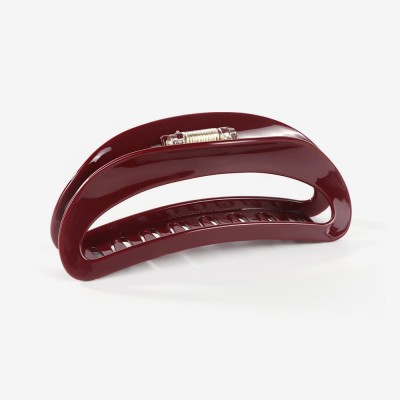
A claw clip sample should first answer whether the buyer would trust the product in daily use. The spring should return smoothly, the clip should open without feeling weak, and the hold should match the intended size and hair volume. This is especially important for premium Beauty GWP buyers who want product quality, not only a decorative giveaway.
For bulk inspection logic, acceptance-sampling standards such as ISO 2859-1 are useful context because they frame lot inspection by attributes rather than relying on casual judgment.1 The buyer still needs a product-specific checklist before that logic is useful.
Check teeth and inner curve against the intended user
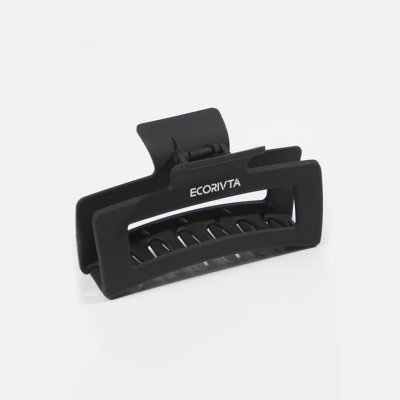
Teeth and inner curve decide whether the clip grips, pulls or slips. A large clip with wide teeth can feel different from a smaller glossy clip even when both look attractive. Ask for sample photos from the side and inside, then check whether the teeth align, the tips feel smooth and the curve supports the target hair volume.
| Checkpoint | Buyer question | Evidence to request |
|---|---|---|
| Spring return | Does it open and close consistently? | Short video plus side photo. |
| Teeth grip | Does it hold without rough pulling? | Inside view and practical hold test note. |
| Edge feel | Are edges smooth enough for repeated use? | Close-up of teeth, hinge and outer edge. |
| Logo area | Is the logo readable at normal distance? | Front photo, close-up and card mockup if used. |
Surface and finish approval should not be rushed
Gloss, matte, translucent, tortoise and marble effects all show scratches and color differences differently. A sample review should include front, back and edge photos under normal lighting. If the buyer plans textile, card or pouch packing with skin-contact or material-safety claims, OEKO-TEX STANDARD 100 is a relevant reference for tested textiles, accessories and material components.2 Do not turn that reference into a blanket claim unless the specific material and certificate scope support it.
Packing evidence matters before bulk starts
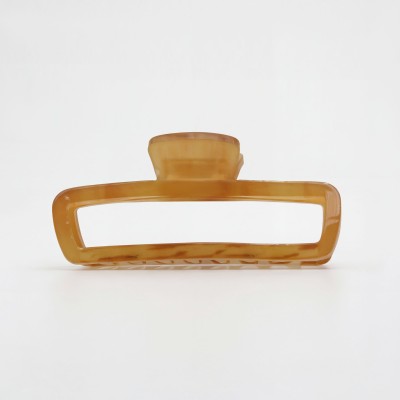
If the claw clip will be sold or distributed as a carded item, ask for card fit, hang hole position, barcode or GTIN ownership, carton mark and packing-photo evidence before bulk starts. GS1 explains that a GTIN is a globally unique product identifier used for trade items, including retail and e-commerce contexts.3 Ecorivta can support the physical card and packing route, while the buyer or retailer should control the product identification data.
Separate correction notes into function, appearance and packing
Sample feedback is easier to solve when it is sorted. Function notes cover spring, teeth, hold and comfort. Appearance notes cover color, pattern, surface and logo. Packing notes cover card, sleeve, label, carton count and shipment protection. Mixing all three into one comment such as “make it better” slows the next sample round.
FAQ
What should be approved first on a claw clip sample?
Approve function first: spring return, opening feel, teeth grip, edge comfort and hold. Decoration and packing are easier to refine after the product works.
Should buyers request a video?
A short opening and closing video can help the buyer understand spring return, clip movement and handling. It does not replace a physical sample, but it helps early internal review.
What defects should be separated from normal variation?
Surface scratches, rough edges, weak spring, loose hardware, unreadable logo and packing damage should be separated from normal acetate pattern variation.
When can the buyer move from sample to bulk?
Move forward when the buyer has approved function, color or acceptable color range, logo position, card/packing route and any required document or market notes.
Send a quote-ready claw clip brief
Send the clip size, target hair type or use case, sample quantity, intended bulk quantity, material/color, logo method, packing route, photos of the sample from front/back/side, and any issue notes about spring, teeth, surface, logo or card. If the project is urgent, state which details are already frozen and which can still be adjusted.
-
ISO 2859-1 sampling procedures – used for acceptance-sampling context when buyer and supplier discuss inspection logic. ↩︎
-
OEKO-TEX STANDARD 100 – used for careful wording around tested textiles, accessories and skin-contact material claims. ↩︎
-
GS1 US GTIN guidance – used for buyer-owned product identification language when a carded clip goes into retail or e-commerce. ↩︎