Quick Buyer Summary
This anonymous French brand-and-retailer project shows why a curling iron bag reorder should preserve the exact approved construction and evidence scope. The original 1,000-piece order was delivered and was followed by a second 1,000-piece order. The approved route used a 2.5 mm three-layer composite with knitted fabric on both faces of a neoprene core, a magnetic-snap closure, woven label and a fold-out flap intended as a temporary resting area. The customer did not request a heat-performance rating, and no heat test was conducted for this order.
- Do not describe a composite neoprene construction as “100% recycled” without verified component and chain-of-custody evidence.
- Treat the fold-out flap as a structural feature unless a future project defines and verifies a heat-performance requirement.
- Do not turn an intended use into a tested heat-performance claim when no test was requested or conducted.
- Freeze material layers, closure, label position and packing before a repeat order uses the approved reference.
- Keep packaging environmental claims within the evidence supplied for that specific film and market.
Review a hair tool bag material route
The verified project brief
The project decisions recorded below separate verified construction facts from claims the order did not require or test.
| Project field | Recorded route | Public evidence boundary |
|---|---|---|
| Buyer | French brand and retailer | Customer and brand remain anonymous |
| Program | Retail curling iron bag | One project, not a universal product specification |
| Stage and quantity | Original 1,000 pieces delivered; second 1,000-piece order recorded | The current shipment status of the repeat order is not claimed |
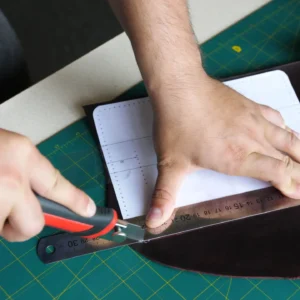
| Main construction | 2.5 mm three-layer composite: knitted fabric / neoprene / knitted fabric; magnetic snap | This construction belongs to the verified project and is not a universal specification |
| Branding | Woven label | No customer name or logo is disclosed |
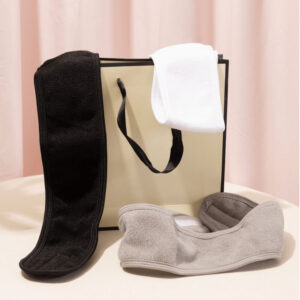
| Individual packing | Compostability-marked film route shown in the project evidence | Any public claim must match the exact certified film, licence scope and authorised logo use |
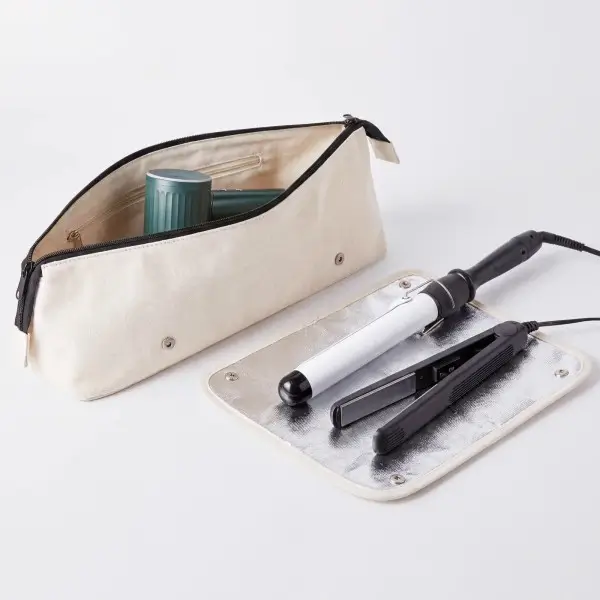
| Functional detail | Fold-out flap intended as a temporary resting area | Structural design intent only; this order did not include a heat-performance requirement or test |
The buyer supplied two traceable project records for the Ecorivta hair tool bag route 1. The original order was delivered; the second record supports the repeat-order statement. Public wording should stop there. It should not infer that the repeat order has shipped, a market result, a heat-performance result or a certification that the records do not establish.
Why the recycled-neoprene request was narrowed
The initial direction requested recycled neoprene. The approved project panel was a 2.5 mm three-layer composite with knitted fabric laminated to both faces of a neoprene core, rather than one homogeneous material. Face fabrics, neoprene, adhesive, backing and trim can each have a different composition and evidence route. Calling the finished bag “100% recycled” would therefore require support for the whole claimed scope, not only one face fabric or component.
The practical correction was to approve the performance and appearance route without overstating recycled content. If a future version uses a recycled component, the brief should identify which component it is, its percentage basis, the supporting document and whether the claim applies to that component, the composite panel or the finished bag.
| Claim question | What the buyer should request | What not to assume |
|---|---|---|
| Which part is recycled? | Layer or component name and composition | One recycled face fabric makes the complete bag recycled |
| How is percentage calculated? | Declared mass or component basis | A marketing percentage applies to every material layer |
| What document supports it? | Supplier document with product and scope match | A general certificate automatically covers the finished bag |
| What wording is approved? | Exact claim for the intended market and artwork | “100% recycled” is safe because the route is described as sustainable |
Define material and structure scope
Why the fold-out flap remains a structural feature in this case
The project used a fold-out flap intended as a temporary resting area for the curling iron. The customer did not request a heat-performance rating, and no heat test was conducted for this order. The case therefore records the geometry and use intention only; it does not present the flap as a tested hot-tool surface.
If a future buyer wants a defined heat function, that must become a separate project requirement with the exact tool state, contact temperature, duration, contact surface and acceptance method agreed before sampling. The appliance manufacturer’s cooling and storage instructions still apply.
- Project boundary: no customer heat requirement or heat test was recorded for this order.
- Structural approval: retain the fold-out geometry, composite build, closure position and assembled reference.
- Future heat brief: define the tool, operating or cooling state, contact area, temperature basis and duration before testing.
- Future evaluation: agree the sample construction, inspection method and pass-or-fail criteria before any performance wording is approved.
- Change control: reopen review if the neoprene, face fabric, adhesive, trim, geometry or supplier route changes.
This case does not claim tested heat resistance, fireproof performance, a safe-contact temperature or suitability for storing an appliance immediately after use. Those are separate claims that require their own applicable evidence.
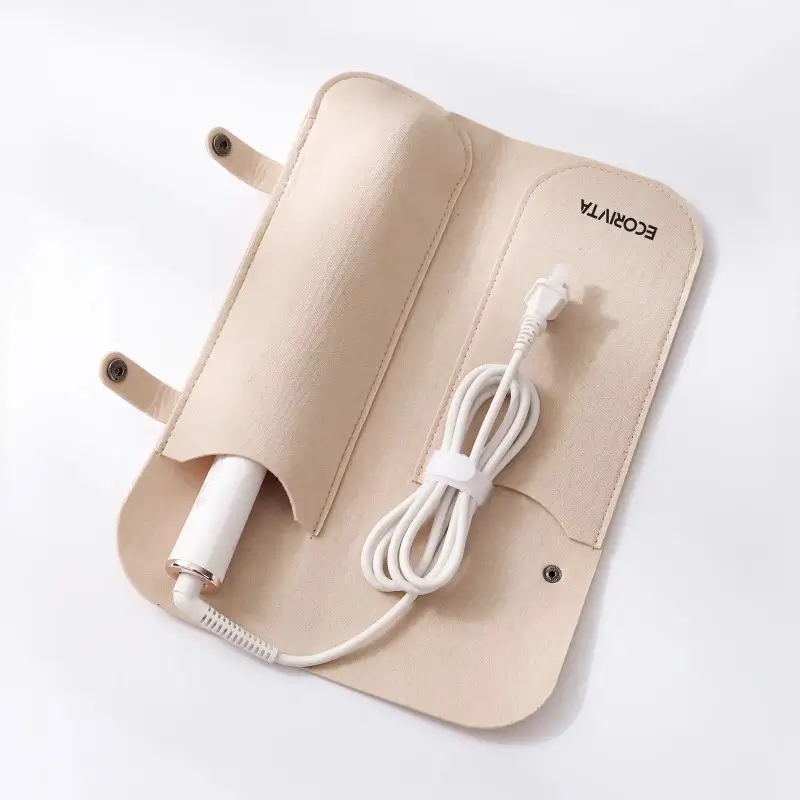
A reorder should preserve the approved version, not only the appearance
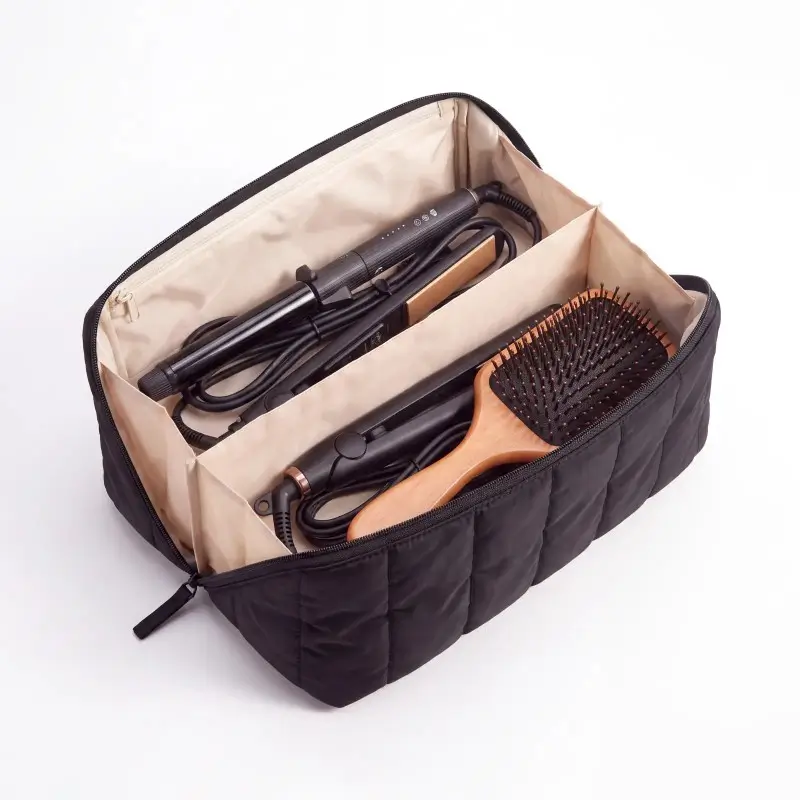
A repeat purchase is useful commercial evidence, but it also creates a version-control task. The reorder file should point back to the approved material layers, finished measurements, flap geometry, magnetic-snap position, woven-label placement and packing reference. A visually similar sample can behave differently if the composite thickness, adhesive or contact-side layer changes.
The project history confirms that the original 1,000-piece order was delivered and a second 1,000-piece order was placed. The reorder approval record should still distinguish unchanged items from changes that require a new sample. A separate performance review is required if a future order introduces a heat-performance claim. Until the second order’s status is verified, the article does not describe it as shipped or delivered.
| Reorder check | Reference to retain | Reason |
|---|---|---|
| Composite material | Layer build, thickness, colour and supplier | Appearance alone cannot confirm the same construction |
| Mat-lid | Finished geometry and mapped contact area | Coverage and tool position depend on the assembled shape |
| Closure | Snap type, position and closing force | Placement affects both closure and usable resting area |
| Branding | Label size, artwork, fold and sewing position | Avoids contact-zone and privacy errors |
| Packing | Approved material wording and individual-pack reference | Environmental claims need product-specific evidence |
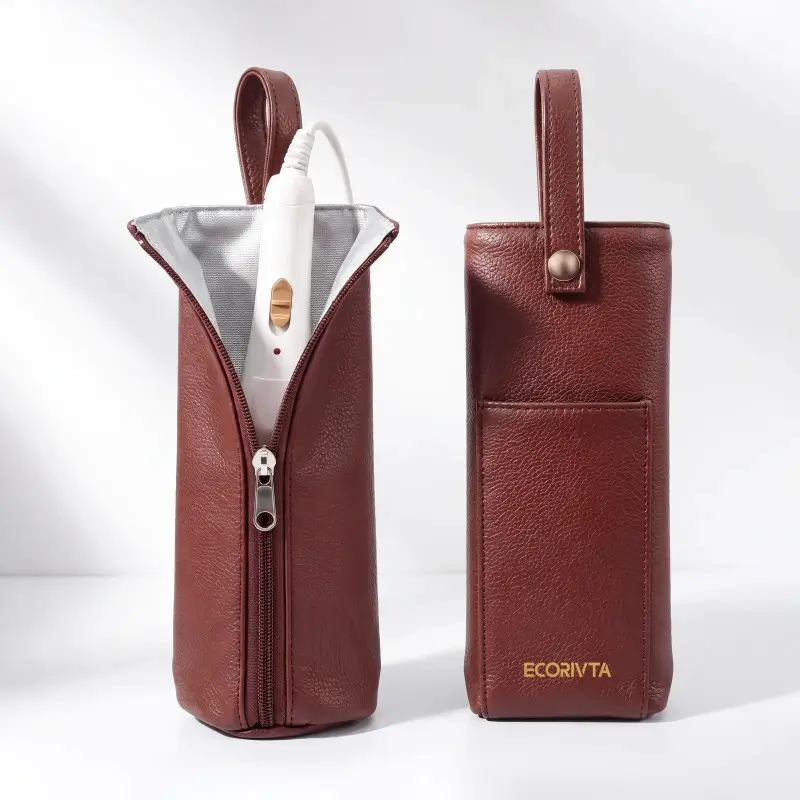
What this project does and does not prove
The project supports a real supplier-side lesson: honest material wording, a clearly defined fold-out structure and controlled reorder references matter more than a broad “heat resistant” label. This order had no customer heat requirement and no heat test, so the case does not present the flap as a tested hot-tool surface or make a safe-temperature claim.
No customer identity, original brand artwork, public temperature threshold, fireproof claim or universal storage instruction is disclosed. Identifying artwork in the project image was replaced with ECORIVTA for confidentiality, so the image is not presented as an unedited original. The submitted packing photo displays industrial- and home-compostability marks, but logo printing alone is not treated as proof that every film or finished bag is certified. Any public packaging claim must match the exact licensed film, current certificate and authorised logo scope.
Send a controlled hair tool bag brief
Send the exact tool model, dimensions, desired bag format, material direction, closure, branding, packing, quantity and target market. If a heat-performance function is required, also send the tool model, operating or cooling state, intended contact surface and test expectation. If the project requests recycled-content or environmental wording, identify the exact component and supporting evidence expected for the claim.
Review a repeat-order change list
FAQ
Can a neoprene curling iron bag be described as 100% recycled?
Not from a general material description alone. A neoprene bag panel can contain several layers and components. The claim should name the verified component, percentage basis and document scope instead of extending one recycled input to the whole finished bag.
Was the fold-out flap heat tested for this project?
No. The customer did not request a heat-performance rating and no heat test was conducted. The flap is described only as a project structure and intended resting area, not a tested hot-tool surface.
Can the bag flap be used as a temporary curling iron mat?
It was designed with that intended function, but this order did not include a heat test. A buyer who needs a verified mat function must define the conditions and approve applicable evidence before any performance wording is used. The appliance manufacturer’s cooling and storage instructions still apply.
What should be checked before a hair tool bag reorder?
Compare the composite layers, thickness, supplier, finished measurements, fold-out geometry, closure, label position and packing with the approved reference. Reopen approval when a change can affect fit or construction, and open a separate performance review if a new heat claim is requested.
Does a material certificate prove finished-product heat resistance?
No. Material composition, chemical-safety or recycled-content documents have their own scopes. A finished-product heat-performance statement needs an applicable condition and evaluation record.
Related Ecorivta pages and guides
- Heat-Resistant Hair Tool Bags for product formats, project fit and RFQ requirements.
- Hair Tool Bag Sample Approval for fit, cord routing and contact-zone checks.
- Hair Tool Launch Kit Packout for multi-component retail-set approval.
Evidence Used in This Brief
-
Ecorivta Heat-Resistant Hair Tool Bags – Product-route reference for the format and RFQ boundary. Project facts were verified against two internal project records on 2026-08-05. Public claims remain limited to two 1,000-piece orders, confirmed delivery of the original order, the approved construction and the confirmed absence of a customer heat requirement or heat test. ↩︎