Quick Buyer Summary
A custom shape claw clip should move from idea to sample through a technical brief: size, teeth spacing, spring fit, acetate color, logo method, edge polish, MOQ and quality checks.
This matters when a buyer sends a specific shape idea, such as a coffee-pot inspired clip, and expects the first sample to feel premium rather than just look similar in a photo.
Start With Size, Hair Type and Shape Function
A custom claw clip sketch is not enough for sampling. The buyer should confirm the finished size, target hair type, curve, teeth count, teeth spacing and how much hair the clip needs to hold.
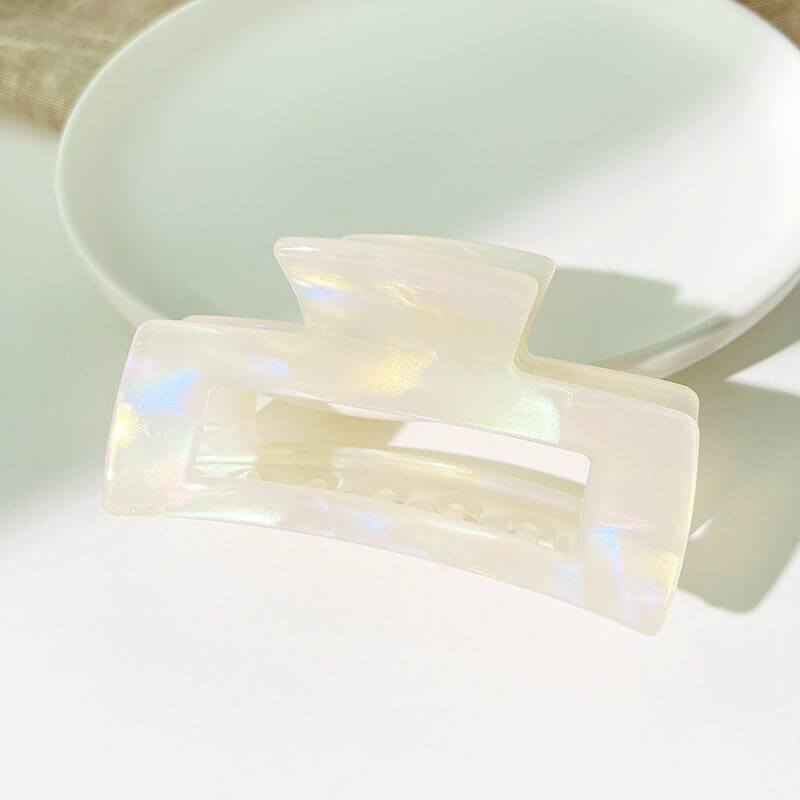
For a size such as 108 x 53 x 38 mm, the supplier should check whether an existing mold is close enough or whether a new mold route is needed. The first sample should prove fit and function before the buyer spends time on packaging or retail copy.
If the buyer asks for premium cellulose acetate, the material route should also be confirmed early. Skin-contact and material-safety questions can reference standards such as OEKO-TEX Standard 100, but document support depends on the selected material. See OEKO-TEX Standard 100 1 for one formal reference buyers may recognize.
| RFQ checkpoint | What to confirm | Why it matters |
|---|---|---|
| Size | Finished length, width, height and target hair type. | Shape must hold the intended hair volume. |
| Teeth | Count, spacing, polish and rounded edges. | Prevents pulling, sharp edges and weak grip. |
| Spring | Opening feel, tension and alignment. | A custom shape still needs reliable function. |
| Logo | Laser engraving size, position and readability. | Small internal logos need real surface testing. |
Teeth Spacing and Spring Fit Decide Whether the Sample Works
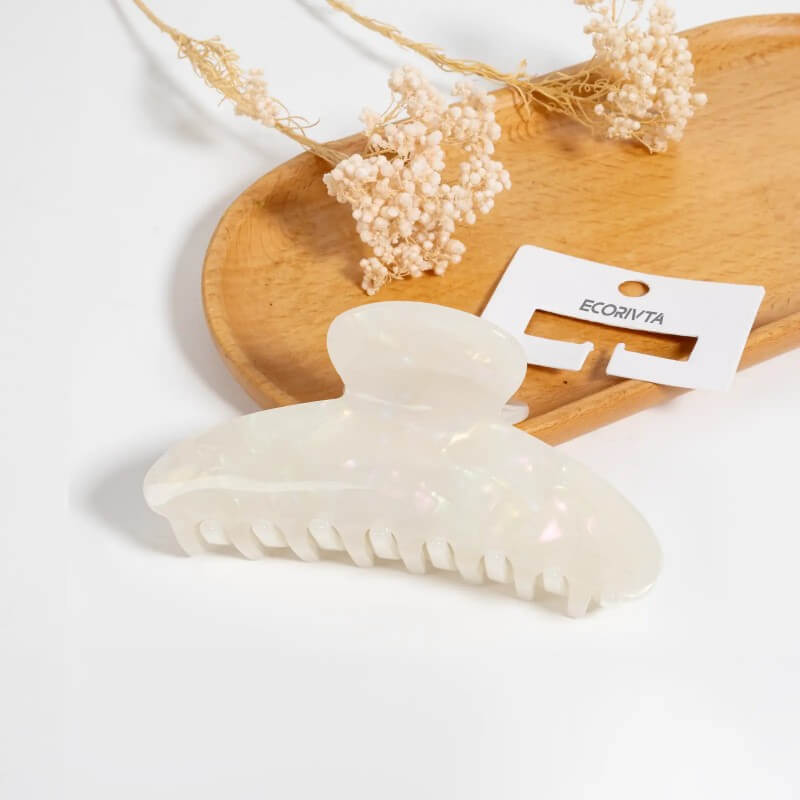
Teeth are not only visual details. Rounded, polished teeth with the right spacing help prevent sharp edges, hair pulling and uneven grip. A custom shape with 10 to 12 teeth per side needs actual hand testing, not only a drawing approval.
The spring should open smoothly, close evenly and hold tension without feeling too stiff. If the clip is intended for medium-density hair, the test should match that use case. A beautiful shape with weak spring tension will still fail the buyer’s sample review.
Color and finish should be checked together with function. Ivory body, black handle and black top knob may look simple, but color matching across acetate parts can still create sample issues if each part is approved separately. See AATCC Standards 2 for a documentation reference point.
Laser Engraving Needs a Real Surface Test
Laser engraving can be a strong route for a premium custom shape because it avoids surface print wear and can look more integrated. But the logo must be tested on the actual surface. Curves, glossy polish and small logo areas can reduce readability.
If the buyer wants a small logo engraved inside the clip, the sample should show exact placement and size. Internal engraving can be elegant, but it is also easier to miss in photos and harder to inspect after assembly.
AATCC standards are useful as a broader reference for textile and color testing, but for acetate clips the practical approval still comes from actual sample handling, surface inspection and repeated open-close testing.
Quality Checks Should Be Written Into the Sample Brief
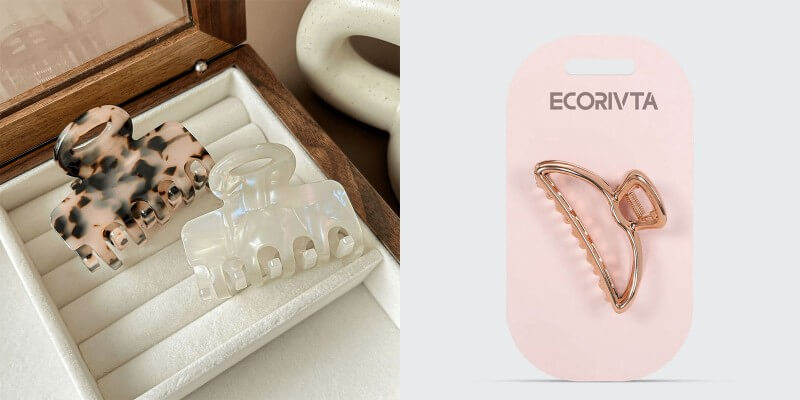
A custom shape sample should be checked for smooth opening and closing, strong grip, no sharp edges, no scratches, no cracks and no misalignment. These are not cosmetic extras. They are the difference between a promising sample and a buyer-ready product.
The sample brief should also state whether the buyer wants one sample for visual review, one for wear testing, or multiple samples across colors. If the first order is small, the supplier should still clarify what is sample approval and what is bulk-ready production.
For claims around premium, sustainable or non-toxic materials, the FTC Green Guides are a useful reminder to keep wording specific and supportable. In practice, approve the product first, then align the marketing language with the available records. See FTC Green Guides 3 when claim wording needs a conservative check.
Send a Focused Sample Brief
Share the sample photo, target size, material route, quantity tier, logo method, packing expectation and delivery market. Ecorivta can review whether an existing route is enough or whether sample/tooling approval should be separated before bulk pricing.
Custom Shape Claw Clip Reference Design Questions
Can a custom shape claw clip start with 50 or 100 pieces?
A small first order can guide sampling, but custom shapes may need existing mold matching or tooling discussion before price is reliable.
Why are teeth spacing and spring fit important?
They decide grip, comfort, opening feel and whether the clip holds the target hair type without sharp edges or weak tension.
Is laser engraving better than printing?
It depends on the surface, logo size and desired look. Laser engraving can feel premium, but the sample must prove readability and placement.
What should be checked before bulk approval?
Check size, teeth count, spring tension, edge polish, logo, color, surface scratches, opening/closing feel and packing.
Related Ecorivta pages and guides
- Acetate Claw Clips Manufacturer – Use this page for claw clip material, style and GWP sourcing.
- Beauty GWP Hair Clip Supplier – Use this page when the buyer is still comparing hair clip formats.
- Contact Ecorivta – Send custom shape, size and sample questions for review.
Evidence Used in This Brief
-
OEKO-TEX Standard 100 – Used for skin-contact material safety and document-support discussion. ↩︎
-
AATCC Standards – Used for textile and colorfastness testing context when a buyer asks for approval or durability evidence. ↩︎
-
FTC Green Guides – Used to keep environmental and material claims specific, qualified and supportable. ↩︎