A silk scrunchie can look simple in a photo, but a private label beauty gift usually fails or slows down at the handoff points: card wording, label size, color reference, barcode, unit pack and carton split. The product may be approved, while the packaging file is still unclear. That is when quotation, sample approval and bulk packing become less controlled.
For Ecorivta, a scrunchie RFQ is not only a fabric and size discussion. Beauty buyers often need to choose whether the scrunchie is a free gift, a retail item, a set component, a PR kit item or a seasonal GWP. Each route changes the packaging card, woven label, printed label, barcode and packing approval logic.
Quick Buyer Summary
- Approve packaging card, label, barcode and unit pack before the final silk scrunchie sample.
- Clarify whether the scrunchie is a gift, retail item, set component or PR kit item.
- Material wording such as silk, satin, recycled or eco should match the actual material route and available documents.
- Barcode and carton mark planning should start before card artwork is locked.
- Send quantity, color split, label route, card artwork, packing route and target price in the first RFQ.
Request Silk Scrunchie Packaging Review
Why Packaging Card and Label Approval Matters
A private label scrunchie is often judged by the full presentation, not only by the fabric. The card, label and unit pack decide whether the gift feels retail-ready, whether the brand story is visible and whether the item can move through store, ecommerce or campaign packing without extra correction.
The approval scope should include the scrunchie itself, the label route, the card or backing card, the insert or sleeve if used, the barcode area, the care or fiber wording if needed and the carton mark. When these pieces are approved separately, a buyer can easily approve a beautiful scrunchie sample but still have an unfinished production standard.
Check Card and Label Approval Scope
Choose the Packaging Route Before Artwork Starts
There is no single best packaging route for a silk scrunchie. A giveaway can use a simple card or individual bag. A retail route may need a stronger backing card, hang hole, barcode and clear product information. A beauty set may need a smaller insert card so the scrunchie fits beside a pouch, headband or skincare product.
| Buyer route | Packaging card or label decision | Why it matters |
|---|---|---|
| Beauty GWP | Simple card, small insert, logo label, individual bag or set pack | Controls cost while keeping the gift clean and brand visible |
| Retail item | Backing card, barcode area, product name, fiber or care wording if needed | Supports store, ecommerce and finished-SKU handling |
| Private label set | Shared color story, small label, card size and pack-out order | Makes the scrunchie feel coordinated with other beauty accessories |
| PR kit or influencer gift | Premium card, ribbon, sleeve, insert message or custom box route | Improves unboxing effect without changing the scrunchie structure |

Confirm the Label Route: Woven, Printed or No Label
The label route should be chosen before sample approval. A woven label can feel more finished, but it changes size, sewing position and minimum artwork detail. A printed label can work when the buyer wants a flatter or simpler look. Some GWP routes may choose no sewn label and put all branding on the card instead.
The buyer should send logo size, label position, background color, thread or print color, and whether the label should be visible when the scrunchie sits on the card. If the label is added after the product sample is approved, the sewing position and final display can change.
Material Wording and Claim Boundaries Belong on the Checklist
If the card says silk, satin, recycled, eco, vegan or certified, the wording should match the actual material route and the available documents. The FTC has textile and clothing guidance that buyers can use as a reminder that fiber and material wording should not be casual marketing copyFTC clothing and textile guidance 1.
If a buyer wants environmental language on the card, the claim should also stay inside a clear boundary. The FTC Green Guides are a useful reference for avoiding broad or unsupported environmental claimsFTC Green Guides 5. For textile safety or testing language, buyers may ask whether a standard such as OEKO-TEX STANDARD 100 is relevant to the project and document setOEKO-TEX STANDARD 100 3.
Color, Artwork and Barcode Should Be Approved Together
For beauty gifts, color is not only a fabric issue. The scrunchie color, card background, label color, logo color and carton sticker can all be reviewed by different teams. A shared color system such as Pantone helps reduce ambiguity when the buyer, designer and supplier are checking the same approval filesPantone color systems 4.
If the scrunchie will be sold, scanned or tracked as a finished SKU, barcode placement should be planned before the final card layout. GS1 US gives practical guidance for placing barcodes on products and packagingGS1 barcode placement guidance 2. This matters because the card may look clean visually but leave no practical barcode area.
Sample Approval Checklist for Card, Label and Unit Pack
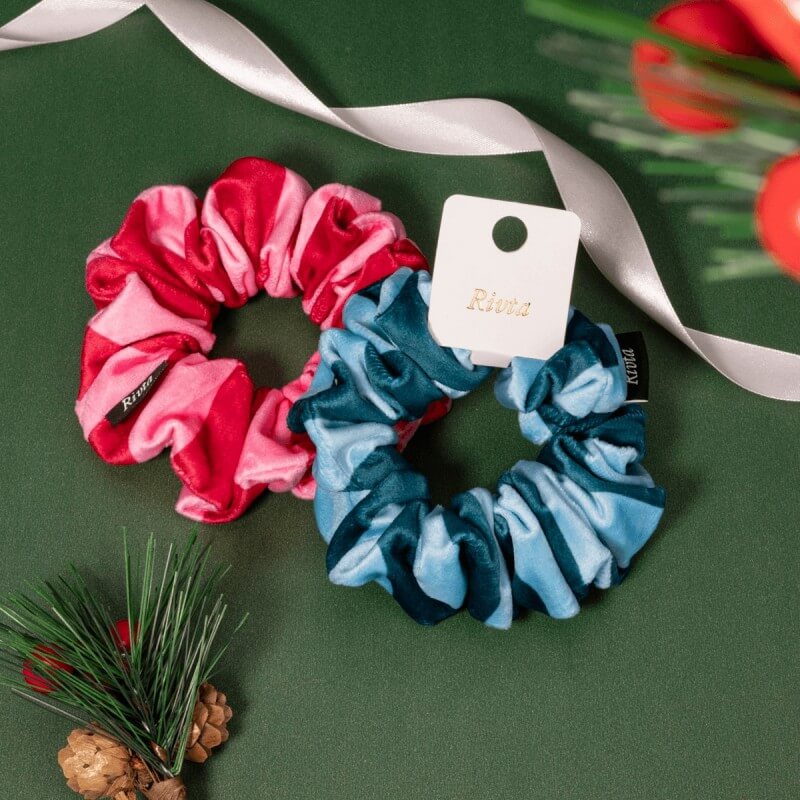
A useful approval sample should show more than the scrunchie. It should show how the scrunchie sits on or inside the packaging, where the logo appears, how the label is sewn or printed and whether the final pack can be counted and packed efficiently.
- Scrunchie: material route, size, elastic feel, color, logo or no-logo decision.
- Label: woven label, printed label, sewn position, label size, background color and logo color.
- Card: card size, paper route, artwork file, hang hole, fold line, QR code or campaign message.
- Barcode: barcode owner, code file, placement area and whether each color is a separate SKU.
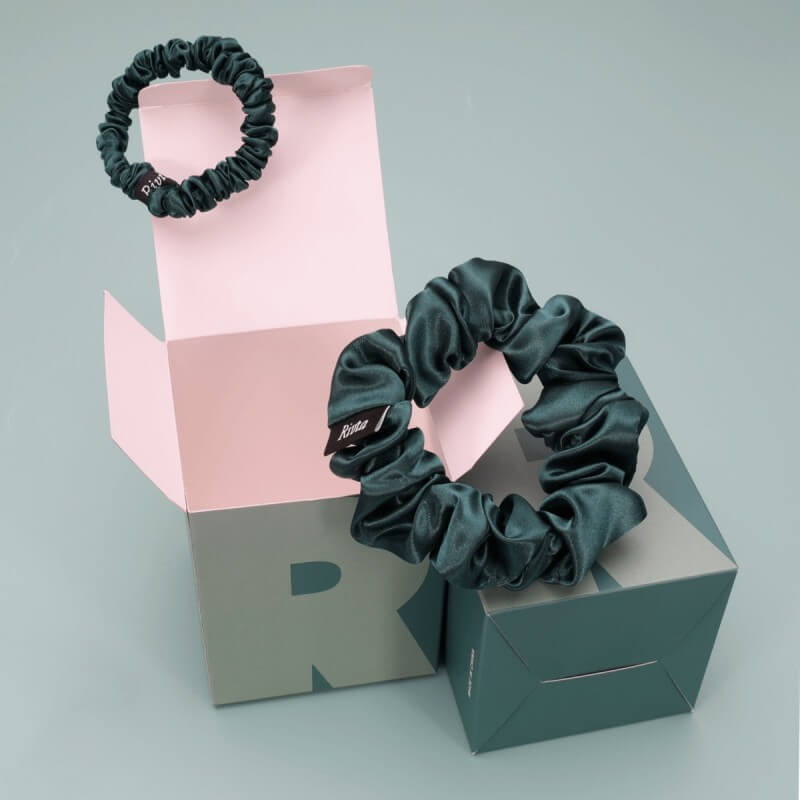
- Unit pack: individual bag, carded pack, sleeve, set pack or bulk carton route.
- Carton mark: PO, SKU, color, quantity, gross weight, net weight and destination if required.
- Approval photos: front, back, label close-up, card close-up, barcode area and carton mark draft.

What to Send in the First RFQ
The fastest RFQ is not the shortest email. It is the email that gives the supplier enough packaging information to quote the right route the first time. If the buyer only sends a photo of a silk scrunchie, the supplier still has to guess the card, label, barcode and packing work.
Send the buyer route, quantity, color split, material route, logo method, label route, card artwork, barcode need, individual packing need, carton mark need, target price and launch timing. If two packaging levels are being compared, ask for both options in the first RFQ so cost and presentation can be compared before sampling.
Best Fit and Less Suitable Requests
Best fit
This checklist is most useful for beauty, skincare, haircare, spa, retail and GWP buyers who need private label scrunchies with a card, label, barcode or gift-set packing route. It is also useful when a buyer wants two or three packaging options before choosing the final sample.
Less suitable
It is less suitable for buyers looking for single-piece stock scrunchies, no-logo resale items or projects where the buyer does not want to clarify quantity, card, label, color or packing. Without those details, the quote can only be a loose estimate.
FAQ About Silk Scrunchie Packaging Card and Label Approval
Should the packaging card be approved before the scrunchie sample?
It should be approved before the final sample if the card affects display direction, label visibility, barcode area or set packing. A plain product sample is not enough when the final gift needs a carded or retail-ready look.
Can one RFQ compare several packaging routes?
Yes. A buyer can ask for simple individual packing, carded packing and retail-ready packing in the same RFQ. This helps compare cost and presentation before committing to the sample route.
Do silk scrunchies always need a sewn label?
No. Some private label routes use a woven or printed label, while some GWP routes place the brand only on the card or sleeve. The right choice depends on budget, display effect and how the gift will be used.
When does barcode planning matter?
Barcode planning matters when the scrunchie is sold, scanned, tracked as a finished SKU or packed for a retailer or ecommerce channel. It should be planned with the card artwork, not after the card is printed.
What material wording should go on the card?
The card should use wording that matches the real material and available documents. If the buyer wants silk, satin, recycled, eco or tested textile wording, that claim should be checked before artwork is locked.
What is the most common avoidable delay?
For this type of project, the avoidable delay is usually late packaging decisions rather than complex product engineering. Card, label, barcode or carton mark details should not arrive after the quote and sample scope are already fixed.
What should Ecorivta receive for sample approval?
Send the selected packaging route, artwork files, logo size, label position, color references, barcode file if needed, unit pack requirement, carton mark draft and launch timing. This allows the sample to reflect the final handoff.
Related Ecorivta pages and guides
- Custom Scrunchies for Beauty GWP – main product page for private label scrunchie programs.
- Beauty GWP Accessories – hub page for multi-product beauty gift and launch kit planning.
- Scrunchie SKU Split and MOQ Planning Checklist – companion guide for quantity and color split planning.
Send a Silk Scrunchie Packaging Brief
If you are planning a private label silk scrunchie for a beauty gift, retail set, PR kit or GWP launch, send Ecorivta the product role, quantity, colors, card route, label route, artwork files and target price. We can help compare packaging options and prepare a sample scope that matches the final launch route.
-
The FTC clothing and textile guidance is useful when buyers prepare fiber or material wording for a textile product card, label or packaging file. Back ↩︎
-
GS1 US barcode placement guidance helps buyers avoid artwork layouts that leave no practical barcode area for retail or ecommerce handling. Back ↩︎
-
OEKO-TEX STANDARD 100 is a textile testing reference buyers may consider when tested textile documentation is relevant to a scrunchie project. Back ↩︎
-
Pantone color systems help teams communicate color references across fabric, logo, card, label and packaging artwork approval. Back ↩︎
-
The FTC Green Guides are relevant when environmental terms appear on card, label or packaging copy, especially broad terms such as eco or sustainable. Back ↩︎