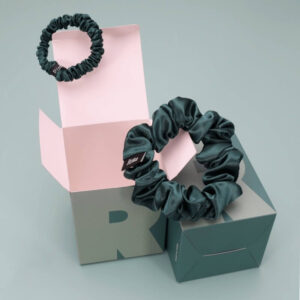
A scrunchie launch kit can look simple in a mood board, but the RFQ becomes unclear when color split, SKU count, material route, logo label, backing card, barcode and packing count are not planned together. For beauty buyers, MOQ planning is not only a factory rule. It is a way to make the quote, sample and production schedule usable.
This checklist is written for beauty brand sourcing, merchandising, product development and procurement teams planning custom scrunchies for beauty GWP, retail gift, haircare launch, spa kit or private label programs. It supports the Ecorivta custom scrunchie manufacturer page [1] without competing with it: the product page carries the inquiry, while this article explains how buyers should split SKUs and plan MOQ before sending the brief.
Quick Summary
- Plan SKU split before asking for a final quote. A total quantity means little if the factory does not know color split, material split, packing split and market version.
- MOQ 500 is a planning point, not a fixed answer for every project. Material, color, print, logo, card and packing can change the practical MOQ and cost.
- Small pilot projects may still be reviewed. High-potential 200-300 piece projects can be considered case by case, but special low-volume customization can cost more.
- Target price, launch date and use case should come before material choice. These details help Ecorivta choose silk, satin, velvet, recycled, printed or simple routes.
- Packing is part of SKU planning. Single pack, multipack, carded pack, barcode, carton mark and insert card can change how the order should be split.
Why SKU split matters before a scrunchie RFQ
A buyer may say “we need 1,000 scrunchies,” but that number is not enough for a factory quote. The order could be one color, four colors, two materials, a carded retail pack, a haircare GWP bundle or a multipack with different color ratios. Each version creates different cutting, sewing, elastic, label, card, barcode and packing decisions.
SKU split is the buyer’s way to turn a creative launch idea into a production plan. It tells the supplier how many pieces belong to each color, each material, each packing version and each market. Without that split, the first quote may look clean but fail during sample approval or packing file review.
This article is narrower than Ecorivta’s broader scrunchie manufacturer RFQ checklist [2]. That guide explains the general RFQ. This checklist focuses on SKU split and MOQ planning after the buyer already knows that scrunchies are part of the beauty program.

The goal is not to force every buyer into a large order. The goal is to make the first route realistic. A high-potential buyer with a 200-300 piece trial may still be reviewed, especially if the style is simple and the relationship has future potential. But if the buyer wants many colors, special fabric, custom print, small woven label, unique card and multiple cartons at a very low quantity, the cost may move up quickly.
SKU split template for beauty launch kits
Use this template before sending a scrunchie RFQ. The buyer does not need every detail finalized, but each row should have enough information for the supplier to recommend a practical route.
If the main bottleneck is logo artwork, backing card, barcode or carton mark rather than color quantity, use Ecorivta’s hair accessory logo and packing file guide [4] before final SKU split. File readiness and SKU planning should move together, not in separate conversations.
| Field | Example buyer input | Why it matters |
|---|---|---|
| Program use | Haircare GWP, beauty retail gift, spa kit, DTC launch or influencer PR kit. | Use case controls material, packing, logo visibility and evidence need. |
| Total quantity | 500, 1,000, 2,000 or 5,000 pieces. | Total quantity is the first MOQ planning anchor. |
| Color split | 500 black, 300 champagne, 200 blush. | Each color may require separate fabric purchase, cutting and packing control. |
| Material split | Satin for retail pack, velvet for holiday color, recycled route for eco campaign. | Material split can change MOQ, price and documentation scope. |
| Logo route | Woven label, small printed logo, backing card logo or no product logo. | Logo method affects sample time and unit cost. |
| Packing route | Single polybag, paper card, two-piece set, sleeve, insert card or box. | Packing route can create new SKU count and barcode needs. |
| Target price | Budget band by unit or by gift set. | Target price helps Ecorivta simplify or upgrade the route before sampling. |
| Launch timing | Sample approval date, bulk deadline and shipment window. | Timing decides whether color split and packing should be simplified. |
If the buyer has not decided the exact color ratio, send a draft split. For example: 60 percent hero color, 25 percent secondary color and 15 percent seasonal color. Ecorivta can then review whether the split is practical for material purchase and packing. If the buyer waits until after sampling to decide color ratio, the final order may need price and delivery review again.
Color references should be clear. Buyers can use a Pantone reference or brand color file to communicate target color, and Pantone color systems for graphic design [10] can be used as an external reference for color communication. Real fabric samples still need review because satin, silk-like material, velvet and recycled fabrics can show color differently.
How MOQ changes by color, material and packing
MOQ is not only the number of pieces in the order. For scrunchies, MOQ can be affected by fabric purchase, color dyeing, print setup, elastic, label, card, barcode, packing and how many versions need to be controlled. That is why a buyer may receive a different answer for one 500-piece color than for five colors of 100 pieces each.
Ecorivta uses MOQ 500 as a practical planning point for suitable B2B beauty GWP and private label projects. The MOQ 500 beauty GWP accessories guide [5] explains why the number can change by route. For a scrunchie program, the buyer should treat 500 as a discussion anchor, then check what changes when the order is split by color, material, logo and packing.
| Planning situation | Likely effect | Better RFQ wording |
|---|---|---|
| One material, one color, one packing | Simple quote and cleaner sample route. | “Please quote 500 pieces in one color with one label and one card.” |
| Four colors, same material | Color split may affect fabric availability and cutting plan. | “Please quote 1,000 pieces split across four colors. We can adjust ratio if needed.” |
| Two materials | Each material may create a separate MOQ and cost route. | “Please compare satin and velvet by target price before sample.” |
| Printed or seasonal pattern | Print setup and color approval can add time. | “Please review print route, color approval and sample timing first.” |
| Carded retail pack | Card, barcode, market version and carton mark need early handoff. | “Please include card, barcode and carton mark in the sample approval file.” |

Small orders are not impossible, but small custom orders need clearer choices. A 200-300 piece pilot with one color, one existing material and simple packing can be reviewed differently from a 300-piece order split into six colors with custom print and retail card. The buyer should share target price and launch date early so Ecorivta can recommend what to simplify.
Material and color decisions before splitting SKUs
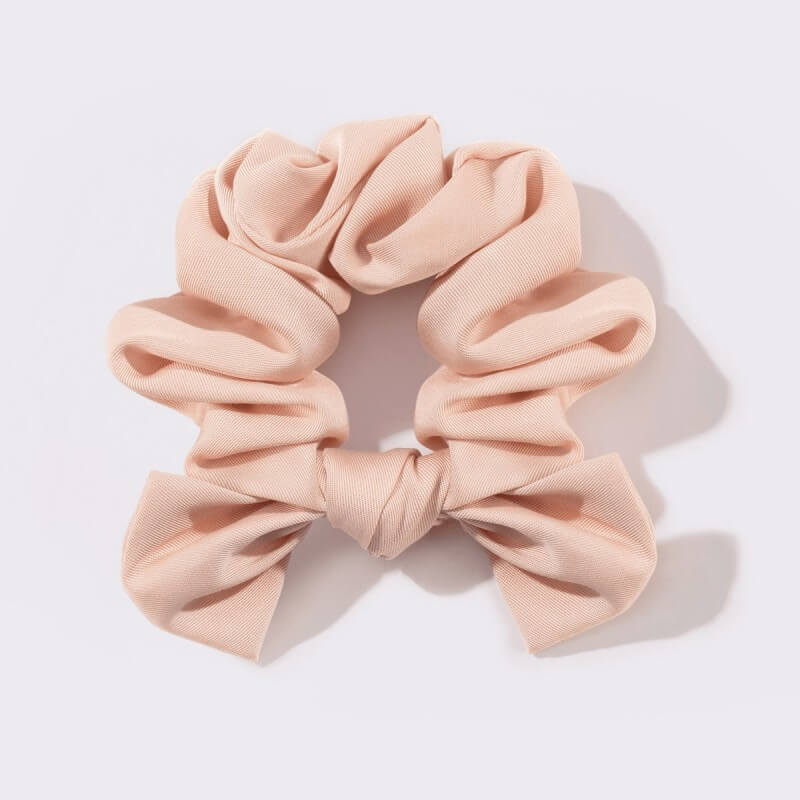
Material choice should come before final SKU split. A silk-like scrunchie, satin scrunchie, velvet scrunchie, recycled route and printed route do not behave the same in MOQ, handfeel, color and cost. If the buyer wants a material comparison first, the live hair scrunchie material comparison [3] should be used before this SKU planning checklist.
For beauty brands, the material route also affects positioning. Satin may support a polished retail gift look. Velvet may fit holiday or premium seasonal campaigns. Silk-like routes may fit haircare and sleep beauty positioning. Recycled or plant-based routes can support a sustainability-led story, but claim wording and document scope must be reviewed by order.
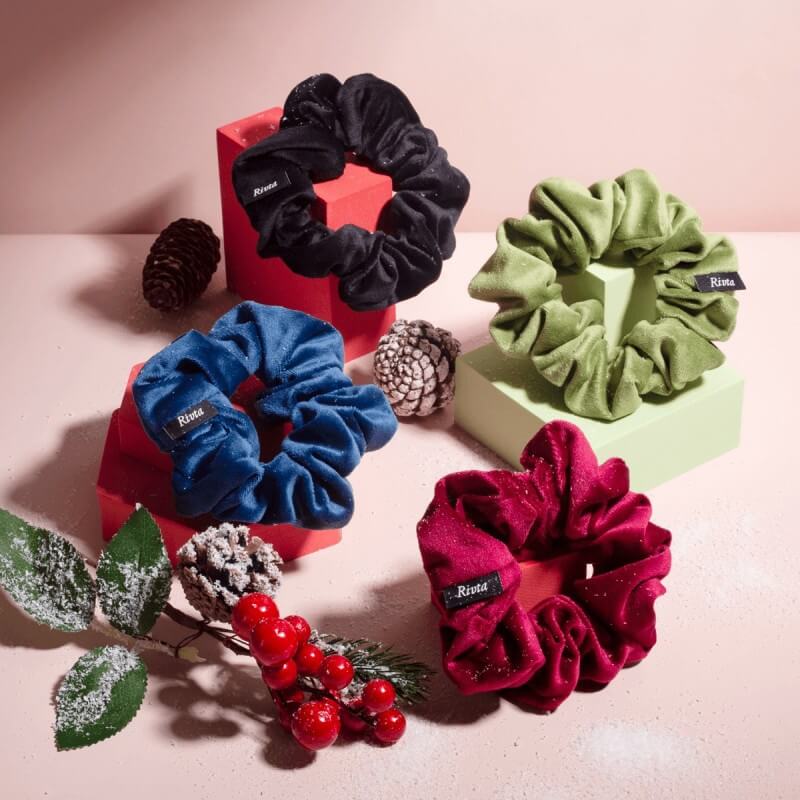
When recycled material is part of the request, buyers should not rely on the word “recycled” by itself. The Global Recycled Standard [6] can be used as a reference when recycled material documentation affects the route. If textile safety is part of the buyer’s file, OEKO-TEX STANDARD 100 [7] can be used as an external reference for textile testing context.
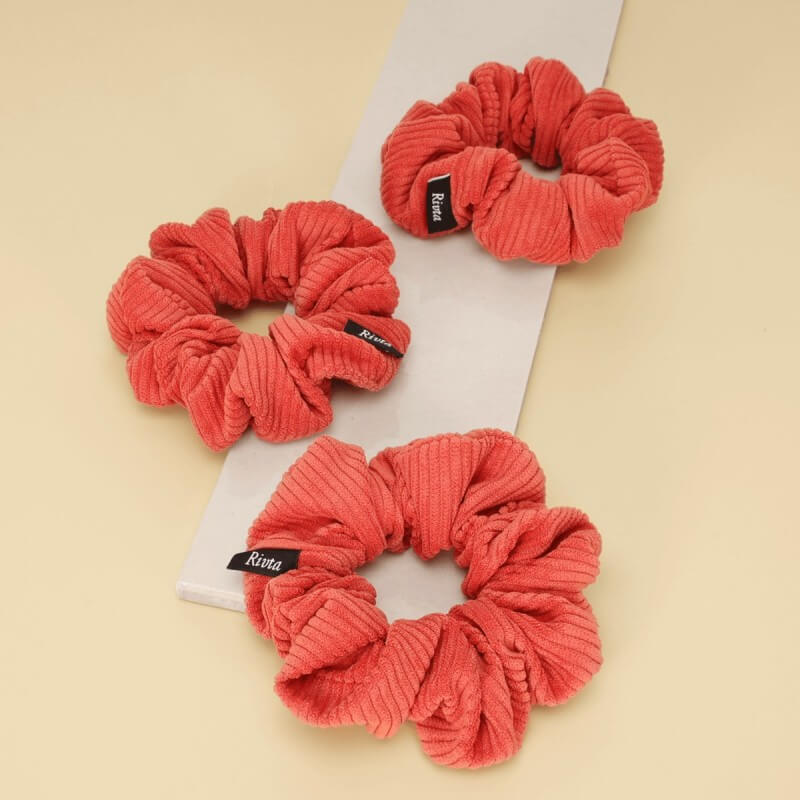
Color split should also match material reality. A buyer may want six brand colors, but some materials may not be available in all colors at the desired quantity or price. If color matching is strict, the RFQ should include color reference, approval owner and sample timing. If target price is more important than exact color, Ecorivta can recommend closer available colors or a simpler split.
Packing, barcode and carton mark planning
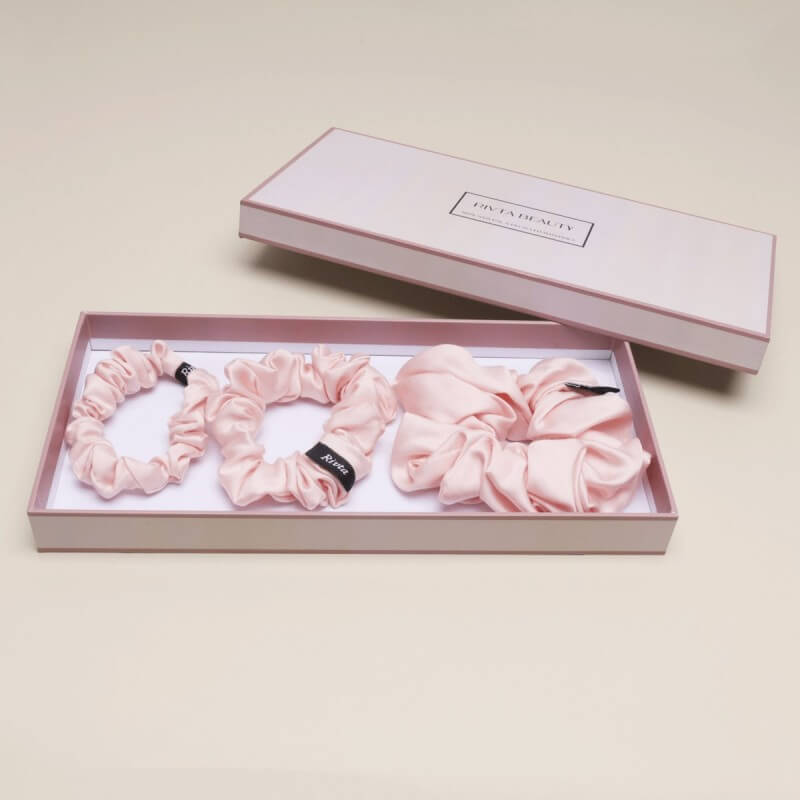
Packing can create hidden SKUs. A scrunchie may be packed as one piece in a polybag, one piece on a backing card, two pieces as a color set, three pieces as a haircare kit, or one scrunchie with a pouch, card and sample product. Each packout changes quantity planning.
If the buyer needs barcode, backing card, hangtag, sleeve, insert card or carton mark, those files should be included before sample approval. Barcode ownership and placement should not be left to the final week. References such as GS1 UK barcode guidance [8] can help buyers understand why retail identification needs clear owner and file control.
Environmental wording on packaging also needs careful review. If the card says recycled, sustainable, eco, plant-based or biodegradable, the wording should match material route and document scope. The FTC Green Guides [9] are useful for claim-safe thinking in the US market. Ecorivta should review claim wording by order rather than treating it as simple design text.
The easiest way to avoid packing confusion is to make the SKU split table include packing version. For example, “SKU A: black satin, 500 pieces, one card, barcode A, carton mark A.” That is more useful than “500 black scrunchies.” It tells the factory how to cut, sew, label, card, count and pack the order.
Sample approval checks before bulk production
Scrunchie sample approval should include more than product appearance. The approved file should record fabric, color, elasticity, size, seam, label, logo, card, barcode, packing count and carton mark. If the buyer approves only a product photo, production and packing details may remain open.
Use this sequence before bulk production:
- Confirm total quantity and SKU split. Record quantity by color, material, packing and market version.
- Confirm material and color. Approve material route, color reference and any acceptable substitute range.
- Confirm logo and card files. Send AI or PDF logo files, backing card, barcode, insert card and carton mark details.
- Approve the physical sample. Check size, elasticity, seam, handfeel, label position, color and packing view.
- Freeze changes before bulk. Any late change in color, SKU split, packing or barcode should trigger route review.
The buyer should also define what can be adjusted after sample approval. If the buyer changes color ratio, card copy, barcode or packing count after the sample is signed, price and delivery may need review. A clear approval boundary protects the launch schedule and keeps the supplier from guessing.
Best fit and less suitable requests
Best fit
Best fit is a beauty, haircare, skincare, spa, travel retail, DTC or retail buyer planning a custom scrunchie program with a real launch window, brand use, target price, SKU split, logo or packing need and sample-first approval. It is especially useful when the buyer wants multiple colors, multiple packouts or a pilot order that may become a repeat program.
Less suitable
Less suitable requests include single-piece consumer buying, no-brand resale sourcing, price-only stock buying, no target price, no launch date, no SKU split, unclear material preference or requests that ask for many colors and custom packaging at a very small quantity without flexibility. Ecorivta can still help clarify the route, but the first answer may need to be a planning review instead of a fixed quote.
Composite case: color split corrected before sample
Composite case: a 2026 Q2 North America haircare launch team requested 1,200 scrunchies for a beauty GWP channel. The first brief asked for six colors, one woven label, a backing card and a launch date six weeks away. The buyer gave a total quantity but did not split the order by color, card version or carton mark.
Ecorivta reviewed the request as a SKU planning issue. Six colors at 200 pieces each created more material and packing control than the buyer expected. The target price was tight, and the card needed a barcode and short claim line. Instead of starting with six sample colors, the route changed to three colors: 600 hero color, 400 secondary color and 200 seasonal color. The buyer kept one card structure and one carton mark format, with color name and SKU code changed by version.
The correction did not remove the brand idea. It made the order quotable. The buyer could still show a coordinated color story, but the factory had a clearer cutting, sewing, label and packing plan before sample approval. The key lesson was that SKU split should be decided before the first sample file becomes the production standard.
Related Ecorivta pages and guides
- Custom Scrunchie Manufacturer for Beauty GWP – use this as the main product and inquiry page.
- Scrunchie Manufacturer RFQ Checklist – use this when the buyer needs the broader quote-ready brief before SKU planning.
- Hair Scrunchie Material Comparison – use this when satin, silk-like, velvet, recycled or plant-based material is the main decision.
- Hair Accessory Supplier Logo & Packing File Guide – use this when logo file, backing card, barcode or carton mark is the main issue.
- MOQ 500 Beauty GWP Accessories – use this when buyers need to understand MOQ changes before route selection.
FAQ
What is a scrunchie SKU split?
A scrunchie SKU split is the planned quantity by color, material, packing version, barcode, market version or set type. It turns a total quantity into a production and packing plan.
Why is total quantity not enough for a scrunchie quote?
Total quantity does not show how many colors, materials, labels, cards or packing versions are needed. A 1,000-piece order in one color is very different from 1,000 pieces split across five colors and three packing versions.
What MOQ should beauty brands expect for custom scrunchies?
MOQ depends on material, color, SKU split, logo method, packing and launch timing. MOQ 500 is a useful planning point for suitable B2B projects, but high-potential 200-300 piece pilots can be reviewed case by case when the route is simple.
How should buyers split colors for a launch kit?
Start with a hero color, secondary color and limited seasonal color. Share a draft ratio such as 60 percent, 25 percent and 15 percent so Ecorivta can review whether the split is practical for fabric and packing.
Should packing be included in SKU planning?
Yes. Backing card, insert card, sleeve, barcode, hangtag, carton mark, multipack and market version can create separate SKU work. Packing should be planned before sample approval.
Can one scrunchie order use different materials?
Yes, but each material may create a separate MOQ, cost and sample route. Compare material route and target price before finalizing the SKU split.
What should buyers send before asking Ecorivta for a quote?
Send total quantity, color split, material preference, target price, launch date, use case, logo file, packing route, barcode or carton mark need and approval owner.
Send the SKU split brief
Use the contact route when you need Ecorivta to review scrunchie SKU split, MOQ planning, target price, color ratio, material route, logo file, packing, barcode or carton mark before sampling. A clear split helps sales recommend the right route before money is spent on the wrong sample.
Send a Scrunchie Launch Kit RFQ
Sources
- Custom Scrunchie Manufacturer for Beauty GWP. Use this as the main money page for custom scrunchie manufacturing, private label and beauty GWP inquiries. Back to text
- Scrunchie Manufacturer RFQ Checklist. Use this when the buyer needs the broader quote-ready brief before discussing SKU split. Back to text
- Hair Scrunchie Material Comparison. Use this when material choice is the main decision before SKU planning. Back to text
- Hair Accessory Supplier Logo & Packing File Guide. Use this when logo file, backing card, barcode or carton mark is the main handoff problem. Back to text
- MOQ 500 Beauty GWP Accessories. Use this when buyers need to understand why MOQ changes by material, color, SKU split, packing and customization level. Back to text
- Textile Exchange Global Recycled Standard. Use this when recycled material documentation affects a scrunchie SKU route. Back to text
- OEKO-TEX STANDARD 100. Use this as a textile safety reference when fabric, elastic, label or trim testing is part of the request. Back to text
- GS1 UK Barcode Guidance. Use this when carded scrunchies, multipacks, retail packs or cartons need barcode handoff. Back to text
- FTC Green Guides. Use this when environmental wording needs review before buyer packaging or claim language is approved. Back to text
- Pantone Color Systems for Graphic Design. Use this when launch colors, card colors and packaging colors need a shared color language. Back to text