Quick Buyer Summary for Shopping Bag RFQs
A custom branded shopping bag RFQ should start with use case, material, handle strength and logo route. If the buyer wants a bright green bag with a white logo, the supplier needs the target color, bag size, material weight, handle construction, quantity tiers and launch date before giving a useful quote.
Brand color language can be controlled with Pantone Color Systems 1, textile material discussions can reference Textile Exchange Standards 2, and environmental wording should stay careful under guidance such as FTC Green Guides 3.
Define the Bag Use Before Material
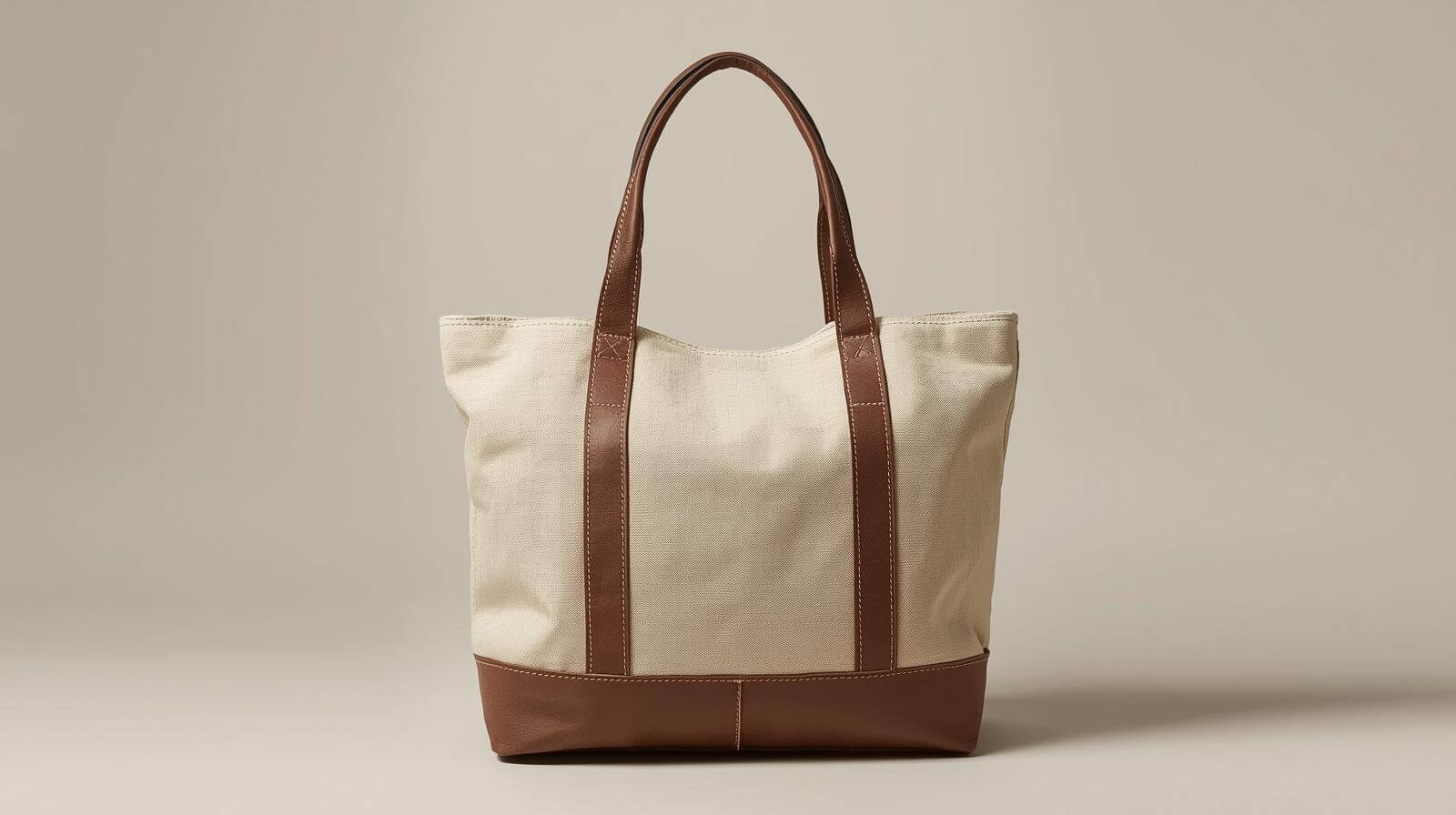
A buyer may ask for a custom shopping bag, tote bag or branded retail bag. The first question is how the bag will be used. A light event tote, a durable retail shopping bag and a Beauty GWP tote do not need the same material weight, handle strength or logo route. If the buyer only sends a reference photo, the supplier should still ask whether the bag needs to carry products, sit in a gift set or work as reusable packaging.
For a bright green bag with a white logo, the buyer should confirm the target color and whether the bag must match an existing brand palette. A color that looks bright on screen may print differently on canvas, rPET or nonwoven fabric. A physical swatch or lab dip helps protect the buyer from a color mismatch before bulk.
This page is written for Ecorivta’s tote and GWP route. Tote bag topics are acceptable for this site because they support beauty retail programs, launch kits and reusable branded packaging. The RFQ should still stay focused on buyer decisions rather than a generic factory pitch.
| RFQ point | What to confirm | Why it matters |
|---|---|---|
| Use case | Retail shopping bag, Beauty GWP tote, event bag or reusable packaging. | The use case decides structure, handle strength and material route. |
| Material | Cotton canvas, recycled cotton, rPET, nonwoven or other durable fabric. | Material changes cost, feel, strength, color and claim wording. |
| Handle | Length, width, reinforcement, cross stitch, self-fabric or webbing. | Strong handles are a real quality issue, not a decorative detail. |
| Logo route | One-color print, screen print, embroidery, label or transfer. | Logo method depends on material texture and target color contrast. |
Durable Material and Strong Handles Need Separate Approval
When the buyer asks for a durable material with strong handles, do not answer only with a material name. Canvas, recycled cotton, rPET and nonwoven routes can all be possible, but handle construction is its own decision. Handle width, stitch pattern, reinforcement, bag opening and carrying weight should be discussed before sampling.
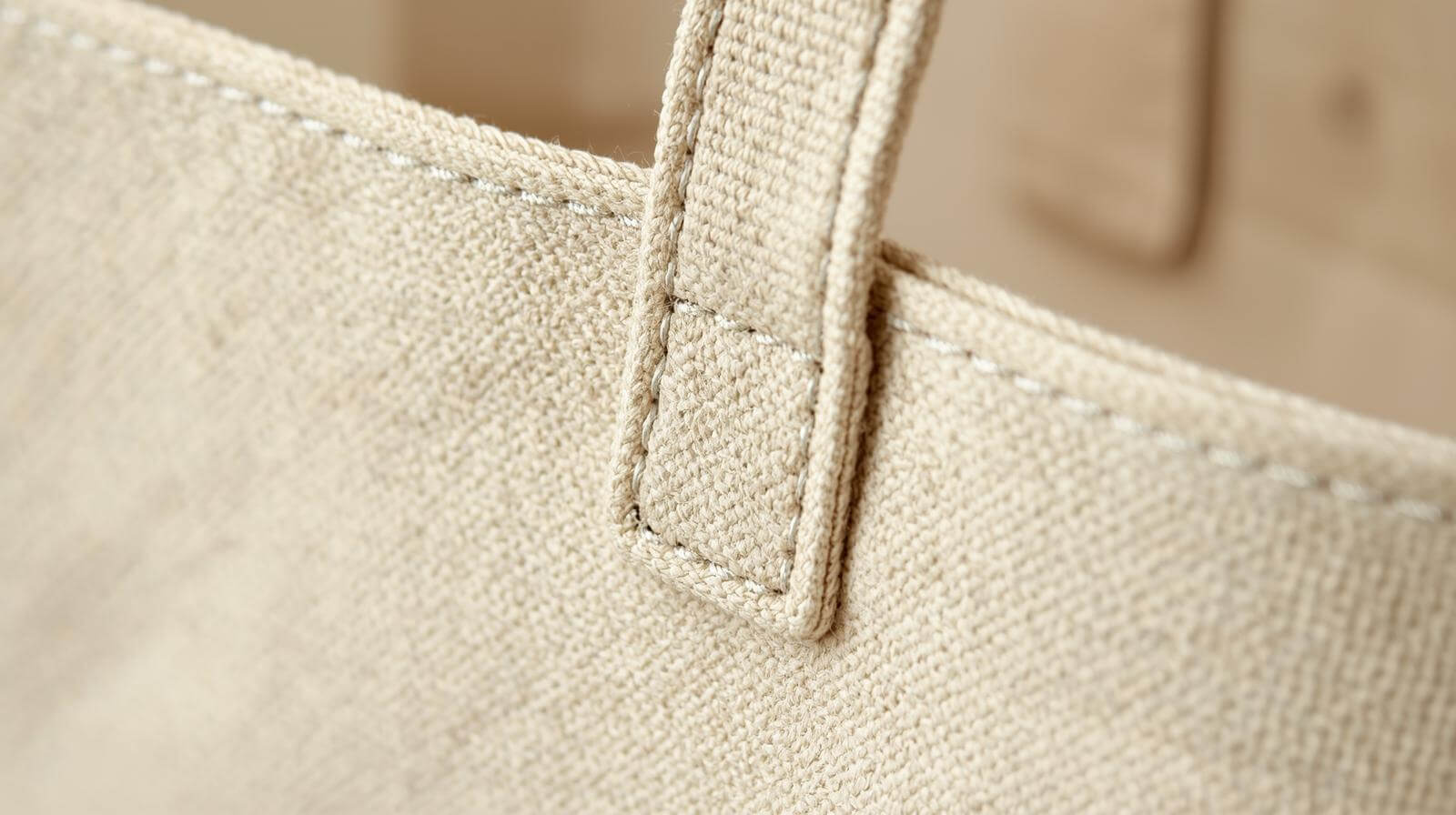
A strong-looking handle can still fail if the stitch is weak or the bag body is too light for the intended load. For a retail shopping bag, the sample should show close-up handle stitching and a simple weight-use expectation. For a Beauty GWP tote, the sample should also show how the tote looks with the matching pouch or campaign products.
The buyer does not need to prepare a complicated engineering file at the first step. A useful first brief can state the intended load, product size, preferred material feel and whether the bag should fold flat or hold shape. From there, the supplier can recommend fabric weight, handle width and reinforcement. If the bag will carry boxed skincare, jars or multiple items, the handle approval should be treated as a quality checkpoint.
For sample review, ask for one full front photo, one side photo, one handle close-up and one inside seam photo. These photos are more useful than a single styled image because they show whether the construction matches the buyer’s intended use. If the bag is part of a GWP kit, show it with the pouch or products inside so the buyer can judge proportion and carrying comfort.
Logo Route Depends on Fabric Texture and Color Contrast
A white logo on a bright green bag sounds simple, but the correct method depends on material texture and order quantity. Screen print, heat transfer, embroidery, woven label and patch routes produce different results. If the buyer wants a clean white logo, the supplier should confirm whether the logo is solid, small-detail, gradient, oversized or placed on both sides.
For sampling, the buyer should approve the logo on the actual fabric color. A digital mockup can help, but it cannot prove ink coverage or edge sharpness on a textured bag. If the buyer needs front and back logo print, the RFQ should list both placements so the price includes the correct labor.
If the buyer needs the bag to match a larger beauty launch kit, the logo and fabric color should be checked against the cosmetic pouch, gift box, hang tag or other accessories. This prevents the tote from looking disconnected from the rest of the campaign.
Bright colors need extra care because the fabric base, dye route and print ink can shift the final look. A white logo may look clean on a digital rendering but lose sharpness on heavy canvas or textured recycled fabric. If the logo is important for retail presentation, the sample should include the actual print method, actual logo size and actual bag color.
For a buyer comparing suppliers, the best quote is not only the lowest unit price. It should explain which logo route is included, whether Pantone matching is included, whether front and back printing is included, and whether any setup charge applies. These details prevent late price changes after the buyer has already selected a supplier.
MOQ, Price Tiers and Lead Time Should Follow the Final Route
A useful shopping bag quote should include MOQ, price tiers, sample cost, sample lead time, bulk lead time and photos of similar bags. If the buyer asks for a special color, special handle or front-and-back logo print, these details should be included before price tiers are compared. Otherwise the lowest price may not match the actual bag.
The buyer can keep the first brief short: size, material preference, target color, logo color, handle strength, quantity tiers, destination and launch date. Ecorivta can then recommend a realistic route and show similar bag photos where available.
Quantity tiers should be tied to the confirmed route. If the 500-piece quote uses stock fabric but the 3000-piece quote assumes custom dyed fabric, the buyer cannot compare them directly. The quote should state whether the color is stock, close-stock or custom dyed. It should also state whether the sample uses the final material or a closest available material for speed.
Lead time should be written with the sample route. A buyer may want to move quickly, but custom color, custom logo, reinforced handles and full packing all add approval steps. If the buyer has a fixed event or launch date, the RFQ should include that date from the beginning. That lets Ecorivta recommend a route that balances cost, sample approval and delivery timing.
Send a Focused Shopping Bag RFQ
Send bag size, target color, logo color, material preference, handle requirement, quantity tiers, destination market and launch date. Ecorivta can quote a custom branded shopping bag or Beauty GWP tote route with sample and production timing.
Custom Branded Shopping Bag Questions
What should be confirmed before quoting a shopping bag?
Confirm use case, size, material, handle strength, logo route, target color, quantity tiers and launch date.
Can a bright green bag with white logo be sampled?
Yes, but the buyer should approve the actual fabric color and print result before bulk because screen color and fabric color can differ.
What makes handles strong enough?
Handle width, stitch pattern, reinforcement and bag body material all matter. A sample should show close-up handle construction.
Can Ecorivta support tote bags for Beauty GWP?
Yes. Tote bags can support retail programs, beauty launch kits and reusable branded packaging when the material and packing route are clear.
Related Ecorivta pages and guides
- Beauty GWP Tote Bags – Main page for tote bag material, handle, logo and retail program routes.
- Beauty GWP Solutions – Use this hub when the tote belongs in a wider launch kit.
- Contact Ecorivta – Send a custom branded shopping bag RFQ.
Evidence Used in This Brief
-
Pantone Color Systems – Used for brand color communication across product, logo, trim, print and packaging. ↩︎
-
Textile Exchange Standards – Used as a reference point when buyers ask about recycled or responsible textile material options. ↩︎
-
FTC Green Guides – Used as a reference for careful wording around reusable, sustainable or environmental claims. ↩︎