Quick Buyer Summary
A hair tool launch kit packout should be planned as one approved system: tool, plug, cord, attachments, storage bag, instructions, branding and retail packaging. Approving each component separately does not prove the complete kit will fit, present or ship as intended.
- Create a component map before choosing the final bag dimensions or insert structure.
- Freeze the presentation state: open, folded, wrapped, carded or retail boxed.
- Approve the tool and bag individually before reviewing the full packed kit.
- Assign one owner to barcode, warning, instruction and market-version files.
- Reopen packout approval when any component, artwork or packaging dimension changes.
Send the launch-kit component list
Start with a component map, not an empty bag

The first packout file should list everything the buyer expects the customer or recipient to receive. Include the tool, plug, full cord, detachable heads, guards, clips, cleaning parts, instruction booklet, warranty card, care note, barcode label, retail sleeve and any promotional insert.
Record finished dimensions and weight for each item, then assign its position. Do not size the bag around the tool alone if the cord, plug or attachment box will sit beside it. Small paper and plastic parts also matter because they can cover branding, crease during closure or move into a tool-contact zone.
| Component | Packout decision | Approval evidence |
|---|---|---|
| Tool | Orientation and powered-off storage state | Loaded photo and finished dimensions |
| Cord and plug | Fold, tie, pocket and strain-relief position | Closed-kit photo without forced bending |
| Attachments | Separate pocket, loop, divider or small box | Retention check after handling |
| Instructions | Folded size, language version and visible face | Approved artwork and placement photo |
| Retail items | Barcode, warning, sleeve, seal or hangtag | Final market-version pack |
Buyers can WhatsApp the first component list before the complete RFQ file is ready.
Choose the storage format around the launch-kit role
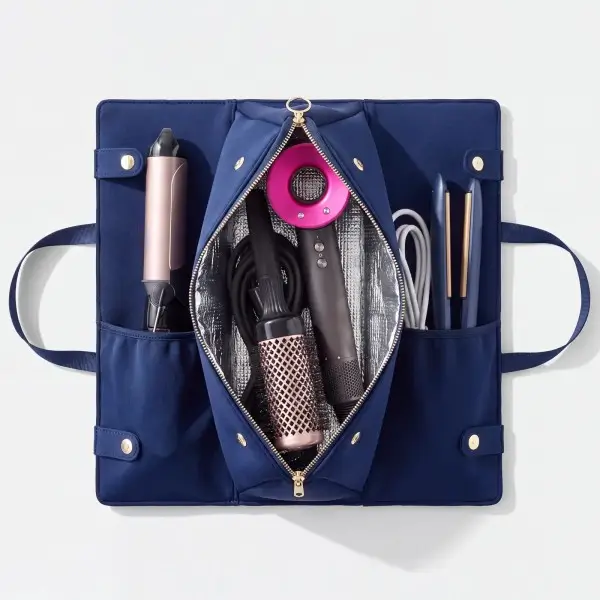
A sleeve may suit a compact travel accessory. A pouch can combine tool storage with a simple GWP or launch-kit presentation. A mat-pouch hybrid adds an unfolding step and needs the folding sequence approved. A fitted organizer can separate more components but requires a more detailed layout and change-control record.
The correct format depends on the buyer task, not the largest possible feature list. State whether the storage piece is a gift-with-purchase, an accessory bundled with the device, a sellable travel item or part of a retail gift set. That decision affects label detail, packaging depth, barcode ownership and the amount of insert control required.
Freeze the presentation state before approving retail artwork
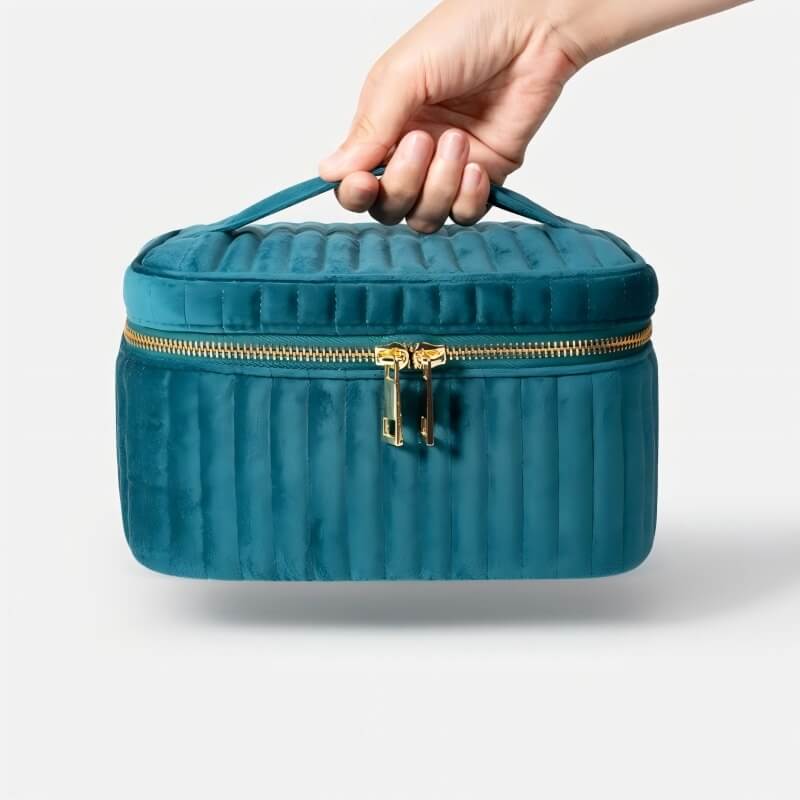
Decide what the recipient sees first when the pack is opened. The tool can face the logo panel, sit under an instruction card or remain inside a closed pouch. Cords and attachments may be visible for a technical presentation or concealed for a cleaner gift route.
Freeze the opening sequence, fold direction, logo orientation and component order. Photograph the approved front, back, open, closed and fully packed states. These images are more useful to production and inspection teams than a single polished mockup that hides how the components are retained.
Three approval gates
- Device gate: the tool, attachments, instructions and required market files are correct.
- Storage gate: the bag or organizer construction, fit, branding and closure are approved.
- Packout gate: all components fit together in the final presentation and shipping state.
Passing the first two gates separately does not guarantee the third. A tool and pouch can each be acceptable while the full kit still fails because the plug raises the closure, the booklet covers a logo or the attachment box moves inside the pack.
Treat barcode, warnings and language files as packout inputs
Assign one artwork owner for the barcode, warning text, care note, instruction version, warranty card and outer-pack files. Market versions should be named and approved before bulk printing. A late language change can alter booklet thickness, while a late barcode move can change the visible face or require a new label area.
GS1 guidance 1 notes that barcode type, size, placement and quality depend on where the barcode will be scanned. For the packout team, that means the buyer should provide the final barcode owner, symbol, size and placement rather than asking the bag supplier to invent them.
Warnings and cooling instructions must come from the approved appliance and target-market file. The storage bag should not rewrite or broaden the device manufacturer’s safety language. If the tool must cool before storage, keep that instruction visible in the approved user-information route.
Review the kit format and presentation
Approve the final packed sample, not separate components only
The final review should use production-intent components. Load the exact tool, plug, cord, attachments, paper items and retail pack. Open and close the kit in the approved sequence, then inspect the filled shape, closure, component retention, logo visibility and paper condition.
Final packed-sample record
- Component list with version, finished dimensions and quantity.
- Front, back, open, closed and full-pack photographs.
- Approved folding, loading and component-removal sequence.
- Logo, label, barcode, warning and instruction artwork versions.
- Unit-pack dimensions and weight after final packout.
- Named buyer approver, date and release version.
Reopen approval if the tool model, cord, plug, attachment count, booklet, retail box, bag construction, insert, artwork or folding route changes. Do not reuse the old packout dimensions automatically after any of those changes.
Send a hair tool launch kit brief
Send the tool model and dimensions, cord and plug details, attachments, instructions, warning and market files, desired storage format, branding, retail presentation, quantity, delivery market and target launch date. State which files are final and which still need buyer approval.
Send the retail-pack file list
FAQ
What should be included in a hair tool launch kit component map?
Include the tool, plug, full cord, attachments, guards, cleaning parts, instructions, warranty card, care note, barcode label, retail sleeve or box and every promotional insert.
Should the pouch be approved before the full packout?
Approve the pouch construction and fit first, but do not release the complete program until the exact tool, cord, attachments, paperwork and retail pack are reviewed together.
Who should provide the barcode and warning files?
The buyer or designated brand and compliance owner should provide the approved symbol, size, placement, warning and market-language versions. The supplier should not invent regulated or brand-owned information.
Does a larger organizer always make a better launch kit?
No. Extra volume can weaken presentation and increase packing or freight space. Choose the simplest format that securely holds the approved components and supports the intended gift, travel or retail role.
What changes require a new packout review?
Changes to the tool, cord, plug, attachments, booklet, outer pack, bag construction, insert, artwork or folding route should trigger a new review because they can alter fit and presentation.
Related Ecorivta pages and guides
- Heat-Resistant Hair Tool Bags for product formats, project fit and RFQ requirements.
- Beauty GWP Solutions for wider launch-kit and gift-program planning.
- Quality Control for sample and bulk-approval context.
Evidence Used in This Brief
-
GS1: 10 steps to barcode your product – Cited only for the principle that barcode type, size, placement and quality depend on the scanning application. It does not provide the buyer’s final artwork or market approval. ↩︎