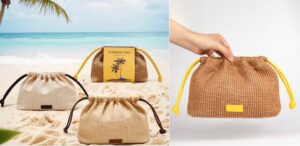
A cosmetic bag factory vs supplier comparison should not start with price alone. For beauty GWP buyers, the better question is whether the partner can control sample accuracy, material route, logo files, packing, barcode, carton mark, bulk inspection and shipment evidence before the launch date.
This guide is written for beauty brand sourcing, merchandising, procurement and product development teams that already know they need a custom cosmetic bag, but still need to verify whether a factory route or supplier route is safer for the project. It supports the main Ecorivta cosmetic bag manufacturer page [1] without competing with it: the product page carries the category inquiry, while this article explains how buyers should verify execution ability.
Quick Summary
- Factory vs supplier is not a label decision. The buyer should verify who controls sampling, material sourcing, production feedback, QC evidence and packing handoff.
- Beauty GWP programs need more than a cheap quote. Target price matters, but launch date, logo clarity, material route, packing scope and shipment checks often decide whether the order works.
- A factory route is stronger when the project has custom detail. Use it for material route, new structure, logo placement, packaging, barcode, carton mark and pre-shipment evidence.
- A supplier route can still work for standard programs. It can fit when the style is fixed, customization is light and the buyer mainly needs sourcing coordination.
- Ecorivta’s position is beauty GWP and sewn accessory execution. The useful question is not “factory or supplier?” but “who can control the buyer’s launch risk?”
| Send a Cosmetic Bag Factory Review Use this route when you need Ecorivta to verify sample control, packing risk and factory-route evidence before sampling. |
Why factory vs supplier matters for beauty GWP cosmetic bags
A beauty GWP cosmetic bag is often small in unit value but high in launch risk. If the logo is unclear, the material handfeel is wrong, the zipper feels cheap, the insert card is missing, the barcode is late or the carton mark is wrong, the whole campaign can be delayed. That is why buyer verification should go deeper than the company label on a website.
Some sellers call themselves a factory because they can arrange production. Some suppliers are strong because they manage several workshops and keep good documentation. Some factories are not suitable for a beauty brand if they cannot explain logo artwork, packing, sample approval or retail shipment details. The buyer should verify the actual execution route, not only the business type.
For Ecorivta, the working position is specific: beauty GWP bags and sewn beauty accessories. A cosmetic bag may be part of a beauty GWP solution [2], a skincare launch kit, a travel retail set, a haircare program or a retail gift box. That context changes the right route. A generic bag supplier may quote the pouch, while a beauty GWP factory route should also review the campaign use, target price, logo method, material story, packing and QC evidence.
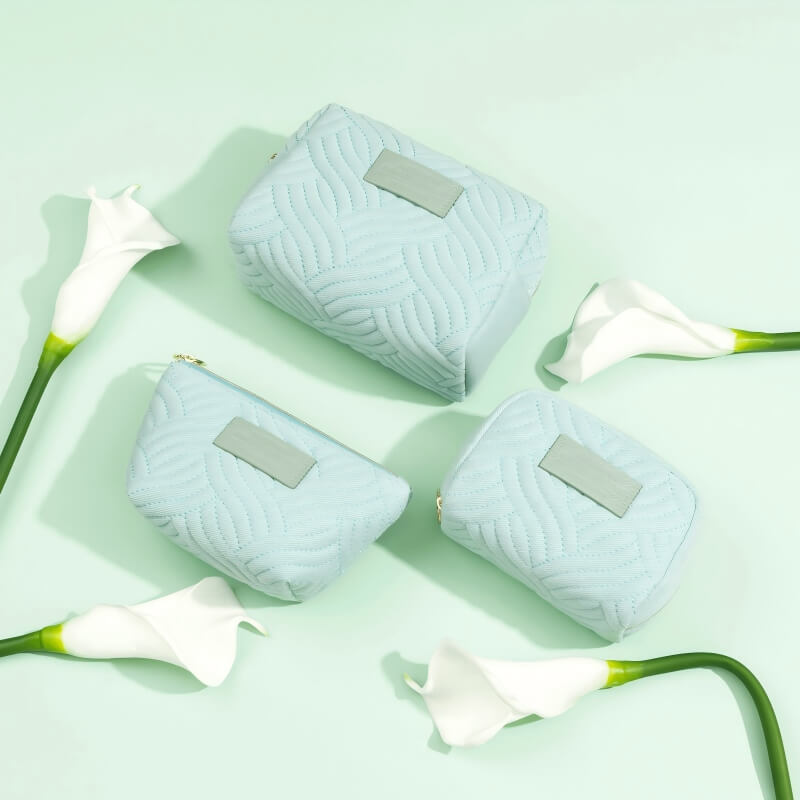
The best RFQ answer is not always the lowest unit price. A useful answer explains what the buyer can safely order now, what should be simplified, what needs a sample first and which details will change the quote. That is the difference between a price reply and a manufacturing route.
Quick verdict: when each route fits
| Buyer situation | Factory route is usually better when… | Supplier route can fit when… |
|---|---|---|
| Beauty GWP launch kit | The bag must match other items, colors, logo and packing. | The bag is a simple stock-like style with one logo route. |
| Retail cosmetic bag | Barcode, insert card, sleeve, carton mark and shelf appearance need control. | The buyer only needs a standard item with light packaging. |
| Sustainable material request | Material source, claim wording and order-specific documents must be checked. | The buyer only needs a broad material story and accepts limited documentation. |
| Small pilot order | The buyer needs practical semi-custom advice before spending on full OEM. | The item is a very standard existing style with minimal change. |
| Strict launch timing | The partner must explain sample, production, packing and shipment deadlines. | The buyer has flexible timing and simple specifications. |
The table is not a rule that factories always win or suppliers always lose. It is a route selection tool. If the cosmetic bag is close to a stock style and the buyer only needs a small logo, a supplier-managed route may be efficient. If the project involves material route, logo clarity, custom packing, retail labeling or a fixed GWP launch date, the buyer should verify factory execution more deeply.
The 12 things buyers should verify
Before choosing a cosmetic bag factory or supplier, ask for evidence in 12 areas. A serious partner should be able to answer these questions without turning the conversation into vague promises.
| 1. Product fit Can the partner explain whether the bag is suitable for retail, GWP, travel retail, spa, haircare or skincare launch use? |
2. Factory route Who makes the sample, who controls production feedback and who signs off the standard sample? |
3. Material route Can they compare recycled cotton, rPET, bamboo, jute, linen, satin, velvet or clear material routes by target price? |
| 4. Target price Can they recommend route changes when the buyer shares target price, quantity and launch date? |
5. Logo file review Can they explain why AI or PDF vector artwork is better than JPG for small print, woven labels or embroidery? |
6. Sample approval Can they define signed sample, pre-production sample and what changes need buyer confirmation? |
| 7. Packing scope Can they support insert card, hangtag, sleeve, barcode, carton mark, market version and retail packing? |
8. QC evidence Can they send material, color, stitching, logo, packing and finished-goods photos or video before shipment? |
9. Audit file Can they provide order-relevant factory or social audit information when the buyer asks? |
| 10. Certificate boundary Can they avoid saying every product has every certificate, and instead review documents by order? |
11. Communication path Can sales, sampling and production feedback move quickly enough for the launch window? |
12. Risk response Can they explain what happens if material, logo, color or packing cannot match the first request? |
This checklist is especially important when a buyer is comparing an Ecorivta route with other cosmetic bag suppliers. A good quote should tell the buyer not only the price, but also what has to be confirmed before bulk production.
Sample control and pre-production confirmation
The fastest way to separate a reliable manufacturing route from a weak sourcing route is to ask how samples become bulk production standards. A cosmetic bag sample is not only a photo. It should become a control reference for material, size, lining, zipper, logo, stitching, packing and finish.
For a factory route, the buyer should ask whether a signed standard sample can be given to the workshop, whether a pre-production sample can be confirmed before bulk, and whether the first production pieces will be checked against that standard. If the answer is only “we will inspect,” the buyer should ask what is inspected, when it is inspected and what evidence will be sent.
For a supplier-managed route, the buyer should ask who owns this control. Does the supplier have direct sample room communication? Can they send exact comments to the factory? Can they confirm material, color and logo changes before bulk? Can they show production evidence, or only forward a factory photo? These questions matter because a cosmetic bag can pass a simple visual check and still fail the buyer’s brand expectation.
Buyers should also verify whether the partner can discuss existing style, semi-custom and full OEM routes. Ecorivta can often review an existing style adjustment first when the order is a GWP item, the target price is tight or the launch time is fixed. Full OEM can be useful, but it must match quantity, budget and timeline.
| Compare Supplier and Factory Routes Use this route when you are unsure whether an existing style, semi-custom route or full OEM route fits the launch. |
Material, logo and packing verification
Many cosmetic bag quotes change after the first sample because the buyer’s material, logo and packing expectations were not clear. This is where a strong factory or factory-capable supplier should help the buyer before sampling starts.
For material, the buyer should share use case, target price, target market and preferred story. If the buyer wants a sustainability-led direction, Ecorivta can review recycled, natural or buyer-required documentation routes through pages such as sustainable cosmetic bags [3]. If the buyer needs transparent travel retail packing, the discussion should move toward clear cosmetic pouch materials [4] instead of a generic fabric pouch.
When recycled material is part of the project, buyers should not rely only on the word “recycled.” They should ask what document scope can be reviewed for that order. A recycled material route may reference the Global Recycled Standard [7]. For textile safety discussions, OEKO-TEX STANDARD 100 [8] can be used as an external reference when a buyer asks what type of material testing may matter.
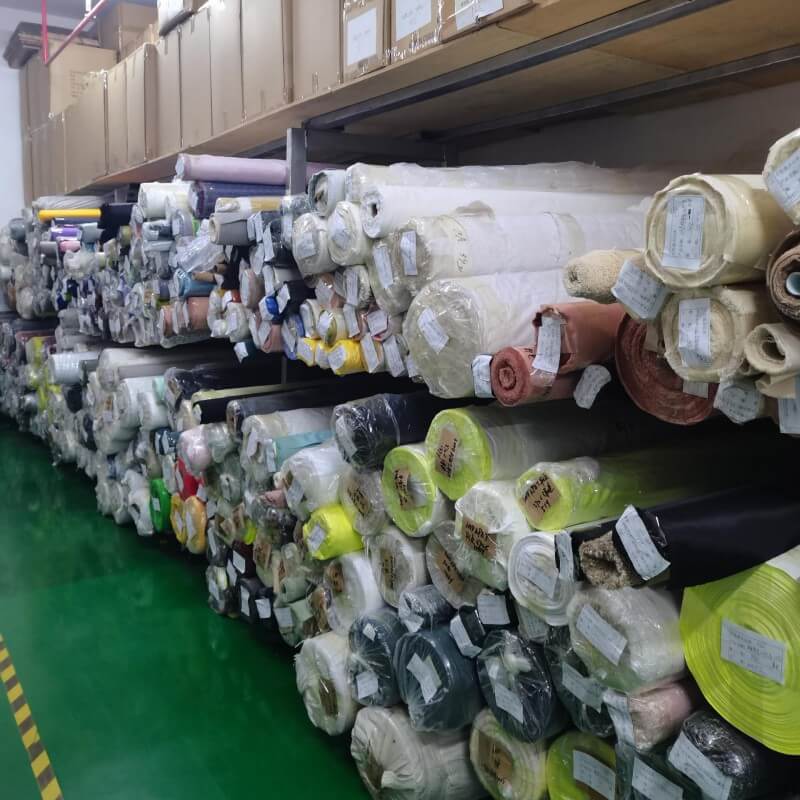
For logo, buyers should send AI or PDF vector artwork whenever possible. JPG or PNG files may look acceptable in a presentation but print unclearly on a small woven label, narrow zipper puller, embroidery area or debossed plate. A capable partner should tell the buyer when the logo needs simplification, redraw or a different placement route.
 |
 |
For packing, buyers should avoid the phrase “normal packing” unless they truly mean bulk carton only. A beauty GWP cosmetic bag may need tissue, insert card, hangtag, sleeve, retail box, barcode label, carton mark or set assembly. If the buyer needs retail barcodes or market version control, the supplier should be able to discuss barcode handoff using references such as GS1 UK barcode guidance [9].
Audit files and documentation boundaries
Factory vs supplier verification often becomes unclear when buyers ask for certificates. The right answer is not a broad promise. The right answer explains which factory audit, material document or test report can apply to the order, and which request needs review before confirmation.
For factory or supplier social responsibility review, buyers may ask whether the partner can provide audit information or explain the audit route. Sedex SMETA [6] is a useful external reference when buyers ask what kind of social audit language is relevant to supplier evaluation.
For material documents, the buyer should separate factory audit from material certificate. A factory audit does not prove that one cosmetic bag material is recycled. A material certificate does not prove that the factory has passed a social audit. This distinction is important for beauty buyers because sustainability language can affect packaging copy, marketing claims and retailer approval.
Environmental claim wording also needs caution. If a buyer wants to use words such as sustainable, recycled, eco, vegan-positioned or bio-based, the claim should be reviewed by market and order context. The FTC Green Guides [10] are a useful reference for claim-safe thinking in the US market. Ecorivta should review buyer-required documentation by order rather than promising every product has every document.
The live cosmetic bag factory audit evidence checklist [5] can support this part of the buying journey. It is a better internal link for this article than a not-yet-ready trust page because it already explains audit evidence before RFQ.
Questions to ask before choosing a route
Use these questions in the first supplier comparison call. They help the buyer understand whether the partner can manage a beauty GWP cosmetic bag program or only quote a pouch.
| Question | Strong answer should include | Risk signal |
|---|---|---|
| Who controls the sample standard? | Signed sample, pre-production sample and workshop reference. | Only says “sample approved” without explaining bulk control. |
| How do you recommend material by target price? | Material route, handfeel, document scope and cost tradeoff. | Quotes every material without discussing use case or budget. |
| How do you check logo artwork? | AI/PDF file review, size, placement and method recommendation. | Accepts any JPG without warning about clarity. |
| What packing details change the quote? | Insert card, hangtag, sleeve, barcode, carton mark and set assembly. | Only says “standard packing” without details. |
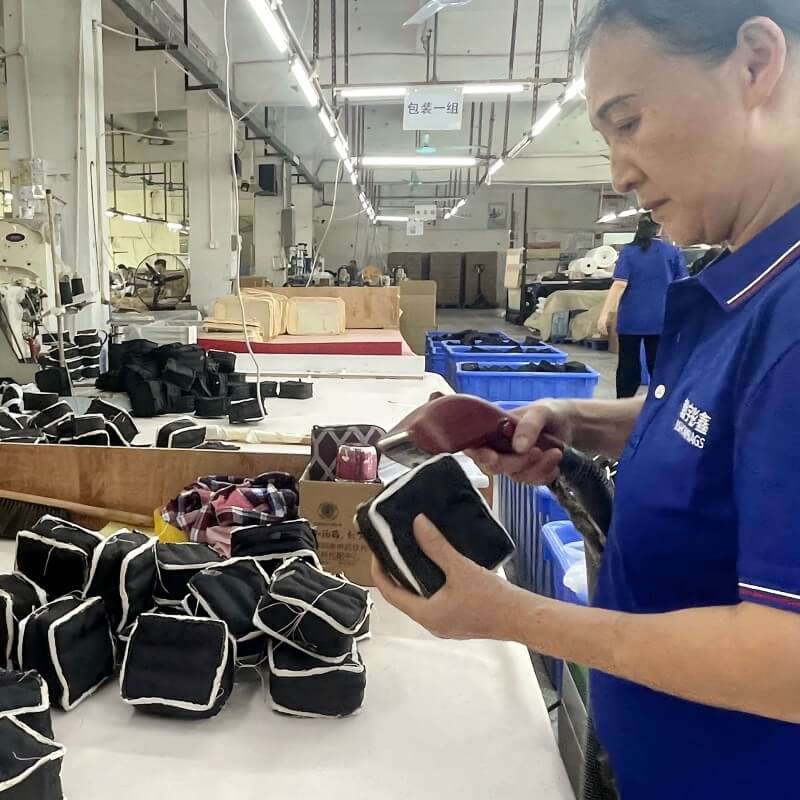
| What photos will we receive before shipment? | Material, color, stitching, logo, packing, barcode, carton and finished goods evidence. | Only says “QC passed” with no evidence list. |
| What documents can be reviewed? | Order-specific audit, material and testing route boundaries. | Claims all products have all certificates. |
These questions are not meant to make sourcing slower. They make the first quote more realistic. When a buyer can see who owns each risk, the factory vs supplier decision becomes much clearer.
Composite case: when a supplier quote became a factory route review
Composite case: a 2026 Q2 West Coast skincare brand requested 2,500 cosmetic bags for a beauty GWP launch kit. The first quote request focused on a low unit price and a reference photo. The buyer later added that the bag needed a brand color, small front logo, insert card, barcode label and delivery before a retail launch date.
A simple supplier quote looked cheaper at first, but it did not include the insert card, barcode handling, logo redraw, packing photo review or color confirmation. Ecorivta reviewed the brief as a factory route problem instead of only a price problem. The route changed to an existing pouch structure, adjusted material, simplified woven label, insert card confirmation and pre-shipment photo evidence.
The buyer did not lose the brand story. They gained a clearer launch route. The final decision was not “factory good, supplier bad.” It was that this specific beauty GWP program needed production and packing control, not just a pouch price.
Related Ecorivta pages and guides
- Beauty GWP Cosmetic Bag Manufacturer and Factory – use this as the main product and inquiry page.
- Beauty GWP Solutions – use this when the bag is one part of a launch kit or GWP set.
- Sustainable Cosmetic Bags – use this when material story and documentation route are central.
- Clear Cosmetic Pouch Materials – use this when visibility, travel retail or clear material route is the key issue.
- Cosmetic Bag Factory Audit Evidence Checklist – use this when buyer verification depends on audit evidence before RFQ.
FAQ
Is a cosmetic bag factory always better than a supplier?
No. A factory route is usually stronger when the buyer needs sample control, material route, logo review, packing, QC evidence and fixed launch timing. A supplier route can work when the style is standard and customization is light.
What should beauty GWP buyers verify first?
Verify who controls the sample standard, who communicates production feedback, how material and logo decisions are made, how packing is confirmed, and what pre-shipment evidence will be sent.
Why does target price matter in factory vs supplier comparison?
Target price helps the partner recommend whether to use an existing style, semi-custom route, full OEM, material adjustment or simpler packing route. Without target price, the first quote may not fit the campaign.
What documents should buyers ask for?
Ask for order-relevant factory audit information, material document scope, testing requests and packing evidence. Do not assume every product has every certificate; the supplier should review documents by order.
How can buyers check logo risk before sampling?
Send AI or PDF vector files, logo size, color, placement and preferred method. Ask whether the logo is too small or complex for print, woven label, embroidery, debossing or puller placement.
What packing details should be confirmed?
Confirm polybag, tissue, insert card, hangtag, sleeve, retail box, barcode, carton mark, market version and set assembly before pre-production sample approval.
When should Ecorivta review the brief?
Send the brief before sampling when the buyer has product use, target price, launch date, quantity, material direction, logo file, packing expectation and verification questions.
How to send the brief
- Define the route question. State whether you are comparing factory-direct, supplier-managed or semi-custom sourcing.
- Share the commercial frame. Add quantity, target price, launch date, target market and whether the bag is retail, GWP or launch kit.
- Attach product and logo details. Send reference photo, material direction, size, AI/PDF logo file and packing expectation.
- List verification needs. Include audit file, material document, sample approval, barcode, carton mark and pre-shipment evidence requests.
- Send the review to Ecorivta. Use the contact route and ask for a realistic cosmetic bag route before sampling.
| Review Sample, Logo and QC Evidence Use this route when logo artwork, sample approval, barcode, carton mark or pre-shipment photo evidence needs checking. |
Sources
- Use Ecorivta’s cosmetic bag page as the money page for category scope, material route, logo method, packing and RFQ intent. Back to text
- Use the Beauty GWP solutions hub when the cosmetic bag is part of a broader beauty launch kit, retail gift set or GWP campaign. Back to text
- Use the sustainable cosmetic bags page when the buyer needs recycled, natural, vegan-positioned or buyer-required documentation discussion. Back to text
- Use the clear cosmetic pouch materials page only when the sourcing question is about clear EVA, TPU, PVC or travel retail visibility route. Back to text
- Use Ecorivta’s factory audit evidence checklist when the buyer wants to compare supplier documents, workshop evidence and RFQ readiness. Back to text
- Use Sedex SMETA as an external responsible sourcing reference when buyers ask how supplier social audit information may be reviewed: Sedex SMETA audit guide. Back to text
- Use Textile Exchange’s Global Recycled Standard reference when recycled material documentation affects the buyer’s factory vs supplier decision: Global Recycled Standard. Back to text
- Use OEKO-TEX STANDARD 100 as an external textile safety reference when material testing is part of the buyer’s verification request: OEKO-TEX STANDARD 100. Back to text
- Use GS1 UK barcode guidance when the buyer needs barcode, retail label or carton mark handoff before shipment: GS1 UK barcode guidance. Back to text
- Use the FTC Green Guides when environmental claim wording needs to be checked before a buyer uses sustainable, recycled or vegan-positioned language: FTC Green Guides. Back to text