A low unit price can look attractive in the sourcing sheet, but Beauty GWP campaigns are judged by launch timing, product fit, retail presentation and consumer trust. This guide helps buyers separate a lean quote from an under-scoped quote.
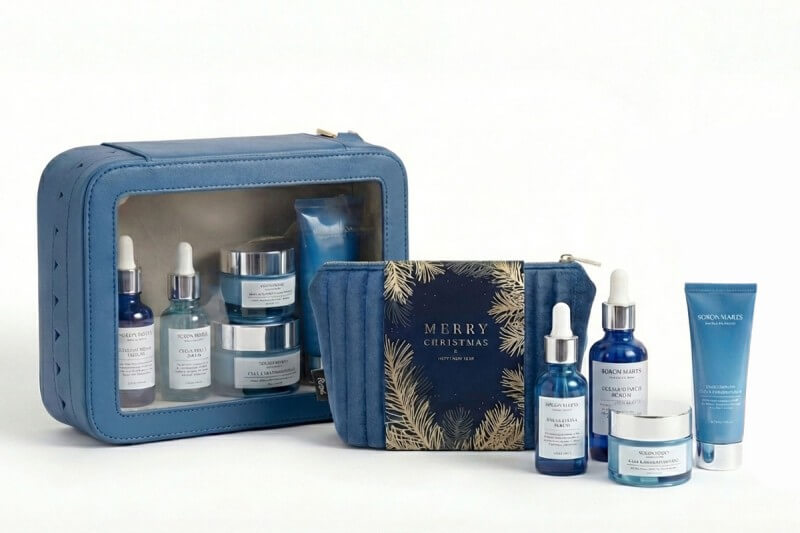
TL;DR: Keep this article as a procurement-risk guide, but pull the sourcing decision back to grooming and skincare GWP toiletry bags. A low quote is useful only when bottle fit, lining, zipper checks, packing scope, QC evidence and RFQ handoff are visible before bulk production.
| Fit check | Buyer reality |
|---|---|
| Best fit | This guide is best for beauty procurement teams, skincare brands, men’s grooming brands, wellness campaign planners and private-label buyers comparing low quotes for toiletry bags, travel pouches, wash bags or grooming GWP kits. It fits projects where the bag must hold bottles, tubes, jars, razors, inserts or sample sets, and where the buyer needs to check lining, zipper, leakage exposure, carton packing, sample approval, documentation, inspection and quote exclusions before choosing a supplier. It is especially useful when the team has two or three quotes that look similar on price but differ in scope, evidence, approval timing and production responsibility. |
| Less suitable | This guide is less suitable for one-piece personal orders, generic travel bag resale, event giveaways with no beauty product fill, or early mood-board projects where the buyer cannot yet define product dimensions, target quantity, destination market, packaging scope or launch timing. It is also not the right workflow for teams that only want a thin unit price without reviewing lining quality, zipper strength, bottle fit, warning review, artwork approval, carton marks, inspection stage, supplier documentation and who owns rework if the bulk goods do not match the approved sample. |
| Ecorivta reality | A low quote is not automatically risky. It becomes risky when the supplier cannot show what is included, what is excluded and how the toiletry or grooming GWP will be approved before bulk. |
| Core boundary | This is a sourcing and procurement-risk guide. It is not legal advice, freight consulting, retailer approval guidance or a final factory quotation. |
Related Ecorivta hubs: Use Beauty GWP Solutions for campaign planning, Toiletry & Travel Bags for structure options, and Contact Ecorivta when a quote needs RFQ handoff before sampling.
What is the real procurement risk behind a low Beauty GWP quote?
The first number on a quote is not the full commercial risk. A toiletry bag may look efficient because the supplier has excluded the stronger zipper, wipeable lining, retail sleeve, QC inspection, final color standard, material proof or buffer needed for a fixed campaign launch.
Beauty buyers need a repeatable decision system rather than a fear-based warning. The right approach is to compare hidden-cost drivers, red flags and quote scope before approving the supplier. That keeps the discussion focused on launch reliability, perceived value, documentation and delivery discipline.
When toiletry bags work for grooming or skincare GWP
Toiletry bags work well for grooming or skincare GWP when the product fill is more structured than a flat pouch can handle. Bottles, tubes, razors, mini jars, shaving products, sunscreen sets and wellness items need enough depth, lining and closure control to arrive neatly and feel useful after the campaign. This is where procurement risk becomes practical: the buyer must check whether the quote covers the structure that the product fill requires.
| Product fill | Bag structure | QC check | Packing note |
|---|---|---|---|
| Skincare tubes and mini jars | Gusset toiletry pouch with wipeable lining | Filled-bag photo, seam tension and lining check | Confirm insert card and carton orientation. |
| Men’s grooming set | Dopp-style bag with stronger zipper and handle | Puller strength, zipper end stop and handle seam | Check razor guard, bottle movement and inner divider need. |
| Sunscreen or resort kit | Water-resistant lining and stable base | Leakage exposure, coating wipe test and shape after fill | Approve packed sample with actual bottle height. |
| Fragrance or wellness minis | Soft structured pouch with inner support | Product movement, zipper opening and logo flatness | Use divider or insert when glass items move too much. |
| Skincare travel retail set | Toiletry bag plus sleeve or belly band | Barcode, carton mark and display-facing side | Quote retail packing as a separate scope line. |
Why can a low Beauty GWP quote become expensive later?
A low quote usually becomes expensive when the supplier quoted a simplified version of the project while the buyer expected a campaign-ready gift. The gap may not appear until sampling, bulk production or final packing.
For example, a supplier may quote an unlined pouch while the buyer expected wipeable lining. The sample may use a stock zipper while the final brand wants a color-matched puller. The unit price may exclude individual polybags, insert cards, carton marks, retail sleeves, recycled-content documentation or third-party inspection.
| Quote item | What may be missing | Risk to a toiletry or skincare GWP launch | How to control it |
|---|---|---|---|
| Material | Grade, weight, coating, lining and exact composition | Gift feels thinner than expected; claim wording becomes unsafe | Require material specification and approved swatch before sampling. |
| Zipper and handle | Zipper quality, puller strength, handle seam and slider type | Bag feels weak when filled with bottles or grooming items | Define zipper route, pull test and backup option. |
| Logo method | Screen print, embroidery, woven label, metal plate or heat transfer details | Logo looks different from the brand book or fails rub testing | Approve strike-off and production control sample. |
| Packaging | Retail sleeve, hangtag, insert, carton label, barcode and polybag | Distribution team receives goods that are not campaign-ready | Quote packaging as a line item, not an afterthought. |
| Quality control | AQL, inspection stage, defect responsibility and rework plan | Buyer discovers issues after goods arrive | Define inspection plan and acceptance criteria in writing. |
| Delivery | Sample approval buffer, material lead time, shipping method and cutoff date | Launch date is missed or air freight is forced | Build a launch calendar with approval gates. |
How should procurement compare two supplier quotes?
Compare the commercial scope first, then compare price. If one supplier includes stronger zipper hardware, better lining, retail packing, social compliance documentation and final inspection, it is not the same quote as a smaller unit number that excludes those items.
| Comparison field | Quote A: under-scoped | Quote B: campaign-ready | Decision note |
|---|---|---|---|
| Unit price | Smaller number | Higher number | Decide only after scope is normalized. |
| Product fit | General pouch size | Product-fill dimensions checked | Quote B better protects grooming or skincare fit. |
| Lining | Not specified | Wipeable lining included | Important for bottles, tubes and travel sets. |
| Logo | One-color print only | Print plus woven label option priced | Quote B gives design fallback. |
| Packaging | Bulk pack | Individual pack, insert and carton mark included | Quote B is closer to launch-ready. |
| QC | Internal only | AQL inspection and defect criteria included | Quote B reduces arrival risk. |
| Delivery | Lead time begins after deposit | Lead time tied to material approval and final sample | Quote B is more transparent. |
What supplier signals should trigger extra due diligence?
Red flags are not about judging a supplier by price alone. They are about identifying where the supplier cannot explain how the price will be delivered.
- The supplier cannot explain fabric weight, lining, zipper grade or logo method assumptions.
- The quote says “same as sample” but no signed production sample process exists.
- Social compliance, quality management or material documentation is mentioned but not provided.
- The supplier will not define whether production is in-house or subcontracted.
- Packaging is described as “standard” even though the campaign needs retail-ready packing.
- The supplier gives an aggressive delivery date without sample approval gates.
- Requested changes are accepted verbally but not added to the written quote.
How should buyers score procurement risk before issuing a deposit?
A simple scorecard helps the buying team keep the discussion objective. The purpose is not to reject every supplier with a low quote. The purpose is to see whether the quote is low because the supplier is efficient, or low because key project assumptions have not been priced.
| Risk area | Low risk answer | Medium risk answer | High risk answer |
|---|---|---|---|
| Product specialization | Supplier regularly makes cosmetic, toiletry or Beauty GWP bags. | Supplier makes general bags and can show a few beauty projects. | Supplier cannot show relevant beauty, cosmetic or pouch projects. |
| Material control | Fabric, lining, coating and composition are written in the quote. | Supplier confirms material verbally but not in the quote. | Supplier only says “same as sample” with no spec sheet. |
| Bulk consistency | Production sample, color tolerance and inspection method are defined. | Supplier agrees to confirm later. | No bulk approval process exists. |
| Packaging scope | All retail or campaign packing items are listed. | Some packaging is listed but carton details are missing. | Packaging is described as standard or included without detail. |
| Claim documentation | Supplier can define what proof is available before artwork approval. | Supplier may provide proof after order confirmation. | Supplier makes broad claims but cannot define documentation. |
| Launch calendar | Sample, artwork, material, inspection and shipment gates are dated. | Only bulk lead time is provided. | Supplier gives delivery timing without approval gates. |
What should the launch calendar reveal before production starts?
Many procurement problems are calendar problems disguised as price problems. A supplier may quote a standard lead time, but toiletry and grooming GWP programs usually have more approval gates than a simple stock item. Artwork, packaging, insert copy, recycled-content proof, carton marks, retailer requirements and final inspection can all change the real schedule.
Before deposit, ask the supplier to map the schedule backwards from the campaign date. If the bulk shipment date is fixed, each missed approval gate should have a written consequence. That may mean using a stock fabric instead of custom dye, simplifying packaging, changing logo method, splitting shipment or delaying the campaign.
| Gate | Buyer must approve | Supplier must confirm | Risk if skipped |
|---|---|---|---|
| Material gate | Swatch, handfeel, color and composition | Availability, MOQ and documentation path | Wrong texture, unsafe claim, delayed sourcing |
| Product-fill gate | Bottle fit, zipper opening, lining and structure | Filled sample and packout method | Bulging, leakage exposure or weak presentation |
| Logo gate | Logo size, position, method and tolerance | Strike-off method and mass-production control | Logo mismatch, rework or brand rejection |
| Packaging gate | Insert, sleeve, barcode, label and carton mark | Unit pack and master carton plan | Warehouse rejection or repacking cost |
| Inspection gate | Defect list and AQL expectation | When inspection happens and who pays for rework | Defects found too late |
What compliance and documentation checks belong in the RFQ?
Procurement risk also includes what the supplier can prove. Quality systems, social compliance and responsible-sourcing frameworks help buyers ask better questions and organize supplier due diligence [7]. ISO 9001 [1], amfori BSCI [2] and Sedex SMETA [3] are useful reference points for quality and social compliance conversations.
For environmental or recycled-material claims, buyers should request specific proof and avoid broad claims that cannot be substantiated. FTC environmental claim guidance [4], Textile Exchange standards [5] and market-specific rules such as California Proposition 65 [6] are all relevant checkpoints when claims or warnings will appear on packaging or campaign materials.
| Check | Ask supplier for | Why it matters |
|---|---|---|
| Quality management | Current quality system certificate or factory QC flow | Shows whether quality is managed as a process, not an afterthought. |
| Social compliance | amfori BSCI, Sedex SMETA or equivalent audit status where relevant | Supports retailer and brand procurement review. |
| Material claim | Composition, supplier scope and transaction documentation where applicable | Prevents unsupported recycled, organic or vegan copy. |
| Chemical or warning review | Market-specific testing or warning discussion | Important for US retail, EU review and retailer compliance teams. |
| Packaging proof | Artwork, insert, carton mark and barcode confirmation | Prevents last-minute distribution problems. |
Composite case: grooming GWP quote scope review
A men’s grooming brand received two quotes for a toiletry GWP set holding a cleanser tube, travel razor, balm jar and folded insert card. Quote A was lower and listed “PU bag with logo, standard packing.” Quote B was higher and included wipeable lining, a larger zipper opening, handle seam reinforcement, filled-sample photos, insert card packing, carton marks and an AQL inspection line. At first glance, procurement wanted Quote A because the unit number looked easier to defend.
Ecorivta would reframe the comparison around scope. The buyer would ask both suppliers to confirm bottle fit, zipper opening width, lining material, handle seam construction, logo method, packing orientation, carton quantity, inspection timing and documentation exclusions. Quote A might still be usable if the brand simplified the product fill or accepted a basic pouch route. But if the campaign needed a grooming bag that could be reused after the promotion, Quote B carried less launch risk.
The final choice would depend on campaign role, not price alone. Marketing would see whether the bag still felt like a gift when filled. Procurement would see which line items created cost. Operations would know whether carton marks and inspection were included before shipment. The buyer could approve the route with fewer late surprises. If the brand later reordered, the same approval file would also clarify which details were locked and which details could be adjusted without restarting sampling.
Anonymous buyer feedback
| Buyer role | What they said | Ecorivta response |
|---|---|---|
| Grooming brand founder | “The first quote did not mention handle reinforcement or bottle movement.” | Add product-fill photos and seam checks to the RFQ before sample approval. |
| Skincare procurement lead | “The supplier said packing was included, but it meant only bulk cartons.” | Separate polybag, insert card, barcode, carton marks and display needs. |
| Regional marketing manager | “The low quote looked fine until we saw the filled bag shape.” | Approve the toiletry bag with real products inside, not only empty sample photos. |
Sibling Diff: procurement risk vs related Ecorivta guides
| Guide | Main question | Best next step |
|---|---|---|
| This procurement risk guide | Does the quote include the scope needed for a safe GWP launch? | Normalize product fit, lining, zipper, packing, QC and documentation. |
| Toiletry bag page | Which toiletry structure fits grooming or skincare products? | Use it when bottle fit, lining and zipper function drive the bag route. |
| Beauty GWP hub | Which product route fits the campaign job? | Use it before choosing pouch, tote, toiletry bag or accessory bundle. |
| Cost framework guide | Which details drive the total quote? | Use it when add-on cost lines and budget trade-offs need comparison. |
How can buyers turn risk control into a copy-ready RFQ?
Use a structured RFQ so the supplier cannot answer only with a unit price. The goal is not to make the brief long. The goal is to make exclusions visible before sampling.
| RFQ field | Copy-ready instruction |
|---|---|
| Project | Beauty GWP procurement risk review for grooming or skincare toiletry bag. |
| Product type | Toiletry bag, wash bag, pouch or grooming accessory set. |
| Campaign type | Skincare, grooming, fragrance, wellness, resort retail or travel retail. |
| Commercial scope | Target quantity, target market, launch date and delivery deadline. |
| Product fit | Product fill, product weight, lining need and coating requirement. |
| Branding | Logo method, artwork file, logo position and approval process. |
| Packaging | Individual pack, insert, sleeve, carton mark, barcode and retailer requirements. |
| Documentation | Quality, social compliance, material proof, testing and warning review. |
| Inspection | AQL level, defect list, inspection stage and rework responsibility. |
| Exclusions | Ask the supplier to list each item excluded from the quote. |
Who We Don’t Take On
- Projects that ask Ecorivta to hide material composition, production location or certification scope.
- Campaigns that require broad sustainability claims without proof, review time or documentation budget.
- Orders where the only decision factor is a small unit number and quality criteria are not defined.
- Rush programs that cannot allow a realistic sample approval, packaging confirmation and inspection window.
About the author
Lina Lv works with beauty brands and private-label buyers on custom cosmetic bags, toiletry bags, GWP accessories and RFQ preparation. Her work focuses on translating product fill, material choices, packaging scope and sampling needs into supplier-ready briefs.
Trademark notice
All third-party brand, retailer, certification and regulatory names mentioned in this article belong to their respective owners. Their appearance is for identification and sourcing-context discussion only and does not imply endorsement, partnership or approval.
FAQ
Why can a low Beauty GWP quote become more expensive later?
A low quote may exclude tested material, final packaging, QC, stronger zipper hardware, re-sampling, compliance documentation, rush production or shipment corrections. Buyers should compare quote scope, not only unit price.
What should buyers check before approving a toiletry bag supplier?
Check product fill, bottle height, lining, zipper opening, handle seams, sample-to-bulk control, packaging details, inspection stage, documentation and written responsibility for changes.
Does this guide replace a cost or MOQ guide?
No. This guide focuses on procurement risk created by under-scoped quotes. Cost framework and MOQ planning should be handled in separate pricing and MOQ guides.
How should buyers write an RFQ to reduce procurement risk?
Include material, dimensions, product fill, logo method, zipper and lining details, packaging, testing, documentation, target launch date, inspection plan and requested commercial terms.
When should a buyer reject or re-brief a low quote?
Reject or re-brief when the supplier cannot explain material grade, QC steps, subcontracting policy, lead time, packaging scope, documentation and what is excluded from the quoted price.