A useful silk hair wrap fit and closure brief starts by separating what the buyer actually requested from what production has already proved. A U.S. hair brand recently asked Ecorivta for a silk hair wrap together with a microfiber hair towel and scalp brush, with pricing at 100, 300 and 500 pieces plus logo, packaging and DDP-to-USA details. A separate completed 2,000-piece order used brown recycled PET satin, no lining, an elastic-bound edge and an inside woven label with a gold logo. During sampling, the initial cap was made too small and the customer said it felt too tight; the final flat size was revised to 54 x 47 cm. The separate U.S. inquiry is not presented as an order, and this article does not claim that one size fits every wearer.
Quick Buyer Summary
- Material first: confirm natural silk or a satin fabric made from another fibre; do not approve from shine alone.
- Fit geometry: record cap depth, relaxed opening, stretched opening and edge-band width on the same sample sheet.
- Closure route: compare a gathered edge, bow-front wrap or another sampled structure before discussing one-size claims.
- Logo placement: keep labels and backing away from pressure points and verify the visible position when the wrap is worn.
- Completed-order anchor: one 2,000-piece order used brown recycled PET satin, no lining and a final 54 x 47 cm flat size.
- Real correction: the initial cap was too small and felt too tight; cap volume and opening tension had to be corrected together.
- Evidence boundary: no wash result, packing result or universal fit is claimed in this brief.
Send a silk or satin hair wrap fit brief
Mark the Inquiry Evidence Before Selecting a Sample
| Evidence state | Current record | Next action |
|---|---|---|
| Existing real evidence | A U.S. inquiry requested 100/300/500 tiers; a separate completed 2,000-piece order used brown recycled PET satin, no lining, a final 54 x 47 cm size, elastic-bound edge and an inside gold-logo woven label. | Keep the inquiry and completed-order evidence as two separate records. |
| Real problem and correction | The initial cap was made too small and the customer reported that it felt too tight; the final flat size was revised to 54 x 47 cm. | Approve cap volume and opening tension together. |
| Needs supplement for a new buyer | Relaxed and stretched opening, band width and pack dimensions. | Buyer and sales complete a new measured sample sheet. |
| Must verify | Recycled-PET evidence, selected measurements, edge-band stretch/recovery, seam position, label backing and market wording. | Factory returns the material file and revised sample record. |
| Forbidden claim | No universal fit, repeated-wash result or packing result is available for this record. | Keep those statements out until real evidence is supplied. |
This narrow sampling brief supports the custom Hair Caps and Beauty GWP page. The older hair-cap fit and packing article owns the general family checklist. This article owns the next decision for silk or satin wraps: how to measure cap depth, edge band and closure on one sample.
Review label placement and skin-contact scope
Confirm Fibre Identity Before Calling the Wrap Silk
“Silk” describes a fibre. “Satin” describes a fabric construction and surface that can be produced from silk, polyester or other fibres. Two glossy wraps can look similar in a photograph while requiring different fibre wording, pricing and evidence.
The FTC Textile and Wool Acts Guidance 1 explains U.S. labelling requirements for fibre content, country of origin and the responsible business. For a U.S. buyer, use the confirmed fibre composition rather than a visual phrase such as “silky satin.”
The completed-order route was brown recycled PET satin without a lining. That is a precise specification for one order, not permission to call every satin wrap recycled or to substitute it for a buyer asking for natural silk. Recycled content evidence still needs to match the selected fabric and supply chain.
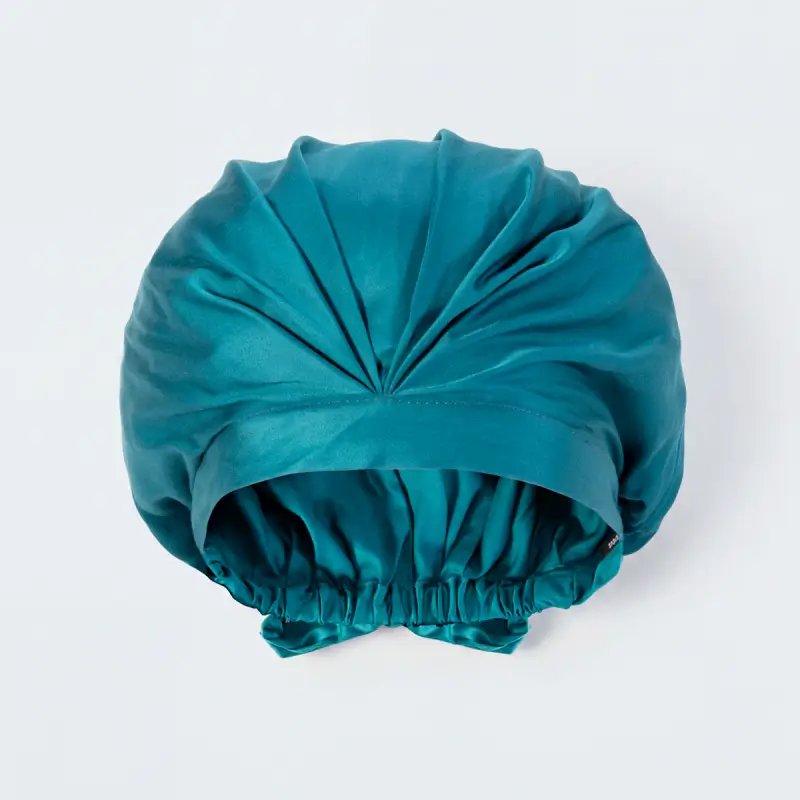
Measure Cap Depth and Opening on the Same Reference
Cap depth should be measured from the opening edge to the deepest crown point with the product laid in the agreed flat position. The opening should have both a relaxed measurement and a stretched measurement. Record the edge-band width separately. These fields help the buyer compare sample A and sample B without inventing a universal size.
In the 2,000-piece order, the initial cap came out too small and felt too tight. The revised final flat size was 54 x 47 cm. This is a real correction for one customer, not a recommended universal size; a new buyer still needs to approve its own cap depth and opening tension.
| Measurement field | How to record it | Why it matters |
|---|---|---|
| Flat cap depth | Opening edge to deepest crown point on the agreed flat layout. | Shows available internal volume. |
| Relaxed opening | Opening before stretch, with no hand tension. | Helps identify pressure and retention risk. |
| Stretched opening | Opening at the agreed review tension, not an uncontrolled maximum pull. | Allows samples to be compared consistently. |
| Edge-band width | Finished visible width at front, side and back. | Affects pressure, appearance and logo room. |
| Seam and closure position | Mark on a photo or technical sketch. | Prevents the closure from moving during revision. |
The buyer should also state the intended hair-volume range and whether the reference is for sleep, post-treatment protection, retail or Beauty GWP use. A fit photo is useful, but the measured sample sheet remains the approval record.
Compare Gathered Edge and Bow-Front Closure Routes
Closure architecture changes where tension sits and how the wrap is worn. A gathered elastic edge is compact and familiar. A bow-front or tie-look construction creates a different visual centre and may add layers at the forehead. The buyer should choose the route by wear test and brand presentation, not by one product photo.
In the completed brown recycled-PET satin order, elastic binding around the edge controlled the opening size. This makes the elastic specification and finished opening just as important as the final 54 x 47 cm flat body measurement.
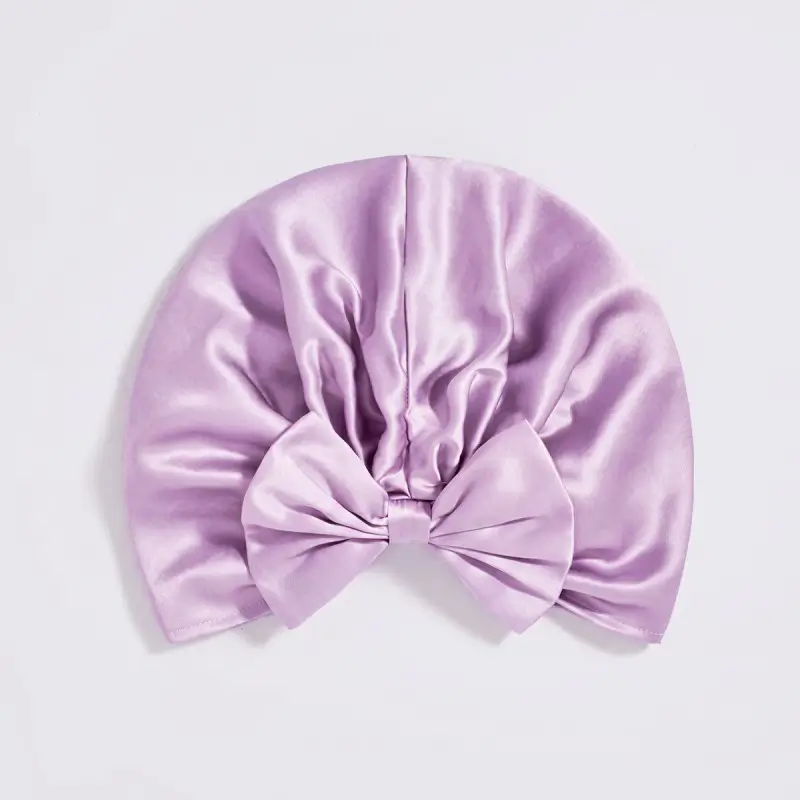
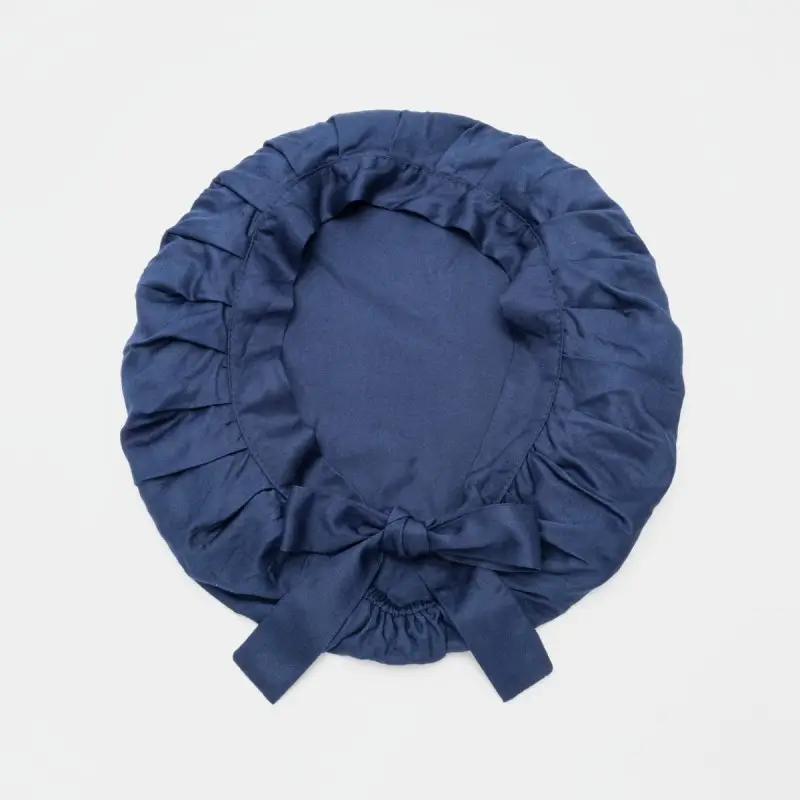
For each route, photograph the front, back, inside and opening before asking for a price revision. Record whether the buyer wants the bow or band to be decorative, functional or both.
Approve Edge Band, Logo and Skin Contact Together
A woven label, embroidery or print can change the handfeel of a soft wrap. Place the logo on the worn sample and check whether the label edge, backing or embroidery underside creates a pressure point. A logo that looks centred on a flat cap can rotate when the cap is stretched.
The completed order used an inside woven label with a gold logo. The customer identity is withheld. That placement should still be checked on the worn sample so the label does not create discomfort or disappear into an uncontrolled fold.
If harmful-substance evidence is requested, match it to the actual fabric, thread, elastic, label and print route. OEKO-TEX STANDARD 100 2 addresses harmful-substance testing for textiles and related components, with requirements linked to skin contact. Do not claim a finished wrap is certified until the applicable certificate and article scope are verified.
Fold the Approved Wrap Into the Intended GWP Pack
Cap depth, bow volume and edge-band thickness affect the folded pack. Approve the folding direction and visible logo before fixing the carton, sleeve or bag dimensions. A packaging quote based on an unapproved flat drawing can change after the first physical fold.

The 100/300/500 quantity tiers from the real inquiry can remain in the quote request. Final unit pricing still depends on fibre, dimensions, closure, logo and packout.
Seven-Step Silk Hair Wrap Sample Handoff
- Confirm natural silk or the exact fibre used for the satin route.
- Supply a wearing reference and intended hair-volume range.
- Record flat cap depth, relaxed opening, stretched opening and edge-band width.
- Select the gathered edge, bow-front or another photographed closure route.
- Mark seam, closure and logo positions on the same technical sketch.
- Approve the worn fit, skin-contact feel and folded pack on the physical sample.
- Reconfirm fibre wording, quantity tier, logo method and packing before bulk pricing.
If the measurements are not ready, send the wearing reference and preferred closure by WhatsApp.
Send a closure and fit sample review
Silk or Satin Hair Wrap Fit Questions
Does a shiny hair wrap automatically contain silk?
No. Satin describes a fabric construction and surface; the fibre may be silk, polyester or another material. Confirm the actual fibre specification and label wording.
What measurements should be supplied before sampling?
Supply the flat cap depth, relaxed opening, stretched opening, edge-band width, seam position and closure position, plus the intended hair-volume range.
Which closure is best for every customer?
No closure should be described as universally best. Compare gathered elastic, bow-front or another sampled architecture against the buyer’s fit, pressure and appearance requirements.
Can the 100/300/500 price tiers be quoted immediately?
They can be used as RFQ tiers, but the product still needs a confirmed fibre, dimensions, closure, logo and packing route before a reliable unit price.
What real project evidence supports this article?
One completed 2,000-piece order used brown recycled PET satin, no lining, elastic-bound edge and an inside gold-logo woven label. The initial cap was too small and felt too tight, so the final flat size was revised to 54 x 47 cm. No universal fit or wash result is claimed.
Evidence Used in This Brief
-
FTC Textile and Wool Acts Guidance – Referenced for U.S. fibre-content, country-of-origin and responsible-business labelling; appearance alone does not establish silk fibre content. ↩︎
-
OEKO-TEX STANDARD 100 – Referenced for harmful-substance testing scope and skin-contact relevance; no certificate is claimed without checking the actual article and scope. ↩︎