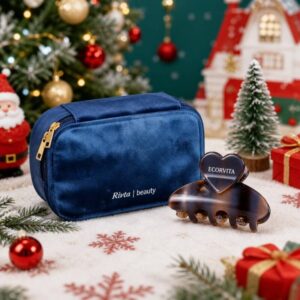
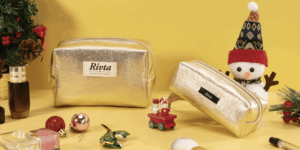
A cosmetic bag factory audit evidence checklist helps a procurement team decide which supplier documents should be reviewed before order placement. For Ecorivta cosmetic bag projects, the most common audit request is BSCI-related factory evidence. Buyers may also ask for material certificates, product testing, factory profile, QC flow or document validity depending on target market and internal onboarding rules.
The key is not to send a large unsorted document folder. Buyers are busy, and the supplier should provide what the buyer asks for. The evidence file should separate factory audit evidence from material certificates and order-specific test reports, because each document type answers a different procurement question.
This checklist is written for qualified beauty brands, skincare teams, fragrance GWP programs, DTC teams, retail private label buyers and procurement teams that need MOQ 500+ production with sample-first approval.

Table of Contents
- TL;DR
- What is a cosmetic bag factory audit evidence checklist?
- How should BSCI evidence be requested?
- How should material certificates and order-specific reports be separated?
- What happens when the buyer needs third-party testing?
- Why should the supplier send a focused evidence file?
- What should be sent to Ecorivta before audit evidence review?
- What can Ecorivta deliver for cosmetic bag audit evidence?
- Composite case: BSCI was clear, but order-specific testing still had to be planned
- FAQ
TL;DR
Before placing a cosmetic bag order, procurement teams should ask for the specific audit evidence they need, especially BSCI-related factory documents when required. Material certificates and order-specific test reports should be separated because they answer different questions. Ecorivta should provide the documents the buyer asks for, not an oversized unsorted pack. Target market, target price and launch timing should be shared before the evidence file is prepared.
Send Your Cosmetic Bag Audit Request
What is a cosmetic bag factory audit evidence checklist?
A factory audit evidence checklist is a focused list of documents a buyer needs before supplier onboarding or order placement. Ecorivta’s cosmetic bag page [1] presents the main custom cosmetic bag manufacturing route for beauty GWP and retail programs, including MOQ, materials, logo, sample approval and bulk production context. The audit checklist narrows that product page into procurement evidence.
For cosmetic bag sourcing, the evidence file may include factory profile, business license, BSCI-related evidence, Sedex or SMETA information if requested, ISO quality documents, GRS-related documentation where relevant, material test documents, production flow, QC flow, AQL or ISO 2859-1 sampling notes [7] if required and shipment evidence. The buyer should not treat all of these as one interchangeable certificate pack.
| Evidence type | What it answers | Typical timing |
|---|---|---|
| Factory audit evidence | Can this supplier pass procurement onboarding? | Before order placement. |
| Material certificate | Does a material or supply-chain document apply to this route? | Before sample or order confirmation. |
| Order-specific test | Does this specific product or order meet a named buyer test? | When buyer requires it. |
| QC flow | How will approved sample and bulk goods be checked? | Before bulk production. |
| Shipment evidence | What is confirmed before cartons leave the factory? | Before shipment. |
How should BSCI evidence be requested?
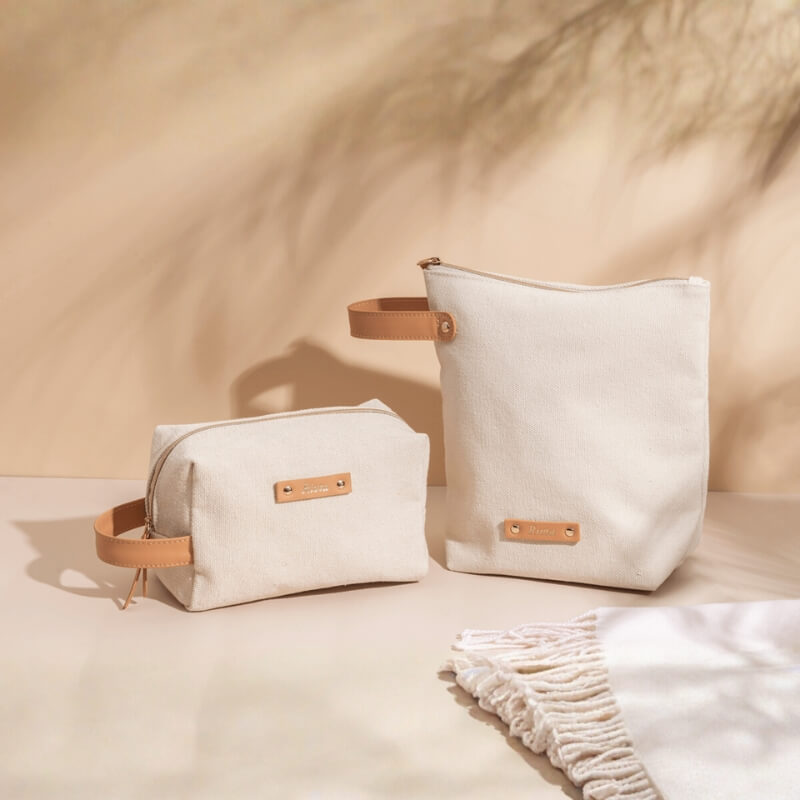
BSCI is the most common factory audit evidence request Ecorivta sees for cosmetic bag buyers. It should be requested as supplier qualification evidence, not as proof that every material or finished product automatically carries a specific product certificate. The buyer should say whether BSCI is needed for onboarding, retailer review, internal procurement policy or pre-order approval.
For official audit context, amfori BSCI audit requests [2] have their own process and scope. The supplier-side file should therefore record document name, validity, factory name, site scope and whether the buyer needs a screenshot, certificate copy, platform reference or additional explanation.
| BSCI request item | What buyer should confirm | Why it matters |
|---|---|---|
| Purpose | Onboarding, retailer review, order approval or internal audit. | Controls how much evidence is needed. |
| Factory entity | Factory name, location and document match. | Prevents mismatch between supplier and production site. |
| Validity | Current document date or platform status if required. | Prevents last-minute recheck before order placement. |
| Document format | Copy, screenshot, platform reference or buyer template. | Helps the buyer review quickly. |
How should material certificates and order-specific reports be separated?
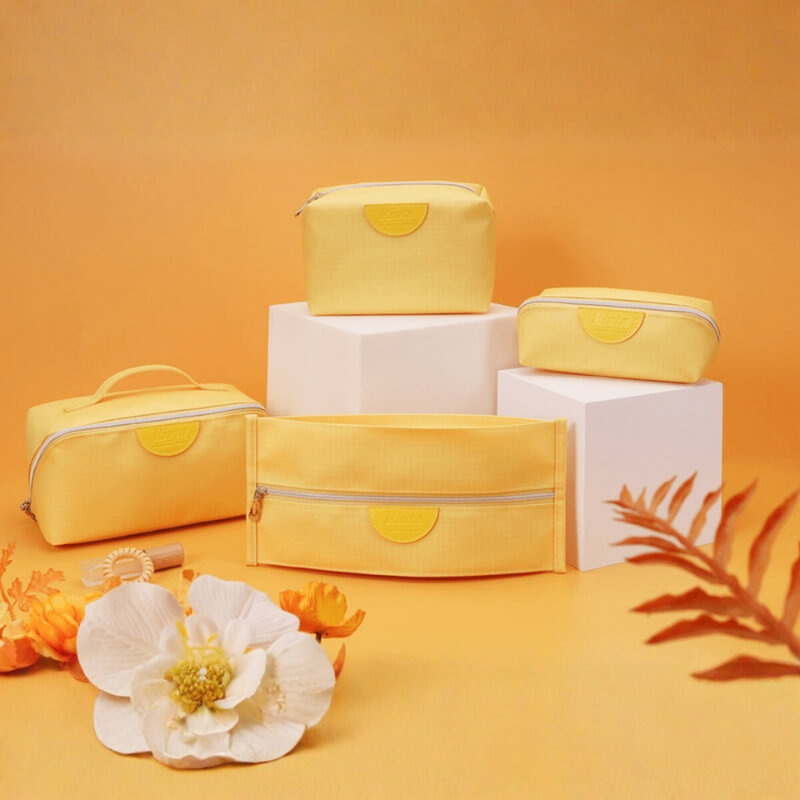
The more practical confusion is around material certificates and buyer-specific reports. Ecorivta can provide GRS-related certificate documentation where available, but a buyer-specific cosmetic bag order may still need additional paid testing and reports if the buyer requires a defined test scope, market rule, material claim or laboratory.
For material standard context, Textile Exchange standards [3] define material-related standard scope and should not be treated as a shortcut for all order claims. For harmful-substance testing, OEKO-TEX STANDARD 100 [4] has its own testing scope and should not be mixed with factory audit evidence.
| Document | Useful for | Buyer should confirm |
|---|---|---|
| BSCI / factory audit evidence | Supplier qualification and social audit review. | Factory entity, validity and buyer format. |
| GRS-related documentation | Material or supply-chain review where applicable. | Material scope, order relevance and claim wording. |
| OEKO-TEX / test document | Product or material testing scope if required. | Testing scope, lab, sample quantity and cost. |
| Order-specific report | Buyer-defined market or product requirement. | Who pays, when samples are sent and how results are used. |
What happens when the buyer needs third-party testing?
If a buyer requires third-party testing or a specified laboratory, Ecorivta can cooperate by providing relevant products, samples, material information and order details for the test process. The buyer should confirm the test item, laboratory, sample quantity, cost responsibility and timing before the test is added to the project schedule.
This matters because third-party testing is not the same as sending an existing factory certificate. It can require sample preparation, courier time, lab queue time and result review. If the buyer adds a test after quote, sample and launch timing are already fixed, the evidence file may have to be rebuilt and the order calendar may shift.
| Testing item | Buyer should provide | Supplier can support |
|---|---|---|
| Lab name | Specified lab or accepted lab list. | Prepare samples for the correct destination. |
| Test scope | Material, finished product, logo print or market rule. | Match sample and document to the test need. |
| Sample quantity | How many pieces or material swatches are needed. | Prepare and label the right samples. |
| Cost owner | Buyer-paid, supplier-paid or shared by agreement. | Quote and timeline can be adjusted transparently. |
| Timing | Required result date before order approval or shipment. | Plan sample, bulk and launch windows realistically. |
Why should the supplier send a focused evidence file?
The practical rule is simple: customers should receive what they ask for. They should not receive a large document pack and then spend time searching for the one file they need. A focused evidence file is faster for the buyer and safer for the supplier because it reduces misunderstanding between factory audit, material certificate and order-specific test evidence.
The supplier should ask what the buyer needs the document for: onboarding, retailer review, material claim, internal approval, target market or order-specific testing. Then the evidence file can be named clearly, dated, linked to the correct product route and sent with notes on what is included and what would require separate paid testing or a separate report.
| Buyer request | Focused response | Avoid |
|---|---|---|
| Need BSCI for onboarding | Send current BSCI-related evidence and factory entity details. | Sending unrelated material documents first. |
| Need GRS for material route | Send relevant certificate documentation and scope notes where available. | Implying all product claims are automatically covered. |
| Need third-party test | Confirm lab, test item, sample count, cost and timing. | Assuming existing documents replace a required test. |
| Need launch approval | Connect evidence to target market and launch date. | Sending unsorted files without project context. |
What should be sent to Ecorivta before audit evidence review?
Send a focused audit evidence request with the project context. Ecorivta’s contact page [5] asks buyers to send product, quantity, materials, logo, packaging, certificates and delivery information before quotation or project review. For cosmetic bag audit evidence, target market, target price and launch timing are especially important.
- Product route: cosmetic bag, pouch, travel bag, gift set or retail program.
- Target market and retailer or internal onboarding requirement if applicable.
- Target price or route budget direction.
- Launch timing, order approval deadline and shipment window.
- Material route and whether a material claim or certificate review is needed.
- Specific requested document: BSCI, Sedex, SMETA, ISO, GRS-related documentation, OEKO-TEX-related document, factory profile, business license, QC flow or test report.
- Whether a third-party lab, named test method or buyer template is required.
- Sample quantity and who handles testing cost if a new test is required.
- Logo, packaging, Pantone color reference, GS1 barcode, SKU split and carton requirements if they affect approval.
- Contact person for procurement, QA or compliance review.
Request Cosmetic Bag Audit Evidence
How is this checklist different from Ecorivta cosmetic bag product page?
This checklist focuses on the audit evidence task. The custom cosmetic bag manufacturer page is useful when buyers need product-level supplier information for cosmetic bag manufacturing, materials, logo, MOQ, sampling and bulk production. Ecorivta’s company profile page [6] is useful when buyers need broader factory, team and certification context for a supplier onboarding file.
What can Ecorivta deliver for cosmetic bag audit evidence?
| Buyer situation | Ecorivta can help by |
|---|---|
| Beauty brands, skincare brands, fragrance teams, DTC teams, retail private label buyers and procurement teams sourcing MOQ 500+ cosmetic bag programs. | Preparing a focused evidence file for supplier onboarding, BSCI requests, material certificate questions, order-specific test planning and procurement review. |
| Projects with target market, target price, launch window, sample-first approval, retailer onboarding file or compliance review. | Separating factory audit evidence, material certificate documentation, order-specific testing, QC flow and shipment evidence so each document answers the right question. |
| Single-piece buying, no-brand resale sourcing, urgent stock-only requests or price-only inquiries with no procurement review. | Explaining which project and document inputs are still needed before Ecorivta can support a structured supplier evidence file. |
Composite case: BSCI was clear, but order-specific testing still had to be planned
Initial brief
A beauty procurement team asked for a custom cosmetic bag supplier and requested BSCI evidence before order placement. The first message included product type and quantity, but it did not include target market, target price, launch timing or whether the buyer needed an order-specific material or finished product test.
Problems found before order placement
The factory audit evidence could be shared as a supplier qualification document. Later, the buyer’s internal QA team asked whether the material certificate covered the exact order claim and whether a third-party report was needed for the target market. The buyer had not named the lab, test scope, sample quantity or cost owner, so the evidence file needed a second review.
Correction path
The supplier separated the file into factory audit evidence, material certificate documentation and buyer-specific testing. Ecorivta sent the requested BSCI-related evidence first, then asked the buyer to confirm target market, target price, launch timing and test scope. If the buyer needed a new third-party report, sample preparation and cost approval were added to the schedule.
Lesson
The buyer changed its onboarding template. Future cosmetic bag projects requested BSCI evidence before order placement, but also listed material claims, market requirements and testing needs in a separate section. The supplier could provide a focused file faster, while the buyer avoided confusing factory audit documents with order-specific test reports.
Anonymous feedback from cosmetic bag procurement teams
| Buyer role | Feedback |
|---|---|
| Retail compliance file owner, names withheld | “BSCI evidence helps us review the supplier, but it does not answer every product testing question. We need the factory file and the order-specific test plan separated.” |
| Beauty procurement onboarding manager, names withheld | “A focused document set is much easier to review than a large folder. If we ask for BSCI, send BSCI first, then explain what requires a separate material or lab report.” |
| Skincare QA documentation lead, names withheld | “Target market and launch timing should be included when we request evidence. Otherwise the supplier may send current documents, but our internal review still waits for the test scope.” |
FAQ
What factory audit evidence do cosmetic bag buyers ask for most often?
Cosmetic bag buyers most often ask for BSCI-related factory audit evidence, especially before order placement. Depending on the buyer and market, they may also ask for Sedex or SMETA information, ISO quality documents, factory profile, business license, production flow, QC flow, factory photos and current document validity.
Is BSCI the same as a product certificate?
No. BSCI is used as factory social-audit evidence and should not be treated as a product certificate. It helps procurement teams review supplier qualification, but it does not prove that a specific cosmetic bag material, logo print, lining, zipper or finished order has passed a buyer-specific product test.
How should GRS documentation be handled for a cosmetic bag order?
GRS-related documentation should be reviewed by scope, material and order requirement. Ecorivta can provide available certificate documentation where relevant, but a buyer-specific order may still require additional paid testing or reports if the buyer needs a specific material claim, market requirement, test method or laboratory.
When should buyers request factory audit documents?
Factory audit documents are usually requested before order placement, after the buyer has enough project context to know what evidence is needed. Sharing target market, target price and launch timing helps Ecorivta provide the right documents instead of sending an oversized file pack that slows the buyer down.
What happens if a buyer requires third-party testing?
If the buyer requires third-party testing or a specified laboratory, Ecorivta can cooperate by providing relevant products, samples, material information or order details for the test process. The buyer should confirm test item, laboratory, sample quantity, cost responsibility and timing before the test is added to the approval schedule.
Why should Ecorivta send only the documents the buyer asks for?
Buyers are busy and often need a focused audit file, not a large unsorted folder. Sending only the requested evidence helps the procurement team review faster, reduces confusion between factory audit, material certificates and product tests, and keeps the conversation tied to the actual cosmetic bag order.
Which buyers are not a good fit for this checklist?
This checklist is not designed for single-piece buying, no-brand resale sourcing, urgent stock-only requests or price-only inquiries with no procurement review. It is most useful for branded beauty, skincare, fragrance, retail private label or GWP teams that need factory evidence before order placement.
About the author
By Lina Lv, Brand & Product Specialist at Ecorivta | Updated May 25, 2026
Lina writes for Ecorivta with input from the sales and sourcing team, focusing on buyer-side questions around custom cosmetic bags, clear pouches, hair accessories and sewn beauty GWP programs. Her articles translate RFQ briefs, factory audit evidence, material certificate scope, third-party testing, sample approval, packing scope, QC evidence and shipment handoff into practical checklists for beauty brands and procurement teams. Ecorivta is operated by Rivta Culture Equipment and backed by a Dongguan factory group with long-term experience in sewn bags and beauty accessories.
If your team is preparing a cosmetic bag audit evidence request, send target market, target price, launch timing, material route, requested documents and any third-party testing requirement through the Ecorivta contact page.
Talk to Lina About Audit Evidence
Trademark and certification note
BSCI, Sedex, SMETA, GRS, OEKO-TEX, ISO and other certification, audit or standard names belong to their respective organizations. This article is a supplier-side sourcing guide and does not claim that every product, material, order or shipment automatically carries every listed certification or test result. Buyers should confirm current document validity, certificate scope, material coverage, test scope, lab requirement, label artwork, packing artwork and market rules before finalizing quotation or bulk production.
Sources
- Use Ecorivta’s cosmetic bag page to understand the custom cosmetic bag manufacturing route, MOQ, materials, logo, sampling and bulk production context. Source ↩
- amfori BSCI is referenced as a factory-audit program with its own scope and audit request process. Source ↩
- Textile Exchange standards are relevant when buyer claims or documents involve defined material standard scope, not general supplier qualification. Source ↩
- OEKO-TEX STANDARD 100 supports harmful-substance testing discussion within its own standard scope when a buyer requires product or material testing. Source ↩
- Use Ecorivta’s contact page to send product route, quantity, material, logo, packaging, certificate and delivery information before quotation or approval review. Source ↩
- Use Ecorivta’s about page for broader company, factory, team and certification context when building a supplier onboarding file. Source ↩
- AQL or ISO 2859-1 sampling notes should only be included when the buyer requests a defined inspection method, sampling plan or approval rule for the cosmetic bag order. Source ↩