A sustainable tote for a beauty campaign is not just a bag made from a greener-sounding material. It has to carry the launch kit, support the brand claim, match the product story, pass procurement review and feel valuable enough for the customer to keep.

TL;DR: Sustainable tote sourcing is not an environmental slogan exercise. It is a claim and certificate scope question. Before bulk, buyers should confirm what the material or certificate proves, what it does not prove, what wording can be used, and what supplier evidence belongs in the RFQ.
| Fit check | Buyer reality |
|---|---|
| Best fit | This guide is best for beauty brand teams, procurement managers, sustainability reviewers and private-label buyers choosing tote materials for Beauty GWP campaigns. It fits projects where the team must compare recycled cotton, rPET, organic cotton, jute, linen, hemp blends, Tyvek-style materials or vegan leather alternatives before RFQ. It is especially useful when the campaign will mention recycled content, paper packaging, textile safety, natural fibers, leather-free trim or supplier responsibility, and the buyer needs to connect material choice with claim wording, certificate scope, sample approval, logo method, packaging route, MOQ, launch timing, fallback options, retailer review and documentation timing. |
| Less suitable | This guide is less suitable for generic tote resale, single-piece personal orders, event giveaways without a beauty campaign brief, or projects where the buyer wants broad environmental language before confirming material composition, order scope and documentation. It is also not the right workflow for teams that only want a small unit number while expecting custom material, premium finishing, complex packaging, claim wording, retailer review and rushed delivery without approving sample evidence, supplier documents, artwork, carton marks and fallback routes. |
| Ecorivta reality | A material can support a better Beauty GWP story only when the claim is matched to the exact component, document and order route. The tote material, packaging and public copy should be planned together. |
| Core boundary | This is a sourcing and RFQ planning guide. It is not legal advice, certification consulting, retailer approval guidance or a final factory quotation. |
Related Ecorivta hubs: Use Beauty GWP Solutions for campaign planning, GWP promotional tote bags for tote route selection, and Contact Ecorivta when the team needs RFQ handoff before sampling.
Why should Beauty GWP tote material choice start with the campaign brief?
A tote material should be chosen after the campaign role is clear. Beauty teams usually need one of five outcomes: carry a launch kit, improve retail perceived value, support a claim-safe sustainability story, create a reusable gift, or pair with a cosmetic pouch, scrunchie, hair accessory or travel item. The same cotton canvas tote can be right for a skincare discovery set and wrong for a sunscreen travel retail promotion.
This is why a useful material guide should not only list fibers. It should help the buyer connect material, logo method, packaging, MOQ, claim evidence and launch timing. If a tote is chosen only because the material sounds responsible, the campaign can still fail through weak presentation, unclear claims, color mismatch or a gift that shoppers do not keep.
What this material or certificate proves and does not prove
Material and certificate language should be separated before the buyer writes campaign copy. A certificate may apply to a fabric, a yarn, a mill, a paper packaging component or a supplier process. It does not automatically cover the full tote, the insert card, the logo ink, the zipper, the hangtag or every public claim the brand wants to make.
| Material/certificate | Proves | Does not prove | RFQ evidence |
|---|---|---|---|
| Recycled cotton route | Recycled-content material may be available for a specified fabric or blend. | It does not prove the full tote, packaging, trim and logo are recycled. | Composition sheet, recycled-content statement and sample swatch. |
| rPET route | Polyester from recycled input may be available for the quoted fabric. | It does not prove ocean-plastic origin, full product coverage or claim wording. | Material spec, recycled-content evidence and order-scope note. |
| Organic cotton route | Organic cotton may be available when the route and documentation support it. | It does not prove a finished tote is organic unless the scope covers the order. | Certificate scope, transaction or supplier documentation where applicable. |
| FSC paper packaging | Paper packaging can be specified with FSC scope where available. | It does not apply to the fabric tote or plastic trims. | Packaging supplier scope, artwork note and paper component list. |
| OEKO-TEX or textile testing | A textile component may meet a defined test scope. | It does not prove environmental impact or cover untested components. | Test report, component list and matching material reference. |
| Supplier audit | A factory or supplier process may have social compliance evidence. | It does not prove material content, finished-product quality or claim language. | Audit status, site name, validity and production-route confirmation. |
Which sustainable tote material fits each Beauty GWP campaign?
The right material depends on what the gift needs to do. A sunscreen campaign may need a water-resistant or wipe-clean route. A skincare set may need a soft canvas tote with a calm color palette. A fragrance holiday GWP may need a premium surface, retail packaging and a higher perceived value. A salon or bodycare campaign may benefit from terry or puffer styling because the tote connects to the routine.
| Material route | Best Beauty GWP fit | Logo method | Buyer note |
|---|---|---|---|
| Recycled cotton canvas | Skincare launch kits, clean beauty sampling, retail gift sets | Screen print, embroidery, woven label | Strong all-rounder; ask what recycled-content evidence can be provided. |
| rPET fabric | Packable totes, travel retail, high-volume event campaigns | Heat transfer, screen print, woven label | Good for lightweight GWP, but recycled claims need documentation. |
| Organic cotton | Wellness, natural skincare, elevated minimalist campaigns | Embroidery, low-coverage print, hangtag | Use organic wording only when scope and proof are confirmed. |
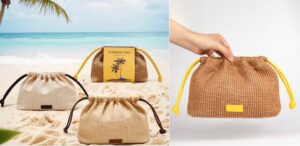
| Jute / linen / hemp blend | Spa, resort, botanical bodycare and natural texture stories | Patch, label, simple print | Strong visual texture; sample first because fine logo detail may be harder. |
| Tyvek-style lightweight material | Pop-up, travel and youth-oriented beauty promotions | Full-surface print, label | Explain material clearly; avoid paper-like assumptions without proof. |
| Vegan leather alternative | Premium holiday GWP, fragrance, loyalty gift sets | Debossing, metal plate, hot stamping | Leather-free does not automatically mean lower-impact; keep wording material-specific. |
How should buyers compare recycled materials?
Recycled cotton and rPET are strong because they let the buyer connect a reusable tote with a more specific material story. But the story should be evidence-based. If the campaign wants to mention recycled content, the sourcing team should ask which documentation can be provided and whether the scope applies to the exact bulk fabric. Textile Exchange’s GRS and RCS standards are commonly used as recycled-content frameworks [2], but the buyer still needs to confirm what is available for the project route being quoted.
For Beauty GWP, recycled cotton canvas is often the safer first option because it feels familiar, carries weight well and works with many logo methods. rPET can be useful for foldable totes and travel retail because it can be light and compact. The trade-off is that rPET often needs more careful claim control, especially if the campaign copy wants to highlight recycled content on packaging, product pages or retail materials.
When do natural fibers make more sense?
Natural fibers work best when the beauty brand already has a natural, wellness, botanical or spa story. Jute, linen, hemp blends and organic cotton can make a tote feel warmer and more tactile than a standard synthetic promotional bag. They also photograph well beside skincare jars, bodycare tubes, candles, towels and paper wraps. This is why natural fiber totes can support Beauty GWP campaigns even when they are not the most budget-led route.
The risk is that natural-looking does not equal substantiated. A jute tote should not automatically carry broad sustainability wording without context. Organic cotton should not be described that way unless the order route and documentation support that phrase. If textile safety is part of the brief, OEKO-TEX STANDARD 100 may be relevant for testing harmful substances in textile components [3], but the scope needs to match the actual component being claimed.
When should premium alternatives be used?
Vegan leather alternatives, coated materials and structured premium totes can make a Beauty GWP feel closer to a retail accessory. They are useful for fragrance, prestige skincare, holiday programs and loyalty gifts where perceived value matters more than a thin unit-cost target. The buyer should treat these as premium presentation routes rather than simple sustainability shortcuts.
The important language distinction is that vegan, leather-free and lower-impact are not interchangeable. A vegan leather look may avoid animal leather, but it may still involve coated materials, backing layers, adhesives and market-specific chemical considerations. For U.S. distribution, some materials, trims or accessories may also need California Proposition 65 warning review [7]. Premium alternatives should use precise language such as “vegan leather look,” “leather-free trim,” or the exact material route available.
Which claim wording is safer for beauty marketing teams?
Claim wording should be built after the evidence route is known. The European Commission’s green claims work also reflects a broader move toward more specific and substantiated environmental communication [5]. For Ecorivta content, this section is important because it teaches buyers how to brief a claim-safe tote instead of asking for a vague eco bag.
| Buyer wants to say | Safer wording | Avoid unless documented |
|---|---|---|
| Eco-friendly tote | Recycled-content fabric option available with documentation on request. | Broad eco-friendly, green or sustainable wording as standalone claims. |
| Recycled tote | rPET or recycled cotton route available; recycled-content proof to be confirmed by order. | Full recycled coverage if exact content and proof are not confirmed. |
| Sustainable packaging | FSC paper packaging | |
| [4] available when specified in the RFQ. | Fully sustainable packaging without scope. | |
| Safe fabric | Textile testing route can be quoted where required. | Non-toxic or chemical-free as broad claims. |
How should logo method and packaging be matched to material?
A sustainable tote can fail commercially if the logo method looks low-value or if the packaging does not match the gift value. Beauty teams should not choose material first and logo later. The logo, packaging and material should be considered together because all three affect perceived value. A one-color screen print may be perfect for a large skincare sampling campaign. A woven label or tonal embroidery may be better for a clean beauty launch. A debossed patch or metal logo detail may be appropriate only for a premium holiday gift.
| Material | Good logo route | Packaging route | GWP note |
|---|---|---|---|
| Canvas / recycled cotton | Screen print, embroidery, woven label | Hangtag, sleeve, paper band | Reliable for broad launch kits. |
| rPET | Heat transfer, woven label, simple print | Compact sleeve or pouch | Good when packability matters. |
| Jute / linen | Patch, label, simple print | Paper card only if claim is qualified | Texture carries the story. |
| Vegan leather alternative | Deboss, hot stamp, metal plate | Gift box or retail sleeve | Use for high perceived value, not low-cost giveaway logic. |
Which related Ecorivta page should buyers use next?
| Buyer moment | Best route | Open page |
|---|---|---|
| The team is still defining the Beauty GWP campaign. | Campaign planning and product-route comparison. | Beauty GWP Solutions |
| The team knows it wants a tote-led GWP. | Tote structure, size and material route selection. | GWP promotional tote bags |
| The team wants to compare recycled tote options. | rPET, recycled cotton and related material routes. | Recycled material tote bags |
| The brand story is wellness, spa or botanical. | Natural plant-based material direction. | Natural plant-based tote bags |
| The gift needs a premium leather-free look. | Vegan leather appearance and premium finishing. | Vegan leather tote bags |
Composite case: claim-safe tote material selection
A skincare brand wanted a tote for a clean beauty launch kit containing cleanser, moisturizer, a mini towel and a folded insert card. The first brief asked for a “sustainable tote” and referenced recycled cotton, rPET and natural fibers in the same sentence. Suppliers responded with different assumptions: one quoted recycled cotton canvas, one quoted an rPET packable tote, and another suggested jute because the mood board looked botanical. The prices and sample timelines were not comparable because the buyer had not separated material route, claim wording, logo method and packaging.
Ecorivta would rebuild the brief around evidence and campaign fit. If the team wanted a broad reusable launch tote, recycled cotton canvas could be the balanced route with a simple logo and documented material statement. If travel retail packability mattered, rPET could be compared with clear recycled-content evidence. If the brand story was spa or botanical, jute or linen could work, but the claim should be texture-led rather than overstated.
The final RFQ would ask each supplier for fabric composition, available proof, logo test, packaging route, sample timing and claim limits. Marketing would know what wording could be used. Procurement would know what documents were included. Operations would know which sample and packing details needed approval before bulk. If the preferred proof was not available in time, the brand could switch to a texture-led or material-specific message instead of delaying the launch or overstating the claim.
Anonymous buyer feedback
| Buyer role | What they said | Ecorivta response |
|---|---|---|
| Skincare founder | “We used one material word, but suppliers quoted three different routes.” | Separate campaign fit, material route and claim wording before RFQ. |
| Sustainability reviewer | “The certificate scope did not cover the whole tote.” | Match each claim to the exact component and document scope. |
| Procurement manager | “The tote looked good, but the packaging claim was mixed with the fabric claim.” | Keep tote material evidence separate from paper packaging evidence. |
Sibling Diff: sustainable tote material guide vs related pages
| Guide | Main question | Best next step |
|---|---|---|
| This material guide | What does each material or certificate prove for claim-safe tote sourcing? | Use it before writing public copy or approving supplier evidence. |
| GWP promotional tote page | Which tote format fits a beauty campaign? | Use it when the buyer is ready to choose tote structure and product route. |
| Recycled material tote page | Which recycled tote options can be sourced? | Use it when recycled content is already the preferred route. |
| Beauty GWP hub | Which GWP product belongs in the campaign? | Use it before deciding whether the gift should be a tote, pouch or accessory set. |
What MOQ and timeline should buyers plan around?
MOQ depends on material availability, color, structure, logo method and packaging. A simple canvas tote with one logo route may start around 500 pieces depending on the supplier’s existing material and production setup. A custom-dyed fabric, documented recycled-content lot, special trim, retail packaging or tote plus pouch set can push MOQ higher. This should be stated as an indicative planning range, not as a final quote.
The practical sourcing move is to ask for three quote routes: quick-launch, balanced and premium. The quick-launch route uses available material and conservative claims. The balanced route adds stronger material evidence or packaging. The premium route adds retail-ready finishing, stronger packaging and higher perceived value. This gives procurement and marketing a real choice instead of reducing the decision to unit price.
What should a sustainable tote RFQ include?
- Campaign type: skincare, makeup, fragrance, wellness, haircare, travel retail or seasonal gift.
- Target product route: canvas, recycled cotton, rPET, jute, linen, organic cotton, vegan leather alternative or set pairing.
- Claim wording being considered and proof required.
- Logo method: print, embroidery, woven label, debossing, patch, metal plate or hangtag.
- Packaging route: paper band, FSC card, sleeve, gift box, reusable pouch or carton labeling.
- Quantity, target launch date, destination market and sample approval deadline.
- Fallback route if the preferred material or claim proof is not available.
Who We Don’t Take On
- Projects that ask for broad eco-friendly claims without evidence or qualification.
- Projects that only want a generic tote price and do not have a Beauty GWP campaign brief.
- Projects that require unauthorized major beauty client names, retailer names or logos in public copy.
- Projects with launch dates that skip sample approval, material confirmation, packaging review or QC planning.
About the author
Lina Lv works with beauty brands and private-label buyers on custom cosmetic bags, tote bags, Beauty GWP accessories and RFQ preparation. Her work focuses on translating product fill, material choices, packaging scope and sampling needs into supplier-ready briefs.
Trademark and certification notice
All third-party brand, retailer, certification and regulatory names mentioned in this article belong to their respective owners. Their appearance is for identification and sourcing-context discussion only and does not imply endorsement, partnership or approval. Certification names should be used only when the order scope and supplier evidence support the specific claim.
FAQ
What is the best sustainable tote material for a Beauty GWP campaign?
There is no single best material. Recycled cotton canvas is often the safest broad launch route, rPET fits packable high-volume campaigns, jute or linen supports natural skincare stories, and premium vegan leather alternatives fit higher perceived-value retail gifts.
Can a beauty brand call a tote eco-friendly?
Use caution. Broad eco-friendly claims need qualification and evidence. It is safer to name the material route and proof available, such as recycled-content fabric documentation or FSC paper packaging.
What MOQ should buyers expect for sustainable tote GWP projects?
Simple logo projects may start around 500 pieces depending on material and supplier availability. Custom dyeing, special trims, custom packaging or documented recycled-content routes may require 1,000 pieces or more.
Which logo method works best for sustainable tote materials?
Screen print works for simple canvas launches, embroidery or woven labels improve perceived value, heat transfer can fit rPET, and debossed or metal logo details are better for premium vegan leather routes.
What should be included in a sustainable tote RFQ?
Include campaign type, material route, claim wording, proof required, logo method, packaging, target quantity, destination market, sample deadline and fallback options.