Quick Buyer Summary for Insulated Beauty Pouches
An insulated beauty pouch should not be briefed like a generic cosmetic bag. For skincare oils, lipsticks, creams and active products, the buyer first needs to define the heat-risk scenario: daily carry, travel, retail set, summer launch, or gift-with-purchase protection. That decision affects shell fabric, lining route, zipper, logo, packing and sample testing.
For a serious RFQ, confirm the product dimensions, lining expectation, target market, launch window, quantity and brand finish before asking for price. Material safety can reference OEKO-TEX Standard 100 1, environmental wording should stay careful under guidance such as FTC Green Guides 2, and color handoff can use Pantone Color Systems 3 when shell, lining and trim must stay on brand.
Start With the Heat Risk, Not the Bag Shape
A recent skincare buyer asked for a premium insulated pouch because beauty oils, lipsticks and active skincare products can be affected by heat, sunlight and travel conditions. That is a stronger brief than simply asking for a cosmetic pouch. The supplier needs to know what problem the pouch is supposed to reduce before recommending a material route.
There are several different use cases. A retail skincare set may need a clean exterior, wipeable lining and premium unboxing. A travel pouch may need light weight, zipper reliability and water-resistant shell material. A summer brand campaign may need color consistency, fast sampling and a clear launch date. Each route looks similar in a photo, but the production questions are different.
Do not start by asking for the lowest-cost insulated bag. Start by describing the product that goes inside and the buyer journey. If the pouch will hold glass bottles, the inside dimensions and protection expectation matter. If it holds lipsticks or cream jars, the buyer may care more about lining cleanliness, temperature wording and whether the pouch can still look premium in a beauty set.
| RFQ item | What to confirm | Why it matters |
|---|---|---|
| Use case | Skincare travel, retail set, launch gift, summer campaign or daily carry. | The use case decides lining, shell, logo and packing route. |
| Lining | Thermal, padded, metallic, wipeable or water-resistant route. | The lining changes usable space, seam construction and claim wording. |
| Sample test | Filled-product fit, zipper movement, corner finish, logo clarity and packing. | The buyer needs proof that the pouch works with real skincare products. |
| Timeline | Sample date, launch date, destination and shipping method. | Fast projects may require stock material and air shipping rather than custom material development. |
Lining Route Controls the Real Sample Test
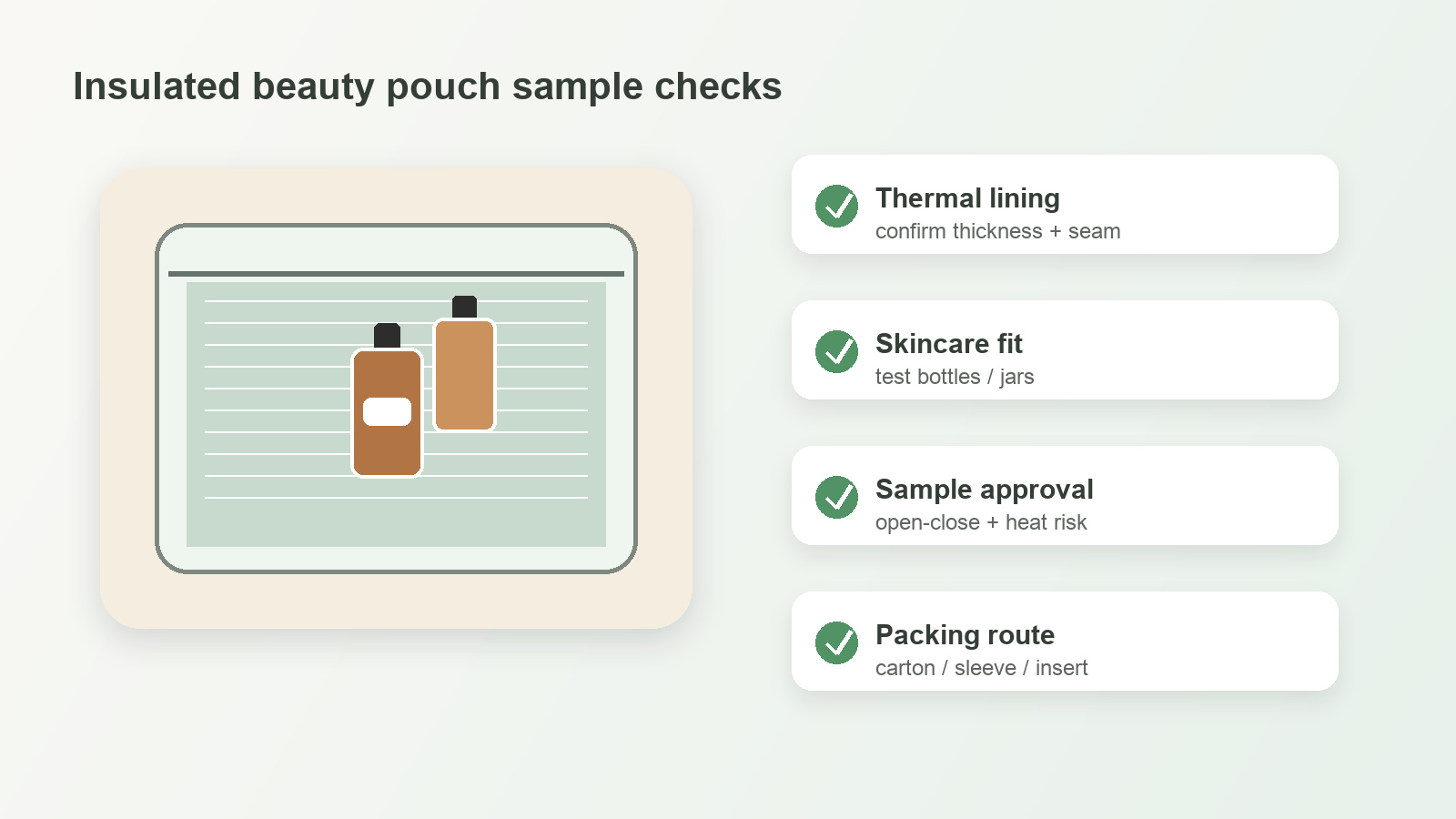
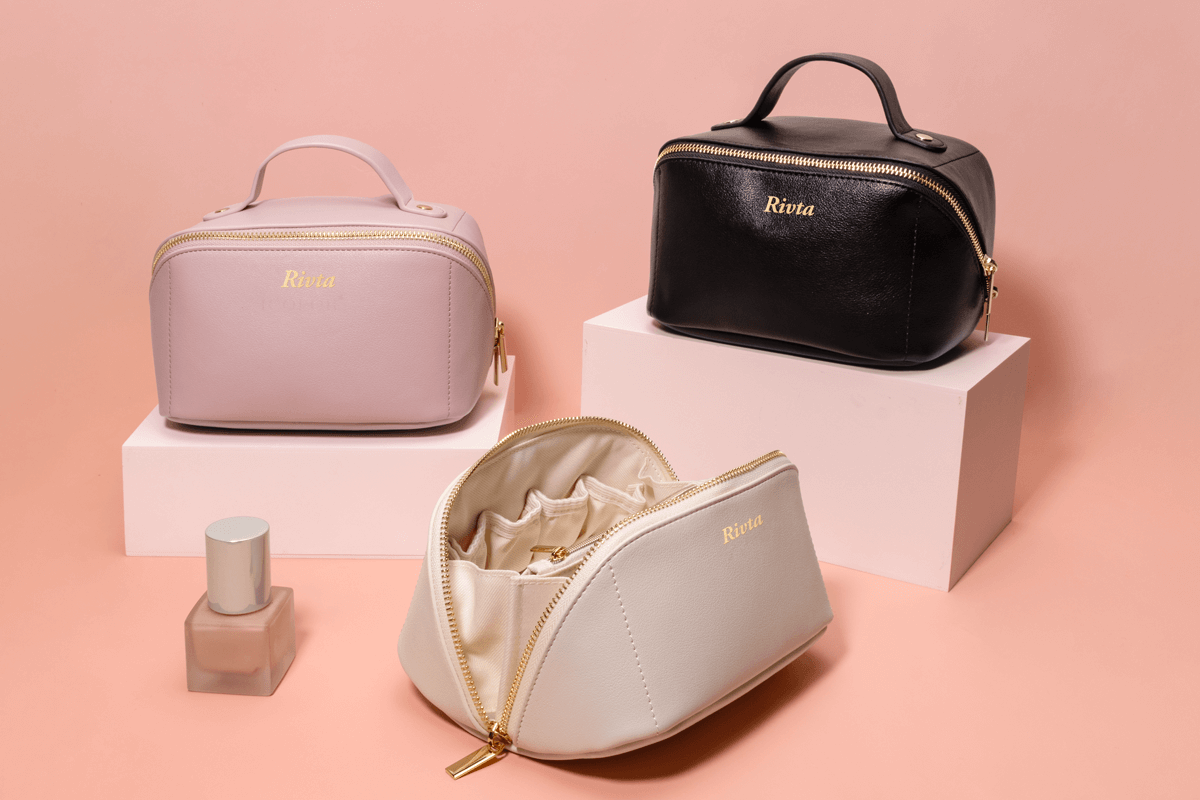
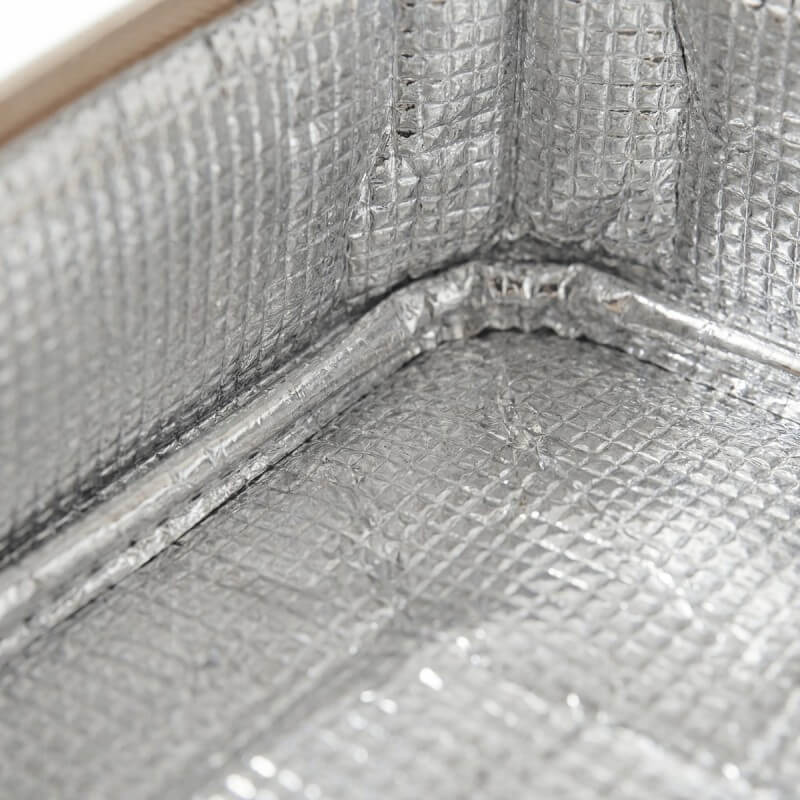
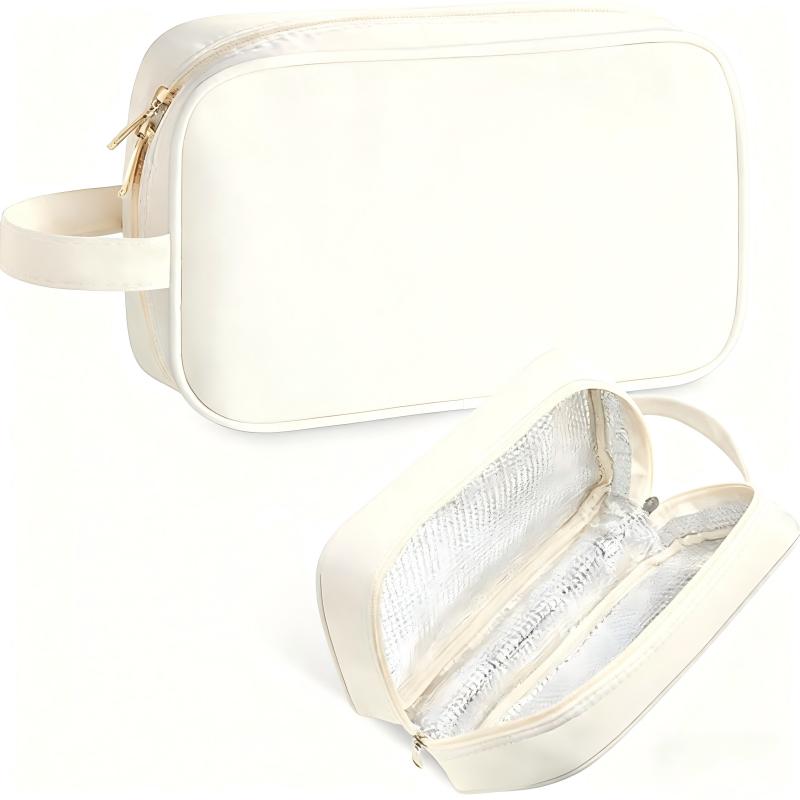
The lining is the part that makes this project different from a normal beauty pouch. A buyer may ask for thermal insulation, padded lining, metallic lining, water-resistant lining or easy-clean lining, but those phrases are not interchangeable. The sample should show how the lining is attached, how thick it feels, whether it changes the usable inside space, and whether the seam finish looks clean.
If the pouch is positioned as premium, the lining cannot feel noisy, low-grade or bulky. If the pouch is positioned as protective, the lining needs a realistic explanation of what it can and cannot do. For example, a lining may help reduce direct heat exposure during daily carry, but it should not be described as a medical-grade cold-chain solution unless the buyer has real testing to support that claim.
A useful sample review checks four things: inside dimensions after lining, zipper movement around thicker layers, corner construction, and how the lining behaves after repeated opening. If the lining looks good only in a flat photo but folds poorly near the corners, the buyer will see the issue when filling the pouch with real skincare products.
Shell, Logo and Color Should Fit the Skincare Brand Level
For skincare brands, the shell material and logo method create the first impression. Metallic silver, soft nylon, coated fabric, smooth recycled fabric or textured routes can all work, but each route changes logo clarity, MOQ, lead time and packing. The buyer should decide whether the pouch is a premium retail item, a launch gift, a travel protector or a kit component.
A metallic exterior can look premium, but the buyer should approve the actual material under normal light. A water-resistant shell can be practical, but the supplier should confirm whether the surface accepts printing, embossing, woven label, puller tag or metal plate. A soft fabric route can feel more beauty-oriented, but it may need extra care around stains and structure.
Color should be approved as a real material sample, not only a rendering. The shell, zipper, lining, puller, label and packing can each shift slightly. For a high-end skincare launch, those small shifts can make the set feel less controlled. Ask for the material swatch, logo sample and packing mockup together before locking the bulk route.
What to Put in the RFQ Before Asking for Unit Price
The buyer does not need to prepare a complicated technical file at the first message, but the first RFQ should contain enough detail for a real quotation. Send the product use, rough dimensions, quantity range, destination market, target launch date, desired shell feel, lining expectation, logo method and packing route. If there is a reference photo, explain what should be copied and what should be improved.
A strong RFQ also states what matters most: premium feel, heat-risk reduction, fast sampling, gift packaging, retail barcode, or long-term replenishment. Those priorities let the supplier recommend a realistic route instead of quoting a visually similar pouch with the wrong lining or finish.
For sample approval, ask the supplier to photograph the inside lining, zipper area, corner construction, logo detail and filled pouch. If possible, place the real skincare products or similar-size mock products inside the sample. A pouch can look correct when empty but feel too tight once bottles, jars or tubes are added.
Send a Focused Beauty GWP Brief
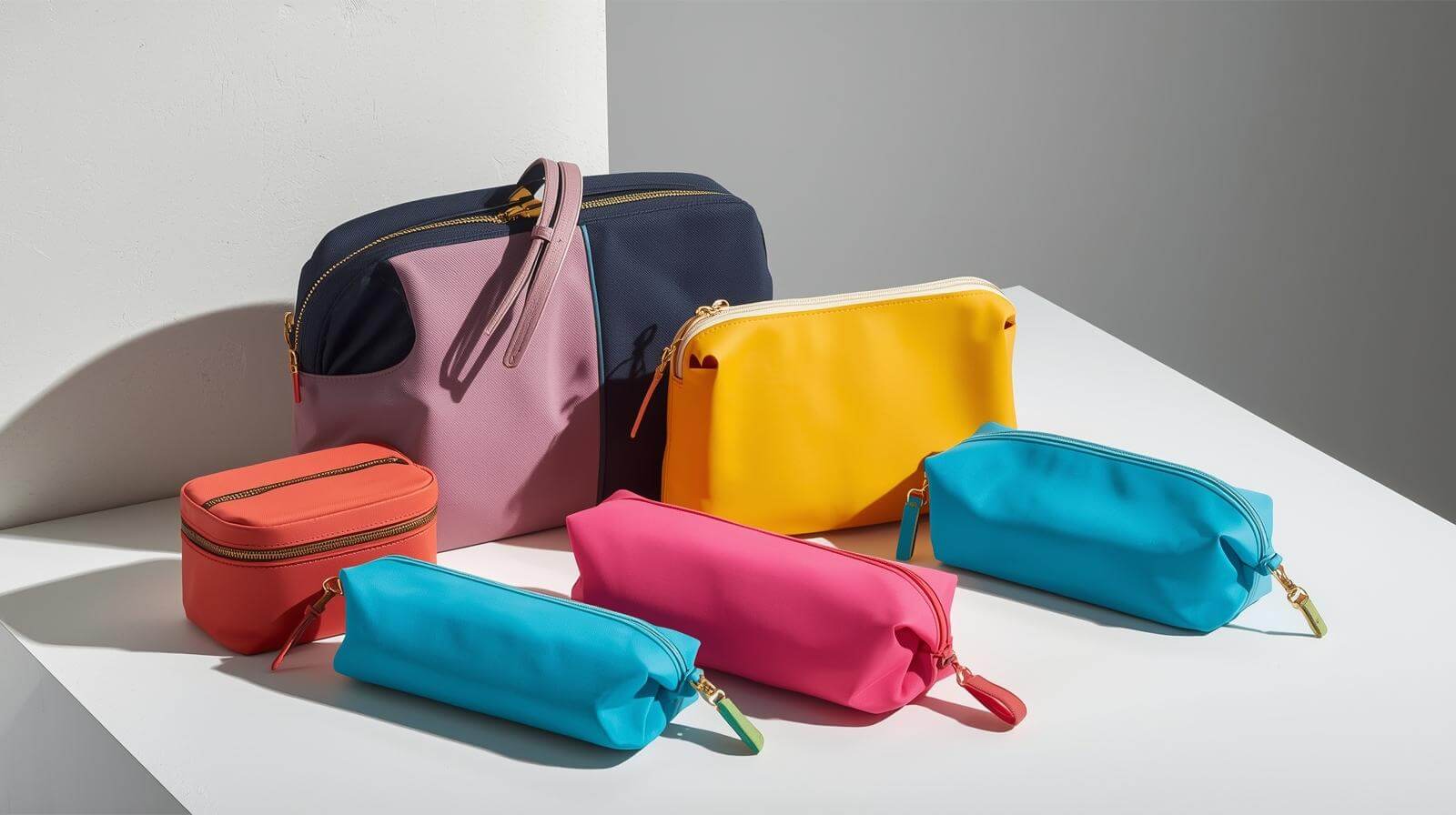
Send the product role, reference photo, material preference, quantity, target market, launch window, logo route, packing requirement and any sample concern. A focused first message gives the supplier enough context to recommend the right sample route without asking the buyer to prepare an oversized technical file.
Compare beauty pouch materials
Buyer Questions
Is an insulated beauty pouch the same as a normal cosmetic bag?
No. A normal cosmetic bag mainly stores products. An insulated beauty pouch must also define lining route, heat-risk expectation, wipeability, closure, sample testing and packing.
Can Ecorivta make a metallic or water-resistant insulated pouch?
Yes, the route depends on shell material, lining structure, zipper, logo method and packing target. A sample should be checked before bulk approval.
What should a skincare brand send before sampling?
Send product dimensions, target use, quantity range, delivery market, launch window, shell and lining preference, logo file and packing expectation.
Should heat protection be claimed on the pouch?
Use careful wording. The buyer should define practical storage and travel expectations, then avoid unsupported temperature or performance claims unless tested and documented.
Related Ecorivta pages and guides
- Beauty GWP Cosmetic Bags – Main page for cosmetic bags and beauty pouch programs.
- Quality Control – Use this page when sample checks and bulk approval need to be aligned.
- Contact Ecorivta – Send a focused insulated pouch RFQ.
Evidence Used in This Brief
-
OEKO-TEX Standard 100 – Used as a safety reference when buyers discuss fabric, lining and skin-adjacent accessory materials.. ↩︎
-
FTC Green Guides – Used to keep reusable, sustainable or environmental wording careful and evidence-based.. ↩︎
-
Pantone Color Systems – Used for brand color communication across shell fabric, lining, trim, logo and packaging.. ↩︎