
Sustainable hair accessories for beauty GWP should not be planned as an environmental slogan. A buyer needs to know which material, accessory component, packaging item, certificate scope and supplier evidence support each claim before the project moves into sampling or bulk production.
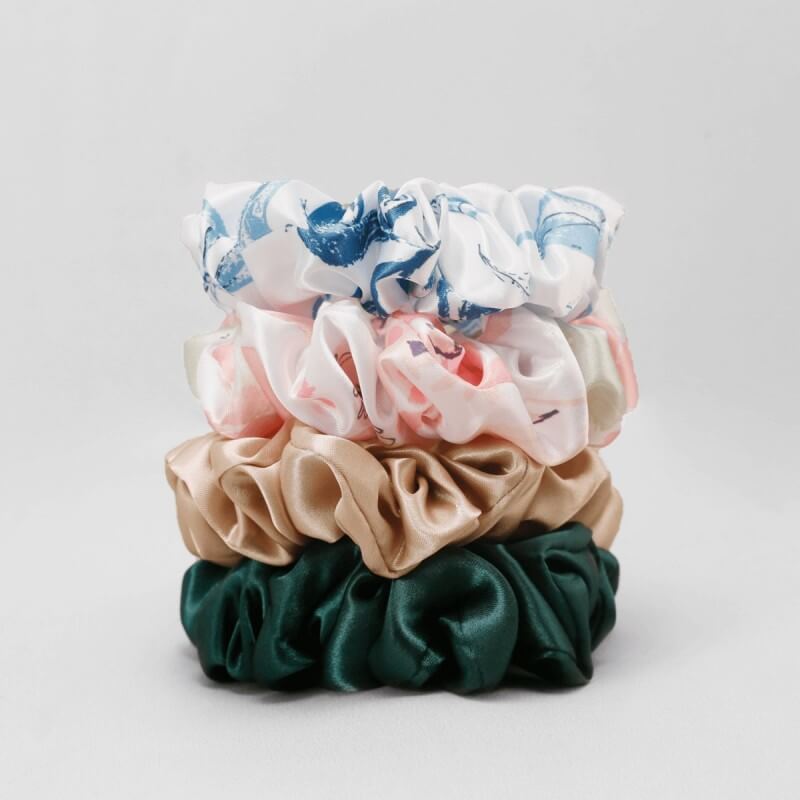
TL;DR: Material choice is a claim and certificate-scope question, not a color palette. Ask what each material or certificate proves, what it does not prove, which component it covers, what evidence the supplier can share and what wording can appear on the product, packaging or buyer-facing copy.
Best fit
This guide is best for beauty brands, haircare teams, wellness brands, private-label buyers and sourcing managers comparing claim-sensitive hair accessories for a GWP program. It fits scrunchies, headbands, clips, barrettes and accessory sets where the buyer wants to use recycled-content language, certified paper packaging, textile safety references, lower-impact material routes or a more responsible presentation without overstating what the evidence supports. It is especially useful when the buyer already has a campaign type, destination market, target quantity, accessory direction, packaging idea and approval owner, but needs a practical way to separate product claims, packaging claims and supplier evidence before RFQ.
Less suitable
This guide is less suitable for one-piece personal orders, generic marketplace resale, early inspiration boards with no accessory type, or projects where the buyer wants broad environmental wording before evidence review. It is also not a legal, customs, child-product or chemical compliance manual. If the buyer cannot define accessory type, destination market, quantity, packaging route, claim wording, proof needs or sample timeline, the first task is to build the brief. A material or certificate discussion becomes useful only when it is tied to a real component and market use.
What this material or certificate proves and does not prove
The safest way to compare sustainable hair accessories is to ask what each material route or certificate actually covers. A document may apply to fabric, paper, supplier process or a specific batch; it does not automatically cover the entire finished accessory, logo, trim, packaging and campaign copy.
| Material/certificate | Proves | Does not prove | RFQ evidence |
|---|---|---|---|
| Recycled-content plastic | A stated material route may include recycled content when documentation supports the input | It does not prove finished-product performance, color stability or all accessory parts | Material declaration, supplier document, component scope and color tolerance note |
| Recycled polyester fabric | Fabric composition may support a specific recycled-content fabric claim | It does not prove elastic, thread, label, card or packaging scope | Fabric specification, certificate scope where available, sample swatch and artwork wording |
| OEKO-TEX textile reference | A textile component may meet a stated test scope when the certificate applies | It does not prove all materials, claims, packaging or child use | Current certificate, covered component, certificate holder and finished-use note |
| FSC paper card or sleeve | Paper packaging may come from a certified paper route when chain-of-custody applies | It does not prove the hair accessory material is sustainable | Paper specification, printer or supplier scope, artwork wording and packaging sample |
| Existing mold route | The project may avoid new tooling and shorten sample work | It does not prove lower impact or recycled content by itself | Mold availability, material route, color options, MOQ and sample photos |
| Durable reusable accessory | The design may support longer shopper use when quality is strong | It does not prove environmental benefit without qualified wording | Function test, hinge or elastic check, user scenario and claim wording review |
Sibling Diff: how this guide differs from nearby Ecorivta pages
| Related page | Use that page when | Use this guide when |
|---|---|---|
| Sustainability | The buyer wants Ecorivta’s broader sustainability position and material approach. | The buyer needs hair-accessory-specific claim and certificate boundaries. |
| Custom Branded Beauty Accessories | The buyer is choosing accessory type, branding route and campaign role. | The buyer has an accessory direction and needs proof-sensitive material planning. |
| Contact Ecorivta | The buyer is ready to submit files for review. | The buyer wants to prepare material, claim, packaging and RFQ evidence first. |
Explore Beauty Accessory Routes
How should buyers separate product, packaging and wording claims?
A hair accessory GWP may include several different claim areas. The clip, fabric, elastic, back card, sleeve, carton and buyer-facing copy can each have a different evidence boundary. The brief should separate them before artwork is approved.
| Claim area | Buyer question | Supplier response needed |
|---|---|---|
| Product material | Which component is the claim about: clip body, fabric, elastic, trim or label? | Material route, component scope and available document. |
| Packaging material | Is the claim about paper card, sleeve, pouch, box or carton? | Paper or packaging specification and artwork wording limit. |
| Textile safety | Is the statement about a tested textile component or general product safety? | Certificate copy, covered item and date or validity check. |
| Reuse or durability | Is the claim based on function, quality or shopper behavior? | Sample test, hinge or elastic evidence and conservative wording. |
| Market wording | Where will the claim appear: product page, insert card, hangtag or retail deck? | Approved copy, owner, deadline and destination-market review note. |
Which accessory routes need the most evidence?
Clips, scrunchies and headbands carry different proof needs. A recycled-content clip may need stronger component documentation and color-tolerance review. A scrunchie may need fiber composition, dye, elastic and skin-contact wording. A headband may need size, stretch, wash guidance and packaging discipline.
| Accessory route | Useful when | Evidence priority |
|---|---|---|
| Hair clip or claw clip | Haircare, styling, counter gift or accessory set | Material route, hinge strength, edge finish, color stability and claim wording |
| Scrunchie | Wellness, skincare routine, haircare launch or soft gift set | Fabric composition, elastic recovery, seam strength, dye route and packaging card |
| Headband | Cleanser, mask, spa or self-care routine | Fit, stretch, absorbency, wash note, textile scope and skin-contact wording |
| Accessory set | Retail-ready GWP or campaign kit | Component list, packaging layout, carton protection and copy owner |
| Packaging-led route | Standard product material with stronger presentation | Paper scope, card wording, barcode location and claim separation |
Composite case: when the packaging claim was safer than the product claim
A haircare brand planned a GWP accessory set with a claw clip, scrunchie and printed back card. The first internal copy called the set a sustainable hair accessory kit because the colors looked natural and the supplier had offered a recycled-content plastic option for the clip. During RFQ review, the team found that the recycled-content route affected color consistency, raised MOQ and did not cover the scrunchie fabric, elastic, label or paper card.
Ecorivta helped the buyer separate the claim areas. The clip could be quoted in a documented recycled-content route, but the buyer needed to approve color tolerance and sample timing. The scrunchie needed a separate fabric composition note and elastic check. The back card had a clearer paper route, so the team moved the main sustainability wording to the packaging and used more precise product-material language only where evidence applied.
The final RFQ asked for component-level material declarations, packaging specification, artwork wording, sample photos, elastic recovery, clip hinge checks and carton packing notes. The buyer chose a balanced route: documented paper card, conservative accessory copy, and a product-material option held for a larger future order. That decision also helped the design team keep the front-card message clean while procurement kept the evidence file specific. The lesson was practical: the strongest claim is often the one with the clearest scope, not the one that sounds broadest.
Anonymous buyer feedback
| Buyer situation | What they changed | What improved |
|---|---|---|
| Haircare launch | Separated clip material claim from paper-card wording | Marketing copy became easier to approve before artwork. |
| Skincare routine GWP | Added textile scope and wash guidance for headbands | Sample review covered function and wording together. |
| Wellness gift set | Asked for fallback material routes and packaging evidence | The buyer had a practical option when MOQ shifted. |
What should the RFQ include?
Send campaign type, accessory type, destination market, target quantity, material route, claim wording being considered, certificate or proof needed, packaging route, color and logo requirements, sample approval deadline, and fallback route if proof is not available. Ask the supplier to state which component each document covers and which words should stay out of artwork.
Who We Don’t Take On
Ecorivta is not the right partner for projects that request broad environmental, safety or child-use claims without evidence. We are also not a fit for requests that only want a generic accessory price while requiring premium proof, retail packaging and tight launch timing. Our workflow is built for buyers who can define accessory type, quantity, destination market, packaging route, claim owner and approval timeline.
About the author
Lina Lv works with beauty and personal care teams on hair accessories, cosmetic bags, toiletry bags and beauty GWP sourcing. Her work focuses on turning buyer briefs into sample-ready project information, then keeping material, logo, packing, certification and QC records aligned before production.
Trademark and certification notice
All trademarks, retailer names, certification marks and third-party standards referenced in this guide belong to their respective owners. Ecorivta does not represent those organizations. Certification, claim wording, barcode use and market labeling should be reviewed against the buyer’s own files, applicable program rules and destination-market requirements before printing or shipment.
FAQ
What does a material certificate prove for a hair accessory?
It proves only the scope stated in that document, such as a specific fabric, paper route, supplier process or component. It should not be treated as proof for the entire finished accessory unless the document says so.
Can packaging carry a different claim from the accessory?
Yes. A paper card, sleeve or box may have a separate evidence route from the clip, scrunchie or headband. The wording should make that boundary clear.
What should buyers ask before sampling?
Ask which component the claim covers, what proof is available, what MOQ changes with the route, how color will be controlled, and what fallback route is available if evidence is not enough.
When should broad sustainability wording be avoided?
Avoid broad wording when the buyer cannot tie it to a specific material, component, package or certificate scope. Use precise, evidence-based wording instead.
Sources
- Environmental marketing guidance, Federal Trade Commission.
- Green claims policy context, European Commission.
- ISO 14000 family environmental management standards, ISO.
- OEKO-TEX STANDARD 100, OEKO-TEX.
- FSC responsible forestry and labels, Forest Stewardship Council.


对比丝印托特包的写实概念海报图;海报上的文字为:-Screen-Printing-vs.-Embroidery_-Which-Branding-Method-Suits-Custom-Canvas-Tote-Bags-300x168.jpg)

