Screen printing vs embroidery is not only a logo-method choice for Beauty GWP totes. It is an approval handoff problem that connects artwork files, Pantone color, logo placement, logo size, proof sample, carton marks, packaging scope and market version before bulk production.
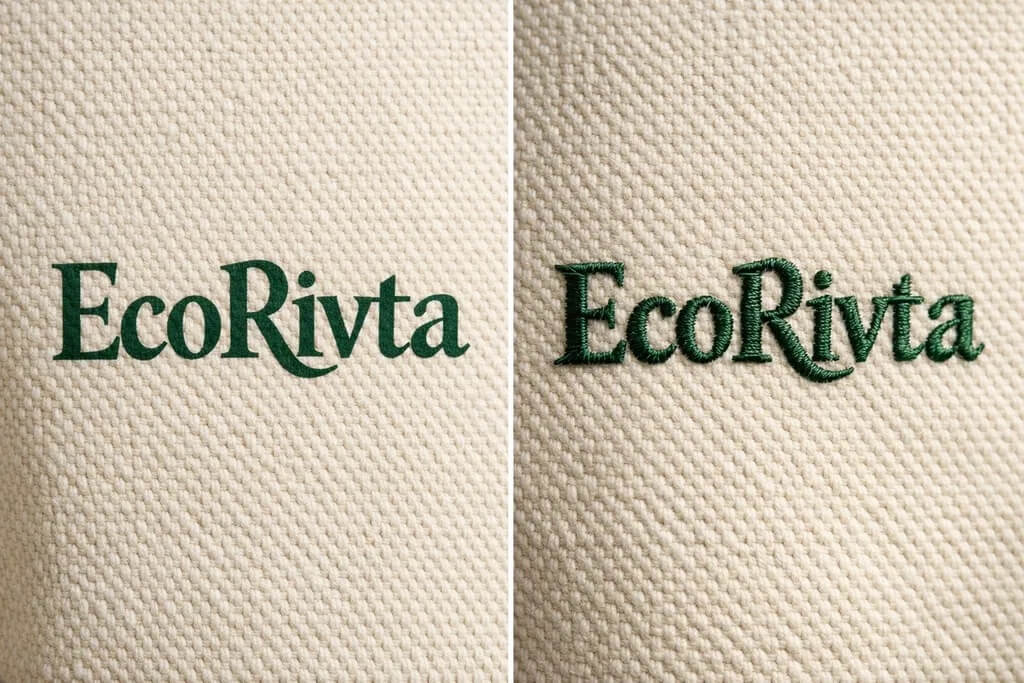
TL;DR: Choose screen printing when the tote needs large flat artwork, campaign graphics, multiple units and tighter cost control. Choose embroidery when a smaller logo needs texture, higher perceived value and a more retail-like finish. In both cases, buyers should approve artwork file, Pantone, placement, size, process proof, carton mark and market version before the supplier books bulk.
Buyer Summary
For most Beauty GWP tote programs, screen printing is the practical route for high-volume skincare, makeup, haircare and event totes with flat color artwork. Embroidery is the premium route for smaller marks, fragrance gifts, loyalty sets and elevated canvas totes where tactile value matters. The procurement conclusion is clear: the logo method should not be approved from a mockup alone. Buyers need a production-ready file, Pantone or thread color reference, logo position, logo size, material route, packaging scope, carton mark and market version in the RFQ before sample approval.
Best fit
This guide is best for beauty founders, brand teams, creative operations leads, sourcing managers and packaging owners choosing between screen printing and embroidery for a Beauty GWP tote. It fits campaigns where logo execution affects perceived value, sample timing, quote comparison, packaging approval or retail presentation. It is especially useful when the team has a tote concept and logo file, but has not yet fixed Pantone color, placement, size, canvas weight, packing method, carton mark or market version. The guide also fits buyers comparing screen print, embroidery, woven label, patch or hybrid routes before sample approval. It helps marketing and procurement use the same approval checklist instead of treating artwork and supplier evidence as separate files.
Less suitable
This guide is less suitable for one-piece personal orders, unbranded resale totes, copied artwork without permission or projects where the buyer only needs a blank tote quote. It is also not the right workflow when the team has no logo file, no target market, no quantity range, no product fill, no sample deadline and no owner for artwork approval. If the campaign has already approved final physical samples and only needs repeat production, a shorter reorder checklist may be enough. The guide does not replace brand guideline approval, legal review, retailer review or formal lab testing when those steps are required by the buyer’s market.
Artwork and logo approval handoff
The handoff should make it easy for the supplier, buyer, designer and packaging owner to review the same details. A logo method can fail even when the artwork looks good on screen. Print color can shift on natural canvas, so buyers often use a Pantone color reference [1] or approved swatch to align artwork and sample review. Embroidery can distort small type. Carton marks can use an old market version. A missing packed-sample photo can hide folding, scuffing or placement problems until bulk goods arrive. ISO 9001 quality-management [2] is useful context because logo approval should be repeatable, not based on a single digital mockup.
Material and packing evidence should stay separate from logo taste. OEKO-TEX STANDARD 100 [3] may relate to textile safety scope, GRS [4] can matter for recycled fabric routes, FSC [5] belongs with paper sleeves or insert cards, ISTA packaging procedures [6] help buyers think about packed presentation, and amfori BSCI [7] is supplier social-compliance context, not a logo-quality proof.
| File | owner | approval evidence | risk if missing |
|---|---|---|---|
| Vector logo file | Brand or designer | AI, EPS, PDF or SVG with outlined fonts and final logo version. | Supplier may rebuild artwork and change line weight, spacing or shape. |
| Pantone or thread color reference | Brand, designer and supplier | Pantone number, thread card reference or approved color swatch on actual fabric. | Logo color may shift against canvas, rPET, dyed fabric or lining shade. |
| Placement file | Designer and sourcing owner | Front/back panel, distance from top edge, handle clearance and centered measurement. | Logo can sit too high, too low or too close to seam and handle stitching. |
| Logo size file | Brand and supplier | Width, height, stitch area or print area confirmed in millimeters. | Small type can blur in print or distort in embroidery. |
| Process proof | Supplier and buyer | Print proof, embroidery digitizing proof, pre-production sample and approval photos. | Bulk can proceed from a digital mockup without checking real fabric behavior. |
| Packaging and carton mark file | Packaging owner | Hangtag, sleeve, polybag, carton mark, SKU and market version checked together. | Packing can use outdated copy, wrong SKU, wrong market label or unclear carton ID. |
| Market version sheet | Brand, distributor or retailer owner | US, EU, UK, travel retail or regional version named in the RFQ. | Artwork, warning text, language, barcode or packaging copy may not match launch channel. |
Sibling Diff: how this page should not compete with nearby Ecorivta pages
| Page | Primary job | This page should own |
|---|---|---|
| Beauty GWP Solutions | Plan the full gift route, product set, launch timing and supplier workflow. | Logo-method approval handoff for totes before quote and sample. |
| Custom Tote Bags | Choose tote size, fabric, handle, structure and product use. | Screen print vs embroidery decision and artwork proof requirements. |
| Beauty GWP Logo Bag Perceived Value | Explain how logo details lift perceived value across bags. | A tote-specific comparison of screen print, embroidery and approval files. |
| Tote QC Checklist | Inspect final tote quality before or during bulk. | What logo and packaging files must be approved before production starts. |
How should buyers choose between screen printing and embroidery?
Screen printing works best when the artwork is flat, readable and campaign-led. It is the better first route for large slogans, seasonal graphics, event totes, skincare sampling totes and makeup launch bags where the tote carries a visible message. Embroidery works best when the logo is smaller, simpler and meant to feel more permanent. It suits fragrance, premium skincare, spa, wellness and loyalty programs where texture and perceived value matter more than large artwork.
| Decision point | Screen printing route | Embroidery route | Approval note |
|---|---|---|---|
| Artwork type | Flat logo, slogan, graphic block or larger campaign message. | Small logo, monogram, simple icon or tonal mark. | Check whether fine lines, gradients or tiny type need simplification. |
| Material route | Smooth canvas, recycled fabric or lighter tote panels. | Medium to heavy canvas or stable fabric with enough backing. | Approve logo method on the exact fabric, not a substitute swatch. |
| Color control | Pantone ink match and opacity on actual fabric. | Thread card reference and lighting review. | Natural canvas shade can change the perceived color. |
| Production planning | Good for larger quantities and repeated campaign graphics. | Good for premium smaller marks with controlled stitch count. | Quote after size, color count and artwork file are reviewed. |
| Packing review | Check scuffing, ink transfer and fold line position. | Check snagging, backing, thread ends and raised logo pressure. | Packed sample approval matters for retail and fulfillment. |
Composite case: when a logo proof changed the tote approval route
A skincare brand planned a canvas tote for a spring Beauty GWP set with three products, a folded insert card and a paper sleeve. The creative file showed a large two-color logo on natural canvas, and the first buyer note asked for embroidery because the team wanted the gift to feel more premium. Ecorivta reviewed the file before quote and found that the logo included thin serif text, a gradient leaf detail and a wide horizontal slogan. The embroidery route would have required a large stitch area, higher sample time and likely distortion around the small text.
The team changed the approval route instead of forcing the original idea into the wrong process. The supplier prepared a one-color screen print proof for the large slogan and a small woven label option for the brand mark. The RFQ added Pantone reference, logo width, front-panel placement, handle clearance, sleeve artwork, carton mark and market version. The buyer also requested a packed sample photo because the sleeve covered part of the tote face when folded.
After the first sample, marketing kept the screen print for the campaign line and moved the brand logo to the woven label. The tote still felt giftable because the canvas weight, label detail and sleeve presentation worked together. More importantly, the quote file now showed who approved the artwork, which proof was physical, which market version was used and how carton marks should identify the launch SKU before bulk.
Anonymous buyer feedback
| Buyer type | What changed after review | Result |
|---|---|---|
| Skincare creative lead | Replaced oversized embroidery with screen print plus woven label. | The logo stayed cleaner and the tote still felt giftable. |
| Packaging project manager | Added sleeve file, carton mark and market version to the RFQ. | Packing approval matched the launch channel before bulk booking. |
| Private-label sourcing lead | Required Pantone, placement and packed sample photos before quote lock. | Supplier comparison became easier and late artwork changes dropped. |
What should the RFQ include?
The RFQ should include campaign type, tote material, canvas weight, size, handle style, product fill, quantity range, logo file, Pantone or thread reference, placement, logo size, process choice, proof requirement, packaging scope, carton mark, market version, sample deadline, launch date and approval owner. If the buyer is unsure whether screen printing or embroidery is better, send both the logo file and the intended use case. Ecorivta can review artwork limits before suggesting a route.
Who We Don’t Take On
Ecorivta is not the right partner for copied logos, unauthorized public use of beauty client names, no-brand resale stock, one-piece personal purchases or projects that ask for unsupported environmental, certification or chemical-safety wording on the tote or packaging. We work best with beauty teams that can share real artwork, target market, launch timing, material route and an approval owner before sample production.
About the author
Lina Lv is a Brand & Product Specialist at Ecorivta. She works with beauty buyers on GWP tote bags, logo-method comparison, artwork approval, packaging handoff, sample review and RFQ preparation for skincare, makeup, fragrance, haircare and wellness campaigns.
Trademark and certification notice
All trademarks, certification names, brand names and retailer names belong to their respective owners. Ecorivta can help organize artwork files, supplier proof and packaging scope for buyer review, but final logo use, brand guideline approval, market wording and certification interpretation should be confirmed by the brand, retailer or qualified advisor for the target market.
Sources
- Pantone, brand color and color reference resources. Source ↩
- ISO, ISO 9001 quality management. Source ↩
- OEKO-TEX, STANDARD 100. Source ↩
- Textile Exchange, Global Recycled Standard. Source ↩
- Forest Stewardship Council, FSC labels and paper sourcing context. Source ↩
- ISTA, transport packaging test procedures. Source ↩
- amfori, BSCI social compliance context. Source ↩
FAQ
Is screen printing or embroidery better for Beauty GWP tote bags?
Screen printing is usually better for larger flat artwork, visible campaign graphics and higher-volume launch totes. Embroidery is usually better for smaller marks where texture and perceived value matter.
What logo file should buyers send before quote?
Send vector artwork with outlined fonts, Pantone or thread color reference, logo size, placement measurement, market version and any packaging files that carry the same branding.
Why does carton mark matter in a logo-method guide?
Carton marks connect the approved artwork to the correct SKU, market version and packing route. They help prevent the wrong artwork or packaging version from moving into bulk shipment.
Should buyers approve a digital mockup only?
No. A digital mockup is useful, but buyers should approve a physical print proof or embroidery proof on the actual tote material, plus packed sample photos when packaging affects presentation.