A travel amenity kit is not only a toiletry bag. The brief should connect the toiletry bag, clear pouch, insert card, barcode, packing count, carton mark and sample approval route before the buyer asks for a final quote.
This guide is written for beauty brand sourcing, hotel amenity, travel retail, airline-adjacent, spa and promotional teams planning a travel amenity kit with Ecorivta. It supports the toiletry travel bags page 1 and the clear cosmetic pouch materials page 2 without competing with them. The product pages carry the inquiry; this article explains how to prepare a kit brief that makes the RFQ and sample approval usable.
Quick Summary
- Brief the kit as one system. Toiletry bag, clear pouch, insert card, barcode, packing count and carton mark should be reviewed together.
- Use case changes the route. Hotel amenity, travel retail, beauty GWP, spa kit and DTC bundle may need different materials and packout evidence.
- Clear pouch material should be named early. EVA, TPU and other transparent routes affect look, softness, durability, cost and travel use context.
- Target price and launch timing should come before material upgrades. They help Ecorivta decide whether to simplify the bag, pouch or card route.
- Sample approval should include the full packout. Approve bag, pouch, insert card, barcode, carton mark and pre-shipment photo scope before bulk.
Why a travel amenity kit brief matters
A buyer may ask for a toiletry bag quote, then later add a clear pouch, insert card, retail barcode, tissue wrap, carton mark and hotel receiving note. Each late addition can change packing labor, sample approval, artwork timing and shipment preparation. A travel amenity kit brief prevents those details from appearing after the quote has already been discussed.
The kit brief is especially important when the program has multiple stakeholders. A brand team may own the story. A sourcing team may own target price. A hotel or travel retail partner may own packing count. A logistics team may own carton mark. A design team may own insert card and barcode placement. Ecorivta can build a better route when those details are visible from the start.
This article is not a generic toiletry bag guide. It is focused on the set brief: how the toiletry bag, clear pouch and insert card work together. If the buyer needs the product route only, the product page is the right first step. If the buyer needs the combined kit plan, use this brief before requesting sample.
Travel use does not automatically mean airport security compliance. If the kit includes liquid-adjacent products or clear pouch needs, the buyer should state the market and use case. TSA liquids rule context 6 can be a useful reference for US travel discussion, but the buyer should still confirm their own retail, hotel or airline partner requirements.
Travel amenity kit brief template
The best RFQ starts with one table that connects product, packing and approval requirements. The buyer can send it as a draft. Ecorivta can then recommend where to simplify, where to upgrade and which details should be sampled first.
| Brief field | Buyer input | Why it matters |
|---|---|---|
| Program use | Hotel amenity, travel retail, beauty GWP, spa kit, airline-adjacent gift or DTC bundle. | Use case controls product structure, packing count and evidence needs. |
| Toiletry bag route | Soft pouch, quilted bag, hanging organizer, Dopp kit, waterproof lining or structured travel case. | Bag structure affects capacity, carton volume, target price and sample checks. |
| Clear pouch route | EVA, TPU, clear toiletry pouch, small clear inner pouch or no clear pouch. | Clear material affects transparency, handfeel, durability, cost and travel context. |
| Insert card | Brand story, usage note, material note, QR code, hotel message or set instruction. | Card needs size, paper route, language version and claim review. |
| Barcode and labels | Unit barcode, set barcode, sticker label, sleeve barcode or no barcode. | Barcode owner and placement affect retail and warehouse handoff. |
| Carton mark | SKU, set count, destination, carton size, weight and receiving note. | Carton mark supports logistics and partner receiving. |
| Approval evidence | Bag view, pouch view, packed set, card, barcode, carton mark and video if needed. | Evidence scope should be agreed before shipment. |
When the kit is part of a broader launch or GWP program, the beauty GWP solutions page 3 can help connect product route, target price and launch calendar. When the buyer is still comparing bag types, the cosmetic bag hub 4 gives a wider category view.
Toiletry bag role in the kit
The toiletry bag is usually the hero container in a travel amenity kit. It may carry the brand logo, hold the products, protect against leakage, create the retail gift feel and define carton volume. The buyer should decide whether the bag needs waterproof lining, wipe-clean surface, hanging hook, wide opening, internal pocket, mesh divider or bottle loop before sample.
For hotel and spa use, the bag may need to feel practical and easy to replenish. For travel retail, it may need stronger shelf presentation and barcode control. For beauty GWP, target price and gift value may matter more than complex interior structure. For DTC bundles, the unboxing view and insert card may be the important parts.
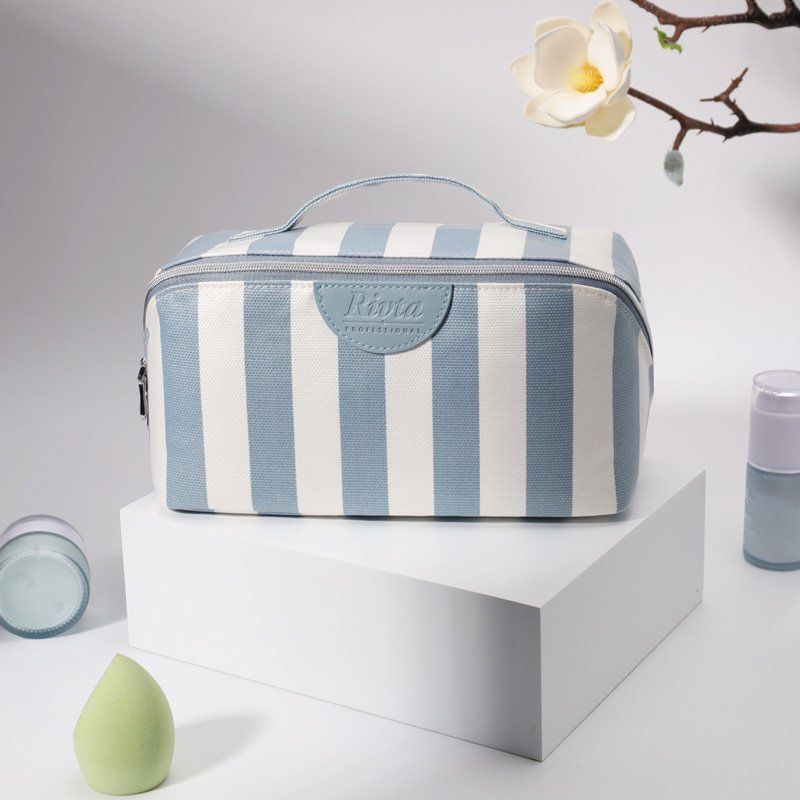
The buyer should send product dimensions if bottles, jars, sachets or mini tubes are included. If real products are not ready, dummy dimensions are still helpful. The bag should not be approved in an empty state when the actual kit contents may change fit, shape or packing count.
Logo method should also match use case. A woven label may work for a soft fabric bag. Print or deboss may fit a different route. If the buyer needs the same branded story across bag, clear pouch, card and other pieces, the custom branded beauty accessories page 5 can help keep artwork and color direction aligned.
Clear pouch role and material route
A clear pouch can make the kit more travel-oriented, retail visible or easy to inspect. But the buyer should decide why the clear pouch is included. Is it for liquid-adjacent travel use, a transparent product window, a separate inner pouch, a waterproof separation layer or a lower-cost add-on? The answer changes the material route.
EVA and TPU are common clear pouch discussion routes. EVA may offer a softer promotional pouch feel. TPU can feel more flexible and durable for some premium or travel routes. Clear pouch thickness, edge finish, zipper, snap, printed logo and packing count should be discussed before quote.
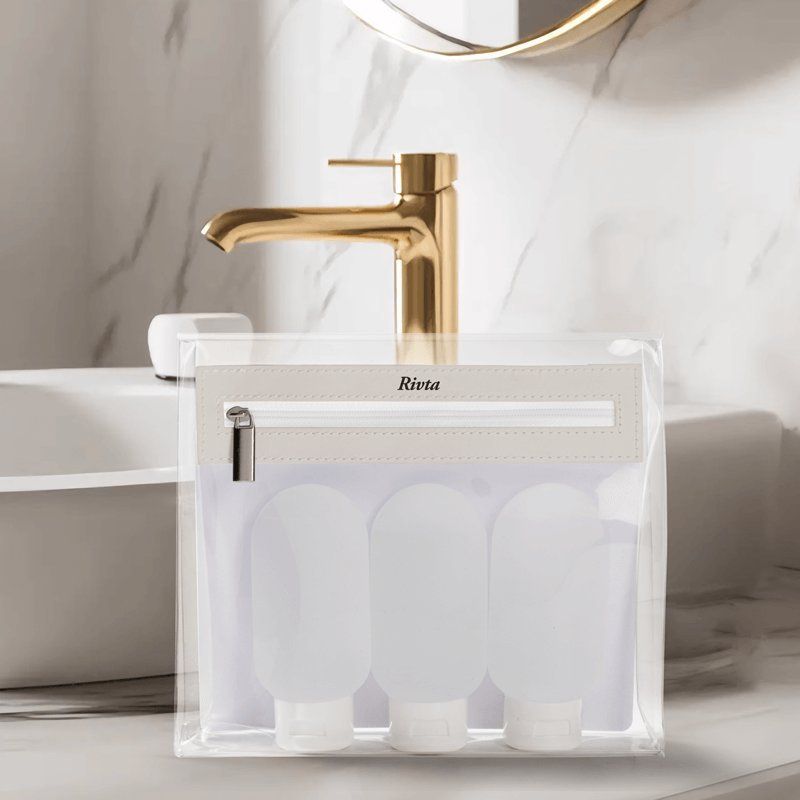
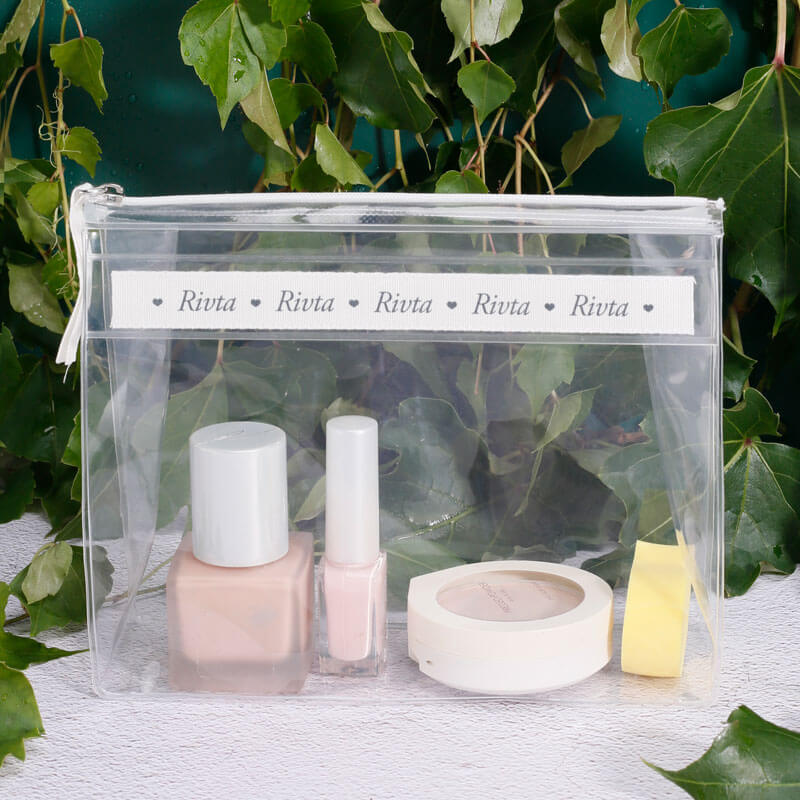
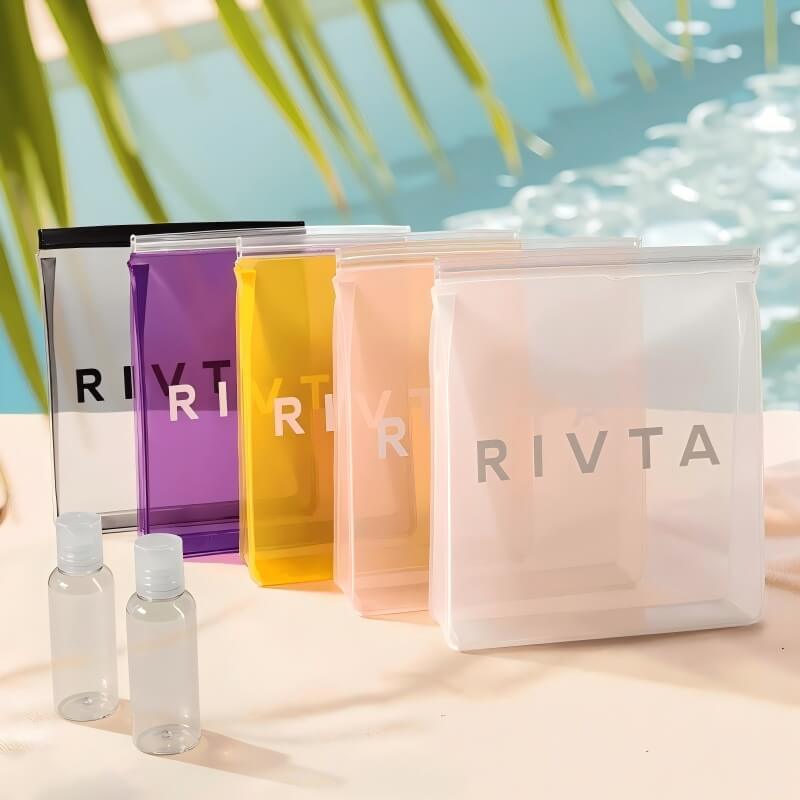
Clear pouch approval should include transparency, softness, odor, seam, zipper, print position, scratch visibility and packing method. If the pouch will hold liquid products, the buyer should state whether it is only a protective pouch or part of a travel-facing message. Ecorivta can review material and construction route, but the buyer owns final compliance wording for the market.
The clear pouch should not be treated as a free detail in the kit. It adds material purchase, cutting, sewing or heat-seal work, logo file review, packing count and sometimes separate barcode or label. If the target price is tight, Ecorivta may recommend simplifying the pouch shape or reducing version count.
Insert card, barcode and carton mark
The insert card turns a collection of products into a coordinated travel amenity kit. It can explain the brand story, list kit items, show QR code, give use instructions, carry hotel or travel retail message, mention material route or guide the recipient. The card should be part of the brief, not an afterthought.
Barcode planning depends on sales channel. Some kits need a barcode on the outer pack, some need a barcode on the insert card, and some need no barcode because they are GWP or hotel-use items. If barcode is needed, GS1 US barcode placement guidelines 7 can be used as an outside reference for barcode owner and identification language.
Carton mark should include SKU, set count, bag color, pouch version, gross weight, net weight, carton size, destination and receiving note. If the kit has multiple market versions, the carton mark should identify the version clearly. This helps the buyer’s warehouse, hotel partner or distributor receive the correct kit.
Paper card or sleeve claims need care. If the buyer wants responsible paper language, FSC label guidance 8 can help frame paper label context. If the card says eco, recycled, sustainable or plant-based, the FTC Green Guides 9 are useful for claim-safe thinking in the US market.
Material and claim boundaries
Travel amenity kits can include several materials: outer toiletry fabric, lining, zipper tape, mesh, clear pouch material, insert card paper, label, sleeve and carton. A buyer should avoid broad material wording unless the claim scope is clear. A recycled outer bag does not automatically make the whole kit recycled.
If recycled textile material is part of the bag route, Textile Exchange’s Global Recycled Standard 10 can be used as an external reference for documentation context. The buyer should still define whether the claim applies to the fabric, lining, trim, pouch, card or full set.
Material claim boundaries should be recorded in the brief before artwork is finalized. If the insert card mentions recycled material, the card should identify the correct component or use wording approved by the buyer’s claim owner. If the clear pouch has no recycled route, the card should not imply that the full set is recycled.
Pre-shipment evidence can also be tied to claim boundaries. The buyer may request photos of product, label, card copy, carton mark and packing count. If document files are needed, the buyer should state which documents are required before the quote and sample route are locked.
MOQ, target price and launch timing
MOQ planning for a travel amenity kit is more complex than MOQ planning for one pouch. The kit may include a toiletry bag, clear pouch, insert card, barcode label, sleeve, tissue, set packing and carton mark. Each version can create a different quantity and approval route.
MOQ 500 can be a practical planning point for suitable B2B beauty GWP and travel set programs, but the final route depends on the bag, pouch, card, logo, color count, market version and timeline. A 500-kit order in one color with one card is different from 500 kits split across several hotels, three language cards and two clear pouch versions.
Target price should be shared early. If the target price is tight, Ecorivta can review whether the clear pouch should be simplified, whether the insert card can use one version, whether the toiletry bag can use an existing route or whether the logo should move from product to card. If the buyer hides target price until after sample, the first route may be more complex than the budget can support.
Launch timing should include sample approval date, final artwork date, bulk completion target and shipment window. Travel retail, hotel and GWP programs often have strict receiving windows. Late changes to card copy, barcode or carton mark can create delays even when the physical bag is ready.
| Decision | Cost-sensitive route | Premium or complex route |
|---|---|---|
| Toiletry bag | Existing soft bag shape with simple logo. | Custom structure, hanging hook, special lining or multi-pocket design. |
| Clear pouch | One clear pouch size with simple zipper or closure. | Custom shape, special print, higher thickness or multiple versions. |
| Insert card | One card version with simple brand message. | Multiple languages, QR code, claim copy and market-specific versions. |
| Packout | One kit count and one carton mark format. | Split shipments, multiple channels and versioned carton marks. |
Sample approval and packout workflow
Sample approval should show the full travel amenity kit, not only the empty toiletry bag. The buyer should review the bag, clear pouch, insert card, barcode, carton mark and packing count together. This protects the launch team from approving a product while the packout remains uncertain.
Use this workflow before bulk production:
- Confirm the kit route. State use case, target price, launch date, quantity, market version and kit contents.
- Approve the toiletry bag and clear pouch. Check dimensions, material, logo, zipper, structure, transparency and packing fit.
- Submit insert card and barcode files. Provide card artwork, barcode owner, label placement and language version.
- Approve a packed sample. Review bag, pouch, card, product fit, barcode visibility, carton mark and photo scope.
- Freeze change boundaries. Any late change in kit contents, card, barcode, pouch or carton mark should trigger route review.
The workflow also makes pre-shipment photo requirements clearer. A buyer may ask for front view, open bag view, clear pouch view, packed set view, insert card view, barcode close-up and carton mark photo. Those requests should be listed in the brief before packing begins.
Best fit and less suitable requests
Best fit
Best fit is a beauty, skincare, hotel, spa, travel retail, airline-adjacent, DTC or promotional buyer planning a travel amenity kit with real quantity, launch date, target price, toiletry bag route, clear pouch need, insert card, barcode, carton mark and sample approval owner. It is especially useful when the kit includes more than one component and needs a coordinated packout.
Less suitable
Less suitable requests include single-piece consumer buying, no-brand resale sourcing, price-only stock hunting, no kit contents, no target price, no launch date, no packing owner or requests that ask for many bag and card versions at very small quantity without flexibility. Ecorivta can still clarify the route, but the first response may need to be a brief review rather than a final quote.
Composite case: clear pouch added before packout approval
Composite case: a 2026 Q3 Middle East hotel and spa launch team requested 3,000 travel amenity kits for a premium guest program. The first brief included a quilted toiletry bag and insert card, but the buyer later wanted a clear inner pouch for liquid-adjacent items. The change affected pouch material, card copy, packing count and carton mark.
Ecorivta reviewed the request as a kit brief issue rather than a simple add-on. The route kept one toiletry bag style, added one TPU clear pouch size, used one insert card with a short kit list and kept one carton mark template. The buyer removed a second card language from the first shipment and planned that version for a reorder. This kept the launch route cleaner while still adding the clear pouch function.
The approved sample showed the toiletry bag, clear pouch, insert card, packed view and carton mark. The hotel partner could review the complete set, not separate parts. The lesson was that a travel amenity kit should be briefed as a packout system before sample approval.
Related Ecorivta pages and guides
- Toiletry Travel Bags for Beauty GWP – use this as the main toiletry bag product and inquiry page.
- Clear Cosmetic Pouch Materials – use this when EVA, TPU or clear pouch route is the key decision.
- Beauty GWP Solutions – use this when the kit is part of a launch or GWP program.
- Custom Cosmetic Bag Manufacturer – use this when comparing toiletry, pouch and cosmetic bag structures.
- Custom Branded Beauty Accessories – use this when logo, card and set presentation need one branded direction.
FAQ
What is a travel amenity kit brief?
It is a buyer file that connects toiletry bag, clear pouch, insert card, barcode, carton mark, packing count, target price, launch timing and sample approval requirements.
Should the clear pouch be included before the first quote?
Yes. A clear pouch can change material route, packing labor, cost, barcode need, insert card wording and sample approval scope.
What should buyers send for the toiletry bag part of the kit?
Send bag style, dimensions, material preference, logo method, zipper or hook needs, lining expectation, target price, quantity and product dimensions if contents are known.
What should be included on the insert card?
Include brand message, kit contents, use note, QR code if needed, material wording, language version, card size, paper route and approval owner.
Does a travel kit need a barcode?
It depends on channel. Retail and travel retail may need barcode control, while some hotel or GWP programs may not. The buyer should state barcode owner and placement.
How does MOQ work for travel amenity kits?
MOQ depends on bag route, clear pouch route, insert card, logo, color count, market versions and packing. MOQ 500 is a useful planning point for suitable B2B programs.
What should be approved before bulk production?
Approve the toiletry bag, clear pouch, insert card, barcode, carton mark, packed sample, packing count and pre-shipment photo scope before bulk production.
Send the travel kit brief
Use the contact route when you need Ecorivta to review toiletry bag, clear pouch, insert card, barcode, carton mark, target price, launch timing and sample packout before a travel amenity kit RFQ.
-
Use the toiletry travel bags product page as the main money page for toiletry bag, travel bag, hotel amenity and beauty GWP inquiries. ↩︎
-
Use the clear cosmetic pouch materials page when the buyer needs EVA, TPU or transparent pouch route review. ↩︎
-
Use the beauty GWP solutions page when the travel amenity kit is part of a larger beauty launch, travel retail or gift set program. ↩︎
-
Use the cosmetic bag hub when the buyer is comparing toiletry bags, clear pouches and other cosmetic bag structures. ↩︎
-
Use the custom branded beauty accessories page when logo, insert card, color and set presentation need one branded project view. ↩︎
-
Use TSA liquids rule context when a clear pouch or travel kit must support liquid-adjacent travel use cases. ↩︎
-
Use GS1 US barcode placement guidance when retail packs, insert cards, unit labels or cartons need barcode owner and placement control. ↩︎
-
Use FSC label guidance when paper insert cards, sleeves or cartons include responsible paper-based sourcing or label language. ↩︎
-
Use FTC Green Guides when environmental wording needs review before buyer packaging or claim language is approved. ↩︎
-
Use Textile Exchange’s Global Recycled Standard reference when recycled textile material documentation affects the bag or pouch route. ↩︎