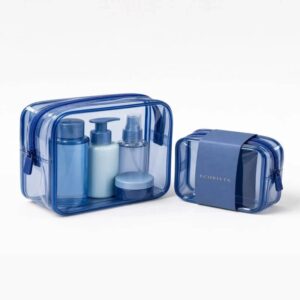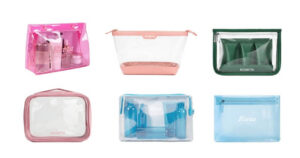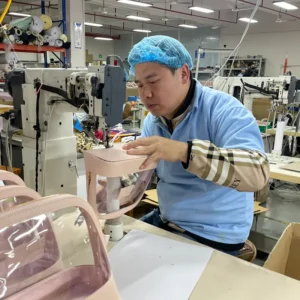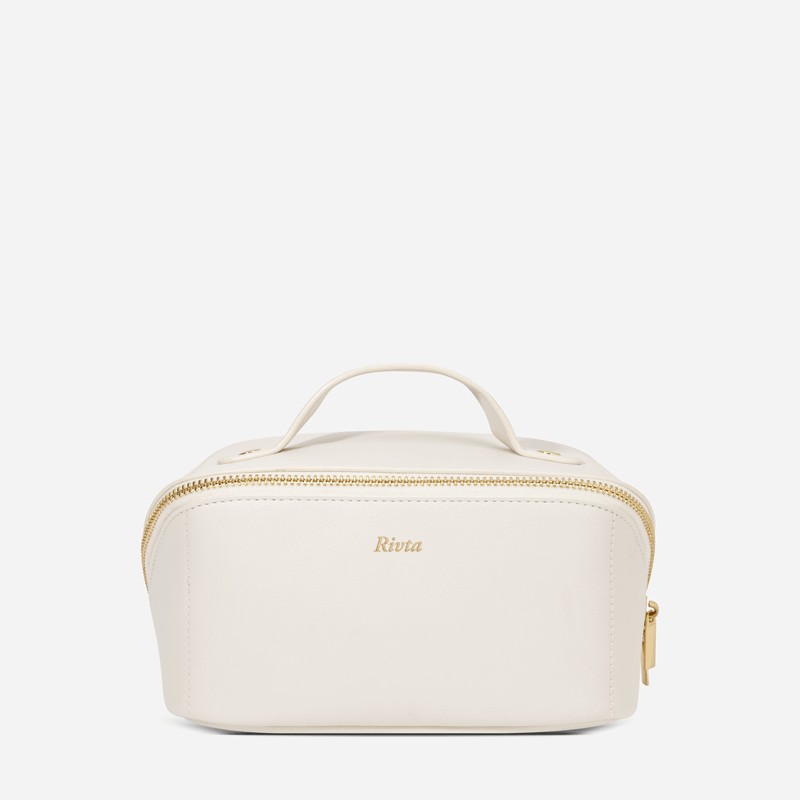
A vanity train case manufacturer checklist should go deeper than photo approval. For beauty retail gift sets, buyers need to verify structure, insert fit, handle strength, zipper, logo method, retail packing, barcode, carton mark and pre-shipment evidence before a fixed launch date.
This guide supports the Ecorivta vanity train cases page [1]. The product page should carry the main RFQ intent, while this article helps a buyer check the manufacturing route before sampling. It is written for beauty merchandising, sourcing and product development teams that are comparing factories, suppliers and existing case styles for retail gifts or GWP programs.
Quick Summary
- Vanity cases are structure projects. They need shell, handle, zipper, lining, insert and interior checks, not only fabric color approval.
- Beauty retail gift sets need packing discipline. Sleeve, insert card, barcode, carton mark and market version should be reviewed before bulk packing.
- Target price changes the route. A buyer may need existing structure, semi-custom adjustment or full OEM depending on quantity, launch date and budget.
- Certificates and audit documents are separate. A factory audit, textile test and recycled material document answer different buyer questions.
- Ecorivta should receive the full use case early. Product use, target price, launch date and packing files help the team recommend a practical route.
| Send Your Vanity Train Case RFQ Use this route when you already know the product direction and need Ecorivta to review structure, material, quantity and target price. |
Why vanity cases need more review than soft pouches
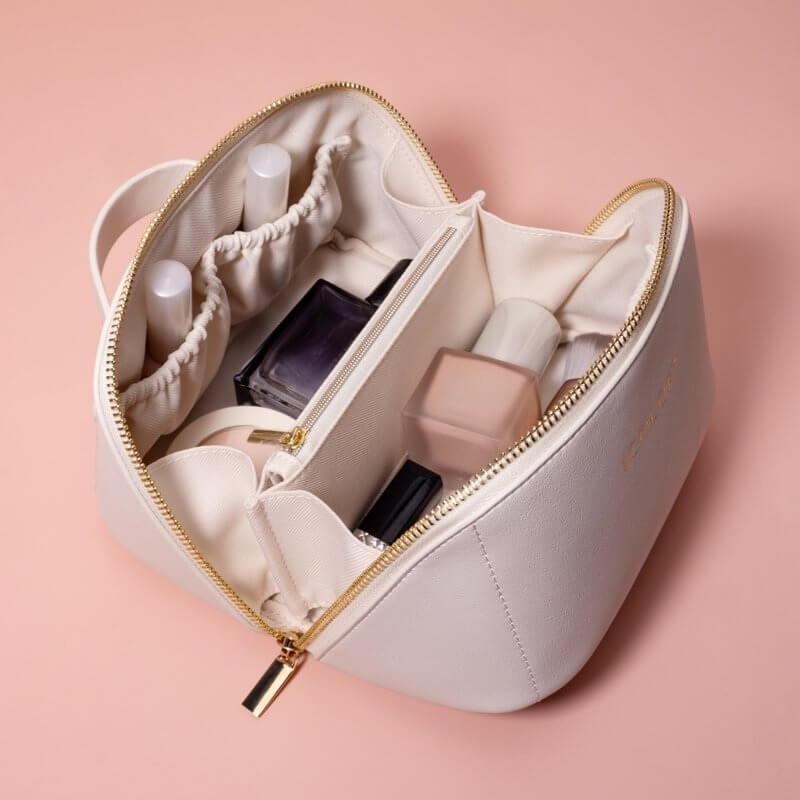
A soft cosmetic pouch can often be reviewed by size, fabric, zipper, logo and basic packing. A vanity train case has more risk points because it has shape, height, shell feel, lid behavior, lining, handle, interior volume and display value. If one of those details is missed, the buyer may receive a sample that looks acceptable in a photo but does not feel retail-ready in hand.
Beauty buyers usually choose vanity cases for higher perceived value. The case may be sold as a retail gift, used as a premium GWP, placed inside a launch kit or used as a reusable travel case. That means the buyer is not only buying a container. They are buying a brand presentation piece for skincare, fragrance, makeup or haircare items.
The vanity case can also sit inside a broader Beauty GWP solution [2]. When it is part of a kit, the case must match the campaign story, other components, insert card, color route and launch schedule. If the buyer only sends a reference photo and asks for the lowest price, the first quote may miss the details that actually control the order.
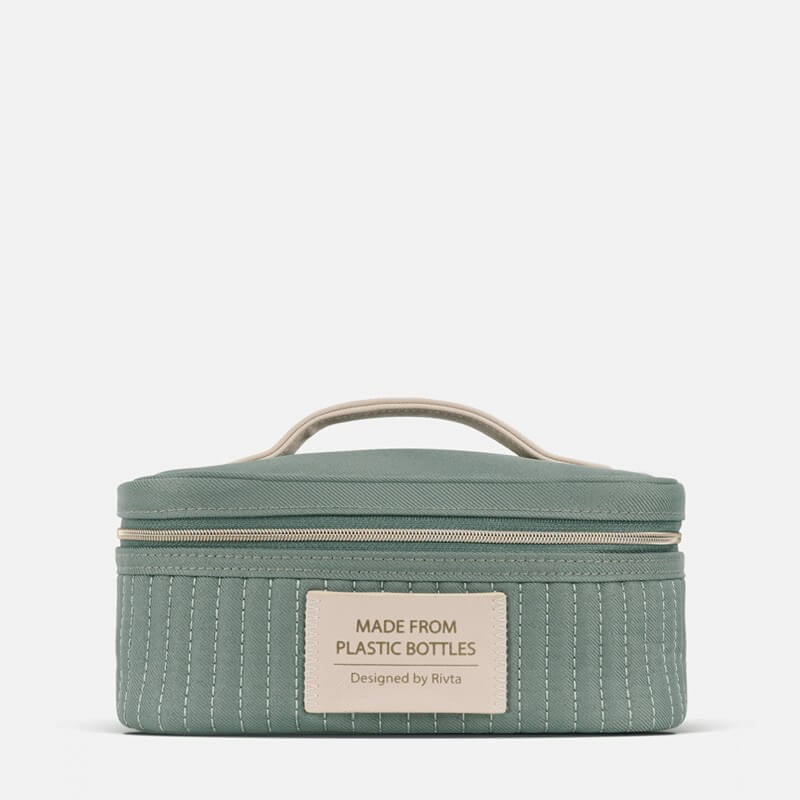
When a vanity train case is the right route
| Buyer need | Vanity train case fits when… | A simpler cosmetic bag may fit when… |
|---|---|---|
| Retail gift set | The buyer needs structure, shelf presence, insert card and premium opening feel. | The program only needs a soft pouch to hold samples. |
| Beauty GWP | The gift must feel reusable and higher value than a flat pouch. | The budget is tight and the pouch is only a free container. |
| Travel set | The product needs height, compartment planning and stronger handle behavior. | The contents are flat or light and do not need structure. |
| Launch kit | The buyer wants one hero container for multiple products and printed inserts. | The kit is packed in a box and the bag is secondary. |
If the project is closer to a soft pouch, Ecorivta’s cosmetic bag page [3] may be the better starting point. If the buyer needs a structured beauty gift item, the vanity train case route deserves a more careful brief.
The 14-point vanity case manufacturer checklist
Use this checklist before sampling. It helps the buyer verify whether a manufacturer can control the case as a finished beauty gift item, not only as a sewing order.
| 1. Use case Retail sale, GWP, VIP gift, travel retail, launch kit or PR mailer. |
2. Target price Budget range that decides existing style, semi-custom or full OEM route. |
| 3. Structure Shell firmness, lid behavior, standing shape and finished handfeel. |
4. Interior fit Divider, insert, mesh pocket, elastic band or open storage route. |
| 5. Handle strength Handle material, reinforcement, stitching and pull behavior. |
6. Zipper and hardware Zipper smoothness, puller route, metal finish and color match. |
| 7. Lining Color, stiffness, wipe-clean need and seam appearance. |
8. Logo route Metal plate, print, woven label, embroidery, debossing or hangtag. |
| 9. Material route PU, rPET, velvet, teddy, cotton, vegan-positioned or buyer-required material. |
10. Sample standard Signed sample, pre-production sample and production reference. |
| 11. Retail packing Sleeve, insert card, gift box, tissue, label and market version. |
12. Barcode Barcode owner, file type, label size and placement. |
| 13. Carton mark SKU, quantity, market, PO and warehouse requirement. |
14. Shipment evidence Finished-goods photos, packing photos and carton photos before dispatch. |
If the buyer needs factory or supplier evidence before RFQ, the existing factory audit evidence checklist [4] can support that discussion while the new trust pages are still being finalized.
Structure, handle, zipper and interior fit
The most common vanity case problem is not the outside material. It is the structure. A buyer may approve a beautiful reference image, but the bulk case can still feel weak if the shell is too soft, the lid collapses, the handle pulls unevenly or the zipper route is not smooth. The first sample should be reviewed in hand, filled with similar contents and photographed from open and closed angles.
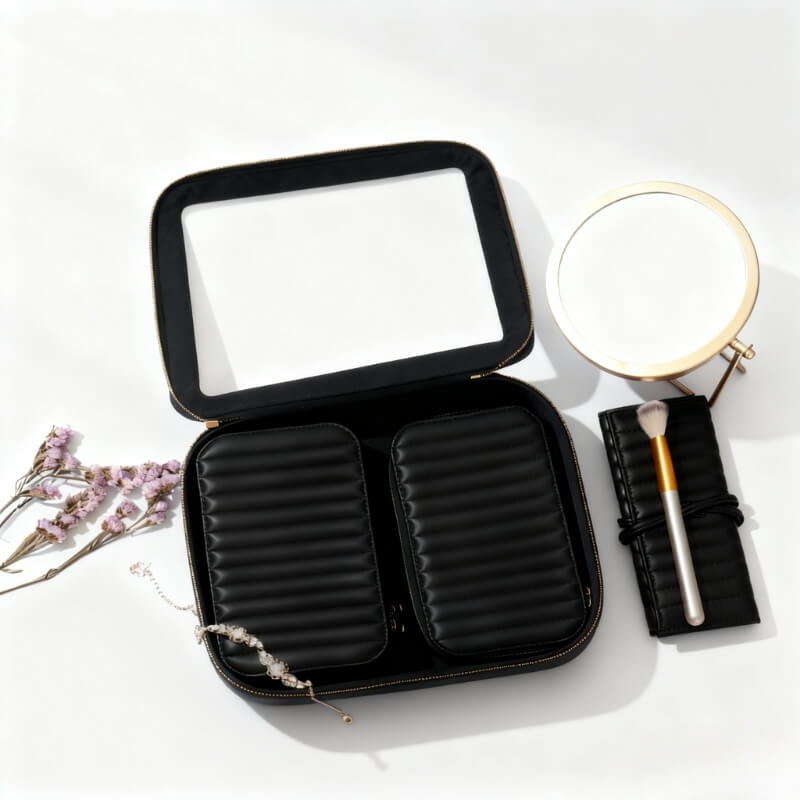
Interior fit should be discussed before sampling. A divider or insert changes labor, material and structure. A mirror, mesh pocket, elastic loop or molded insert can also change the sample route. If the buyer waits until after the first sample to add these features, the second sample may become a different product instead of a simple revision.
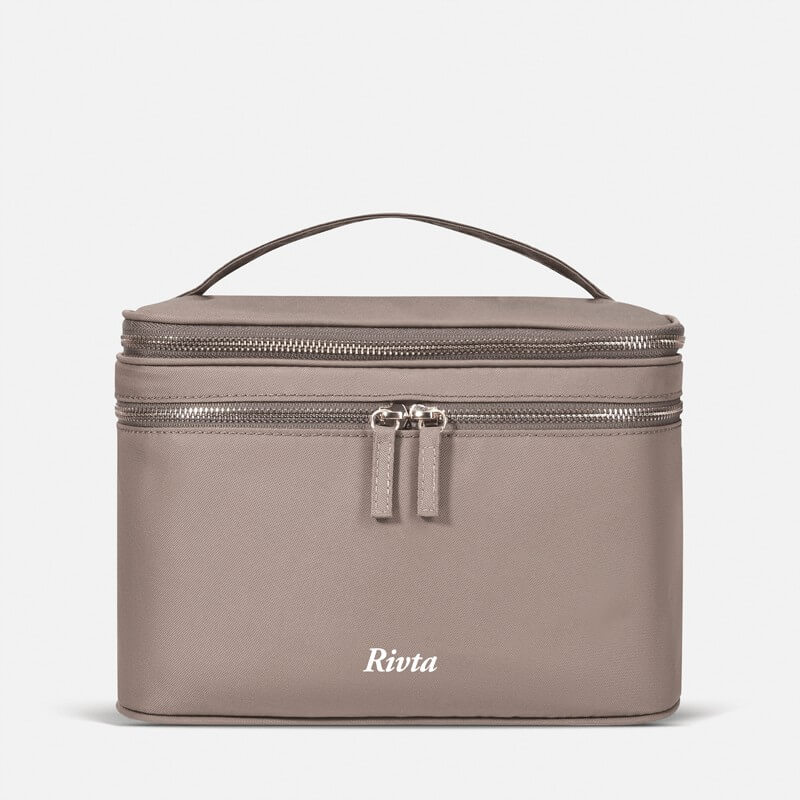
Handle and zipper choices should match the weight of the gift set. A case for empty retail display is different from a case that carries skincare jars, hair tools or glass bottles. Ecorivta should be told the expected contents, because that affects reinforcement, handle placement and shipment packing.
| Ask Ecorivta to Review the Route Use this route when material, logo method, structure, target price or launch timing still needs comparison before sampling. |
Material, logo and claim boundary
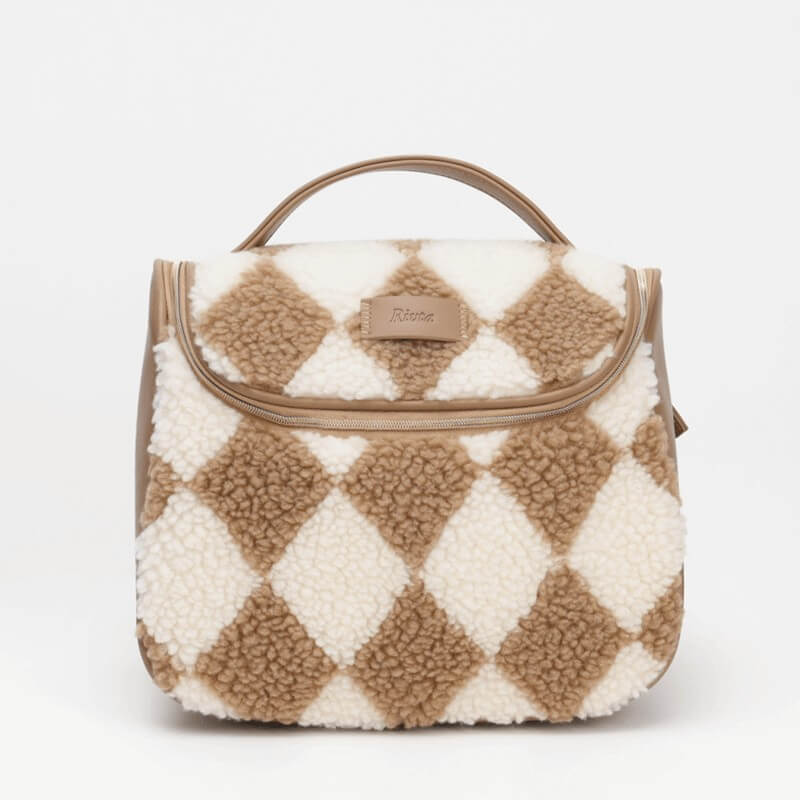
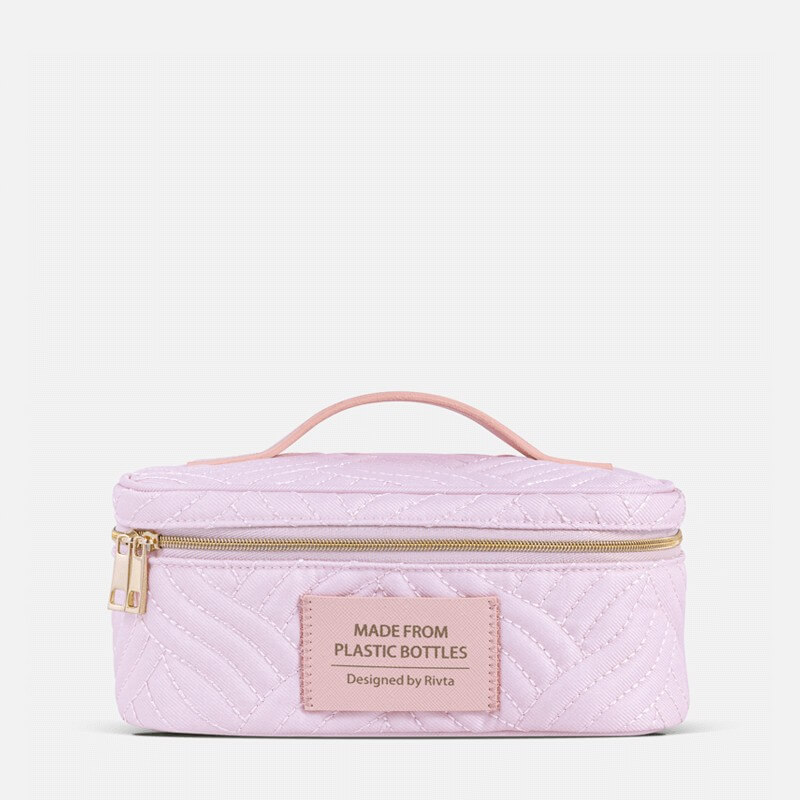
Material choice should be tied to target price and market story. PU can deliver structure and surface finish. rPET-positioned textile can support a recycled material story when documentation is available for that order. Velvet or teddy can make a gift case feel softer and seasonal, but they also need lint, color and handfeel review. If recycled material is part of the brief, a buyer can use Textile Exchange’s Global Recycled Standard reference [10] as external context for what kind of recycled documentation discussion may arise.
Logo route should be confirmed before sampling. A metal plate, debossed logo, printed logo, woven label and hangtag do not have the same cost, MOQ, lead time or clarity. If the logo is small, the buyer should send vector artwork instead of a JPG. The manufacturer should tell the buyer when the logo needs simplification or a different placement route.
Document boundaries matter. A responsible sourcing audit, a textile test and a recycled material document do not prove the same thing. Sedex SMETA [6] can be used as an external reference for responsible sourcing language. OEKO-TEX STANDARD 100 [8] can be used as textile safety testing context. Environmental wording should be reviewed carefully with references such as the FTC Green Guides [9]. Ecorivta should review buyer-required documentation by order rather than making a broad every-product promise.
Retail packing, barcode and carton mark
Retail gift cases often fail at the handoff between product approval and packing approval. The case may be approved, but the sleeve, insert card, barcode label, carton mark or market version is still missing. That creates a timing problem because finished goods may wait in the factory while the buyer finalizes small files.
Barcode planning should not be left until the final shipping week. GS1 barcode guidance [7] can help buyers understand why barcode ownership and label format matter. Ecorivta does not need the buyer to send every final retail file on day one, but the RFQ should say whether barcode and carton mark will be required.
For export cartons, buyers should confirm SKU, PO, destination, carton quantity, gross weight, net weight, carton size, market version and warehouse mark. Those details sound operational, but they affect whether the order can ship without rework.
Questions to ask before sampling
| Question | Strong answer should include | Risk signal |
|---|---|---|
| How will the case keep its shape? | Shell route, reinforcement, sample review and filling test. | Only says the case will be like the photo. |
| How will the interior be confirmed? | Insert size, divider route, lining and content fit review. | Interior is left until after sample approval. |
| What logo method is safest? | Logo file review, method comparison and sample approval. | Accepts any artwork without checking clarity. |
| What packing files are needed? | Sleeve, insert card, barcode, carton mark and market version list. | Only says standard packing. |
| What evidence is sent before shipment? | Product, logo, packing, carton and finished-goods photos. | Only says the order will be checked. |
Composite case: when a retail gift case brief changed route
Composite case: a 2026 Q2 US beauty retailer requested 3,000 vanity train cases for a skincare gift set. The first brief used a reference photo and asked for a low unit price. After review, the buyer confirmed that the case also needed a semi-rigid shell, branded insert card, barcode label, reinforced handle and fixed delivery before a launch window.
The project moved from a simple supplier quote to a manufacturer route review. Ecorivta recommended an existing vanity structure with material adjustment, a simplified logo plate, confirmed insert card size and pre-shipment packing photos. The buyer did not lose the premium appearance. The buyer gained a route that better matched the timeline and reduced late packing risk.
Quote drivers buyers should separate before asking for price
A vanity train case quote can move quickly when the buyer separates fixed requirements from flexible preferences. Fixed requirements are details that cannot change without hurting the launch: case size, expected contents, retail channel, launch window, barcode need, market version and shipment destination. Flexible preferences are details that Ecorivta can compare: material surface, lining color, puller style, logo method, insert route and individual packing. If all details are treated as fixed, the first quote may become slower and more expensive than necessary.
The strongest brief usually gives Ecorivta a target price and asks which route can meet it. For example, one buyer may want a semi-rigid PU case with a metal logo plate and printed sleeve, while another can accept a soft rPET case with woven label and insert card. Both can be valid beauty gift routes, but they belong to different cost and lead-time levels. A manufacturer can only recommend the right route when the buyer explains whether shelf presence, reusable value, sustainable story or speed is the highest priority.
Quantity also changes the advice. A 500-piece trial for a promising brand should avoid unnecessary tooling and complex inserts unless the buyer accepts a higher sample and setup cost. A 5,000-piece retail gift set can justify more structure, better reinforcement and more controlled packing. This is why the RFQ should never hide the target quantity. It is not only a price number; it tells the manufacturer how much development work is reasonable.
Launch date should be sent even when the buyer thinks it is not final. The manufacturer needs to know whether there is time for two sample rounds, printed card approval, barcode verification and pre-shipment photo review. A fixed launch date may push the route toward an existing structure with small adjustments. A flexible launch date may allow a more customized interior or new color route. Without this timing information, the first quote can look attractive but fail operationally.
Sample-to-bulk control for structured vanity cases
The approved sample should become a production standard, not a loose reference photo. For a vanity train case, the buyer should ask the factory to record material surface, shell firmness, handle position, zipper pull, lining color, insert dimensions, logo placement and packing method. These details should be visible in the signed sample file so the production team can compare bulk output against the same standard.
Pre-production review is especially important when the buyer changes anything after the first sample. A new logo method, thicker insert card, different lining, extra divider or stronger handle can change the production route. If those changes are not confirmed before bulk work, the factory may produce according to the older sample while the buyer expects the revised version. A short pre-production sample review prevents that gap.
Bulk production should also check the first pieces before the line moves too far. The first 50 to 100 pieces are a practical checkpoint because they show whether the line understands the standard. For a vanity case, this check can include shape, zipper smoothness, handle stitching, lining cleanliness, logo position, insert fit and packing sequence. If a problem appears here, it is still early enough to correct the line before the full quantity is affected.
Finished goods evidence should include more than a close-up beauty photo. Buyers should ask for open case photos, closed case photos, side profile, handle view, zipper pull view, logo view, interior view, sleeve or insert card view, barcode label view and master carton view. These photos give the buyer practical confidence that the case is ready for retail or gift set assembly.
Route decision examples for beauty retail gift sets
If a skincare brand wants a premium holiday gift with jars and bottles inside, the route should prioritize structure, handle strength, interior protection and retail presentation. The buyer may accept a higher unit cost because the vanity case is the hero packaging item. In that case, Ecorivta should review semi-rigid shell, reinforced handle, lining, insert or divider, branded sleeve, barcode and carton mark before sampling.
If a haircare brand wants a reusable GWP with travel-size bottles, the route may prioritize volume, wipe-clean surface and speed. A simpler vanity structure with existing shape and adjusted color can work better than full customization. The logo may move to a woven label, small print or hangtag so the sample can be approved faster.
If a beauty retailer wants a low-risk trial order, the route should control development cost. The buyer can choose an existing case shape, adjust material color, use an insert card for branding and avoid complicated interior changes. This still gives a branded gift impression, but it avoids making a small order carry the cost of a full product development project.
These examples show why Ecorivta needs target price, launch date and use case before giving a serious recommendation. The best manufacturer answer is not necessarily the most customized route. It is the route that fits the buyer’s campaign, budget, timeline and risk tolerance.
FAQ
What should beauty buyers verify before choosing a vanity train case manufacturer?
They should verify structure, shell firmness, insert fit, lining, handle, zipper, mirror or divider option, logo route, retail packing, barcode, carton mark, sample approval and shipment evidence.
Is a vanity train case the same as a simple cosmetic bag?
No. A vanity train case usually needs more structure, interior planning, handle strength, insert fit and premium packing control than a soft cosmetic pouch.
What files should be sent before sampling?
Send product use, target price, launch date, quantity, reference size, material preference, logo vector file, packing idea, barcode need and carton mark requirements.
Can Ecorivta review recycled material routes for vanity cases?
Yes. Ecorivta can review recycled textile or rPET-positioned routes by order, but documentation scope should be checked before claim wording is confirmed.
When should barcode and carton mark be confirmed?
Barcode, retail label, carton mark and market version should be confirmed before bulk packing, not after finished goods are ready.
What sample should be approved before bulk production?
The buyer should approve a signed standard sample and, when structure or packing is complex, a pre-production sample before bulk work continues.
How should buyers send a vanity train case RFQ to Ecorivta?
Send the use case, target price, launch date, quantity, structure reference, material preference, logo file, insert card, packing route and shipment evidence needs.
How to Prepare a Vanity Train Case RFQ for Ecorivta
- Define the gift set use: Tell Ecorivta whether the vanity case is for retail sale, beauty GWP, VIP gift, launch kit or travel retail program.
- Share structure and size references: Provide target dimensions, shell firmness, lining, insert, mirror, divider, handle and zipper expectations.
- Confirm logo and packing files: Send AI or PDF logo files, insert card, sleeve, barcode and carton mark requirements before sampling.
- Review sample and material route: Approve material, handfeel, structure, interior fit, logo clarity and packing route before bulk production.
- Send the RFQ to Ecorivta: Send target price, launch date, quantity, market, document requests and pre-shipment evidence needs to Ecorivta.
Send the brief to Ecorivta
The best RFQ is not a long message with every detail perfect. It is a clear first brief that tells Ecorivta the product use, target price, launch date, quantity, material direction, logo file status, packing idea and shipment requirement. Buyers can also use the Ecorivta contact route [5] when they want the team to review these details before sampling. With those details, the first reply can move from a rough price into a practical route.
| Check Sample and Packing Details Use this route when sample approval, packing files, barcode, carton mark or final shipment evidence needs checking. |
Sources
- Use Ecorivta’s vanity train case page as the product and RFQ page for structure, material, logo, packing and sample route: vanity train cases. Back to text
- Use the Beauty GWP solutions hub when the vanity case is part of a broader gift set, launch kit or retail GWP route: Beauty GWP solutions. Back to text
- Use the cosmetic bag page when the project is closer to a soft pouch, flat cosmetic bag or simpler GWP bag: cosmetic bag page. Back to text
- Use the audit evidence checklist for supplier-route questions that need existing live evidence before the trust pages are complete: factory audit evidence checklist. Back to text
- Use the contact route when the buyer is ready to send target price, launch date, product use, logo file and packing scope: Ecorivta contact route. Back to text
- Use Sedex SMETA as an external reference for responsible sourcing and social audit language: Sedex SMETA audit guide. Back to text
- Use GS1 guidance when barcode, retail label or carton mark handoff affects packing approval: GS1 barcode guidance. Back to text
- Use OEKO-TEX STANDARD 100 as textile testing context when material safety is part of the buyer’s question: OEKO-TEX STANDARD 100. Back to text
- Use the FTC Green Guides when recycled, sustainable or vegan-positioned wording needs claim-safe review: FTC Green Guides. Back to text
- Use Textile Exchange’s GRS reference when recycled material documentation affects a vanity case route: Global Recycled Standard. Back to text