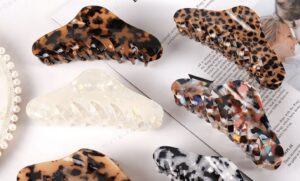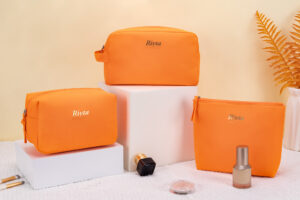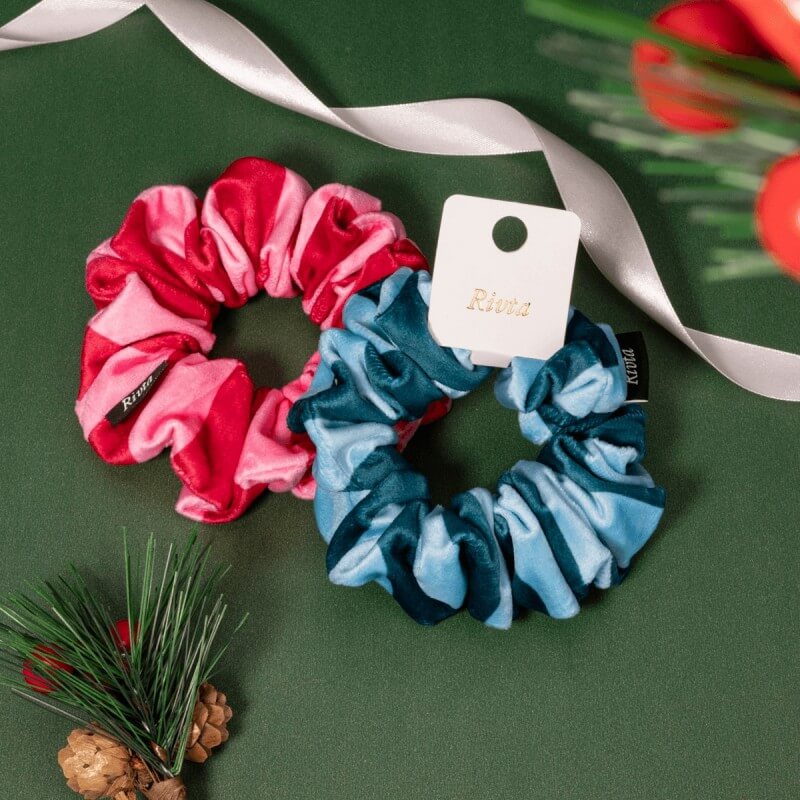
Beauty GWP buyers often ask for full OEM because they want a unique product. In practice, the faster and safer route may be an existing style adjustment or semi-custom route. The right choice depends on target price, quantity, launch date, material route, logo method, packing file, sample approval time and how much real product risk the buyer wants to take.
This guide is written for beauty brand sourcing, merchandising, procurement and product development teams choosing custom scrunchies, headbands, hair towels, pouches, eye masks, clips and small beauty accessories. It supports the Ecorivta custom branded beauty accessories page [1] without competing with it: the page carries the inquiry, while this article explains how buyers should choose the manufacturing route before sampling.
Quick Summary
- Existing style is usually the fastest route. It works when the buyer can accept an existing structure, then adjust color, logo, label, card or packing.
- Semi-custom is the practical middle route. It can combine existing construction with new material, size, logo, packing or SKU split while keeping risk controlled.
- Full OEM should be used only when the product reason is strong. New shape, special function, exclusive structure or strict brand identity may justify longer sampling and higher development cost.
- Target price and launch date decide more than taste. A beautiful idea may not fit MOQ, sample time, material availability or packing deadline.
- Ecorivta should review the route before sample. Buyers should send product use, quantity, SKU split, target price, launch date, logo file, material direction and packing need.
Review an existing style route when timing, target price and simple branding are the main decision points.
Why route choice matters before RFQ
Beauty GWP accessories are often tied to a launch date. The buyer needs a product that feels branded, fits the campaign, meets the target price and ships on time. If the buyer chooses full OEM too early, the project may spend sample time on structure problems that could have been avoided by using an existing route. If the buyer chooses an existing style when the brand needs a special function or exclusive shape, the product may feel too generic.
The route choice affects almost every RFQ item: MOQ, unit cost, sample fee, sample time, mold or tooling need, material sourcing, logo method, packing, barcode, carton mark and pre-shipment evidence. It also affects how much the buyer should prepare before asking for a quote. A full OEM brief needs more detail than an existing style color adjustment.
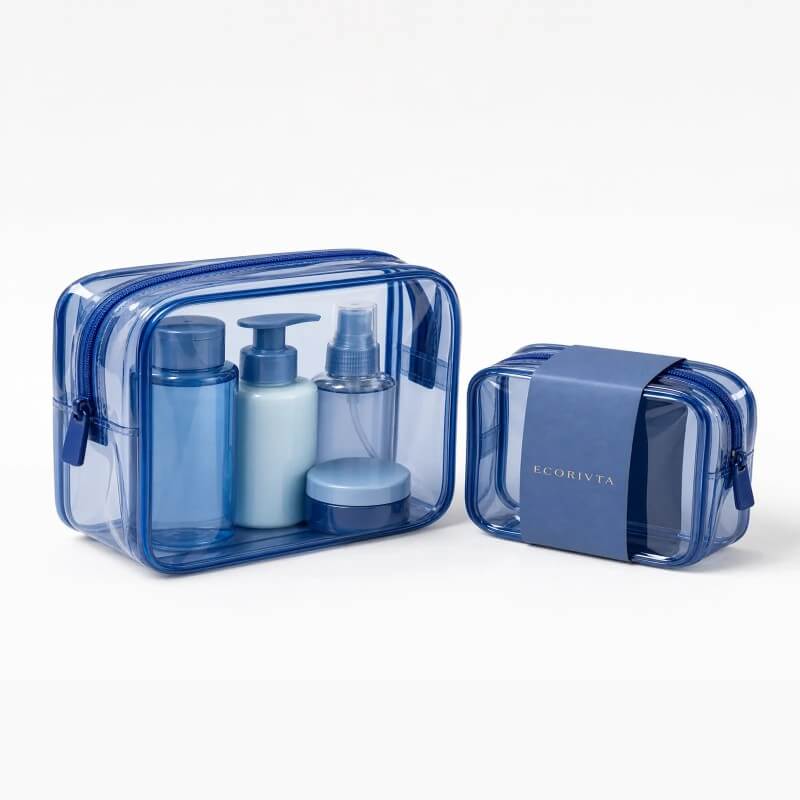
For Ecorivta, the route should stay inside beauty GWP and sewn accessory logic. A scrunchie, headband, hair towel, eye mask, pouch or clip can be a simple branded gift, a launch kit component or a more custom retail accessory. The buyer can use the beauty GWP accessories hub [2] to compare category fit, then use the beauty GWP solutions hub [3] when the accessory is part of a broader set. The buyer should decide what the product must accomplish before asking whether it should be existing style, semi-custom or full OEM.
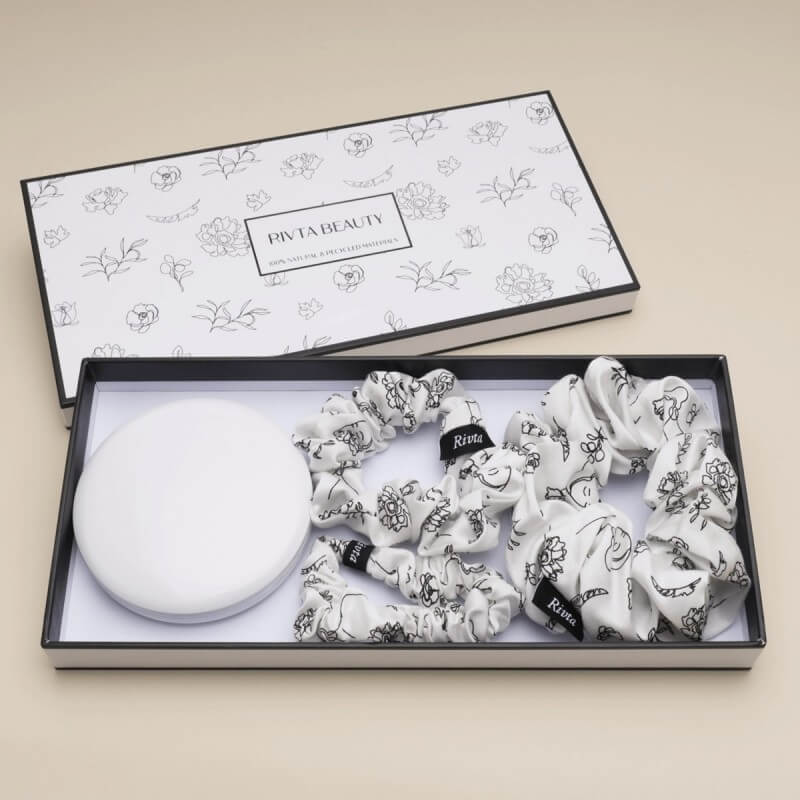
This route decision also helps avoid internal approval delays. A merchandising team may want a special design. A procurement team may need target price. A packaging team may need barcode and carton mark. A launch owner may need a fixed shipping date. Route choice gives all sides a practical language before the sample is made.
Existing style, semi-custom or full OEM: route comparison
The three routes are not quality levels. They are different ways to control risk, cost and timing.
| Route | Best for | Common changes | Main risk |
|---|---|---|---|
| Existing style adjustment | Fast GWP, low-risk sampling, smaller pilot, tight launch window. | Color, logo, small label, card, sleeve, insert, barcode, carton mark. | May not feel exclusive enough if the brand needs a distinct structure. |
| Semi-custom route | Beauty buyers who need a branded look but still want controlled timing. | Material, size, lining, elastic, closure, logo method, packout, SKU split. | Scope can expand if buyer keeps adding changes after first sample. |
| Full OEM route | New structure, special function, exclusive silhouette or hero retail gift. | Pattern, structure, tooling, special trims, new construction, custom packout. | Longer sampling, higher setup cost and more approval steps. |
Use this table as a first filter, not a final rule. Some beauty GWP programs start with existing style, then add enough material and packing changes to become semi-custom. Some full OEM ideas can be simplified into semi-custom without losing the brand purpose. The best supplier should explain this clearly instead of pushing one route for every project.
Review a semi-custom accessory route when material, size, logo, packing or SKU split needs controlled change.
When existing style adjustment fits
Existing style adjustment is useful when the buyer needs speed, a clear price range or a sample that can be approved with limited change. It works especially well for beauty GWP programs where the product is not the only hero item, but still needs to look branded and retail-ready.
Typical examples include a scrunchie with a new color and woven label, a headband with a small logo and paper card, a hair towel with a changed loop color, a pouch with a simple front print, or a clip with a backing card logo. The buyer can still get a branded look without rebuilding the whole product.
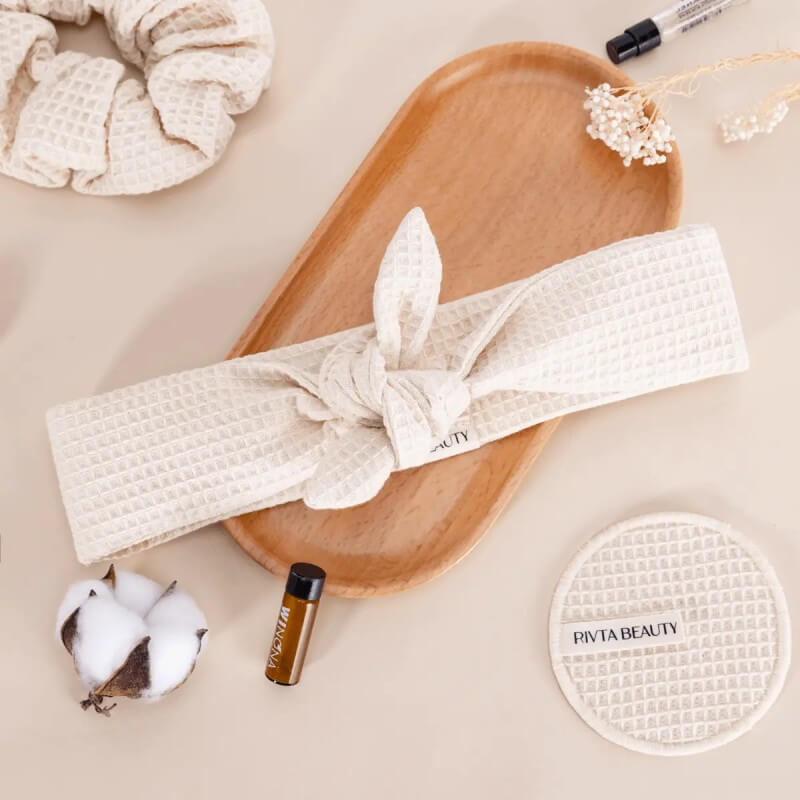
This route is strongest when the buyer has a target price and launch date. It lets Ecorivta check what can be done quickly without creating a new structure. It also helps when the buyer is testing a new market, doing a first beauty GWP run, or trying a 500-piece style before committing to a bigger program. The MOQ 500 guide [5] is useful when the buyer wants to understand why low-volume custom work changes by material, color, SKU split and packing.
The limitation is brand uniqueness. If the buyer wants a product that no competitor can easily copy, existing style may not be enough. It can also limit material, size, shape or internal structure. The buyer should be honest about whether the project needs a strong custom product or simply a reliable branded accessory for a campaign.
When semi-custom fits
Semi-custom is often the most practical route for beauty brands. It gives more brand control than a simple existing style adjustment, but it avoids some of the development risk of full OEM. It is useful when the buyer likes an existing route but needs changes that affect material, size, logo, packing or set assembly.
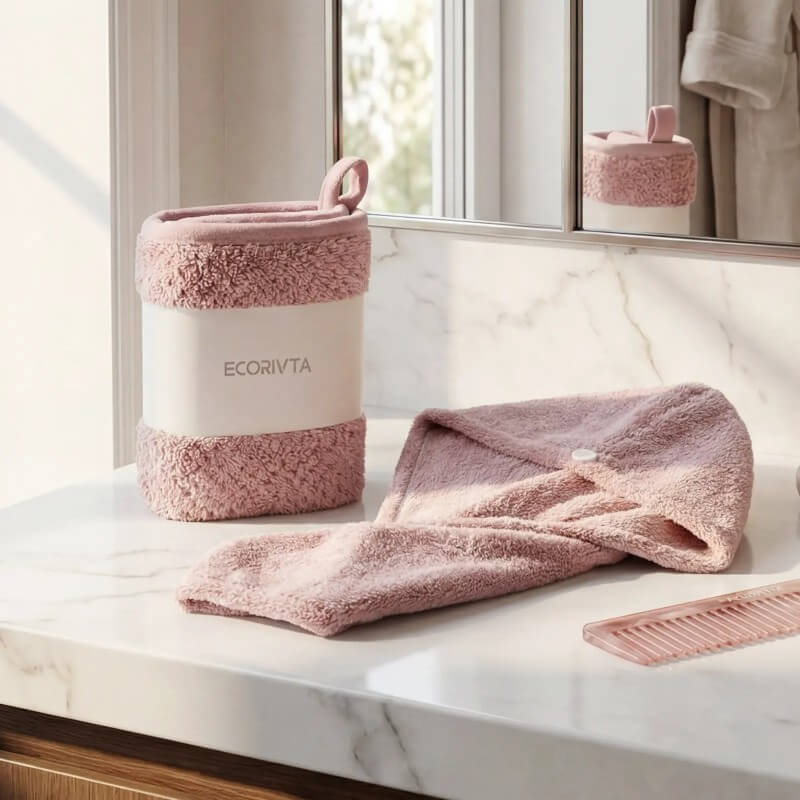
A semi-custom route might use an existing headband construction with a new width, new fabric handfeel and a brand card. It might use an existing accessory pouch structure with a new material, logo method and insert card. It might use an existing hair towel shape with a changed closure, logo label and retail sleeve. These changes matter, but they do not require a completely new product architecture.
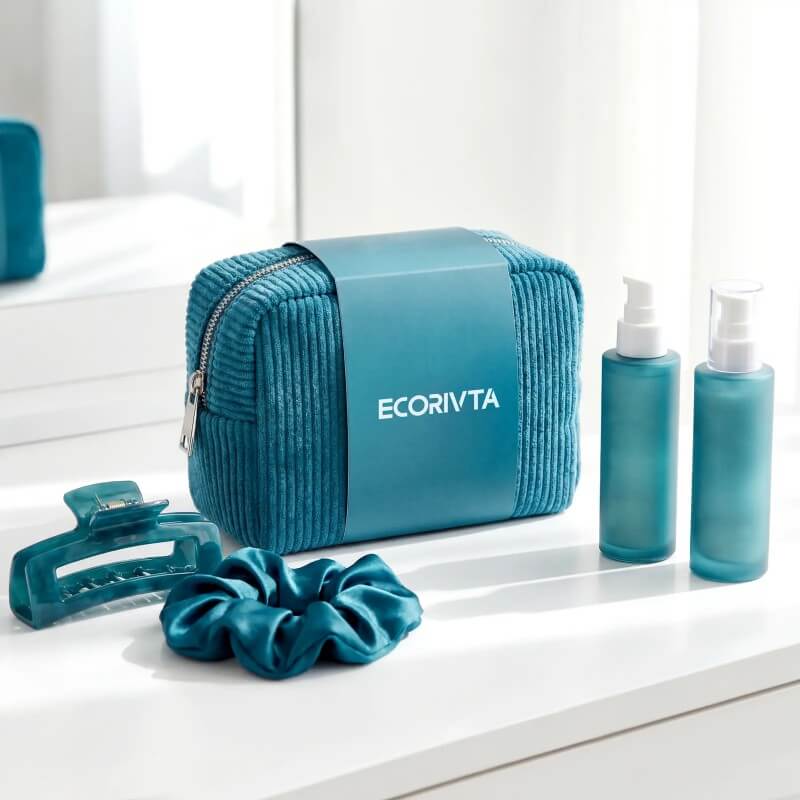
For semi-custom, the buyer should define which details are fixed and which are negotiable. If the target price is tight, material and packing may need to be simplified. If the launch date is close, color and logo routes should use proven methods. If the product must carry a sustainability story, document scope should be reviewed by order. For recycled material discussions, the Global Recycled Standard [6] can be used as a reference when buyers need to understand recycled material documentation.
Semi-custom also requires better file discipline than existing style adjustment. Logo files, card artwork, barcode, carton mark and approval owner should be ready before the sample is finalized. The hair accessory logo and packing file guide [4] can support this part of the handoff when the accessory is in the hair or small beauty category.
When full OEM is worth it
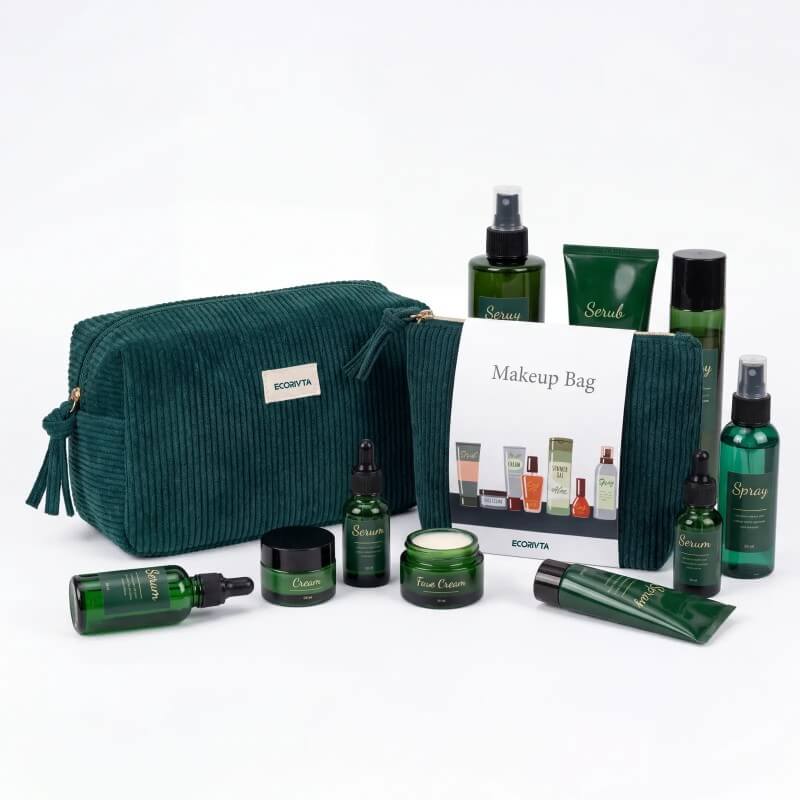
Full OEM is worth considering when the product itself must create the brand difference. This may include a new structure, special function, custom pattern, exclusive packout, unusual trim, special closure, custom mold or product format that existing routes cannot support. It can be the right path for a hero retail gift, a large repeat program or a brand that needs a distinct product identity.
Full OEM should not be chosen only because the word sounds more premium. It usually needs a stronger brief, more sample rounds, clearer approval owner and more realistic timing. The buyer should have quantity, target price, launch date, target market, product use, material direction, logo route and packing scope ready before asking for full development.
Testing and certificate questions should also be separated. A full OEM route does not make every certificate automatic. If textile safety is relevant to fabric, labels, ribbons or soft accessory parts, OEKO-TEX STANDARD 100 [7] can be used as an external reference. If environmental wording appears on the card or package, the FTC Green Guides [9] can support claim-safe thinking. Ecorivta should review document scope by order, not by broad product category.
Full OEM can be powerful when the buyer has the budget and time to support it. It can become inefficient when the buyer still has an unstable brief. If the product use, price, quantity or packing is not decided, Ecorivta should first help the buyer narrow the route rather than start full development too early.
RFQ details that decide the route
Route choice becomes easier when the buyer sends the right RFQ details. These details do not need to be perfect, but they should be clear enough for Ecorivta to recommend a route.
| RFQ detail | What to send | How it affects route choice |
|---|---|---|
| Target use | Retail gift, GWP, travel retail, spa kit, haircare launch, PR kit or amenity program. | Use case decides how much product uniqueness, packing and QC evidence matter. |
| Quantity and SKU split | Total pieces, color split, size split and whether each SKU needs different packing. | More SKU splits can push the route toward existing style or simplified semi-custom. |
| Target price | Budget range or expected unit price direction. | Price controls material, logo method, packing and whether full OEM is practical. |
| Launch timing | Sample deadline, bulk deadline, event date and shipment window. | Tight timing favors existing style or proven semi-custom routes. |
| Material preference | Fabric, acetate, clear material, recycled route, satin, velvet, microfiber or mixed set. | Material availability and document scope can change MOQ and sample time. |
| Logo and packing | AI/PDF logo file, card, sleeve, insert, barcode, carton mark and market version. | Artwork and packing readiness can decide whether the first sample is useful. |
| Evidence need | Audit context, material document, buyer test, pre-shipment photos or retail file. | Evidence requirements should be added before quote confirmation. |
For barcode and retail file questions, references such as GS1 UK barcode guidance [8] can help buyers understand why barcode owner, format and placement should be decided early. A barcode that arrives after card approval can force packaging changes.
For responsible sourcing questions, branded beauty buyers may ask about audit context. The Sedex SMETA audit guide [10] can support supplier evaluation, but it should not be mixed with material certificate, product test or logo approval. Each item has its own scope.
Sample approval and packing handoff
Sample approval should match the route. For existing style adjustment, approval may focus on color, logo, card, label and packing count. For semi-custom, approval should also include material, size, trim, closure, handfeel and fit. For full OEM, approval should include structure, pattern, function, risk points, production standard and any special tooling or development item.
A buyer should not approve a sample only because it looks good in one photo. The approved file should include product front, product back, logo detail, material detail, carded view, packing count, barcode position, carton mark and any evidence the buyer expects before shipment. This is especially important when the same accessory is packed into a beauty GWP set or retail launch kit.
Use this route approval sequence:
- Choose route level. Decide existing style adjustment, semi-custom or full OEM based on target price, launch date and product need.
- Freeze the first brief. Confirm product use, quantity, SKU split, material, logo and packing before sample.
- Review route risk. Ask what detail may change MOQ, price, timing or sample rounds.
- Approve sample evidence. Check product, logo, material, card, barcode, carton mark and packing photos.
- Send RFQ to Ecorivta. Ask for a practical route recommendation before moving into bulk.
The buyer should also decide what can change after sample approval and what cannot. If color, logo, card or size changes after the signed sample, the supplier may need to recheck price, production time and packing files. A clear approval boundary protects the launch timeline.
Best fit and less suitable requests
Best fit
Best fit is a beauty, skincare, haircare, spa, travel retail, DTC or retail buyer planning a branded accessory program with a real launch window, MOQ 500+ potential, target price direction, logo or packing needs and sample-first approval. The buyer wants Ecorivta to help choose between existing style adjustment, semi-custom and full OEM instead of jumping into development too early.
Less suitable
Less suitable requests include single-piece consumer orders, no-brand resale buying, urgent stock-only sourcing, price-only small orders, unclear product use, no target price, no launch date, no approval owner or requests that ask for full OEM without enough quantity, time or budget. Ecorivta can still ask clarifying questions, but the first answer may need to be a route review rather than a fixed quote.
Composite case: semi-custom route instead of full OEM
Composite case: a 2026 Q2 EU skincare launch team wanted 3,000 branded accessory sets for a retail GWP channel. The first request asked for full OEM headbands, scrunchies and a pouch because the brand wanted the set to feel exclusive. The target price and launch date were tight, and the buyer still needed barcode, backing card, carton mark and card copy approval.
Ecorivta reviewed the request as a route problem. Full OEM across three accessory types would have created too many sample rounds and too much approval risk. The team kept an existing headband construction, changed fabric and width, used an existing scrunchie route with new colors, adjusted a pouch material, and created a coordinated card and insert system. The route became semi-custom rather than full OEM.
The buyer still received a branded set, but the project had fewer unknowns. The key decision was not to make everything from zero. It was to spend custom effort where the buyer could see value: color coordination, logo placement, card hierarchy, barcode handoff and packout. That made the RFQ easier to quote and the sample file easier to approve before bulk.
Related Ecorivta pages and guides
- Custom Branded Beauty Accessories – use this as the main product and inquiry page for branded accessory programs.
- Beauty GWP Accessories Hub – use this when several accessory categories are being compared inside one campaign.
- Beauty GWP Solutions Hub – use this when the accessory is part of a broader gift set or launch kit.
- Hair Accessory Supplier Logo & Packing File Guide – use this when artwork, barcode or carton mark is the main handoff issue.
- MOQ 500 Beauty GWP Accessories – use this when the buyer needs to understand MOQ changes before route selection.
FAQ
Is full OEM better than using an existing style?
Not for every beauty GWP program. Full OEM is useful when the product needs a new structure, special function or exclusive identity. Existing style adjustment can be better when the buyer needs faster sampling, lower development risk and a clear launch timeline.
What is the difference between existing style and semi-custom?
Existing style usually keeps the main structure and changes color, logo or packing. Semi-custom uses an existing route but changes more meaningful details such as material, size, closure, lining, label, packout or SKU split.
When should buyers choose full OEM?
Choose full OEM when the project has enough quantity, budget, timing and product reason to support new development. It fits special structure, exclusive shape, custom function or hero retail gift programs better than small urgent GWP orders.
What RFQ details help Ecorivta recommend the route?
Send target use, quantity, SKU split, target price, launch date, target market, material preference, logo file, packing method, barcode or carton mark needs and any evidence request. These details help Ecorivta recommend existing style, semi-custom or full OEM.
Can a 500-piece project use full OEM?
Sometimes, but it depends on material, structure, logo method, packing, tooling and launch timing. A high-potential buyer may still be reviewed, but special low-volume full OEM can cost more than an existing or semi-custom route.
How does target price affect route choice?
Target price helps the supplier decide whether to simplify material, use an existing construction, reduce packing complexity, choose a different logo method or avoid full OEM development that does not fit the budget.
Should packing be decided before sample approval?
Yes. Card, insert, sleeve, barcode, SKU label, carton mark and packout should be reviewed before bulk production. Late packing files can change sample approval, cost and shipping schedule.
Send the route review brief
Use the contact route when you need Ecorivta to review whether an accessory program should use existing style adjustment, semi-custom or full OEM. Include product type, quantity, SKU split, target price, launch date, target market, material preference, logo file, packing method and any certificate, audit, barcode or carton mark needs.
Review a full OEM GWP accessory route when the product needs a new structure, function or exclusive brand format.
Sources
- Custom Branded Beauty Accessories. Use this as the main money page for branded sewn and soft accessory programs. Back to text
- Beauty GWP Accessories Hub. Use this when the buyer is choosing between several accessory categories inside one campaign. Back to text
- Beauty GWP Solutions Hub. Use this when the accessory is part of a wider launch kit, gift set or retail GWP program. Back to text
- Hair Accessory Supplier Logo & Packing File Guide. Use this when the main bottleneck is artwork, logo file, barcode, carton mark or packing handoff. Back to text
- MOQ 500 Beauty GWP Accessories. Use this when the buyer needs to understand why MOQ changes by material, color, SKU split, packing and customization level. Back to text
- Textile Exchange Global Recycled Standard. Use this when recycled material documentation may affect route choice. Back to text
- OEKO-TEX STANDARD 100. Use this as a textile safety reference when fabric, label, ribbon or soft accessory components need review. Back to text
- GS1 UK Barcode Guidance. Use this when backing cards, hangtags, carton labels or retail market versions need barcode handoff. Back to text
- FTC Green Guides. Use this when environmental wording needs review before buyer packaging or claim language is approved. Back to text
- Sedex SMETA Audit Guide. Use this as a responsible sourcing reference when buyers ask about factory or supplier audit context. Back to text