A reusable cleansing pads brief should start with set logic, not only material
Reusable cleansing pads look simple, but a quote changes quickly when the buyer changes set count, pad size, layer route, edge stitch, laundry pouch, sleeve, box, label or target market. A skincare GWP buyer should brief the set as a complete use-and-packing route, not as one loose round pad.
The fastest useful handoff is: product role, quantity, set count, pad shape, material direction, handfeel expectation, logo or label route, laundry pouch or box, target price, market and launch window. This lets Ecorivta compare a skincare gift route, spa kit route and retail-ready set without adding unnecessary form friction.
If your team has only a reference photo, WhatsApp the cleansing pad set idea first.
Review cleansing pad material route
Choose material by handfeel, claim boundary and use case
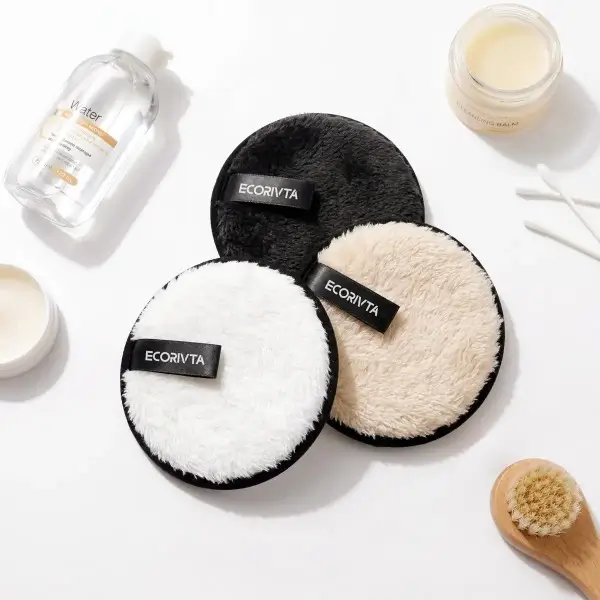
For skincare GWP, material choice is not only a sustainability conversation. The pad touches skin, may be washed, may be used with cleanser and must fit the buyer’s brand positioning. Cotton terry, bamboo cotton, microfiber, plush and blended routes can all work, but each creates different handfeel, lint, edge and care-label questions.
When buyers ask for skin-contact textile support, OEKO-TEX STANDARD 100 1 is a useful reference family for textile safety conversations. If the project discusses washing, colorfastness or textile performance, AATCC textile test methods 2 are useful background. The brief should still be project-specific: material, color, care label and document scope need confirmation before claims are placed on packing.
Check set count and laundry pouch
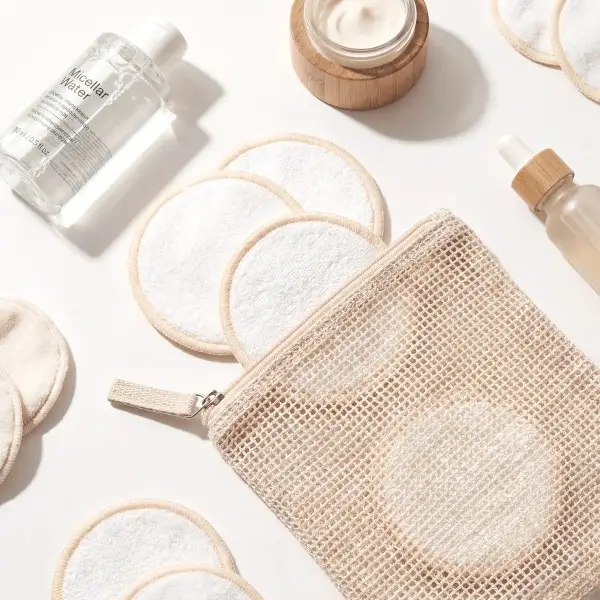
Set count changes pouch size, box size and perceived value
A three-pad sample sleeve, a seven-pad weekly set and a twelve-pad retail box do not use the same packing route. Set count affects laundry pouch size, fold, label, insert card, box wall strength, barcode area, carton mark and final photography. It also changes how buyers compare target price.
| Set decision | Why it matters | Brief detail to send |
|---|---|---|
| Pad count | Changes pouch, sleeve and box size | Count per set and total quantity |
| Pad shape | Affects stitching and packing layout | Round, square, oval or finger pocket |
| Laundry pouch | Adds use value and packing cost | Mesh, cotton, drawstring or no pouch |
| Retail route | Needs barcode and market version planning | Box, sleeve, insert card and carton mark |
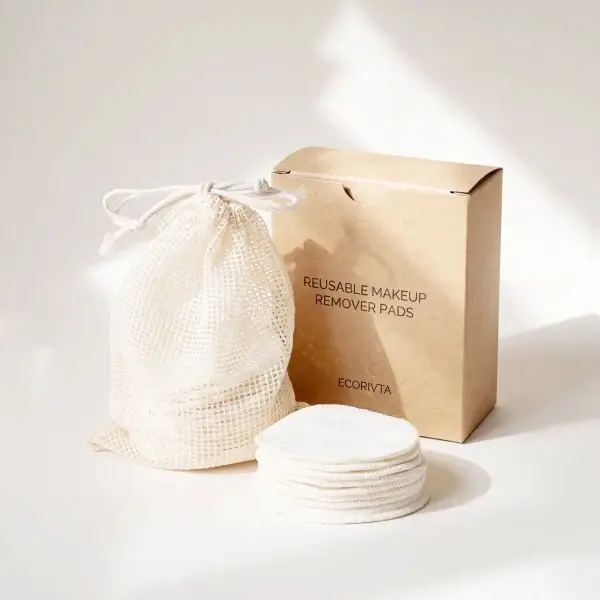
Retail-ready sets need label, barcode and claim wording earlier
If the reusable cleansing pads are sold as a retail SKU or placed inside a retail gift kit, the buyer should plan product identification and barcode ownership early. GS1 US barcode guidance 3 is useful background for UPC or GTIN planning. Ecorivta can support the production and packing route, while the buyer or retailer should control the official product data.
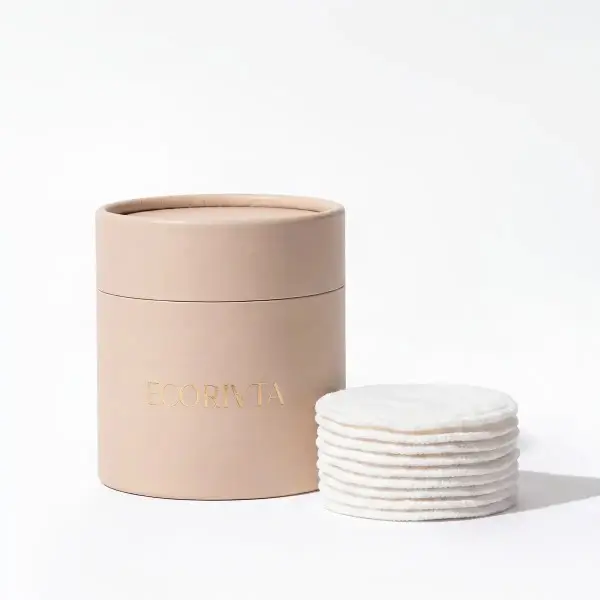
If recycled, reusable, washable, bamboo or eco wording appears on the sleeve or product page, keep the language specific and supportable. The US Guides for the Use of Environmental Marketing Claims 4 are useful claim-boundary background.
Sample approval should include use feel, set packing and QC evidence
Reusable cleansing pads should not be approved only from a front product photo. A useful sample review should include handfeel, surface texture, edge stitch, size tolerance, lint expectation, label position, pouch fit, care wording and final pack count. For a skincare launch kit, the buyer should also see how the pads sit with the other items in the set.
For a completed 3,200-piece example covering a 12 cm coral-fleece pad, removal of excess filling, a corrected wash check and two-piece paper-box packing, read the reusable cleansing pad sample review.
Before bulk production, decide what evidence will be checked: pad diameter or finished size, edge color, stitching consistency, color match, pouch drawstring, label readability, sleeve or box fit, carton quantity and pre-shipment photos. This keeps the project from becoming a last-minute packing problem when the product itself already looks approved.
The cleansing pad route is also different from a general cosmetic bag or towel route. The product is small, but it carries skin-contact, reuse and care expectations. The buyer should make the brief simple, but it should still include enough details for Ecorivta to recommend a material and packing path that matches a beauty GWP program rather than a loose commodity accessory.
Send a cleansing pad brief that can move straight to sample planning
Send the product role, set count, pad shape, approximate size, material route, color, label or logo file, laundry pouch or box idea, target market, target price, launch window and any document requirement. If the pads are part of a wider Beauty GWP set, include the pouch, towel, insert card or cosmetic bag route in the same brief.
For a quick route check, WhatsApp the set count and pouch route.
Send reusable cleansing pad RFQ
FAQ
How many pads should be in a skincare GWP set?
Common planning starts with the buyer use case: trial gift, routine set, spa kit, retail sleeve or launch kit. Set count affects pouch size, box size, label area, carton count and target price.
Which material route should a buyer compare first?
Start with handfeel and claim boundary: cotton terry, bamboo cotton, microfiber, plush or blend routes behave differently in softness, lint, edge stitch, care label and price.
Does every reusable cleansing pad set need a laundry pouch?
No. A pouch helps when repeat use, gift value or set organization matters. A sleeve, box or insert card may fit better when the program is price controlled or retail-ready.
What should be approved before bulk production?
Approve material handfeel, pad size, edge stitch, set count, label or logo, packing method, care wording, carton mark and pre-shipment photo evidence.
Related Ecorivta pages and guides
- Reusable Cleansing Pads for the main product route.
- Spa Wellness GWP Solutions for skincare and spa set planning.
- Face Towels when cleansing pads are paired with a towel route.
- Beauty GWP Accessories for the parent sewn accessory route.
For the wash-test approval workflow, use the reusable cleansing pad wash-test approval checklist.
-
OEKO-TEX STANDARD 100 is cited as a recognized textile safety reference when buyers ask about skin-contact textile support. ↩︎
-
AATCC textile test methods are cited as background for laundering, colorfastness or textile-performance discussions. ↩︎
-
GS1 US barcode guidance is cited for retail or sellable cleansing pad programs where product identification is buyer- or retailer-owned. ↩︎
-
The US environmental marketing claim guides are cited as claim-boundary background for reusable, recycled or environmental wording. ↩︎