Quick Summary
This article is for beauty and hair accessory buyers who already know they want custom claw clips, but are unsure where the logo should live: on the clip, on a metal plate, on the backing card, or on the gift packaging. It protects the current claw clip inquiry cluster by turning “can you put my brand name on it” into a cleaner sample brief.
- Use foil or print when the surface and logo size are simple enough to read clearly.
- Use engraving when the buyer wants a quieter mark and accepts lower contrast.
- Use a logo plate when premium feel matters and the attachment point can be approved.
- Use card, sleeve or label branding when the clip shape is curved, patterned or too small.
- Do not freeze the card artwork before the sample photo shows logo size, color and clip fit together.
The logo route should start from the buyer’s launch role
A claw clip used as a skincare GWP, a premium retail accessory and an influencer kit gift can all use the same base shape but need different logo treatment. A small sample order may only need a readable brand mark and card mockup. A retail-ready launch may also need barcode space, hang hole position, color control and shelf photos.
That is why the first question should not be “foil or engraving?” It should be “where should the buyer notice the brand?” If the brand moment is the card, the clip can stay clean. If the brand moment is the product itself, the surface and sample photo have to prove the logo is readable.
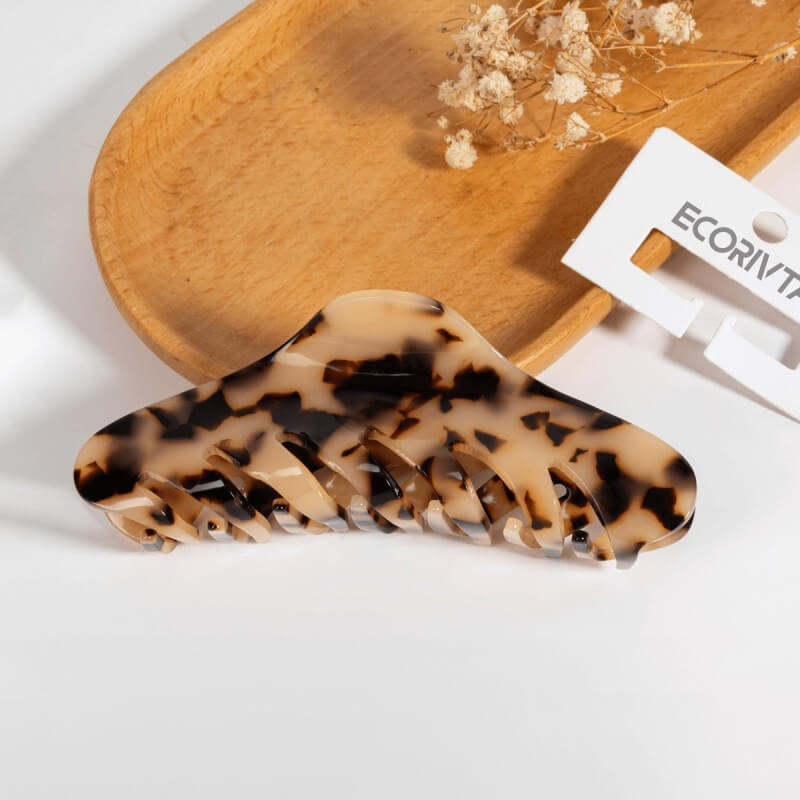
Foil, print, engraving and plate routes solve different problems
| Logo route | Best used when | Approval risk to watch |
|---|---|---|
| Foil or surface print | The logo is simple, the surface has enough flat area and the buyer wants visible branding. | Small letters, curved surfaces, dark patterns and color contrast can reduce readability. |
| Engraving | The buyer wants a quiet mark and accepts a subtle result. | Low contrast can disappear in product photos or retail lighting. |
| Metal or logo plate | The project needs a premium hardware detail and the attachment position can be sampled. | Plate size, edge feel, color match and attachment strength need approval. |
| Backing card, sleeve or label | The clip is patterned, curved, small or better left clean. | Card size, hang hole, barcode area and claim wording must fit the retail route. |
For color communication, a shared color reference helps the buyer, designer and supplier talk about artwork and product direction before physical samples are made.1

Do not make the backing card carry too many jobs
The backing card may need brand logo, product name, barcode, material wording, warning or claim text, hang hole and color direction. If everything is added late, the card can become crowded and the barcode area may be compromised. GS1 barcode placement guidance is useful background when a carded retail item needs scannable product identification and quiet space around the code.2
For Ecorivta, the practical route is to decide which information must be on the card and which can move to an insert, sleeve, carton label or digital handoff. This keeps the buyer brief simple enough to quote and sample.
Logo approval should happen with the sample, not only with artwork
Artwork on a flat screen does not prove how the mark will look on acetate. Pattern, gloss, curve, thickness and lighting can change the result. The sample approval photo should show the clip open and closed, the logo at normal viewing distance, the card or sleeve if used, and one close-up of the surface.
If environmental or recycled wording appears on the card, keep the claim specific and supported instead of broad. The US environmental marketing claim guides are useful background for claim-boundary wording.3
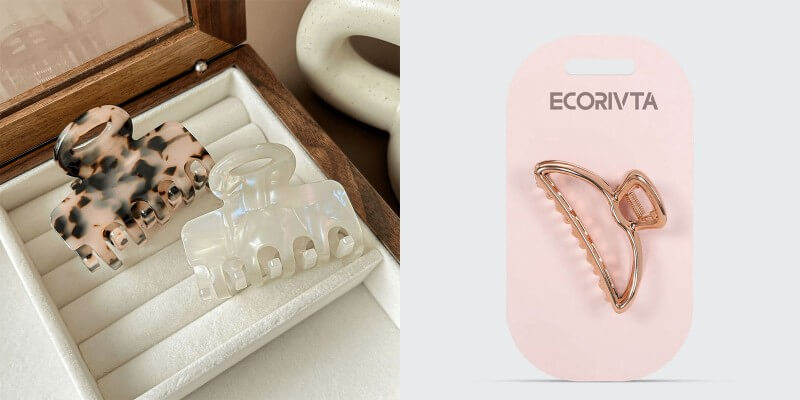
Buyer-useful handoff: keep the route simple
A strong first brief can be short: clip shape, material/color direction, logo file, preferred brand location, card or pouch idea, quantity range, target market and launch date. Ecorivta can then recommend whether the logo should be tested on the clip, plate, card, label or packing. This is more useful than asking for one price across every possible logo method.
FAQ
Can the logo go directly on an acetate claw clip?
Often yes, but it depends on the clip surface, curve, logo size, finish and color contrast. Patterned or dark acetate may make small logos harder to read, so a card or label route can be safer.
Which logo route feels most premium?
A logo plate can feel premium when the hardware, attachment and color are approved. It is not automatically the best route because it adds more sample checkpoints.
Should the backing card be approved before the clip sample?
The first artwork direction can be prepared early, but the final card should be approved after the clip sample confirms logo size, clip pressure, hang position and color match.
What should a buyer send for the first logo review?
Send the logo file, preferred mark size, clip reference, material or color direction, sample quantity, intended bulk quantity, packing idea and target market.
Send a quote-ready claw clip brief
Send the clip reference, logo file, preferred logo position, color or acetate sheet idea, card or sleeve concept, target quantity range, target market and launch window. If the buyer has not decided where the brand mark should appear, Ecorivta can first review the logo route before sample production.
-
Pantone color systems – used for color-reference communication between artwork, product color and packaging teams. ↩︎
-
GS1 US barcode placement guidance – used for backing card and barcode space planning on retail-ready card packs. ↩︎
-
US environmental marketing claim guides – used for careful environmental claim wording when a card, material or product page uses eco/recycled language. ↩︎