Start With Use Case, Size and Edge Finish
A silk satin scarf for a Beauty GWP set should not be written as a generic fashion accessory. The buyer is deciding how the scarf will be used, what size feels right, how the edge is finished, where the logo sits, how the color matches the beauty campaign, and how the scarf is packed with the rest of the set.
Quick Buyer Summary
- Confirm the scarf role first: neck scarf, bag tie, box insert or set accessory changes the size and packing route.
- Approve fabric handfeel, drape, edge finish and logo placement on a physical sample before bulk color approval.
- Treat Pantone, print artwork, folded size and packing method as one handoff, not separate decisions.
- If the scarf is part of a Beauty GWP set, confirm how it sits with the pouch, card, box or other accessories before final quotation.
Textile document questions can reference OEKO-TEX Standard 100 1, color handoff can use a shared system such as Pantone Color Systems 2, and fiber-label discussions should stay careful under rules such as FTC Textile Fiber Products Rules 3.
Send scarf size and color brief
Do Not Choose the Scarf Size Before the GWP Role Is Clear
For a Beauty GWP buyer, a silk satin scarf can play several roles. It can be a hair scarf, a small neck scarf, a bag charm scarf, a pouch insert, a gift-box layer, or a retail-style accessory inside a beauty launch kit. Those routes should not use the same size brief. A scarf that is meant to be tied to a pouch can be smaller. A scarf that is meant to be worn needs a more careful handfeel, edge and print approval.
The useful first brief can stay simple: target use, approximate size, material direction, color story, logo or label route, packing style, quantity and launch window. The buyer does not need to prepare a full technical document before asking for a route. But the buyer should avoid sending only a pretty scarf photo, because the supplier still needs to know how the scarf will be used in the Beauty GWP set.
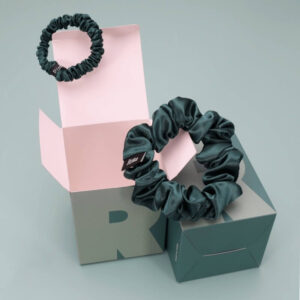
If the scarf sits with a cosmetic pouch, scrunchie, eye mask or hair towel, approve the color story across the whole set. A scarf can look right alone and still feel off when packed with other soft beauty accessories.
WhatsApp scarf use case and size idea.
| Buyer decision | What to confirm | Why it changes the route |
|---|---|---|
| Use case | Neck scarf, hair scarf, bag-tie scarf, pouch insert or retail gift. | The use case changes size, fold, edge finish and packing. |
| Size route | Small tie scarf, mid-size square, larger folded scarf or campaign-specific size. | Size changes material consumption, print scale and perceived value. |
| Edge finish | Machine hem, rolled edge, border treatment or cleaner low-bulk route. | Edge finish is visible after folding and can change the premium feel. |
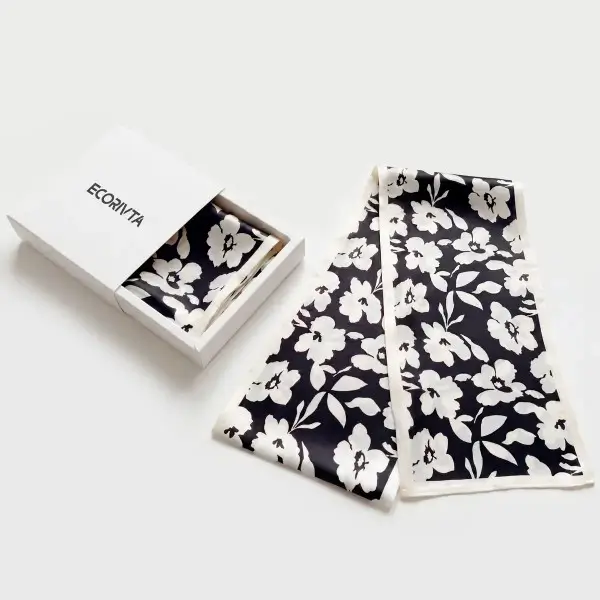
| Logo route | Printed logo, border logo, woven label, sleeve branding or no visible product logo. | Branding should match the beauty campaign without making the scarf look low value. |
Edge Finish Is Part of the Perceived Value
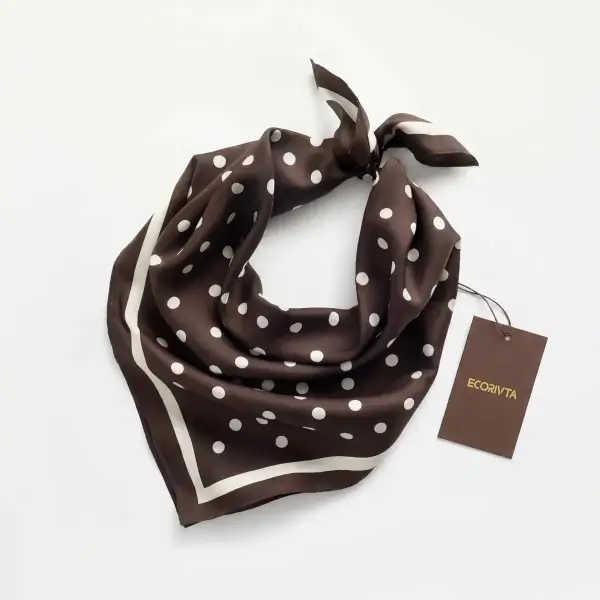
The edge finish should be approved together with size. A smaller scarf with a clean edge can feel refined when folded inside a gift box. A larger scarf may need a more visible border and a better print scale. If the edge looks bulky, wavy or uneven, the buyer may read the whole gift as lower value even when the fabric is acceptable.
For beauty launches, the sample should show the scarf flat, folded, tied and packed. This helps the buyer see whether the edge finish works in real use. It also prevents late changes after print artwork has already been locked.
WhatsApp edge finish references.
Logo Placement Should Not Fight the Print
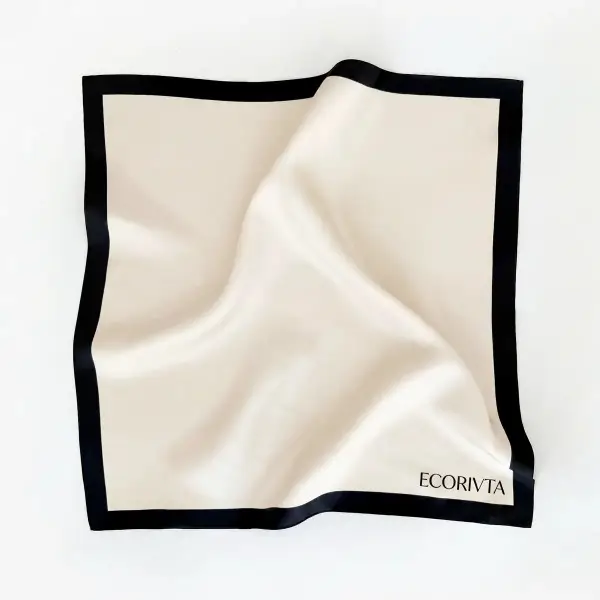
Scarf branding can be subtle or highly visible. The logo can sit in the corner, along the border, on a woven label, on a sleeve, or only on the outer packaging. The best route depends on how the scarf will be displayed in the Beauty GWP set. A corner logo may disappear after folding. A large center logo may make the scarf look promotional instead of premium.
Color should be checked on the actual printed scarf or fabric sample. Paper artwork, digital mockups and textile print can shift differently. If the scarf is part of a coordinated launch kit, approve the scarf color against the pouch, card, box or other beauty accessories.
The buyer should also decide whether the logo is meant to be seen during use or only during unboxing. That one decision changes the artwork scale. If the scarf is tied around a pouch handle, a small repeated border mark may work better than a single large logo. If the scarf is folded under a product card, the sleeve or label may be the clearer branding surface.
WhatsApp logo placement and color file.
Sample Approval Should Show the Folded Pack-Out
A scarf sample should not stop at a flat product photo. For Beauty GWP, the buyer should approve how the scarf folds, how the label sits, whether the logo is visible, and whether the scarf fits the sleeve, pouch, box or card. This is especially important when the scarf is a gift component rather than a standalone retail fashion item.
The final RFQ should include size, material route, edge finish, print or logo route, packing method, target market, quantity and launch date. If the buyer is still choosing between several size routes, Ecorivta can quote a practical sample route first and keep the artwork approval for the next step.
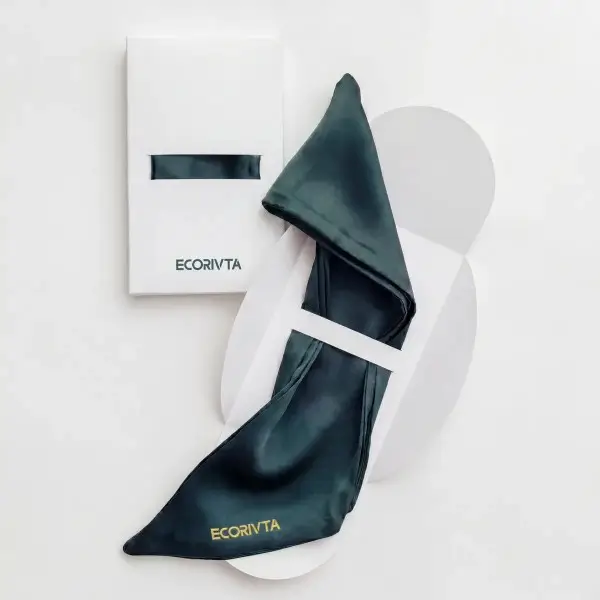
If the scarf will sit inside a multi-item launch kit, approve one photo of the scarf alone and one photo of the scarf packed with the other items. This prevents a common handoff problem: the scarf passes the single-item review, but the folded size, color or label position feels wrong once it is placed beside the main beauty product.
WhatsApp scarf sample and packing route.
Send a Scarf Brief That Is Easy to Quote
Send the scarf use case, size range, edge finish preference, color direction, logo route, packing method, quantity, target market and launch window. Ecorivta can help turn that into a sample route for Beauty GWP sets.
Silk Satin Scarf Buyer Questions
What is the first decision for a silk satin scarf GWP?
Confirm the use case first. A neck scarf, hair scarf, bag-tie scarf and pouch insert need different size and packing logic.
Should the logo be printed on the scarf?
Not always. A corner logo, woven label, border mark, sleeve logo or packaging-only logo can all work depending on the gift-set role.
Why does edge finish matter?
The edge is visible when the scarf is folded, tied or packed. It affects perceived value and should be approved before bulk.
What should a scarf RFQ include?
Use case, size, material route, edge finish, print or logo route, packing, quantity, market and launch date.
Related Ecorivta pages and guides
- Custom Silk Satin Scarves – Main page for silk satin scarf size, logo, edge and packing routes.
- Beauty GWP Accessories – Use this hub when scarves sit with other beauty accessories.
- Contact Ecorivta – Send a short scarf GWP brief.
Evidence Used in This Brief
-
OEKO-TEX Standard 100 – Reference for skin-contact textile document discussions when buyers ask about scarf material safety support. ↩︎
-
Pantone Color Systems – Reference for communicating scarf print, label, sleeve and gift-set color targets. ↩︎
-
FTC Textile Fiber Products Rules – Reference for careful textile fiber-identification discussions when scarf labeling is required. ↩︎