One verified Ecorivta order involved 5,000 light-color satin eye masks whose first sample did not provide sufficient blackout through the mask body. The recorded correction was to increase the silk-floss filling thickness, and the customer confirmed the corrected sample. This project-specific result is not a universal blackout guarantee. Nose-wing opening, side coverage and face fit remain separate checks for a silk eye mask blackout brief, but no pattern or nose-opening change was reported for this order.
Blackout Approval in One Page
- Start with two leakage paths: light through the material and light around the face.
- Use Ecorivta’s verified correction lesson accurately: a 5,000-piece light satin project increased silk-floss filling after the first sample lacked sufficient blackout; no pattern change was reported.
- Treat color as one variable: darker material generally blocks more light than lighter material, but color does not guarantee finished blackout.
- Approve on a named sample: record layers, fill, nose opening, strap setting, wearer notes and lighting setup.
Request a silk eye mask blackout review
Separate Fabric Transmission From Face-Fit Leakage
A material can look opaque on a table while the finished eye mask still leaks around the nose. Compare the fabric stack first, then wear the same identified sample and inspect the nose bridge, nose wings and side edges. Do not merge those two checks into one vague result.
AATCC TM203, Light Blocking Effect of Textiles 1 describes a spectrophotometric method for the light-blocking effect of textiles. It is useful for material-level comparison, but its scope does not prove that a finished sleep mask fits every face without edge leakage.
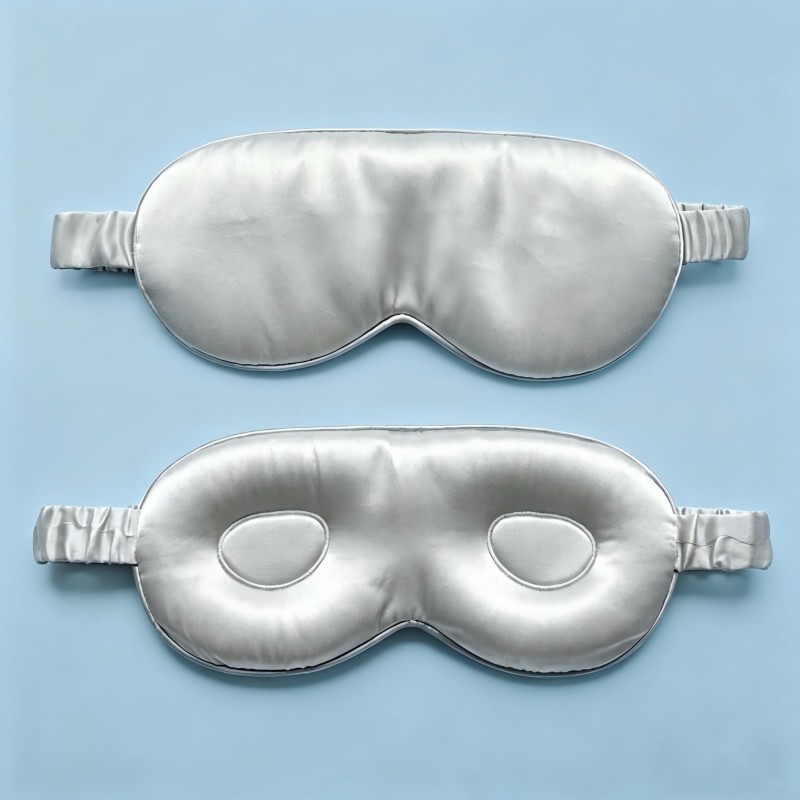
See Ecorivta’s custom eye mask page for the product route. The existing eye mask strap and comfort brief covers strap fit and packing; this article owns blackout construction and light-leak correction instead.
Control the Nose-Wing Opening Angle and Size
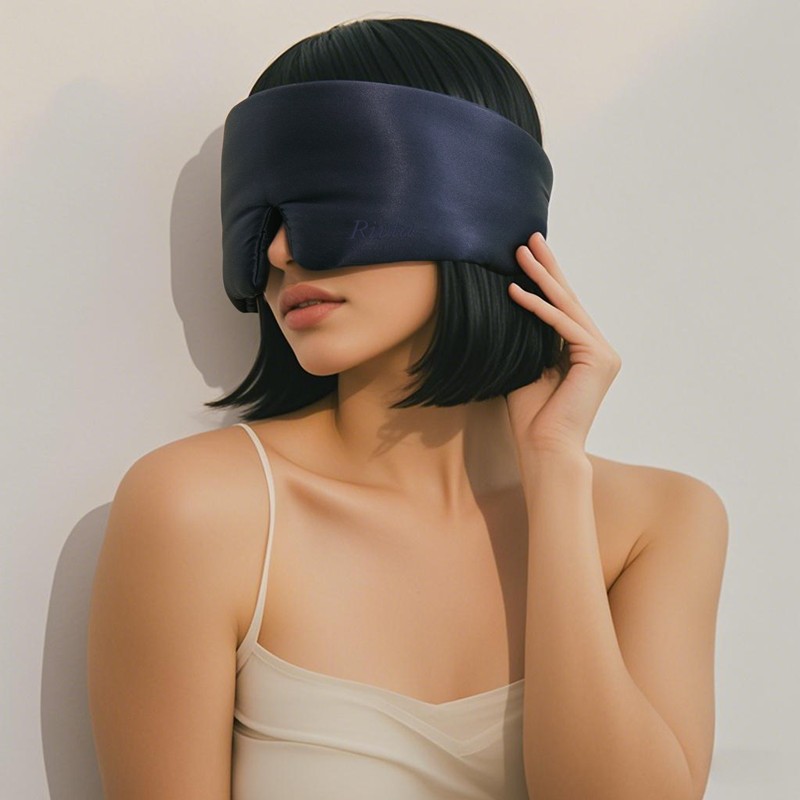
The opening around the nose is a geometry decision. If the angle is too open, light can enter beside the nose. If the opening is too small or heavily filled, the mask can lift, press uncomfortably or shift during wear. Mark the opening width, angle, seam line and fill transition on the sample rather than describing the area as “close fit.”
Treat pattern geometry and filling as separate controls. In Ecorivta’s verified 5,000-piece light satin case, only the filling thickness was changed; no pattern or nose-opening adjustment was reported. Other leakage routes may require a different correction, so ask for front, inner and worn-side photos and record which single variable changed in each revision.
Send the nose opening and light-leak sample notes
Compare Dark and Light Materials Without Overpromising
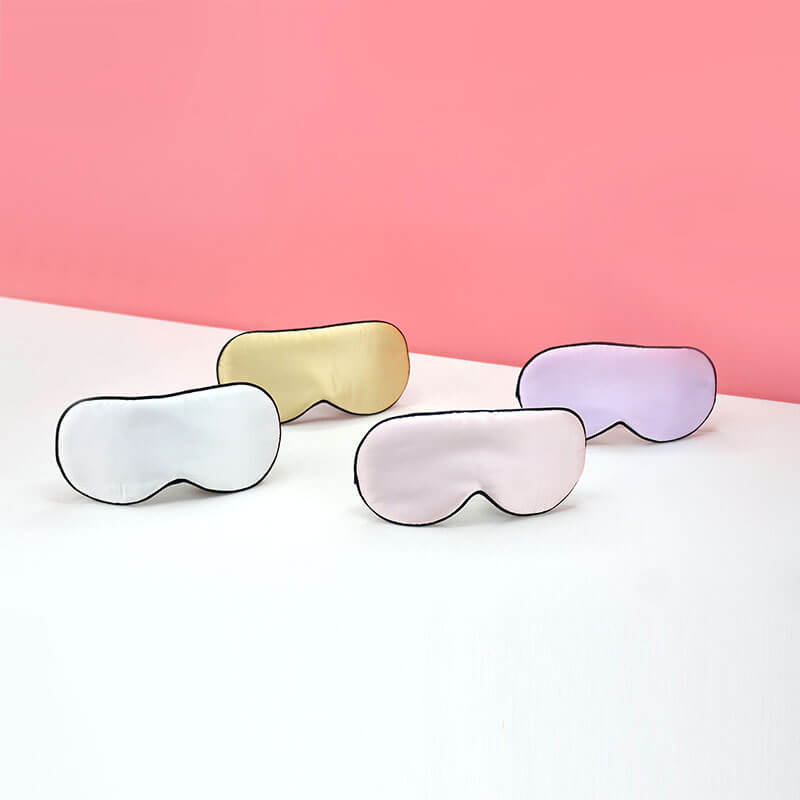
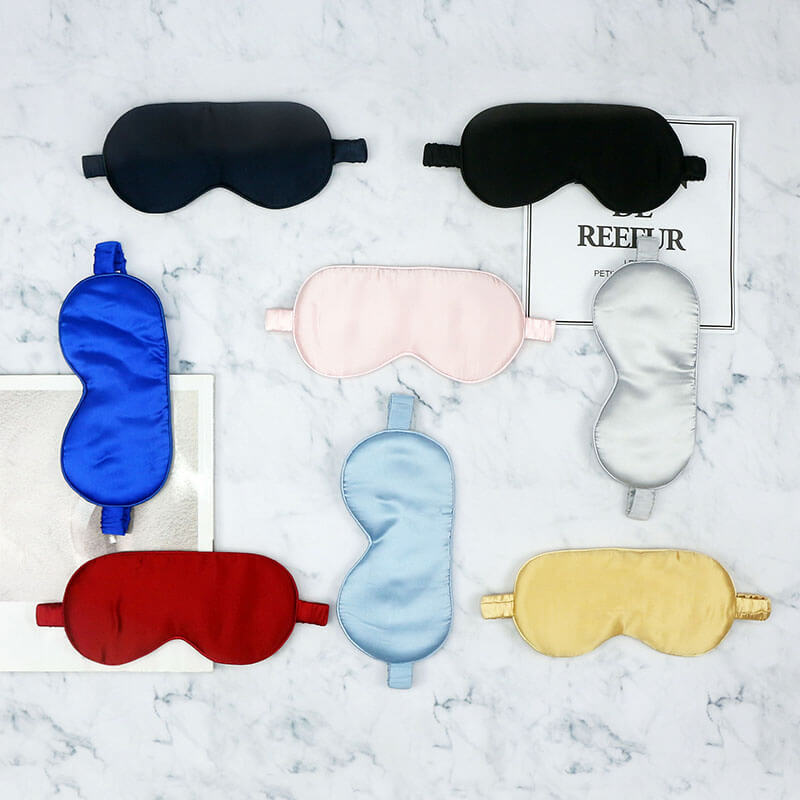
In Ecorivta’s sampling experience, darker materials have generally been more forgiving for light blocking than light colors. The practical comparison still needs the same construction, layer count and lighting setup. A dark single layer should not be compared with a light multi-layer sample and reported as a color-only result.
Use Pantone Color Systems 2 to communicate the intended shade, then approve the physical textile. Color systems do not replace opacity, handfeel, coating, lining or finished-fit checks.
Real Order Evidence: Light Satin and Fill Thickness
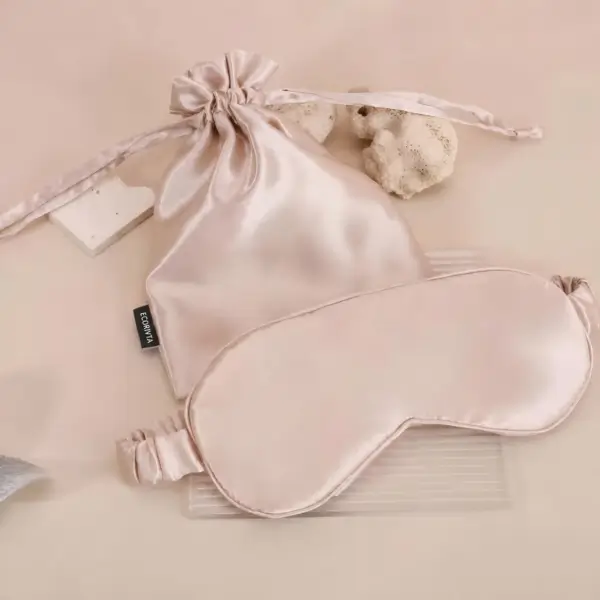
In a 2024 project for an Irish healthcare brand, Ecorivta produced a 20 × 9 cm light-color satin eye mask with silk-floss filling. The first sample did not provide sufficient blackout through the mask body. The recorded correction was to increase the filling thickness, after which the customer confirmed the corrected sample for the 5,000-piece order.
| Verified field | Project record | Approval boundary |
|---|---|---|
| Material and color | Light-color satin. | Color was one project variable, not a blackout guarantee. |
| Size and filling | 20 × 9 cm with silk-floss filling. | The filling thickness was increased after the first sample. |
| Correction result | The customer confirmed the corrected sample. | No pattern or nose-opening change was reported for this order. |
The transferable buyer lesson is to separate material transmission from face-fit leakage and document the exact sample change. Do not approve a universal “100% blackout” claim from this single result.
Use a Four-Route Light-Leak Test Matrix
| Sample route | Keep controlled | Decision to record |
|---|---|---|
| A: light fabric baseline | Pattern, fill and strap setting. | Where light passes through the material or enters at the edge. |
| B: dark fabric comparison | Same pattern, fill and strap setting. | Whether material transmission improves without changing fit. |
| C: nose-pattern revision | Chosen fabric and fill. | Whether opening angle and size reduce nose-wing leakage. |
| D: fill revision | Chosen fabric and recorded pattern. | Whether material transmission and fit improve without excessive pressure or lift. |
The light-leak test sheet should identify every sample with a code. Record observations, not a universal “100% blackout” statement. Face geometry, strap setting and ambient light can change the result.
Confirm Skin-Contact Evidence and Final Handoff
If tested textile safety is required, request the actual certificate and verify supplier, material, article class and scope. OEKO-TEX Standard 100 3 explains the STANDARD 100 route, but the standard name alone does not certify a proposed finished mask.
Send the target color, outer and lining materials, fill direction, nose-opening reference, strap route, logo, packing, quantity tiers and launch market. If the reference is easier to explain by photo, WhatsApp the eye mask reference and leakage area.
Send the complete silk eye mask blackout brief
Silk Eye Mask Blackout Questions
Does a dark silk eye mask guarantee complete blackout?
No. Darker fabric can reduce material transmission, but finished blackout also depends on layers, fill, nose-opening geometry, side coverage and individual face fit.
What should be checked around the nose wings?
Check the opening angle, opening size, seam position, fill transition and whether the mask lifts away from the face during normal wear.
Can more fill solve every light-leak problem?
No. Increased filling solved the specific material-transmission issue in one 5,000-piece light satin project, but extra fill can also change pressure and fit. Edge leakage, nose-wing gaps and side lift may need different corrections, so compare controlled samples and record the exact variable changed.
What evidence belongs in a blackout sample approval?
Record the fabric and layer route, nose and side photos, wearer fit notes, lighting setup, strap setting and the exact sample selected for approval.
Evidence Used in This Brief
-
AATCC TM203, Light Blocking Effect of Textiles – Referenced as a material-level light-blocking method; it does not prove finished eye-mask fit or eliminate facial-edge leakage. ↩︎
-
Pantone Color Systems – Referenced for controlled color communication before physical dark and light fabric samples are compared. ↩︎
-
OEKO-TEX Standard 100 – Referenced for skin-contact textile discussions; actual certificate scope and article class still require verification. ↩︎