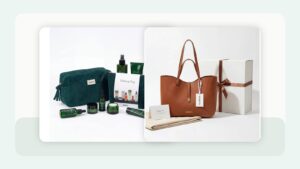
A scrunchie manufacturer RFQ should do more than ask for a unit price. For Ecorivta, the fastest quote starts with three buyer decisions: whether the scrunchie is a retail product or a gift, the launch timing and the target price. These details help the team recommend material routes because silk, satin, rPET satin, velvet and other routes can create very different cost and presentation outcomes.
Scrunchies can support beauty GWP, haircare gift sets, retail sets, subscription boxes, spa or hotel amenity programs and coordinated sets with a pouch, headband or hair towel. The product looks simple, but the first RFQ can still become slow if the buyer adds logo, backing card, barcode or certificate requirements after the first quote.
This checklist is written for qualified beauty brands, haircare brands, DTC teams, retail private label buyers and GWP programs that need MOQ 500+ production with sample-first approval.
Table of Contents
- TL;DR
- What makes a scrunchie RFQ quote-ready?
- Why should buyers define retail sale or gift use first?
- How does target price guide material recommendation?
- What logo file and label details should be sent?
- What packing scope should be confirmed?
- How should MOQ, sample timing and bulk timing be written?
- What should be sent to Ecorivta before quotation?
- What can Ecorivta deliver for scrunchie RFQ review?
- Composite case: a 2026 Q1 US East Coast haircare brand scrunchie quote changed after target price and packing were added
- FAQ
TL;DR
For a faster scrunchie RFQ, send product use, launch timing and target price first. Then add material route, color, quantity split, logo file, label size, packing scope, carton mark, barcode and certificate needs. Ecorivta can review MOQ 500+ projects, 7-10 day sampling and 30-50 day bulk timing as planning ranges, then recommend a route that fits gift, retail, haircare or set-packing needs.
What makes a scrunchie RFQ quote-ready?
A quote-ready scrunchie RFQ tells the manufacturer what the product is for, what price level the buyer needs and when the order must launch. Ecorivta’s scrunchies page [1] covers silk, satin, velvet, rPET and plant-based options, plus logo, packing, MOQ, sample and bulk QC context. The RFQ should turn that product range into one clear buyer brief.
The most useful first message is not long. It should say whether the scrunchie is a gift, retail item, haircare set component, subscription box item, spa amenity or set-packing accessory. It should also include target price and launch window so Ecorivta can avoid recommending a material route that the buyer cannot approve later.
| RFQ field | What to send | Why it affects quote |
|---|---|---|
| Product use | Retail sale, GWP, haircare gift set, subscription box, spa amenity or set component. | Controls material, logo, packing and quality expectation. |
| Launch timing | Sample target, bulk approval date, shipment target and market launch date. | Shows whether material and packing are realistic for the schedule. |
| Target price | Route budget, target unit price or price band. | Lets the team recommend silk, satin, rPET satin, velvet or another route. |
| Quantity split | Total quantity plus color, SKU, market and packing split. | Prevents MOQ and carton planning changes after quotation. |
| Logo and packing | Artwork file, logo size, label route, card, hangtag, polybag, barcode and carton mark. | Prevents later price changes and sample delays. |
Why should buyers define retail sale or gift use first?
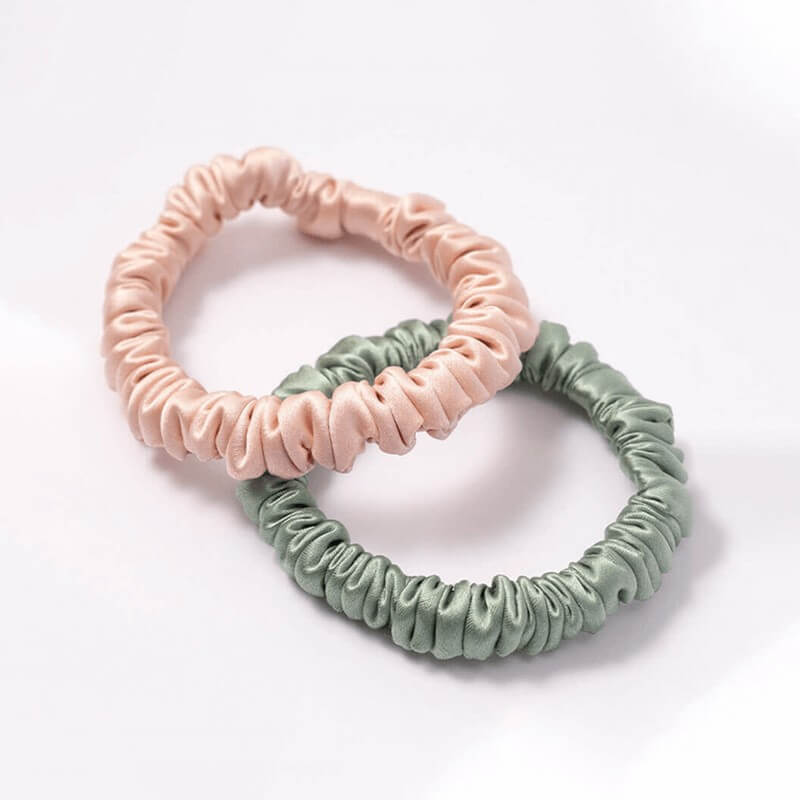
Retail sale and gift use create different decisions. A retail scrunchie may need stronger card presentation, barcode, market version, more consistent display packing and a clearer SKU split. A GWP scrunchie may need to match a pouch, headband, hair towel or launch kit color while staying inside a campaign target price.
If the buyer only says “custom scrunchie,” the supplier may not know whether to prioritize shine, handfeel, retail card, low-profile logo, set packing or fastest production. The RFQ should state the business role first, then the visual direction. Ecorivta’s contact route [2] is the right place to send product, quantity, material, logo, packing, certificate and delivery details before quotation.
| Project signal | Strong RFQ fit | Needs more detail first |
|---|---|---|
| Brand and use case | Beauty, haircare, GWP, retail, subscription, spa or launch-kit program. | No brand, no use case or only a catalog screenshot. |
| Quantity | MOQ 500+ planning quantity with color or SKU split. | Single-piece request or no quantity target. |
| Approval path | Sample-first review with launch timing and target price. | Price-only comparison with no sample or launch context. |
How does target price guide material recommendation?
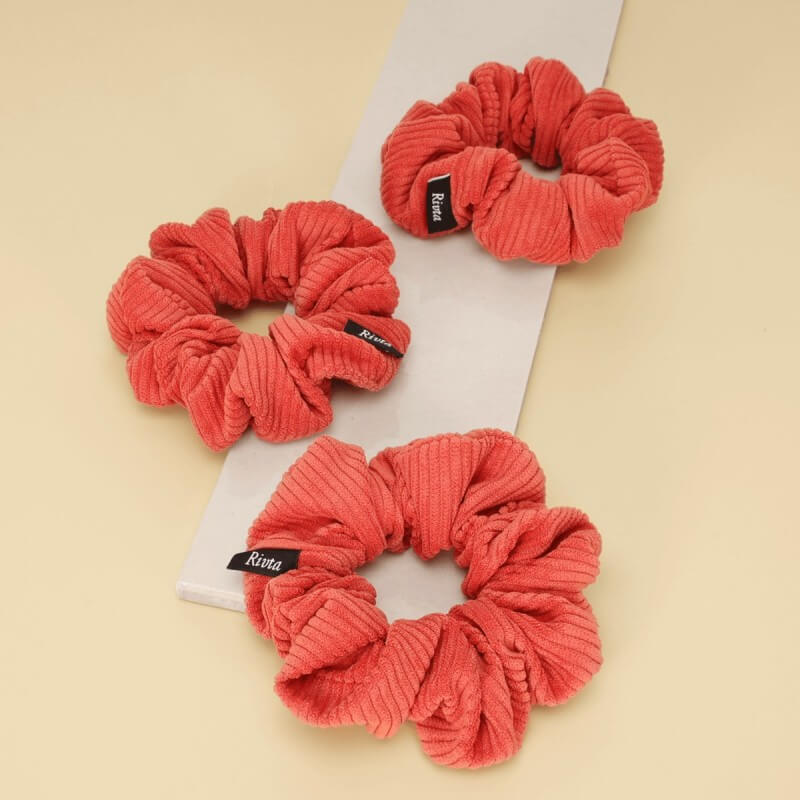
Target price is important because Ecorivta has many material routes and the price gap can be large. A buyer who wants a premium gift route may look at silk or rPET satin. A campaign that needs stronger cost control may use another satin, velvet or existing material option. Without target price, the supplier can recommend a route that looks good but fails budget review.
Target price also helps the supplier separate must-have details from optional details. If the target price is tight, logo may stay on a small woven label or backing card. If the item is a retail set, the buyer may approve a better card, barcode and set packing. The RFQ should make these tradeoffs visible before sampling.
| Buyer direction | Possible route to review | RFQ note to include |
|---|---|---|
| Premium glossy haircare gift | Silk, mulberry silk or rPET satin route. | Send shine reference, target price and launch date. |
| Beauty GWP with cost control | Satin, rPET satin or supplier-recommended existing route. | Send target price and whether package branding can carry the logo. |
| Retail carded set | Scrunchie plus backing card, hangtag, barcode and carton mark. | Send artwork file, barcode need and market version early. |
| Coordinated launch kit | Scrunchie color matched with pouch, headband or towel. | Send set components and color priority before quotation. |
What logo file and label details should be sent?
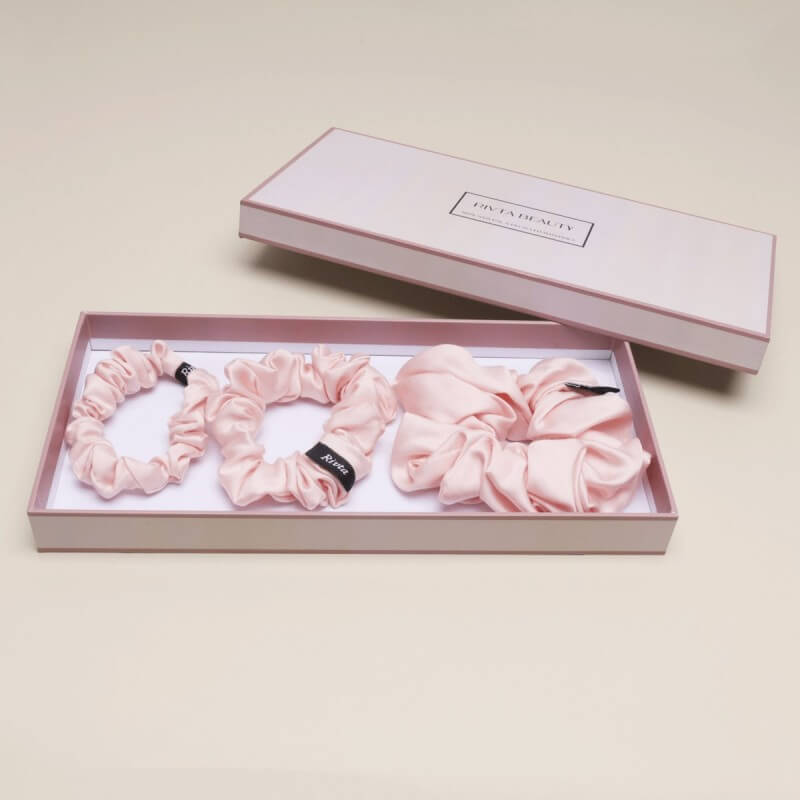
Scrunchie logo work must be small and clear. Fine details such as an “@” can become unclear because the product is small and gathered. A logo that works on a cosmetic bag may not work on a scrunchie label. The buyer should send vector artwork when available, plus a simplified logo option if the original mark has very fine details.
Ecorivta can make an artwork or placement drawing for customer confirmation, but the RFQ should still include logo file, preferred label type, label size, position, color and whether branding can sit on the backing card instead of the product. Custom branded beauty accessories [3] use different logo routes across small products, so the artwork decision should fit the product scale, not only the brand guideline.
| Logo detail | Send before quote | Why it matters |
|---|---|---|
| Artwork file | AI, PDF or clean vector when available; JPG only if temporary. | Small labels need clear artwork to avoid unclear details. |
| Logo size | Preferred size or supplier-recommended small-label size. | Oversized labels can look unbalanced on the scrunchie. |
| Label route | Woven label, printed label, hangtag/card logo or package-only branding. | Each route changes quote and sample proof. |
| Placement | Seam position, fold direction and visible side. | Controls final appearance when the scrunchie is packed. |
What packing scope should be confirmed?
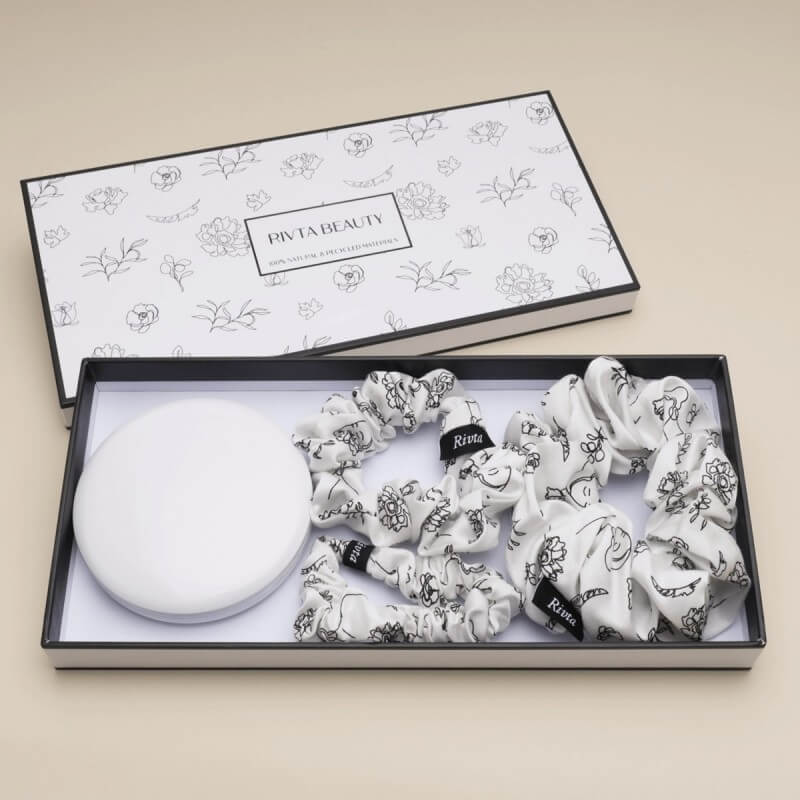
All common packing routes can appear in a scrunchie RFQ: individual polybag, backing card, hangtag, sleeve, belly band, pouch set packing, carton mark and barcode. Ecorivta can pack according to the buyer’s requirement, but the requirement should be visible before quotation because packing affects material cost, print proof, labor, carton planning and delivery handoff.
For gift use, the buyer should say whether the scrunchie is packed alone or inside a larger set. For retail use, the buyer should confirm card size, barcode, market version and display requirement. For subscription box use, the buyer should define packout size and whether the scrunchie must match other accessories in the box.
| Packing route | RFQ field | Common rework risk |
|---|---|---|
| Individual polybag | Bag size, single/set packing, sticker if needed. | Added after quote, changing labor and packing material. |
| Backing card | Card size, artwork, hole position, product orientation. | Logo or barcode added after sample approval. |
| Hangtag / sleeve | Artwork, paper route, attachment point and market version. | Print file not ready when sampling starts. |
| Pouch or set packing | Which scrunchie goes with which pouch, headband or towel. | Set matching changes color and quantity split. |
| Carton mark / barcode | SKU, color, quantity, market, barcode and carton wording. | Warehouse information arrives after packing confirmation. |
How should MOQ, sample timing and bulk timing be written?
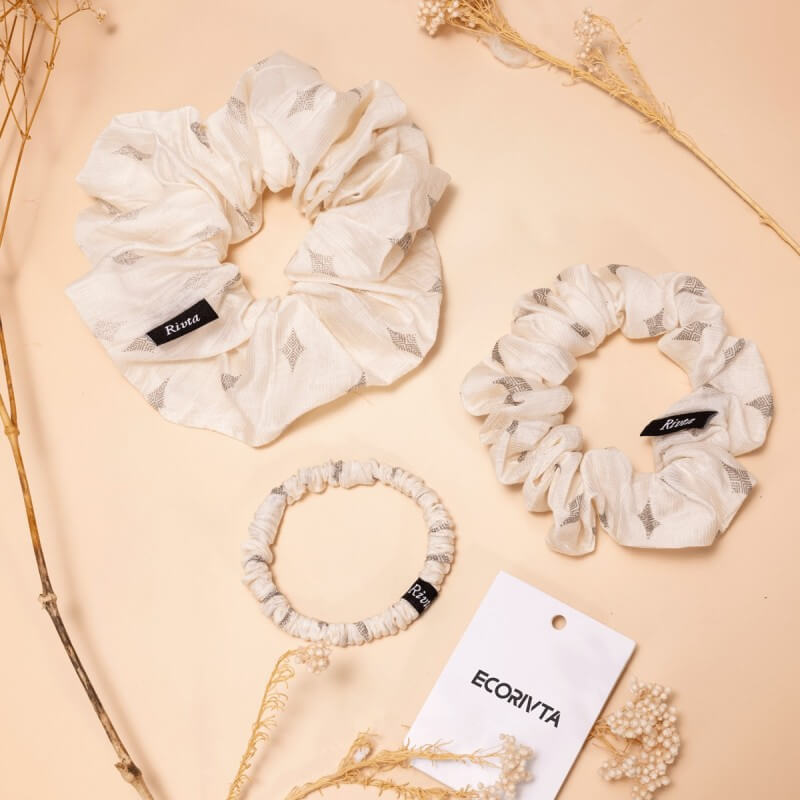
MOQ 500+ can be used as a planning range for many branded scrunchie projects, but the final route depends on material, color, logo, packing, certificate and approval timing. Sampling around 7-10 days may be possible depending on process, and bulk production around 30-50 days may be used as a planning range depending on material availability and approval speed.
These numbers should not be written as fixed promises. The RFQ should give Ecorivta enough context to evaluate the schedule: material route, logo route, packing scope, certificate or test needs, final artwork date, sample target, bulk approval date, shipment target and launch window. Rush projects can be reviewed case by case, but the buyer should share the real deadline early.
If a buyer needs material or chemical safety evidence, the RFQ should name the requirement before production planning. OEKO-TEX STANDARD 100 [4] relates to tested harmful substances within its own standard scope and should be referenced only when the requested material, document scope and buyer-required testing support it. Textile Exchange standards [5] help buyers understand how material claims connect to defined standard scope and documentation.
What should be sent to Ecorivta before quotation?
Send one RFQ file and one artwork folder. The RFQ file should make product use, target price and timing clear first. The artwork folder should include logo, label and packing files if available. If the buyer only has a concept, Ecorivta can still recommend routes after understanding what the product is for and what target price the buyer needs.
- Product use: retail sale, GWP, haircare gift set, subscription box, spa amenity or coordinated set.
- Target price or route budget direction.
- Launch timing: sample target, artwork date, bulk approval date, shipment target and market launch date.
- Material direction: silk, satin, rPET satin, velvet, cotton, bamboo or supplier recommendation.
- Color reference: Pantone, brand palette, stock color, sample or set-matching direction.
- Quantity split by color, SKU, market and packing version.
- Logo file and whether small details such as “@” must be simplified for clarity.
- Logo route: woven label, printed label, backing card logo, hangtag logo or package-only branding.
- Packing scope: polybag, backing card, hangtag, sleeve, pouch set packing, carton mark or barcode.
- Certificate, audit or third-party test request if the buyer needs it for onboarding or market approval.
How is this checklist different from the scrunchies product page?
The scrunchies product page is useful when buyers need product-level supplier information for silk, satin, velvet, rPET and branded scrunchies. This checklist focuses on what the buyer should send before the first quote. It is also different from a material and packing approval checklist, which is used later when the route is already being reviewed.
For broader accessory planning, the beauty GWP accessories hub [6] can help buyers compare scrunchies with headbands, hair clips, towels, eye masks and pouches before building a set. For logo systems across small accessories, use the custom branded beauty accessories route rather than forcing one logo method across products with different size, surface and packing limits.
What can Ecorivta deliver for scrunchie RFQ review?
| Buyer situation | Ecorivta can help by |
|---|---|
| Beauty brands, haircare brands, DTC teams, retail private label buyers, subscription box planners, spa program buyers and merchandising teams preparing MOQ 500+ scrunchie programs. | Reviewing product use, target price, launch timing, material route, logo route, packing scope, color split, certificate needs and set-packing requirements before quotation. |
| Projects where the buyer is not sure whether to choose silk, satin, rPET satin, velvet or another material. | Using product use and target price to recommend a practical route before sample work starts. |
| Single-piece buying, no-brand resale sourcing, urgent stock-only requests or price-only inquiries with no brand, packaging, sample or launch information. | Explaining which RFQ inputs are still needed before Ecorivta can recommend a meaningful material and packing route. |
Composite case: a 2026 Q1 US East Coast haircare brand scrunchie quote changed after target price and packing were added
Initial brief
In a 2026 Q1 US East Coast haircare launch review, a beauty buyer sent a reference photo and asked for a custom scrunchie for a haircare campaign. The first message said the product should feel premium and match a soft color palette, but it did not say whether the scrunchie was for retail sale or gift use. Target price, backing card, barcode, logo size and launch window were also missing.
Problems found before quotation
The supplier first prepared a route around a glossy fabric because the photo looked premium. After the first discussion, the buyer explained that the scrunchie was a GWP item inside a pouch set, not a retail SKU. The target price was tighter than expected, and the buyer also needed a small logo label, individual polybag, backing card and carton mark. The first route was no longer the right quote path.
Correction path
The RFQ was rebuilt around product use, target price and launch timing. Ecorivta asked for quantity split, material preference, logo file and packing scope before preparing the revised quote. The buyer accepted a route that kept the scrunchie attractive, moved stronger branding to the backing card and used a small label that would not distort in the fabric folds.
Lesson
The buyer did not need a longer RFQ. The buyer needed the right RFQ order. Product use, target price and launch timing came first, then material, logo and packing. Once those details were clear, the supplier could recommend a realistic material route and prepare a sample file that matched the launch kit, instead of quoting a product that looked good but did not fit the campaign budget or packout.
Anonymous feedback from scrunchie RFQ buyers
| Buyer role | Feedback |
|---|---|
| Beauty GWP merchandising planner, names withheld | “Our first scrunchie RFQ used to start with photos only. Quotes became more useful after we added product use, target price and launch timing before asking for material options, because the supplier could separate retail card needs from lower-cost GWP packing.” |
| Haircare brand sourcing coordinator, names withheld | “The logo file mattered more than expected. A small scrunchie label cannot hold every detail from the master brand mark, so we now approve a simplified logo and a backing card option before sampling.” |
| Retail gift set packaging manager, names withheld | “Packing changed our landed view. Once backing card, barcode and carton mark were included in the first RFQ, the supplier could quote a route that matched our packout review instead of revising after sample approval.” |
FAQ
What should a scrunchie manufacturer RFQ include?
A scrunchie RFQ should include product use, target price, launch timing, material route, color, quantity split, logo file, label size, packing scope, certificate or test request and shipment target. It should also say whether the scrunchie is for beauty GWP, retail sale, haircare gift set, subscription box, spa amenity or a coordinated set with pouch, headband or towel.
Why does Ecorivta ask whether the scrunchie is for retail sale or gift use?
Retail sale and gift use create different product decisions. A retail item may need backing card, barcode, market version and stronger display packing, while a GWP item may need target price control and set matching. If the supplier knows the use case early, the material, logo and packing route can be recommended more accurately.
Why is target price important for a scrunchie RFQ?
Target price helps Ecorivta recommend the right material route because silk, satin, rPET satin, velvet and other options can have very different cost structures. Without target price, the supplier may suggest a route that looks right visually but cannot pass the buyer’s budget review after packing, logo or certificate needs are added.
What logo file works best for custom scrunchies?
Vector artwork such as AI or PDF is best when available, especially for woven or printed labels. Scrunchies are small, so fine logo details such as an “@” may not remain clear. Buyers should be open to a simplified small-logo version, backing card branding or package-only branding when the original logo is too detailed for the product scale.
What packing options should buyers mention in the first RFQ?
Buyers should mention individual polybag, backing card, hangtag, sleeve, belly band, pouch set packing, carton mark and barcode if any of them are required. Packing affects quote, print file timing, labor, carton planning and shipment handoff. Adding packing after quotation often changes price and may require a revised sample or artwork proof.
Can Ecorivta quote if the buyer only has a concept?
Ecorivta can discuss early concepts, but the team first needs to understand what the product is for and what target price the buyer needs. After that, Ecorivta can recommend material routes, existing color options, logo placement and packing choices. A concept can start the conversation, but a quote-ready RFQ still needs core buying details.
What MOQ and lead time should buyers expect for custom scrunchies?
Many custom scrunchie projects can be reviewed from MOQ 500+ pieces, depending on material, color, logo, packing and certificate requirements. Sampling may take about 7-10 days depending on process, while bulk production may take about 30-50 days depending on material availability and approval speed. Rush projects can be reviewed case by case.
RFQ contact options
Trademark and certification note
BSCI, Sedex, SMETA, GRS, OEKO-TEX, ISO and other certification, audit or standard names belong to their respective organizations. This article is a supplier-side sourcing guide and does not claim that products, materials, orders or shipments automatically carry listed certification or test results. Buyers should confirm current document validity, certificate scope, material coverage, label artwork, packing artwork and market rules before finalizing quotation or bulk production.
Sources
- Use Ecorivta’s scrunchies page to understand silk, satin, velvet, rPET and plant-based scrunchie routes plus logo, packing and bulk QC context. Source ↩
- Use Ecorivta’s contact page to send product route, quantity, material, logo, packaging, certificate and delivery information before quotation or approval review. Source ↩
- Use Ecorivta’s custom branded beauty accessories page when buyers need the broader logo and branded accessory route across scrunchies, headbands, clips and other small accessories. Source ↩
- OEKO-TEX STANDARD 100 supports discussion of tested harmful substances within its own standard scope and should not be confused with recycled-content, material origin or product-performance claims. Source ↩
- Textile Exchange standards are useful when buyers need to connect recycled-material claims to defined standard scope and documentation. Source ↩
- Use Ecorivta’s beauty GWP accessories hub when the buyer needs to compare scrunchies with sibling accessory categories before building a set. Source ↩