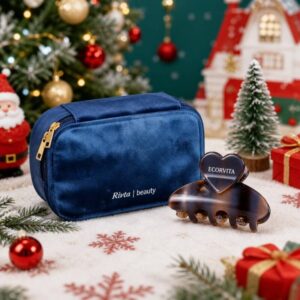
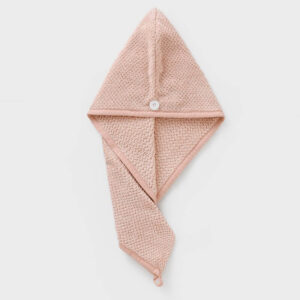
A recent private-label curly-hair brief asked for a warm-ivory microfiber towel wrap, 400-500 GSM, a button-and-elastic-loop closure, embroidery, a woven label and premium packing. That is enough detail to start a curly hair towel wrap fit brief, but it is not enough to approve production. The buyer still needs one sample route that connects pattern fit, fabric mass, closure geometry and handfeel.
The Buyer Decision in One Page
- Use this brief for: premium curly-hair towel wraps with a shaped pattern, button loop, brand color and private-label packing.
- Do not use it for: a generic hair towel MOQ article or another bleach-proof salon towel test.
- Main approval risk: choosing 400-500 GSM as a quality score while leaving the finished pattern, loop position and drying handfeel undefined.
- First action: send the finished wrap dimensions, target fabric range, closure photo and packaging route together.
Request a curly hair towel wrap fit review
Start With Curly-Hair Fit, Not GSM Alone
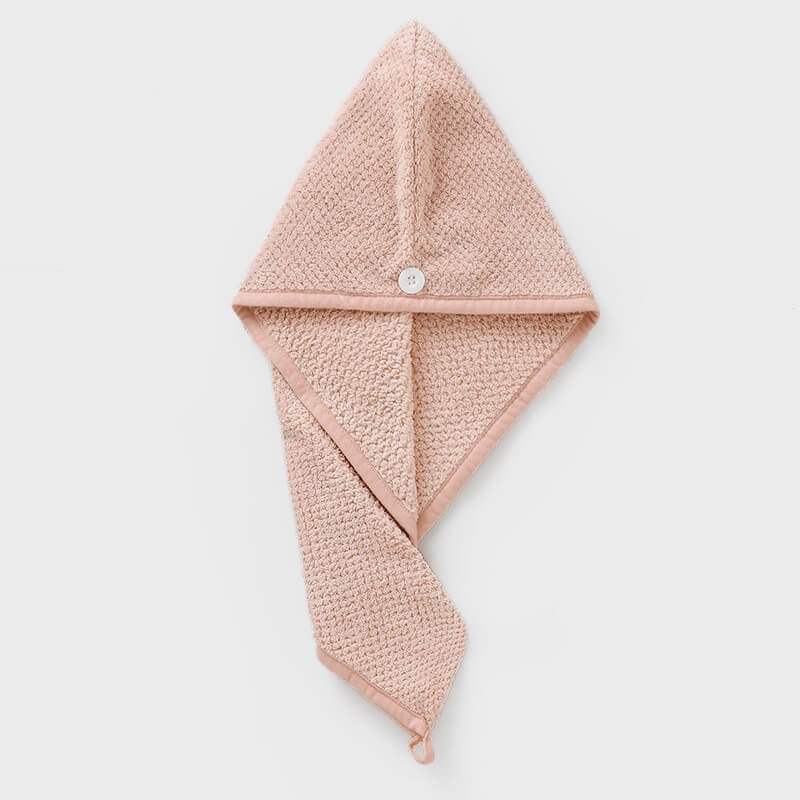
A curly hair towel wrap fit brief should begin with the finished pattern. The buyer should specify the wrap length, widest point, button position, loop reach and whether the shape must hold thick or long curls without pulling at the hairline. A flat fabric swatch cannot answer those fit questions.
The 400-500 GSM request is useful as a starting range, but mass per unit area does not describe the complete product. ISO 3801:1977 1 explains the measurement concept for woven fabrics; buyers should still compare samples made to the same finished dimensions before judging bulk, weight and handfeel.
Review Ecorivta’s custom hair towel page for product options. For a separate approval workflow, use the hair towel sample approval checklist.
Use 400-500 GSM as a Controlled Swatch Range
Ask for two or three fabric swatches with the fiber composition, weave, finish and measured mass identified. Compare them after the same conditioning and washing route. Do not compare one heavier finished wrap with one smaller lightweight wrap and call the difference a GSM result.
| Approval field | What to record | Why it matters |
|---|---|---|
| Fabric mass | Requested and measured GSM on the submitted swatch. | Keeps the 400-500 GSM discussion tied to a real sample. |
| Finished pattern | Length, widest point and curve after sewing. | Controls fit and total product weight. |
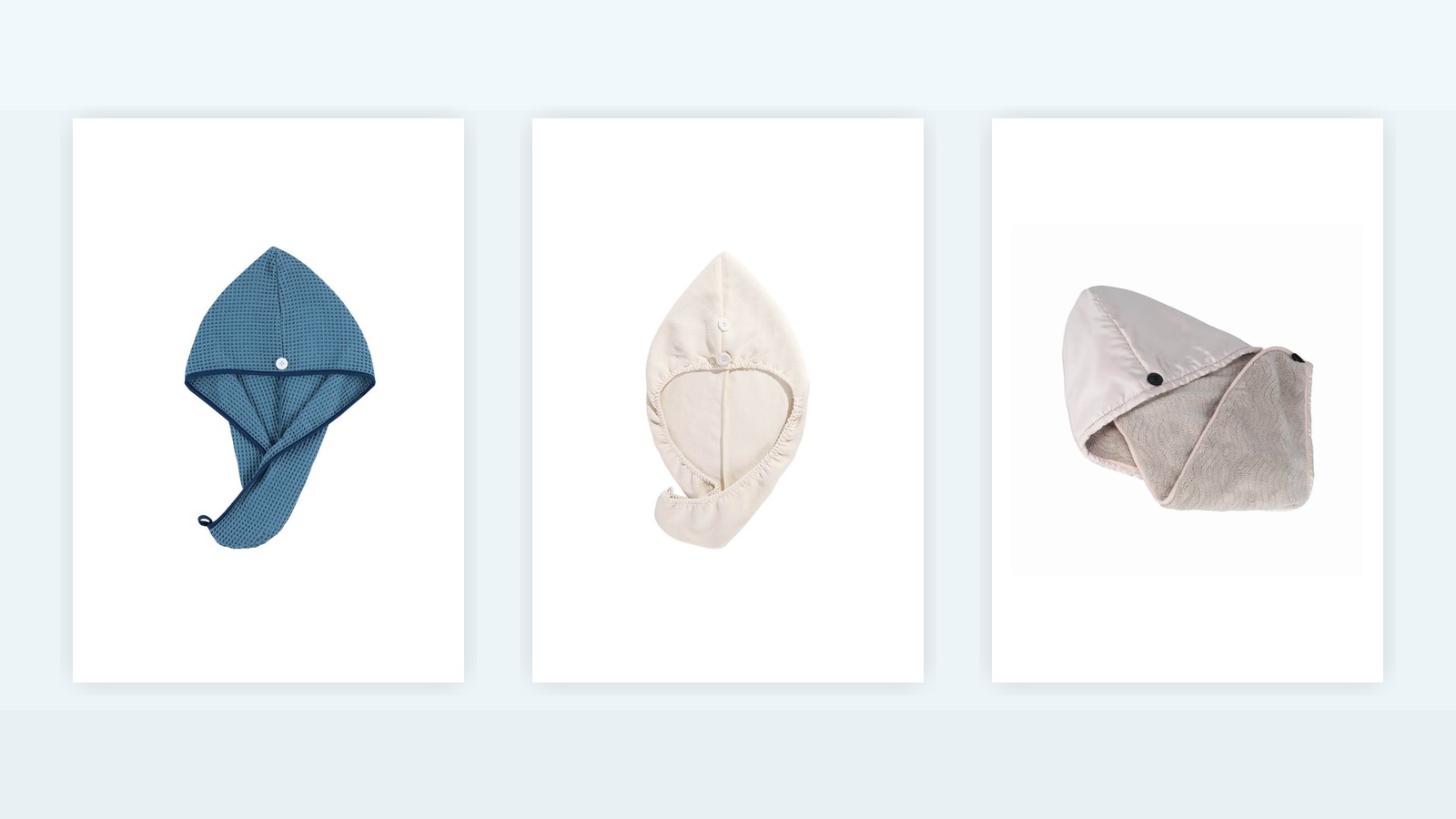
| Fiber and weave | Composition plus waffle, terry or other construction. | Changes handfeel, absorbency and surface friction. |
| Color | Warm ivory/oat reference plus physical approval swatch. | Prevents a neutral color name from replacing an actual standard. |
For color communication, Pantone Color Systems 2 can give the team a shared reference, but a physical fabric swatch still matters because pile, weave and lighting change the visual result.

Send 400-500 GSM swatch requirements
Approve the Button and Elastic Loop as One Closure
The button, elastic loop and reinforcement stitching work as one closure. The approval photo should show the loop at rest, the loop reaching the button, the stitch box or bar tack, and the wrapped product under realistic tension. Moving only the button can change fit; lengthening only the loop can make the wrap loose.
This is not a theoretical risk. Another premium hair-towel buyer reported rejecting previous supplier samples after the elastic stitching failed and the band detached during use. That buyer experience supports a focused closure review, but it does not prove a failure rate or justify invented pull-test numbers. The related elastic strap failure brief covers that QC problem in more depth.
Keep Anti-Frizz as a Buyer Evaluation, Not a Guarantee
“Anti-frizz” should remain a buyer evaluation unless the brand has a defined test and claim route. In the sample stage, compare surface smoothness, snagging, seam placement, wet handfeel and how tightly the wrap must be twisted. A softer surface may be preferred, but the article should not promise a hair outcome from GSM alone.
The fiber choice should therefore be recorded as part of the same sample decision as weave, finish and closure, not approved from a fiber name alone.
The buyer should also confirm fiber-content wording and care labeling. FTC Textile and Wool Acts guidance 3 explains U.S. textile labeling requirements, while OEKO-TEX Standard 100 4 can be relevant when the buyer asks for a textile safety route. Neither source replaces product-specific verification.
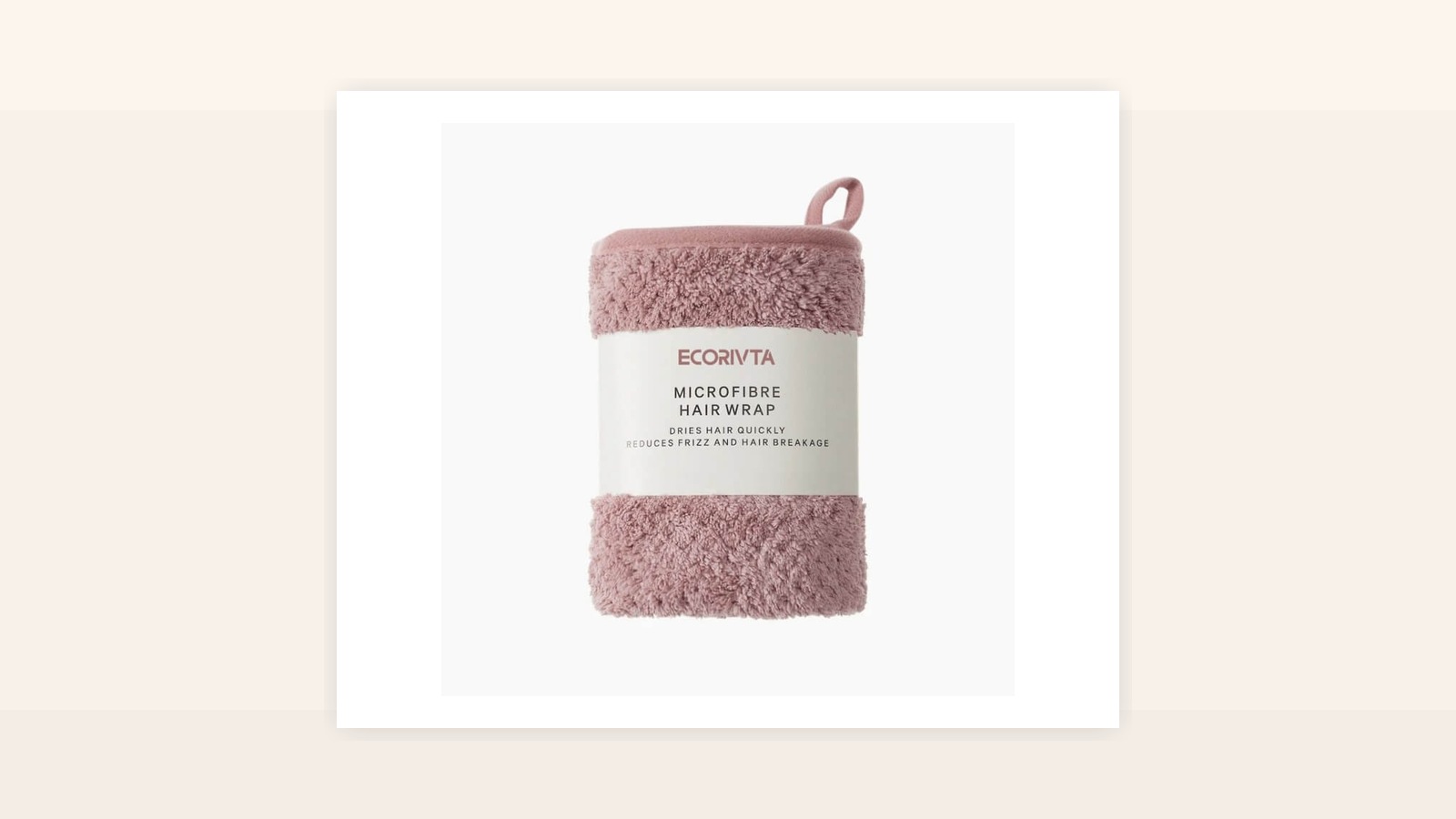
Send the Curly Hair Towel Wrap Fit Brief
Send the finished dimensions, 400-500 GSM swatch request, fiber and weave preference, warm-ivory color reference, button and loop placement, embroidery artwork, woven-label file, packing style, quantity tiers, sample address and launch date. If a field is unknown, mark it unknown instead of allowing the supplier to guess.
Send the closure and sample photo brief
FAQ
Is 500 GSM automatically better than 400 GSM for curly hair?
No. GSM describes fabric mass per area, not finished fit, surface friction, drying speed or closure security. Compare samples made to the same dimensions and construction.
What should the first closure approval photo show?
Show the button position, elastic loop at rest, loop under normal reach, reinforcement stitching and the wrapped product under realistic tension.
Can Ecorivta guarantee an anti-frizz result from microfiber alone?
No. The buyer should define the evaluation method and approve fabric surface, seam placement, wrap tension and washed-sample handfeel before using an anti-frizz claim.
Where should a buyer review product options and related sample checks?
Review the custom hair towel page for product options. Use the sample-approval checklist, elastic-strap failure brief or bleach-proof salon towel brief only when those decisions match the project.
Evidence Used in This Brief
-
ISO 3801:1977 – Referenced for the meaning and determination of fabric mass per unit area. ↩︎
-
Pantone Color Systems – Referenced for shared color communication before physical fabric approval. ↩︎
-
FTC Textile and Wool Acts guidance – Referenced for U.S. fiber-content and textile labeling discussions. ↩︎
-
OEKO-TEX Standard 100 – Referenced for buyer discussions about tested textile safety routes. ↩︎