Button-Loop vs Elastic-Wrap Hair Towels for Beauty GWP
Beauty brands comparing button-loop vs elastic-wrap hair towels are choosing between two different product architectures, not only two different looks. Ecorivta has completed multiple orders for the two-tone button-loop route; one documented order was 10,000 pieces. The white waffle elastic-wrap route is newly developed and has already attracted several paid sample orders, but it does not yet have the same bulk-order evidence. This brief separates those evidence levels so a Beauty GWP buyer can choose a sampling route without turning early interest into a false trend claim.
Quick Buyer Summary
- Proven route: the two-tone microfiber turban uses a traditional button and elastic loop. One documented order used a 65 x 25 cm size, edge-binding logo print and paper sleeve.
- Emerging route: the white waffle wrap opens to 81 x 96 cm and is primarily secured by a broad elastic band.
- Evidence boundary: the white route has several sample orders and positive early feedback, but no verified bulk result yet.
- Composition check: a continuous waffle route may be offered at 80% polyester / 20% polyamide; a visible flat-band route may be quoted differently. Confirm each technical sheet instead of reading composition from appearance.
- Performance check: polyamide share can be one factor in water pickup, but fiber ratio alone does not prove absorbency.
- GWP decision: approve closure fit, wet-hair capacity, logo route, composition and packout on the same sample.
Start With Evidence: Proven Route vs Emerging Route
| Evidence status | What Ecorivta can state | What remains to be approved |
|---|---|---|
| Completed-order evidence | Multiple two-tone button-loop orders have been completed; one recorded order was 10,000 pieces. | A new buyer still approves its own fabric, dimensions, logo and packout. |
| Sample-stage evidence | The white waffle elastic-wrap has several paid sample orders and positive feedback on the samples supplied. | Bulk production, repeated washing and market sell-through are not yet verified. |
| Factory-side observation | Continuous and flat-band waffle constructions may be quoted with different polyester/polyamide ratios. | The actual composition must be confirmed on the selected fabric specification. |
| Not claimed | This article does not rank the routes as the year’s two most popular styles. | Choose by buyer fit and sample evidence, not an unsupported popularity label. |
This comparison supports the custom hair towel GWP page. The earlier two-tone hair turban swatch approval explains color and edge-logo control for the completed route. This page owns the different decision: whether a buyer should start with that mature button-loop architecture or sample the new elastic-wrap architecture.
Route B: 81 x 96 cm Waffle Elastic-Wrap Hair Towel
The newly developed white route starts from an 81 x 96 cm open waffle towel and uses a broad elastic band to hold the wrapped form. Ecorivta has already sold several sample orders, and the available customer feedback on those samples was positive. No buyer reported that the sample was too loose, too tight or unable to cover long hair. That feedback is useful, but it is not yet a substitute for a bulk-order wash and fit record.
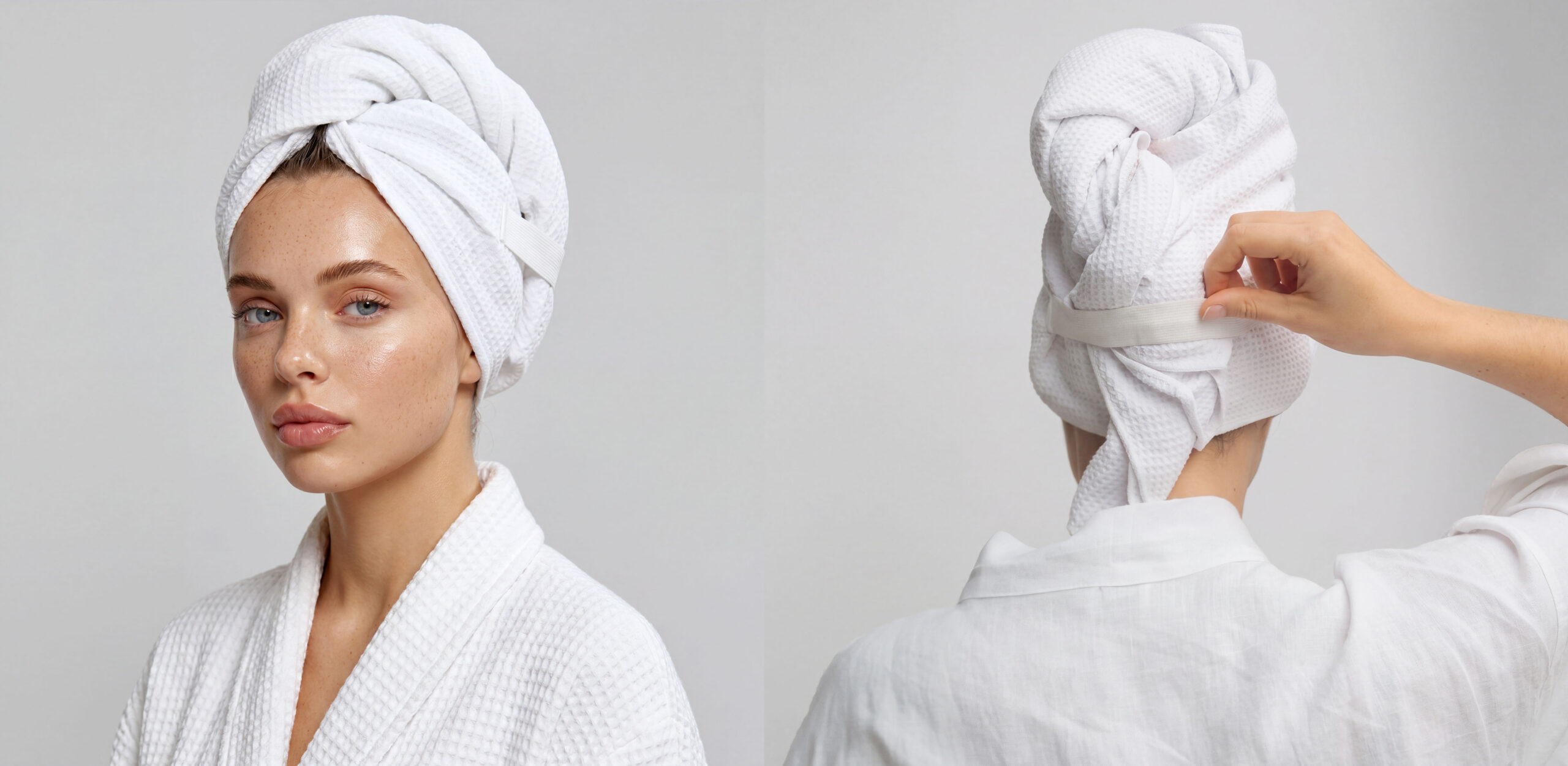
The broader format changes the sample questions. Instead of approving only a button and loop, the buyer should check band tension, wrap direction, coverage at the nape and whether the folded bundle still fits the GWP package. Use the elastic strap and stitching pull-test guide when the band seam is a critical approval point.
Compare Closure and Fit Before Comparing Cost
| Buyer decision | Button-loop route | Elastic-wrap route |
|---|---|---|
| Reference size | 65 x 25 cm documented completed-order size. | 81 x 96 cm open sample size. |
| Closure | Traditional button plus elastic loop. | Broad elastic band around the wrapped towel. |
| Current evidence | Multiple completed orders, including one 10,000-piece record. | Several sample orders; bulk outcome not yet verified. |
| Best first fit check | Loop reach, button placement and internal volume. | Band tension, nape coverage, wrap direction and wet-hair capacity. |
| Typical brand route | Simple edge-binding print can work after sampling. | Woven label is currently the more common route. |
| Typical pack route | Paper sleeve used on the documented order. | Bag packing is common for current samples. |
A low unit quote is not useful if the buyer has not approved how the closure behaves on wet hair. Send a hair-length range, reference wearing photo, preferred open size and pack dimensions with the RFQ. The hair towel RFQ brief shows the remaining fields needed before pricing.
Continuous Waffle vs a Visible Flat Woven Band
The white waffle family can be built with a continuous textured surface or with a visible flat woven band interrupting that texture. The difference is not only visual. Ecorivta’s current factory-side guidance is that a continuous waffle route may be offered at 80% polyester / 20% polyamide, while one flat-band route may be quoted around 85% polyester / 15% polyamide.
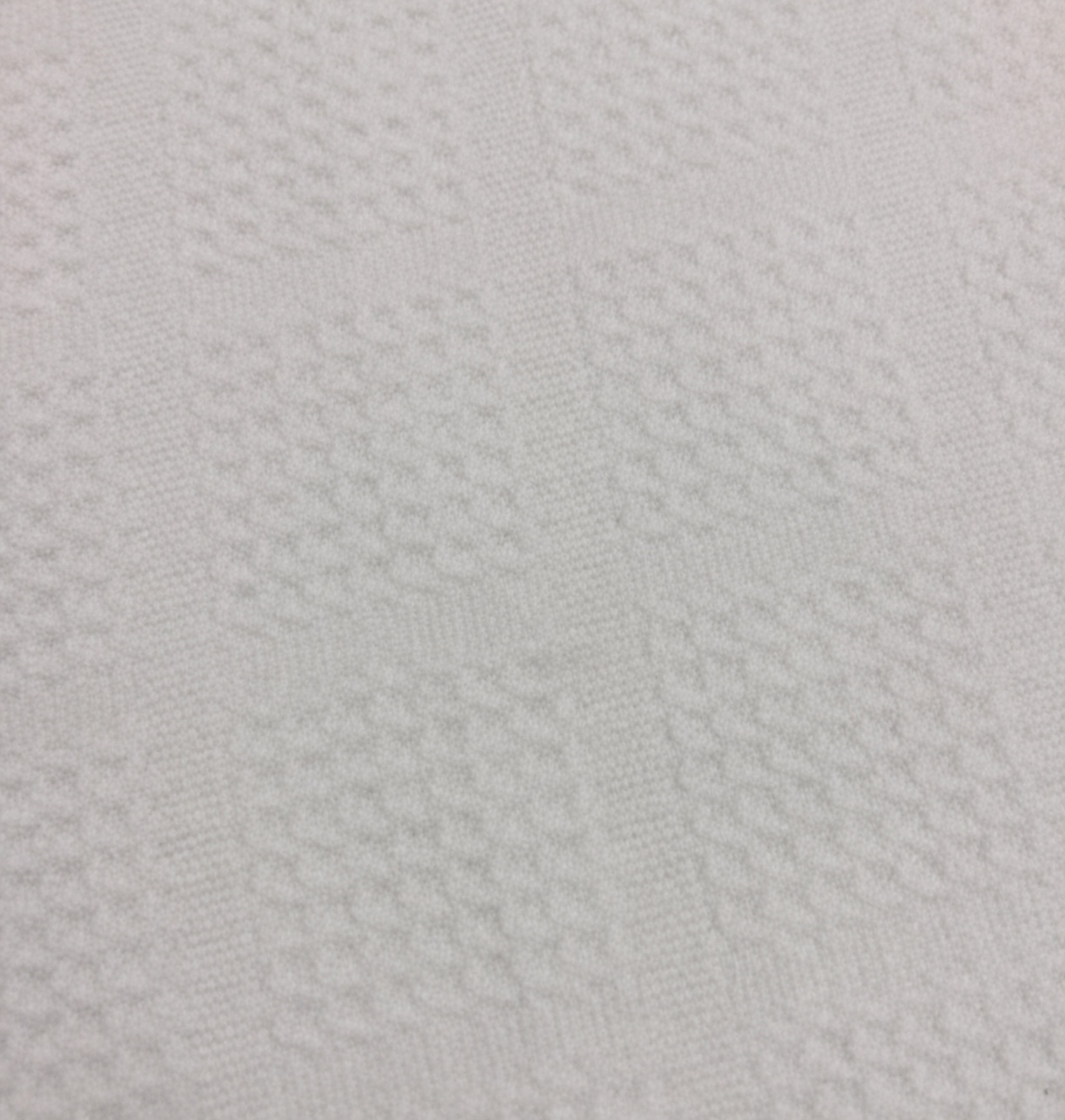
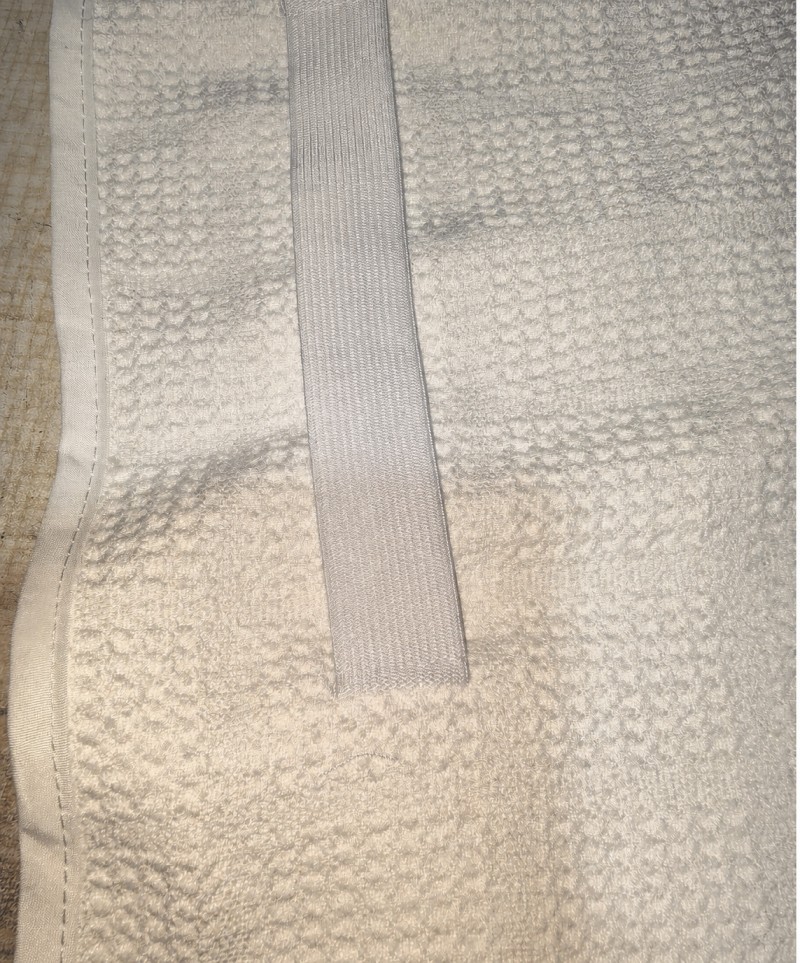
These ratios are sourcing observations for current routes, not a universal rule for every mill. Fiber-content descriptions also need to match the confirmed product. The FTC Textile and Wool Acts Guidance 1 explains U.S. fiber-content labeling considerations. Confirm the selected composition, destination market and label artwork before production.
Do Not Approve Absorbency From Fiber Ratio Alone
A higher polyamide share can be one factor in water pickup, which is why some buyers prefer the 80/20 route when the appearance requirement allows it. It is still inaccurate to say that 20% polyamide automatically guarantees better absorbency. Filament splitting, yarn structure, GSM, finishing and the test method also affect performance.
AATCC TM79-2025, Absorbency of Textiles 2 is one reference for evaluating textile absorbency. Ecorivta is not claiming that the current samples passed that method. A buyer who needs a measured claim should define the method, preconditioning, specimen count and pass value before testing.
Approve Logo and GWP Packing on the Same Sample
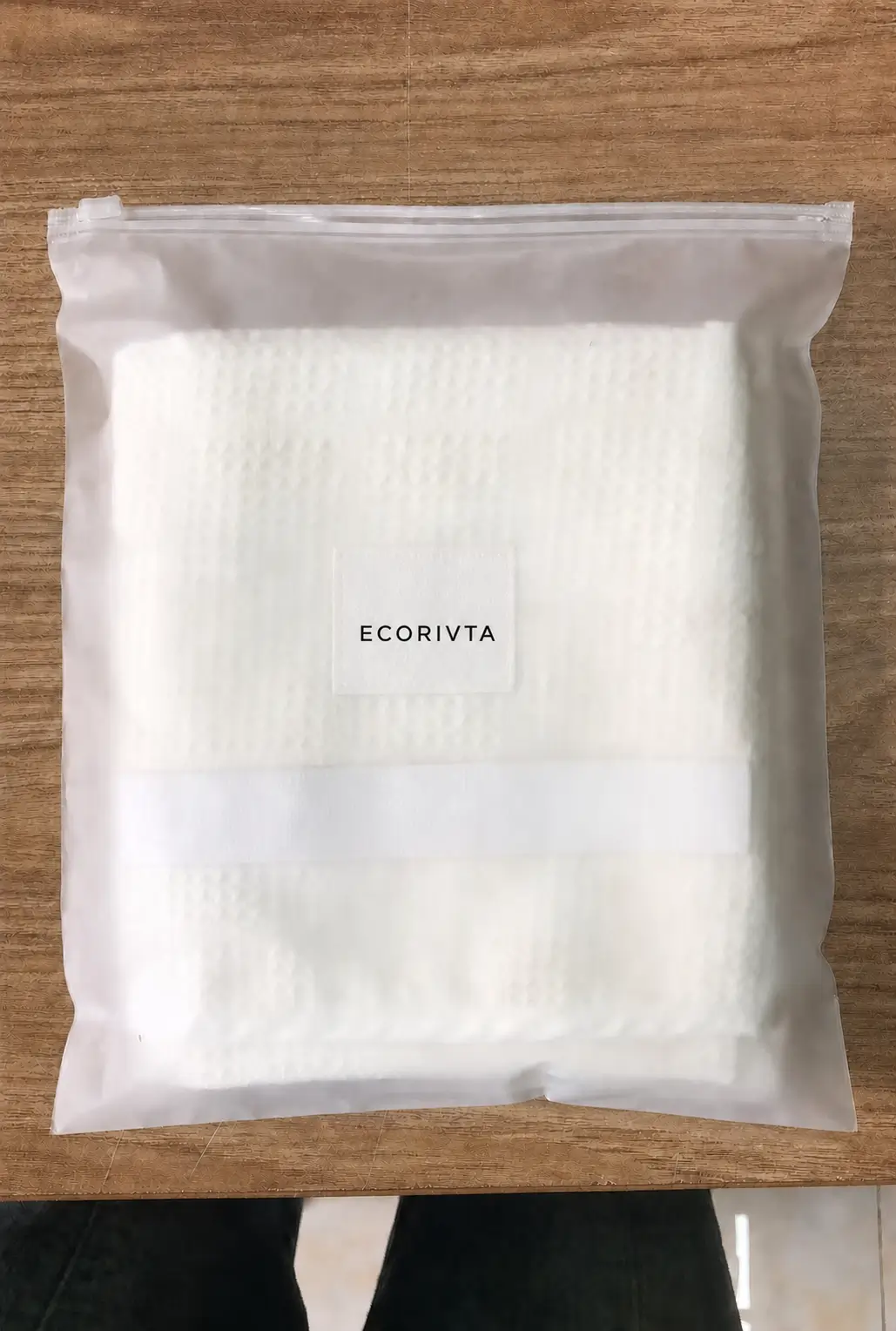
The two routes currently favor different brand presentations. The mature button-loop order used a simple edge-binding print and paper sleeve. The new waffle elastic-wrap samples more often use a woven label and bag packing. Neither combination is mandatory, but the logo method changes handfeel, folding and package thickness.
If skin-contact certification is part of the brief, identify the exact fabric, trim, elastic, thread, label and print route covered by the evidence. OEKO-TEX STANDARD 100 3 covers harmful-substance testing for textiles and related components. Do not describe a finished Beauty GWP as certified until the applicable certificate and scope are verified.
Quote-Ready Handoff Checklist
- Choose the button-loop or elastic-wrap architecture.
- Provide the target open size and the hair-length/density range used for fit review.
- Confirm continuous waffle or visible flat-band construction.
- Request the exact polyester/polyamide ratio for the selected fabric.
- Define whether absorbency is visual, comparative or measured to an agreed method.
- Supply a simple and a complex logo file before choosing edge print, woven label or embroidery.
- Approve the closure, logo and package together, not in separate samples.
- Record which statements are completed-order evidence, sample observations or unverified targets.
Button-Loop vs Elastic-Wrap Hair Towel Questions
Which hair towel route has stronger bulk-order evidence?
The two-tone button-loop route has stronger evidence. Ecorivta has completed multiple orders, including one documented 10,000-piece order. The white waffle elastic-wrap currently has several sample orders but no verified bulk result.
What is the reference specification for the new white waffle wrap?
The current reference opens to 81 x 96 cm, uses a broad elastic band and may use an 80% polyester / 20% polyamide continuous waffle route. The selected fabric composition must still be confirmed for each project.
Does 20% polyamide guarantee better absorbency?
No. Polyamide share can be one factor, but yarn construction, filament splitting, GSM, finishing and the test method also affect water pickup. Use an agreed sample comparison or test method before making a measured claim.
Is every waffle towel with a visible flat band 85/15?
No. Around 85% polyester / 15% polyamide is a current factory-side route observation, not a universal rule. Appearance cannot confirm composition; request the technical sheet for the actual fabric.
Which logo route is safer for a complex brand mark?
A simple edge-binding print worked on the documented button-loop order after repeated tuning, but it is not ideal for a complex symbol. Compare a woven label or another sampled route when fine details must remain clear.
Evidence Used in This Brief
- FTC Textile and Wool Acts Guidance – Referenced for U.S. fiber-content and textile labeling considerations after the selected fabric composition is confirmed. Back to content
- AATCC TM79-2025, Absorbency of Textiles – Referenced as an absorbency-test method option; no AATCC result is claimed for the Ecorivta samples in this brief. Back to content
- OEKO-TEX STANDARD 100 – Referenced for harmful-substance testing scope; no finished-product certification is claimed without verifying the certificate and covered components. Back to content