EVA and TPU can both work for clear Beauty GWP pouches, but they solve different buyer problems. The right choice depends on clarity, softness, campaign tier, product fill, packing condition and budget.
Buyer Summary
For most beauty brands, the EVA vs TPU decision should be made from the filled sample, not from the material name alone. Choose EVA when the campaign needs a softer, semi-clear and value-controlled pouch where a casual transparent look is acceptable. Choose TPU when product visibility, premium handfeel, panel recovery and gift-ready packed presentation are part of the campaign value. Before bulk, buyers should compare actual product fill, logo contrast, zipper pressure, surface marks, packing protection, sample photos and document requirements. Ecorivta can help turn this decision into supplier-ready sample and quote fields.
| Best for | This guide is best for beauty buyers, private-label teams, sourcing managers, product marketers and GWP owners choosing between EVA and TPU for sunscreen, skincare, fragrance, resort, wellness, travel retail or transparent cosmetic pouch campaigns. It fits projects where the buyer has already moved away from a broad material search and now needs to decide which non-PVC clear route supports the campaign tier, product fill, logo visibility, packed sample appearance, budget and approval evidence. It is especially useful when the buyer must compare two sample routes side by side before confirming quote, sample revision, packing method, launch photos and bulk expectations. |
| Less suitable | This guide is less suitable for buyers who still need a full PVC, EVA and TPU material-family comparison, one-piece personal purchases, stock pouch orders without product fill, or projects where the buyer has no launch tier, target quantity, product dimensions, logo method or packed-sample requirement yet. It is also not a chemical compliance manual, laboratory testing guide, legal review or replacement for retailer-specific documentation. If the buyer has already selected TPU and only needs inspection criteria, a TPU quality-control checklist is a better next step. |
| Ecorivta reality | Clear pouch projects often look simple, but the material route shapes appearance, handfeel, cost, packed sample approval and production expectations. |
| Core boundary | This is a two-route EVA vs TPU decision guide. It does not replace a broader PVC / EVA / TPU comparison or a TPU quality-control checklist. |
Quick answer: choose EVA for value softness, choose TPU for premium clarity
Choose EVA when the campaign needs a softer, slightly frosted, value-controlled clear pouch and the buyer does not require a premium glass-clear look.
Choose TPU when the pouch must feel more premium, show product fill more clearly, recover better after packing and support a cleaner filled-sample presentation.
The approval rule is simple: do not choose by material name alone. Approve the route with actual products inside the pouch, because fill weight, label color, tube shape and zipper pressure change the result. When destination-market review matters, material route decisions should also respect relevant product warning and safety expectations such as California Proposition 65 notice requirements [1].
| Route | Choose when | Be careful when |
|---|---|---|
| EVA | The brand wants a softer, semi-clear pouch with practical cost control. | The team expects a very crisp, premium transparent display. |
| TPU | The campaign needs clearer visibility, flexible premium handfeel and stronger filled-sample presentation. | The project is chasing material route cost above all else. |
How is this different from a PVC / EVA / TPU material guide?
A broader material guide helps buyers decide whether PVC, EVA or TPU should be considered at all. This guide is narrower. It assumes the buyer is already comparing non-PVC clear pouch routes and now needs to decide between EVA and TPU for a specific Beauty GWP campaign.
| Buyer question | Better next route | Why it matters |
|---|---|---|
| Should PVC still be considered? | PVC / EVA / TPU material guide | Use it when the project needs a three-material comparison before narrowing the brief. |
| How do we inspect TPU after selection? | TPU quality review support | Use it when clarity, odor, zipper, seam and packing tests need to be translated into checkpoints. |
| How do we approve the final packed sample? | Packed sample approval support | Use it when the buyer must approve the pouch with actual products before bulk production. |
| How should retail packing be scoped? | Clear pouch packaging brief support | Use it when carton, insert card, bag protection and travel retail presentation shape the final result. |
Practical differences buyers notice first
Most buyers notice three things before they discuss technical details: clarity, softness and how premium the filled pouch looks in hand.
| Buyer-visible factor | EVA tendency | TPU tendency |
|---|---|---|
| Transparency | Often softer and more semi-clear. | Often clearer and more premium-looking. |
| Handfeel | Soft, approachable and casual. | Flexible, smoother and more refined. |
| Structure | Practical for simple soft pouches. | Better suited when packed shape and panel recovery matter. |
| Campaign tier | Value GWP, event kits, wellness sets and simple skincare pouches. | Premium skincare, fragrance minis, resort campaigns and travel retail sets. |
| Budget role | Often supports cost control. | Often justifies a higher route cost through perceived value. |
|
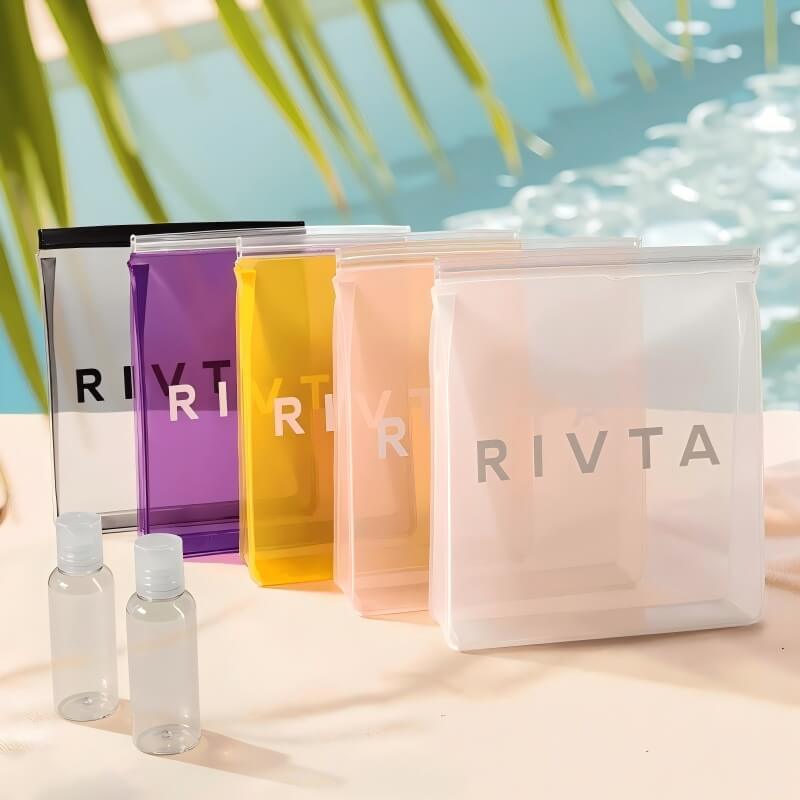 |
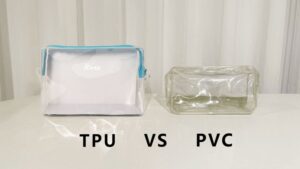
| EVA route
Useful when the pouch should feel soft, simple and cost-aware. |
TPU route
Useful when product visibility and premium handfeel are part of the gift value. |
When is EVA better?
EVA is often a good route when the brand wants a softer clear pouch for a casual transparent look, an event giveaway, a simple wellness kit or a value-controlled skincare GWP. It can work well when the pouch is not expected to carry the whole premium message of the campaign.
| EVA fit | What to approve | Main risk |
|---|---|---|
| Budget-control campaign | Empty and filled sample appearance. | The pouch may feel too simple if the campaign needs a premium look. |
| Softer semi-clear look | Haze level, color cast and logo contrast. | Products may be less visible than expected. |
| Simple gift set | Product fit, zipper pressure and panel shape. | The pouch may distort if the fill is too tight. |
| Event or wellness route | Logo contrast and insert-card placement. | The message can become hard to read through the pouch. |
When is TPU better?
TPU is usually the stronger route when the buyer wants a clearer, more premium transparent pouch for skincare minis, fragrance samplers, resort kits or travel retail campaigns. It can also be a useful route when the buyer wants to move away from PVC-style concerns in colder or higher-expectation markets.
TPU still needs approval. Buyers should check clarity, odor, seam appearance, scratch sensitivity, zipper behavior and packing marks. Film behavior and tensile properties are commonly assessed through recognized methods such as ASTM D882 plastic film testing [2], but the buyer-facing sample should still be judged in its real packed condition.
| TPU fit | What to approve | Main risk |
|---|---|---|
| Premium clarity | Panel transparency, haze and filled product visibility. | Any haze or surface mark becomes more noticeable. |
| Flexible premium handfeel | Softness, recovery and zipper pressure. | The pouch may deform if the fill is oversized. |
| Travel retail or resort kit | Packed sample, carton method and surface protection. | Scratches or puller rub can reduce the premium effect. |
| Non-PVC clear route | Destination market, material document scope and claim wording. | The team may assume material route alone covers all compliance needs. |
Product fill changes the decision
A clear pouch is judged after the product goes inside it. The same material can look different with a flat sheet mask, a round sunscreen tube, a glass fragrance mini or a mixed SKU set.
| Product fill | EVA route | TPU route |
|---|---|---|
| Sheet masks or flat sachets | Often practical for simple flat packing. | Useful when the brand wants premium visibility and cleaner presentation. |
| Sunscreen tubes | Check bulge, zipper pressure and logo distortion. | Useful when front-panel clarity and flexible recovery matter. |
| Skincare jars | Needs careful review of pressure points and structure. | Often stronger for premium transparent display. |
| Fragrance minis | Be careful with hard items that can mark the surface. | Review scratch risk, divider need and final product layout. |
| Mixed SKU set | Works when the campaign is budget-aware and simple. | Works when the pouch is part of a higher-value visual story. |
Clarity, color cast and logo contrast
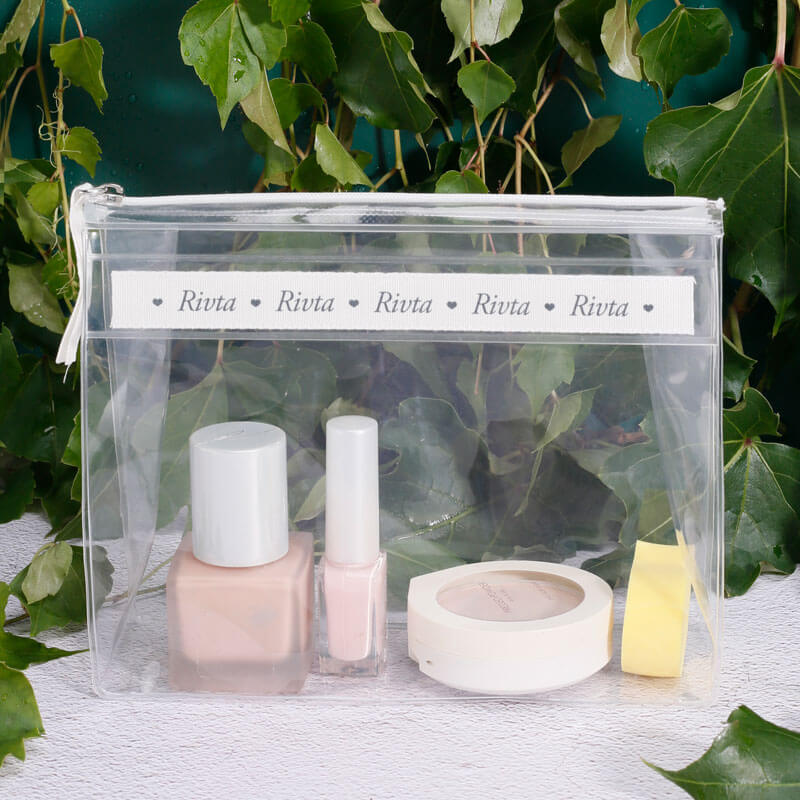
Clear pouches are not invisible. EVA can look softer or slightly frosted; TPU can show products more clearly. Both routes need approval with real product colors, not only a blank material swatch.
Logo contrast matters too. A white logo may disappear over light skincare packaging, while a dark logo may become too heavy for a soft spa or resort campaign. If the pouch carries a barcode, QR code, insert card or warning panel, the final position should be tested for readability against barcode placement and scanability expectations [3].
| Question | Approval check | Likely route response |
|---|---|---|
| Must products be clearly visible? | Filled sample with real product colors. | TPU is often stronger. |
| Is a softer frosted look acceptable? | Material swatch plus empty and packed sample. | EVA may be enough. |
| Is logo contrast weak? | Logo printed over actual packed products. | Adjust material, logo color or placement. |
| Will a card sit behind the logo? | Card position after packing and transit. | Review material route and packing layout together. |
 |
 |
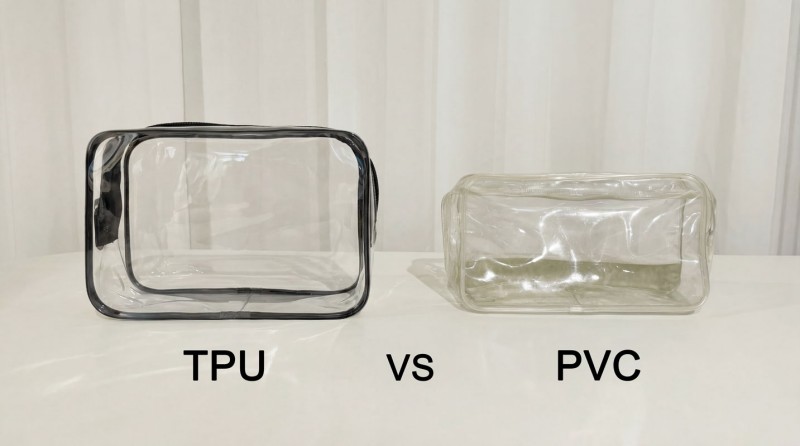
| Material appearance
Compare clarity, haze and color cast with real product fill. |
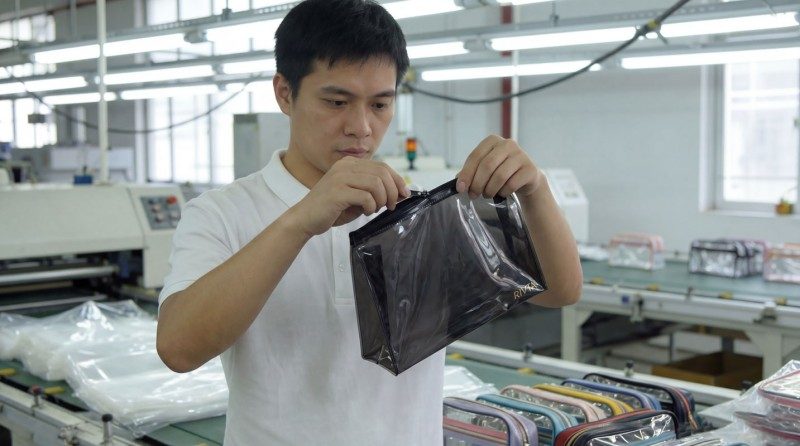
Sample inspection
Check zipper, seam, surface marks and packed-sample behavior before bulk. |
Budget and MOQ
EVA is often attractive when the project needs a clear pouch but must stay value-conscious. TPU is easier to justify when the pouch itself supports perceived value, retail presentation or premium gift appeal.
Actual price and MOQ still depend on material availability, thickness, size, zipper, logo method, packaging, sample requirements and schedule.
| Campaign situation | Typical route logic | Buyer action |
|---|---|---|
| Simple event giveaway | EVA may be enough. | Approve actual fill and logo contrast. |
| Mid-tier skincare GWP | EVA or TPU can both work. | Compare filled samples side by side. |
| Premium travel retail set | TPU is often stronger. | Review clarity, scratch risk and gift-ready packing. |
| Tight budget with premium expectation | Route decision needs trade-off review. | Compare sample value, not only unit price. |
| Low quantity with custom details | Feasibility may depend on stock material and schedule. | Ask the supplier to separate material, tooling, logo and packing assumptions. |
What should buyers approve before bulk production?
The approval target is not the words EVA or TPU. The target is the actual and ideally packed sample. Buyers should approve material look, zipper behavior, panel recovery, scratch sensitivity, odor, logo contrast, insert-card position and packing method.
If the buyer plans later inspection, the approved sample should become the comparison reference. For lot inspection planning, teams often align acceptance decisions with recognized sampling concepts such as ISO 2859-1 sampling procedures [4].
| Approval area | EVA check | TPU check |
|---|---|---|
| Material look | Haze, color cast and softness. | Clarity, smoothness and premium feel. |
| Product fill | Bulge, shape and zipper pressure. | Recovery, panel shape and zipper behavior. |
| Cleanliness | Dust and surface marks. | Fine scratches and fingerprints. |
| Logo | Contrast on softer semi-clear material. | Visibility over actual product colors. |
| Packing | Bending, haze marks and compression. | Scratches, puller rub and surface protection. |
Supplier quote and sample evidence
A useful quote should name the material route, thickness or grade where relevant, pouch size, zipper, logo method, packing method, sample requirement and whether a filled-sample photo is included. Supplier quality systems such as ISO 9001 quality management [5] can support process discipline, but they do not replace project-specific sample approval.
Material and safety evidence should match the actual claim and product scope. For example, a buyer should check whether any textile or component certificate, such as OEKO-TEX STANDARD 100 [6], applies to the requested material, color, component and supplier route. Gift-ready packed sets also need transport protection planning, where packaging validation frameworks such as ISTA test procedures [7] can help shape expectations.
| Evidence item | Why it matters | Buyer prompt |
|---|---|---|
| Material route note | Prevents EVA and TPU assumptions from becoming vague. | Ask the supplier to state the selected material route clearly. |
| Filled sample photos | Shows real clarity, shape and logo visibility. | Request front, side and zipper-area photos with actual products. |
| Quote separation | Makes the cost effect of material, logo and packing easier to compare. | Ask what changes if EVA switches to TPU or vice versa. |
| Packing evidence | Protects clear surfaces from scratches and compression marks. | Confirm bagging, carton orientation, insert card and puller protection. |
| Document requirement | Connects claims to real certificate or test scope. | Share destination market, claim wording and retailer review needs early. |
Composite route decision case
A sunscreen GWP buyer asked for a clear pouch with logo. The first brief did not say whether the pouch should be value-led or premium-led, so Ecorivta asked for product dimensions, launch quantity, logo color, channel, launch tier and a filled-sample photo target. The buyer wanted the pouch to show three sunscreen tubes clearly, but also needed the route to stay realistic for a seasonal campaign.
Ecorivta prepared EVA and TPU sample directions using the same pouch size, zipper direction and logo position. The EVA sample felt softer and controlled cost well, but the filled pouch looked less crisp when the tubes pressed against the front panel. The logo also lost contrast because the tube labels sat directly behind the print area. The TPU sample cost more, but the sunscreen tubes and front logo looked cleaner, and the panel recovered better after packing. Surface protection became part of the packing plan because the clearer material made scratches and puller rub easier to notice.
The buyer chose TPU because the pouch was part of the perceived value of the gift and the launch photos needed a cleaner transparent presentation. For a simpler event giveaway, EVA might still have been the better decision. The lesson is not that TPU is always better. The lesson is that the material route should match the role the pouch plays in the campaign, and that role should be judged with actual product fill, logo contrast and packing method before bulk production.
Anonymous feedback from brand buyers
These comments summarize recurring buyer-side concerns Ecorivta hears during clear Beauty GWP pouch development. Names are withheld because the points are used only to explain sourcing patterns, not to identify customers, retailers, distributors or market teams.
| Buyer role | Feedback pattern | Practical lesson |
|---|---|---|
| Brand marketer | The empty EVA sample looked acceptable, but the filled pouch did not show product labels clearly enough for campaign photos. | Judge clear pouch materials with real product fill, not only flat swatches or empty samples. |
| Sourcing buyer | The TPU route looked more premium, but the team had not budgeted for extra surface protection during packing. | Include packing protection and photo evidence when comparing material routes. |
| Retail project owner | The logo color worked on a blank pouch but became weak when a light tube sat directly behind it. | Approve logo contrast against the packed product layout before confirming bulk artwork. |
Which related Ecorivta guide should buyers read next?
Full material guide Use when PVC, EVA and TPU still need to be compared together. |
TPU QC route Use when the route is already TPU and quality checkpoints need to be specified. |
Packed sample route Use when the team needs to approve the pouch with actual products before bulk. |
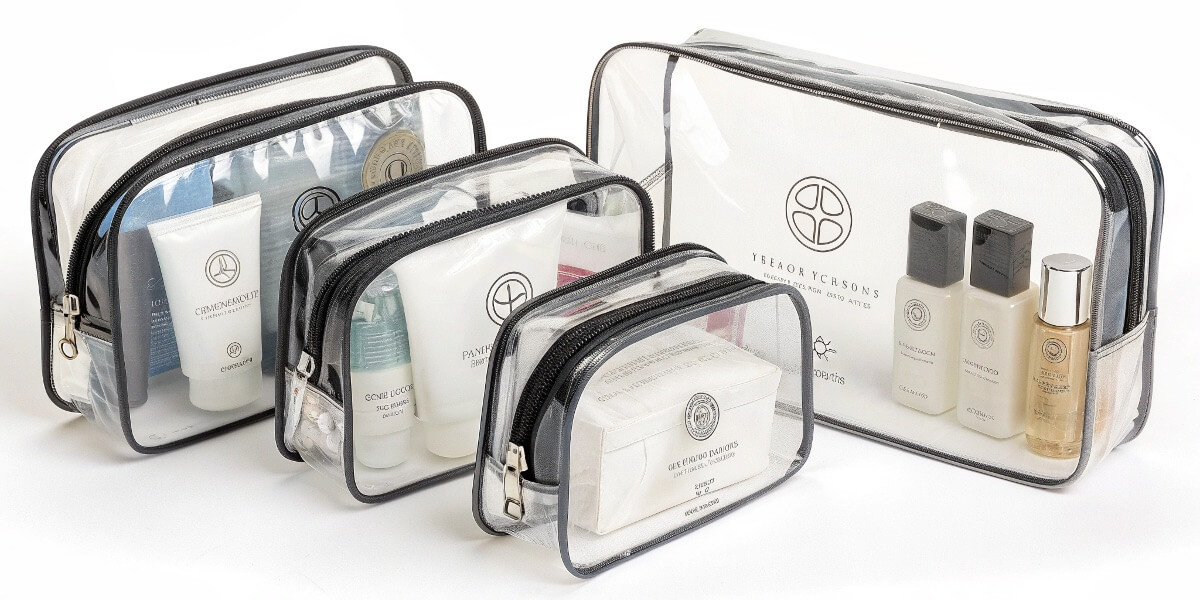 Product route Use when the buyer needs product-format inspiration for clear pouch programs. |
 Packaging route Use when insert cards, carton method and travel retail presentation affect approval. |
Supplier review Use when the buyer needs EVA or TPU options translated into supplier questions. |
Which route should answer each buyer question?
| Buyer question | Recommended route | Use when |
|---|---|---|
| Should we consider PVC too? | PVC / EVA / TPU material guide | The team has not narrowed the material family yet. |
| How do we test TPU after selection? | TPU quality support | The buyer needs TPU-specific clarity, seam, odor and packing checks. |
| How do we approve the final sample? | Packed sample approval support | The filled pouch must be approved before production. |
| How should packaging be scoped? | Packaging brief support | The gift-ready set includes cards, carton rules or travel retail handling. |
| Need product formats? | Clear cosmetic bag product route | The team needs clear pouch shapes before final material selection. |
| Ready for supplier review? | Contact Ecorivta | The buyer can share product fill, quantity, target market, logo and timing. |
Copy-ready EVA vs TPU clear pouch route brief
- Project type: Beauty GWP, travel retail, resort kit, skincare set, sunscreen kit or event giveaway.
- Route to compare: EVA, TPU or both.
- Campaign tier: value, mid-tier or premium.
- Product fill: product names, dimensions, weights, label colors and fill quantity.
- Visual target: semi-clear soft look or premium clearer display.
- Handfeel target: soft casual pouch or smoother premium flexible pouch.
- Logo and card: logo color, size, position, insert card and barcode or QR needs.
- Packed sample need: empty sample only, filled sample photo or full packed sample approval.
- Budget and quantity: target quantity, launch date, target price and packing expectation.
- Approval rule: approve final route only after reviewing actual filled sample behavior.
Need help choosing EVA or TPU for a clear Beauty GWP pouch?
Send Ecorivta the product fill, quantity, launch date, market, logo direction, campaign tier and whether the pouch should feel value-led or premium-led. We can help compare EVA and TPU routes, prepare sample approval points and translate the choice into supplier-ready questions.
About the author
Lina Lv works with beauty brands and sourcing teams on custom cosmetic bags, clear Beauty GWP pouches, material route selection, logo methods, sample approval and production documentation. Her supplier-side work focuses on turning early campaign requirements into clear product briefs, realistic sample routes and traceable approval files before bulk production.
FAQ
Is TPU always better than EVA for clear Beauty GWP pouches?
No. TPU is often stronger for premium clarity and filled-sample presentation, but EVA can be the better route for softer, simpler and more budget-aware campaigns.
Is EVA always cheaper than TPU?
EVA is often attractive for value-controlled programs, but the final cost depends on size, thickness, zipper, logo method, packing, quantity, material availability and sample requirements.
Should buyers choose the material before confirming product fill?
No. Product fill can change the appearance and function of the pouch. Buyers should confirm product dimensions, weight, label colors and packing direction before final route approval.
Does this replace a PVC / EVA / TPU material guide?
No. This guide helps buyers choose between EVA and TPU after the project has already narrowed toward non-PVC clear pouch routes. A broader material guide is better when PVC still needs to be compared.
What should be approved before bulk production?
Approve material look, handfeel, product fit, zipper behavior, surface cleanliness, logo contrast, insert-card position, packing method and ideally a packed sample with actual products.
Sources
- California Office of Environmental Health Hazard Assessment, Proposition 65. Source ↩
- ASTM International, ASTM D882 plastic film tensile testing standard. Source ↩
- GS1, barcode standards overview. Source ↩
- International Organization for Standardization, ISO 2859-1 sampling procedures. Source ↩
- International Organization for Standardization, ISO 9001 quality management. Source ↩
- OEKO-TEX, STANDARD 100. Source ↩
- International Safe Transit Association, test procedures. Source ↩