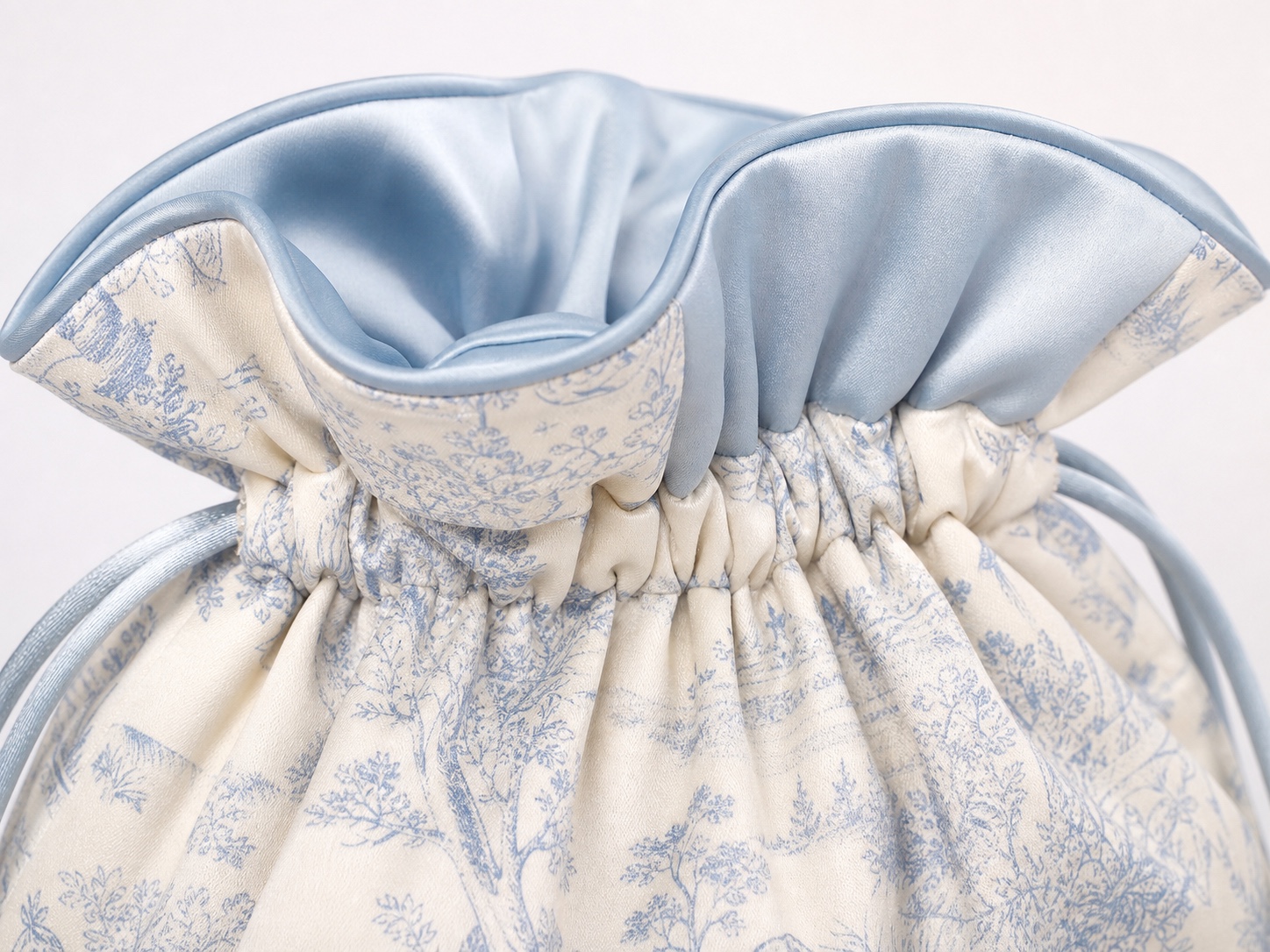
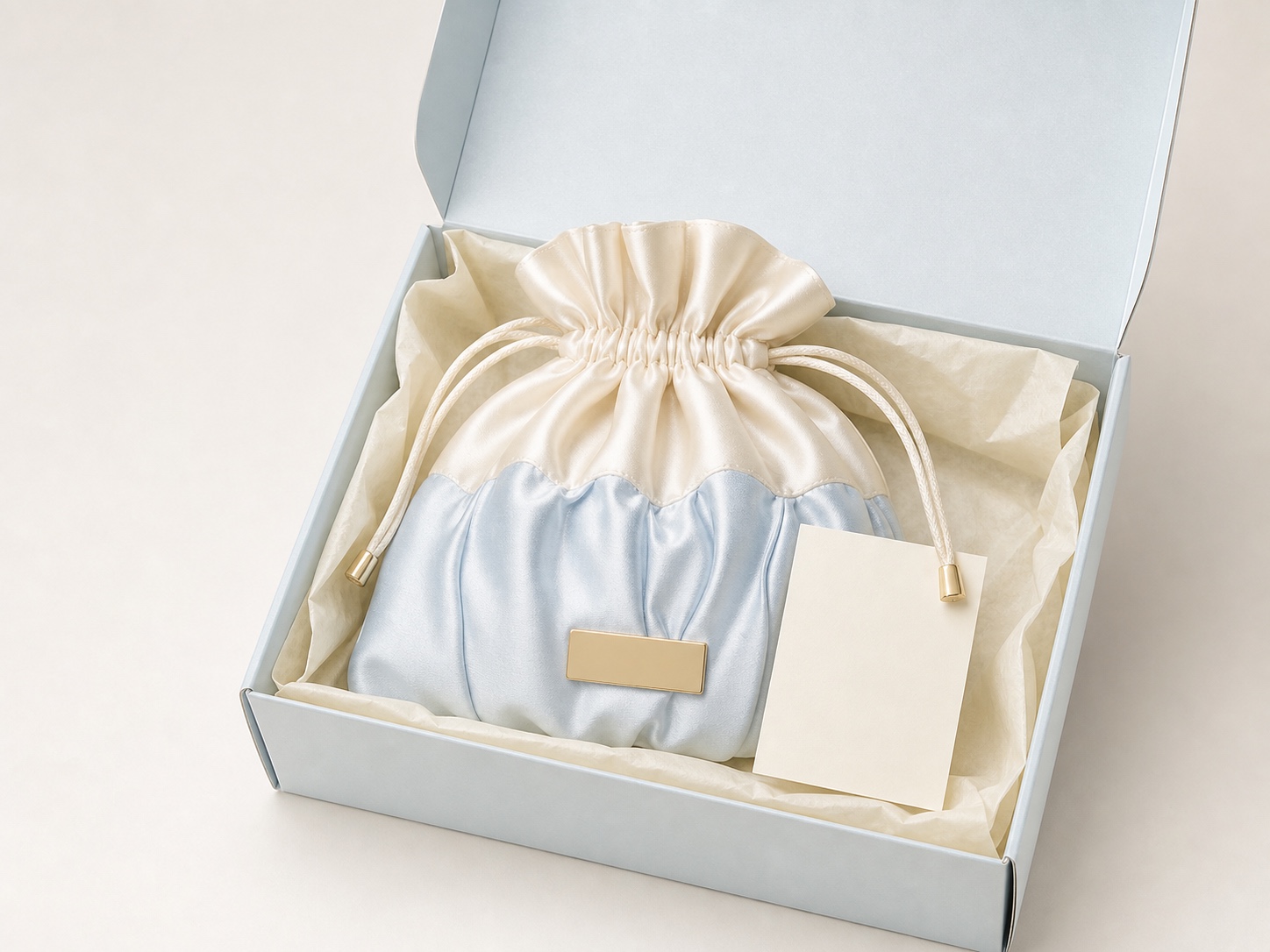
A recent Copenhagen skincare-startup brief described a soft ruched satin GWP pouch with a toile-style print, contrast lining, drawstring closure, gold-tone hardware and a front metal plaque. The follow-up added a 23-26 cm by 15-18 cm target size, a 5-6 cm by 2-2.5 cm plaque and a starting quantity around 100-300 units. Those details support a prototype brief, not a claim that the design is already production-ready.
Translate the Reference Into a Prototype Drawing
A ruched satin GWP pouch prototype should start with four views: flat body, filled body, top opening and closed drawstring. Mark the finished width and height, usable opening, lining depth, plaque position and cord exit points. The soft gathered form cannot be priced reliably from one front photo.
Request a ruched satin GWP pouch prototype review
This article supports the Beauty GWP solutions page and the custom cosmetic bag capability page without targeting generic cosmetic bag factory or makeup pouch factory terms.
Approve Gathering and Lining Before the Print
Gathering ratio should not be guessed in public copy. Ask the sample room to prepare the intended opening and at least two fullness options if the buyer has not supplied a pattern. The buyer can then approve how the pouch looks empty, filled and closed. More fullness changes fabric consumption, print distortion and how the lining sits at the top.
| Prototype field | Buyer input | Approval evidence |
|---|---|---|
| Finished size | 23-26 cm width by 15-18 cm height target. | Flat and filled photos with ruler. |
| Opening | Required product access and closure width. | Top view before and after drawing cords. |
| Gathering | Soft fluid look; exact ratio to be sampled. | Two fullness options if no pattern is supplied. |
| Lining | Contrast satin or lightweight polyester direction. | Inside view, seam view and filled drape. |
Pantone Color Systems 1 gives a recognized color communication system, but satin sheen and printed pattern scale still require a physical strike-off or sample under agreed lighting.
Separate Drawstring, Toggle and Plaque Decisions
The drawstring cord, toggle, plaque, backing patch and corner studs are separate quote lines. Record each material, finish, color and attachment method. A heavy plaque on a soft satin body may need backing reinforcement; a larger toggle may change how the gathered top closes and packs.
If the product will be sold in the EU, the buyer should define the market and expected contact pattern before requesting hardware evidence. ECHA REACH nickel restriction guidance 2 explains the REACH nickel restriction context for articles intended for direct and prolonged skin contact. A pouch plaque is not automatically in that category, so the correct action is to review the hardware and intended use instead of making a blanket compliance claim.
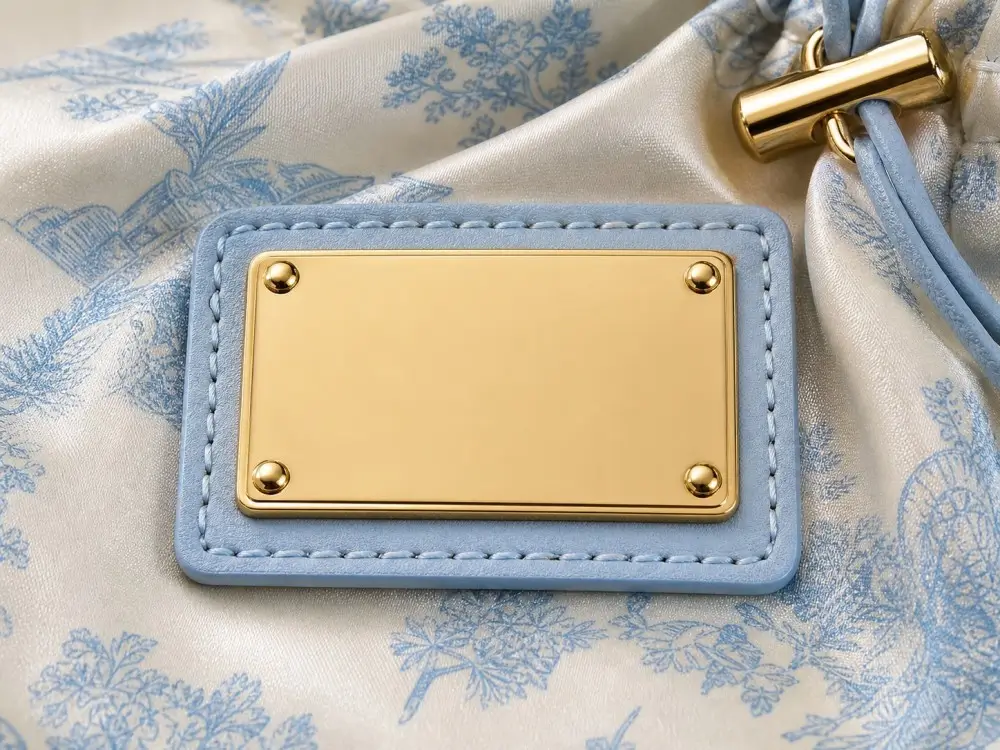
Send the drawstring and metal plaque details
Keep the Toile Print Legible Through the Gathered Zone
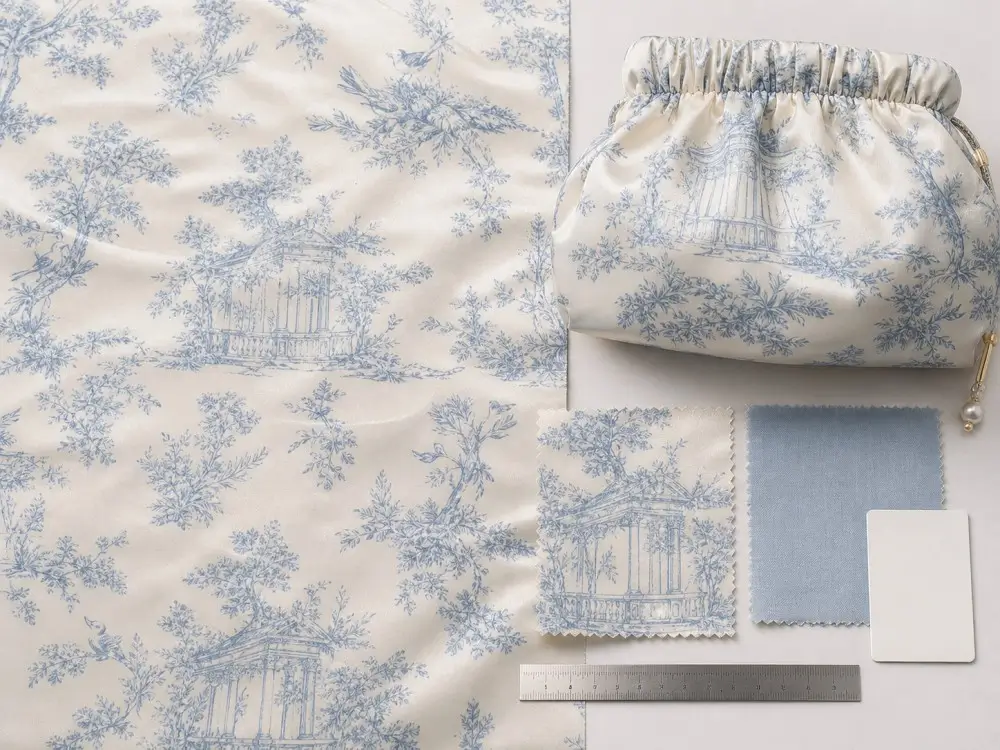
A toile-style print can look controlled on flat fabric and become crowded near the drawstring channel. The artwork handoff should include repeat size, motif direction, main motif placement, color references and a no-critical-art zone near the top gathering. Ask for a strike-off or digital proof before the full prototype when the artwork is detailed.
For textile safety discussions, OEKO-TEX Standard 100 3 may be relevant when the buyer requests a tested textile route. The certificate scope, article class, supplier and material must still be checked; the article does not claim that every proposed satin, lining or trim is covered.
Use the 100-300 Piece Request to Build a Real Quote
For a startup order, quote the prototype and setup first, then show realistic price breaks for 100, 250, 300 or the true minimum supported by the selected construction. Keep the base pouch, print setup, metal plaque, drawstring hardware, individual packing and freight as visible lines. That lets the buyer simplify the design without restarting the whole quotation.
GS1 Standards 4 can help keep product, packaging and identification details connected when the pouch moves from prototype to retail or gift-box packing.
Send the Ruched Satin GWP Pouch Brief
Send the reference photos, 23-26 cm by 15-18 cm target size, product-fill dimensions, toile artwork, color references, lining direction, desired fullness, drawstring and toggle specifications, 5-6 cm by 2-2.5 cm plaque artwork, quantity tiers, sample address and launch date. Unknown fields should remain open in the prototype sheet.
Send the prototype and packout brief
FAQ
Can the gathering ratio be fixed from one reference photo?
Not reliably. The sample must connect body width, opening, fabric drape, lining and filled volume. If no pattern exists, compare two fullness options.
Should the metal plaque be approved on a flat fabric panel?
No. Approve it on the filled prototype because plaque weight, backing and stud position can change the drape of soft satin.
Is a low starting quantity enough to skip a prototype?
No. A 100-300 piece startup order still needs the opening, gathering, lining, print, hardware and packing approved before bulk production.
Does OEKO-TEX automatically cover the whole pouch?
No. The buyer must verify the actual certificate scope, material, supplier and article class. Hardware and other components may need separate evidence.
Evidence Used in This Brief
-
Pantone Color Systems – Referenced for shared print and hardware color communication before physical approval. ↩︎
-
ECHA REACH nickel restriction guidance – Referenced for deciding when metal hardware intended for direct and prolonged skin contact needs nickel-release review. ↩︎
-
OEKO-TEX Standard 100 – Referenced for buyer discussions about tested textile safety routes and certificate scope. ↩︎
-
GS1 Standards – Referenced for connecting product, packaging and identification details in a retail or GWP handoff. ↩︎