Clear bags look simple, but Beauty GWP buyers still need control over material safety, seam quality, visual clarity, packaging, documentation and launch timing. Use this checklist to qualify a supplier before approving a clear cosmetic, toiletry or travel GWP bag.
TL;DR
Buyers should not approve a clear Beauty GWP bag from verbal assurance, a catalog image or a single clean sample photo. The purchasing conclusion is practical: approve the supplier only after it shows the exact clear material route, safety-document scope, RF welding or heat-sealing control, panel-clarity standard, logo and zipper evidence, packed-sample photos, QC records and a written launch calendar. If those records are missing, the project is not ready for bulk production even when the clear bag looks attractive in a reference photo.
| Best fit | This guide is best for beauty founders, procurement managers, packaging teams, compliance owners and operations leads preparing a clear cosmetic bag, clear toiletry pouch or transparent Beauty GWP launch item. It fits PVC, EVA, TPU and alternative clear-material routes where buyers must review material safety, panel clarity, odor risk, seam strength, zipper quality, logo placement, insert card, sleeve, barcode label, carton marks and sample approval before bulk production. It is especially useful when the buyer needs one shared checklist for comparing supplier quality, writing RFQ notes, defining defect levels and keeping marketing, compliance, sourcing and logistics aligned before launch approval. |
| Less suitable | This guide is less suitable for one-piece personal orders, generic marketplace resale, simple event pouches with no beauty product fill, or projects where the buyer only wants a clear bag image without reviewing material documents, sample gates or packaging scope. It is also not the right workflow when the target market, product fill, logo method, required tests, claim wording and launch date are still unknown. In those cases, supplier comparison will remain too vague for a quality checklist to protect bulk production. |
Why does clear bag supplier quality need a structured checklist?
Clear Beauty GWP bags are inspected visually before they are used. That makes supplier quality more visible than it is on many opaque fabric bags. A buyer can see cloudiness, scratches, bubbles, crooked welds, uneven logo placement, zipper waves and packing marks almost immediately.
A structured checklist keeps the supplier conversation practical. Instead of asking whether a supplier is “good,” the buyer can ask whether the supplier can control material safety, alternative material routes, RF welding, staged QC, decoration, packaging, project management and launch timing for this specific campaign.
What evidence should buyers approve before bulk production?
| Issue | Evidence to request | RFQ note |
|---|---|---|
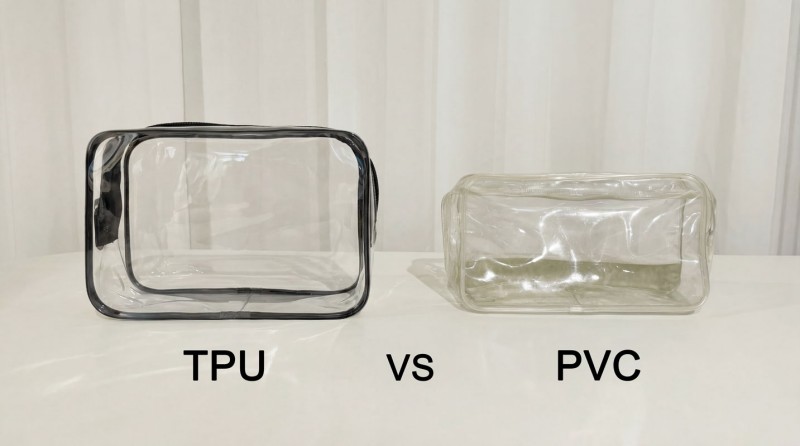
| Material route uncertainty | Material name, thickness, hardness, finish, plasticizer discussion and target-market test scope. | Ask the supplier to quote PVC, EVA, TPU or another route with the exact assumptions written down. |
| Panel clarity and surface marks | Front, side and close-up sample photos showing haze, bubbles, scratches, color cast and folding marks. | Define acceptable panel clarity before bulk so the inspection team is not judging by opinion. |
| RF welding or heat sealing | Seam method, weld width, corner strength, zipper alignment and tolerance photos. | State whether the clear bag must carry liquid products, travel minis, skincare bottles or boxed items. |
| Logo and decoration quality | Strike-off, placement photo, ink or patch compatibility note and approved color reference. | Ask whether the logo route can stay clean on the chosen clear material after packing. |
| Packing and carton protection | Individual pack, insert card, sleeve, barcode label, carton marks and scratch-protection method. | Require packed-sample photos before the supplier starts bulk packing. |
How is this different from the PVC, EVA and TPU material guide?
| Article | Primary job | Should rank for | Should not steal |
|---|---|---|---|
| PVC vs EVA vs TPU guide | Compare clear material routes by handfeel, clarity, durability, cost and market fit. | PVC vs TPU clear bag, EVA clear cosmetic bag, clear bag material for beauty brands. | Supplier audit and quality checklist intent. |
| This quality checklist | Help buyers qualify the supplier who will execute the clear Beauty GWP project. | Clear bag supplier quality checklist, clear cosmetic bag supplier audit, Beauty GWP clear bag QC. | Full material comparison owned by the dedicated clear material guide. |
What are the ten quality checks for a clear Beauty GWP bag supplier?
| Quality check | What buyer should ask | Why it matters for Beauty GWP |
|---|---|---|
| 1. Clear material specification | Which material, thickness, hardness, coating and plasticizer route are quoted? | Prevents sample-to-bulk surprises and unsafe claim language. |
| 2. Safety documentation | Can the supplier discuss REACH, phthalates, Prop 65 warning review and market testing? | Clear plastic touches beauty products, packaging and retailer review. |
| 3. RF welding or heat sealing | Which seam method is used, and what tolerance is acceptable? | Controls seam strength, clarity, leakage risk and visual finish. |
| 4. Sample-to-bulk control | How is production sample approval locked before bulk? | Prevents the approved sample from becoming a different bulk product. |
| 5. AQL inspection | Which defect list and AQL level will be used? | Clear bags show scratches, bubbles, wrinkles and welding marks quickly. |
| 6. Hardware and zipper quality | Which zipper, puller, snap, handle or trim is included? | Hardware strongly affects perceived value and repeat use. |
| 7. Logo and decoration control | How will screen print, label, embossing or patch placement be approved? | Clear bags expose uneven logo placement and ink quality. |
| 8. Packaging readiness | Are insert cards, sleeves, barcode labels, individual packs and carton marks included? | Beauty GWP goods must arrive ready for campaign distribution. |
| 9. Compliance and audit discipline | Can the supplier show quality system and social compliance records where required? | Supports retailer and brand procurement review. |
| 10. Project communication | Are sampling, artwork, inspection and shipment gates dated? | Prevents launch delay and last-minute simplification. |
What engineering capability should the supplier prove before quotation?
Clear synthetic bags are less forgiving than opaque fabric bags. If a panel is cloudy, scratched, wavy or poorly welded, the defect is visible before the consumer even opens the gift. For that reason, supplier quality starts before sampling. The buyer should ask the supplier to prove the process that will control the product, not only show a nice reference photo.
The strongest suppliers can explain the relationship between material thickness, softness, seam method, zipper placement, panel clarity and packing. They can also tell the buyer where a design may need adjustment. A stiff clear material may need a different gusset or handle. A very soft clear material may need a different closure. A large logo area may need a method that will not crack, peel or cloud the panel.
| Engineering area | Supplier should prove | Buyer decision |
|---|---|---|
| Material thickness | Available thickness range, handfeel and stability after folding. | Choose thickness by product fill and retail feel, not only cost. |
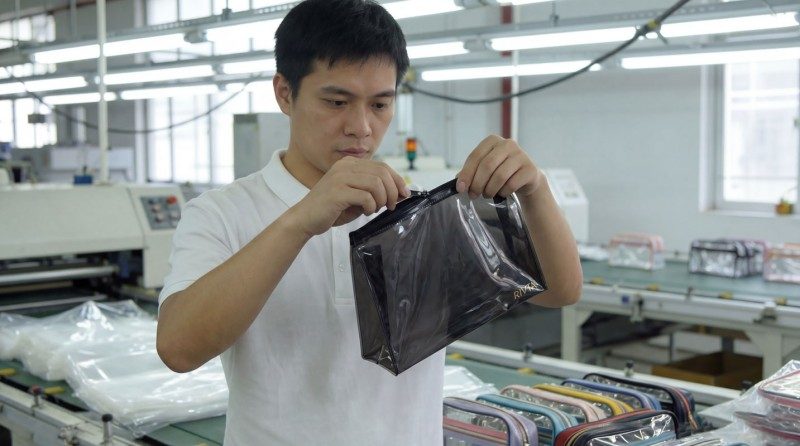
| Seam process | RF welding, heat sealing or sewn construction suitability. | Match seam method to leakage risk, clarity and durability expectation. |
| Logo area | Ink, patch, label or embossing compatibility with clear panels. | Approve a strike-off before bulk. |
| Odor control | Material storage, ventilation and packing process. | Request sample review after sealed packing when odor risk matters. |
| Carton packing | How bags are protected from scratches, dents and panel marks. | Define packing method before shipment. |
Review Clear Bag Product Routes
Which clear bag quality risks are most visible to consumers?
| Risk route | Buyer should check | Useful page |
|---|---|---|
| Clear PVC route | Material discussion, warning review, seam quality and how the supplier controls scratches and odor. | Clear PVC Cosmetic Bags |
| EVA alternative route | Softness, thickness, handfeel, haze, color cast and whether the look fits Beauty GWP positioning. | PVC vs EVA vs TPU guide |
| TPU premium route | Flexibility, clarity, premium finish, folding behavior and testing cost. | PVC vs EVA vs TPU guide |
| Campaign comparison route | Whether procurement is comparing supplier execution, not only material name. | Beauty GWP Solutions |
| Inspection route | Zipper, weld, print and packing criteria that need to be written into the RFQ before sampling. | Contact Ecorivta |
How should buyers score supplier quality before sampling?
A supplier scorecard keeps the discussion practical. It also prevents the project from drifting into a generic factory comparison. The buyer is not looking for the largest factory; the buyer is looking for the supplier who can execute a clear Beauty GWP bag with the right proof and launch discipline.
| Score area | Pass | Concern | Reject or re-brief |
|---|---|---|---|
| Material definition | Material route, thickness and finish written in the quote. | Supplier gives material name only. | Supplier cannot explain composition or thickness. |
| Safety discussion | Supplier can discuss REACH, Prop 65 and phthalate testing route. | Supplier says testing is possible later. | Supplier makes safety claims without documents. |
| Welding method | Supplier explains RF welding or heat-seal process and tolerance. | Supplier shows samples but no process detail. | Supplier cannot explain seam method. |
| Bulk control | Production sample and defect criteria are defined. | Supplier relies on verbal approval. | No approval gate before bulk. |
| Packaging scope | Retail or campaign packaging is listed line by line. | Packaging is partially defined. | Packaging is described as standard. |
| Communication | Sampling, artwork, inspection and shipping dates are mapped. | Only bulk lead time is offered. | Supplier states delivery timing without approval gates. |
How should sample approval protect the bulk order?
Clear bag projects need a stronger sample approval habit because a small material or process change can be obvious in bulk. The approved sample should not be treated as a design reference only. It should become the production control standard for material, seam, logo, zipper, packaging and carton packing.
Before paying the bulk deposit, buyers should define which sample is the reference sample, who keeps it, whether photos are enough for approval, and what changes require written confirmation. If the supplier changes material stock, weld temperature, zipper tape, packaging or carton packing after approval, the buyer should know before production starts.
| Approval item | Buyer should lock | Supplier should confirm |
|---|---|---|
| Reference sample | One signed sample or photo set used as the bulk standard. | No material or construction change without written approval. |
| Panel clarity | Accepted level for haze, bubbles, scratches and color cast. | Bulk material comes from the approved material route. |
| Seam and zipper | Weld width, zipper alignment and puller smoothness. | Inspection checks these points before final packing. |
| Logo | Position, color, size and tolerance. | Production follows approved strike-off. |
| Packaging | Individual pack, insert card and carton mark. | Packing protects panels from scratches during shipment. |
What documentation should be requested for clear bag safety?
Clear synthetic materials require careful documentation because buyers may sell or distribute them in different markets. ECHA REACH restrictions [1], California Proposition 65 warning rules [2] and CPSC phthalate rules [3] are all useful reference points for supplier discussions.
Do not ask the supplier for “safe material” in general. Ask which material was quoted, which tests are relevant, whether the report matches the material and color, and whether the same material will be used in bulk production.
| Document or proof | Ask for | Why it matters |
|---|---|---|
| Material composition | Material name, thickness, hardness and plasticizer discussion. | Prevents broad or inaccurate material claims. |
| Test report | Report tied to the relevant material, color or production batch where required. | Helps retail and compliance review. |
| Social compliance | amfori BSCI [4], Sedex SMETA [5] or equivalent where buyer requires it. | Supports procurement review and retailer standards. |
| Quality system | ISO 9001 [6] or documented QC flow. | Shows whether QC is managed before final inspection. |
| Environmental claim proof | Specific proof for recycled or alternative material claims [7]. | Prevents unsupported green wording. |
How should buyers define clear bag defects before bulk production?
Clear bags show defects quickly. Scratches, bubbles, cloudy panels, welding marks, crooked seams and zipper waves are more visible than they would be on opaque fabric. That means the defect list should be written before bulk production, not argued after goods arrive.
A good supplier will help the buyer separate cosmetic defects from functional defects. A tiny inner packing mark may be acceptable if it disappears after unpacking. A cloudy front panel, a zipper that catches, a sharp trim edge or a weak welded corner is different because it changes consumer experience or product safety perception. The RFQ should say which defects are minor, major or critical before the inspection team checks the order.
| Defect type | What to define | Why it matters |
|---|---|---|
| Panel clarity | Acceptable cloudiness, color cast and surface marks. | Controls shelf appearance and perceived value. |
| Seam quality | Weld width, wrinkles, bubbles and seam strength. | Controls durability and liquid-leakage perception. |
| Logo placement | Position tolerance and print color tolerance. | Protects brand presentation. |
| Zipper and puller | Open/close smoothness, puller finish and stitch or weld alignment. | Controls repeat use after the GWP campaign. |
| Packaging | Individual pack, insert, carton marks and label placement. | Prevents warehouse and distribution issues. |
What does a composite clear bag QC case teach?
A composite skincare launch planned a transparent pouch for a mini serum, cleanser tube and sunscreen sample. The first supplier response looked strong because the reference photo was clean and the quoted lead time fit the retail calendar. During sample review, however, the buyer realized the quote did not state the exact material thickness, phthalate-testing route, weld tolerance, logo strike-off or packed-carton method. The clear panel also looked acceptable in open-air photos but showed pressure marks after being sealed with the insert card and product fill.
The buyer paused bulk approval and rebuilt the supplier checklist. The revised file required material name, thickness, hardness, safety-document scope, front and side filled-sample photos, zipper close-ups, weld-width photos, logo placement tolerance, individual pack direction and carton marks. The supplier also had to show whether the approved sample would be used as the bulk reference. The buyer added a packed-sample review after two days of sealed storage, because odor, panel marks and insert-card pressure did not appear in the first photo set. The design did not change dramatically, but the evidence trail changed the risk level for stakeholders. The lesson for Beauty GWP buyers is that clear bag quality is not only a material decision. Supplier control must prove how the chosen material, seam, logo, packing and documentation behave together before bulk production starts.
What did three anonymous buyers say after clear bag QC review?
| Anonymous buyer | Before QC review | After QC review |
|---|---|---|
| Skincare sourcing lead | The team approved a clear pouch from a front-view photo and a short quote. | The revised approval file added material thickness, packed-sample photos and weld tolerance. |
| Travel retail planner | The buyer focused on size and logo but had not checked scratch protection in cartons. | The supplier added individual packing, carton marks and panel-protection evidence before bulk. |
| Makeup launch manager | The buyer saw broad safety language but no document scope tied to the exact material. | The supplier clarified test-report relevance, market review needs and the approved bulk material route. |
How is this different from related clear bag guides?
| Related guide | Main focus | How this supplier checklist differs |
|---|---|---|
| PVC vs EVA vs TPU guide | Comparing clear material routes by clarity, handfeel, cost and market fit. | This page checks whether the supplier can execute the chosen material route with evidence. |
| Clear PVC Cosmetic Bags | Showing clear bag product formats and product-page conversion route. | This page turns clear bag interest into supplier QC questions before sampling and bulk. |
| Beauty GWP Solutions | Planning the broader GWP campaign and buyer journey. | This page narrows the workflow to clear bag supplier quality, documentation and approval records. |
| Quality demand checklist | Defining product-specific quality demands for Beauty GWP bags. | This page focuses those quality demands on clear material, seam, panel and packing risks. |
Which red flags should disqualify a clear bag supplier?
- The quote does not specify material route, thickness, finish or safety documentation.
- The supplier discusses only one clear material and cannot explain EVA, TPU or other relevant alternatives.
- The supplier cannot show RF welding, heat sealing or seam-control examples.
- The sample looks clear, but the supplier cannot explain bulk color or clarity control.
- Inspection is described as “we check everything” without an AQL plan or defect list.
- Packaging scope is missing even though the GWP must be campaign-ready.
- The supplier uses unauthorized big-brand names as proof instead of verifiable process evidence.
What can Ecorivta deliver for clear bag supplier reviews?
This topic should not state that every clear material can solve every problem. A more credible message is to show the boundary. Ecorivta can support clear cosmetic, toiletry and travel GWP bags where buyers are willing to define material route, safety review, packaging and inspection before bulk. The supplier review becomes weaker when a buyer asks for a bottom-price route, a vague material description and a fixed launch date without a production sample gate.
That boundary helps the page sound more like a specialist and less like a generic factory pitch. It tells buyers what Ecorivta can help control, and it also tells them where the brief needs more detail before a supplier can quote responsibly.
How should buyers turn the checklist into a supplier brief?
| Brief field | Copy-ready instruction |
|---|---|
| Project type | Clear Beauty GWP cosmetic bag, toiletry bag or travel retail pouch. |
| Material route | PVC, EVA, TPU or undecided; ask supplier to recommend based on market and use. |
| Product fill | List bottles, tubes, jars or travel minis and approximate weight. |
| Safety review | State target market and required test or warning discussion. |
| Seam method | Ask for RF welding or heat-seal recommendation and seam tolerance. |
| Branding | Logo method, artwork, position and approval sample requirements. |
| Packaging | Individual pack, insert, sleeve, barcode, carton mark and retail requirements. |
| QC | Defect list, AQL level, inspection stage and rework responsibility. |
| Timeline | Sample, approval, bulk, inspection and shipment dates. |
Who We Don’t Take On
- Projects that ask Ecorivta to hide material composition, warning discussion or testing limits.
- Clear bag programs that need broad sustainability claims without proof or review time.
- Orders where the supplier must match a retail launch date but the buyer cannot allow a production sample gate.
- Projects that require unauthorized big-brand references as proof instead of process, document and quality evidence.
About the author
Lina Lv is a Brand & Product Specialist at Ecorivta. She works with beauty buyers on GWP bag briefs, material routes, sample approval details and supplier communication for cosmetic bags, tote bags, pouches and related beauty accessories.
Trademark notice
All third-party brand names, certification names, standards and trademarks mentioned in this article belong to their respective owners. Their use is for identification, sourcing and compliance-context discussion only, and does not imply endorsement by those owners.
FAQ: Clear Beauty GWP bag supplier quality
What should buyers check in a clear Beauty GWP bag supplier?
Check clear-material safety documentation, RF welding or heat-sealing capability, sample-to-bulk control, AQL inspection, packaging scope, social compliance, communication discipline and clear exclusions in the quote.
Is this article a PVC vs EVA vs TPU material guide?
No. This article is a supplier quality checklist. Material comparison belongs in the PVC, EVA and TPU clear bag material guide.
Why do clear bags need stronger sample approval?
Clear panels expose haze, scratches, bubbles, weld marks, zipper waves and packing marks quickly. Buyers should approve the material, seam, logo, zipper and packed sample before bulk production.
What should be included in a clear bag RFQ?
Include material route, thickness, target market, product fill, logo method, packaging scope, defect list, AQL level, sample deadline, inspection timing and carton mark requirements.
When should buyers contact Ecorivta?
Buyers should contact Ecorivta when they need to turn a clear bag idea, supplier quote or sample into a quality-controlled RFQ before sampling or bulk approval.
Sources and compliance references
- ECHA. REACH regulations and chemical safety information. ↩
- California OEHHA. Proposition 65 warnings. ↩
- CPSC. Phthalates business guidance. ↩
- amfori. BSCI social compliance overview. ↩
- Sedex. SMETA audit overview. ↩
- ISO. ISO 9001 quality management overview. ↩
- Federal Trade Commission. Environmental claims summary. ↩