A scrunchie material and packing approval sheet helps a beauty buyer lock the decisions that affect quote, sample, launch timing and bulk production. For scrunchies, the most common missing details are target price, packing route and launch date. These gaps make the first quote fragile because material shine, logo label size and packing method can change the route quickly.
Scrunchies look simple, but the approval file should be precise. A buyer who wants a very glossy, shiny finish may need silk or rPET satin. Other materials may still be useful, but they usually cannot create the same high-shine effect. Logo size also matters because a scrunchie is small; a label that is too large, too small or poorly positioned can make the final product look unbalanced.
This checklist is written for qualified beauty brands, DTC teams, haircare launches, retail private label buyers and GWP programs that need MOQ 500+ production with sample-first approval.

Table of Contents
- TL;DR
- What is a scrunchie material and packing approval sheet?
- How should silk and rPET satin routes be approved?
- How should shine, handfeel and color be confirmed?
- How should logo label size be approved?
- What packing details should be confirmed?
- How should quantity split and timing be written?
- What should be sent to Ecorivta before sampling or bulk?
- What can Ecorivta deliver for scrunchie material and packing approval?
- Composite case: glossy material was approved before label and packing were ready
- FAQ
TL;DR
Before approving scrunchie samples or bulk production, confirm target price, launch timing, material route, shine level, handfeel, color, logo label size, label position, individual polybag, backing card, quantity split and certificate or test needs if required. Silk and rPET satin are the main routes when the buyer wants a glossy, shiny look. MOQ 500+, 7-10 day sampling and 30-50 day bulk timing should be treated as planning ranges, not fixed promises.
Send Your Scrunchie Approval Sheet
What is a scrunchie material and packing approval sheet?
A scrunchie approval sheet is the buyer’s working file for material, logo and packing decisions before sample or bulk approval. It should say what is final, what is pending and which details Ecorivta should recommend. Ecorivta’s scrunchies page [1] includes silk, satin, velvet, rPET and plant-based options, plus logo labels, hangtags, packing, MOQ, samples, lead time and bulk QC support.
The approval sheet is not the same as a product mood board. A mood board shows the feeling. The approval sheet tells the supplier how to quote and what to produce: material route, shine target, logo label route, packing route, quantity split, launch window and document requirements.
| Approval area | What the buyer should confirm | Why it affects quote or sample |
|---|---|---|
| Target price | Target range, retail positioning or route budget direction. | Supplier can choose silk, rPET satin or another route realistically. |
| Material route | Silk, rPET satin, satin, velvet, cotton, bamboo or supplier recommendation. | Controls shine, handfeel, color and certificate discussion. |
| Logo label | Woven label, printed label, size, position and color. | Small products need balanced label size to look correct. |
| Packing | Individual polybag, backing card, hangtag, sleeve, pouch set or carton mark. | Packing changes labor, paper goods and presentation. |
| Launch timing | Sample date, artwork date, bulk approval and shipment window. | Supplier can judge whether material and packing decisions fit the schedule. |
How should silk and rPET satin routes be approved?

For beauty campaigns that need a glossy, shiny scrunchie, silk and rPET satin are often the most relevant routes. Silk can support a premium shine and soft handfeel. rPET satin can also deliver a bright satin look while supporting recycled-material positioning when the correct material scope is available. Other materials can be suitable for texture, cost or campaign style, but they may not create the same high-shine effect.
The buyer should state whether shine is a must-have or only a preference. If shine is essential, the approval sheet should include reference photos or physical sample direction. If shine is flexible, Ecorivta can compare silk, rPET satin, satin, velvet or plant-based routes for target price and launch timing. Textile Exchange standards [2] help buyers connect material claims to defined standard scope, so any recycled-material claim should be tied to document scope instead of general wording.
| Material route | Best use | Approval point |
|---|---|---|
| Silk / mulberry silk | Premium beauty set, high-shine gift, haircare or retail positioning. | Confirm shine, handfeel, weight, color and label route. |
| rPET satin / recycled satin | Glossy look with recycled-material discussion when applicable. | Confirm shine, recycled claim scope, color and target price. |
| Standard satin | Bright look where cost and color options matter. | Confirm handfeel, shine level and color consistency. |
| Velvet | Soft seasonal or winter gift route. | Confirm texture, color depth and packing presentation. |
| Plant-based or cotton route | Natural texture or lower-shine campaign style. | Confirm that buyer accepts a less glossy appearance. |
How should shine, handfeel and color be confirmed?
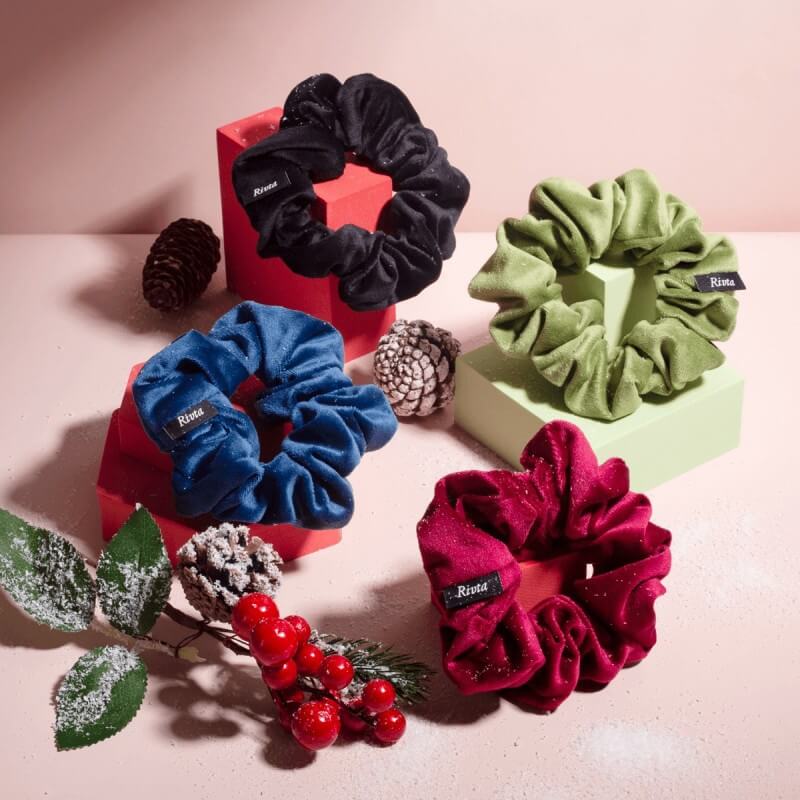
Shine and handfeel should be approved as real product attributes, not as vague adjectives. A buyer may say “premium,” but one team may mean glossy satin while another team means soft velvet or natural cotton. The approval sheet should separate shine, handfeel and color so the supplier knows which detail is most important.
For color, the buyer should send Pantone, brand palette, stock color family or physical sample. For shine, the buyer should send a reference photo or state whether silk/rPET satin shine is required. For handfeel, the buyer should mark whether the product is a gift, retail item, haircare accessory, pouch set component or campaign add-on.
OEKO-TEX STANDARD 100 [3] relates to harmful-substance testing within its own scope; it should not be confused with recycled-content or shine claims. If a buyer requires testing, the approval sheet should name the required document before bulk planning.
How should logo label size be approved?
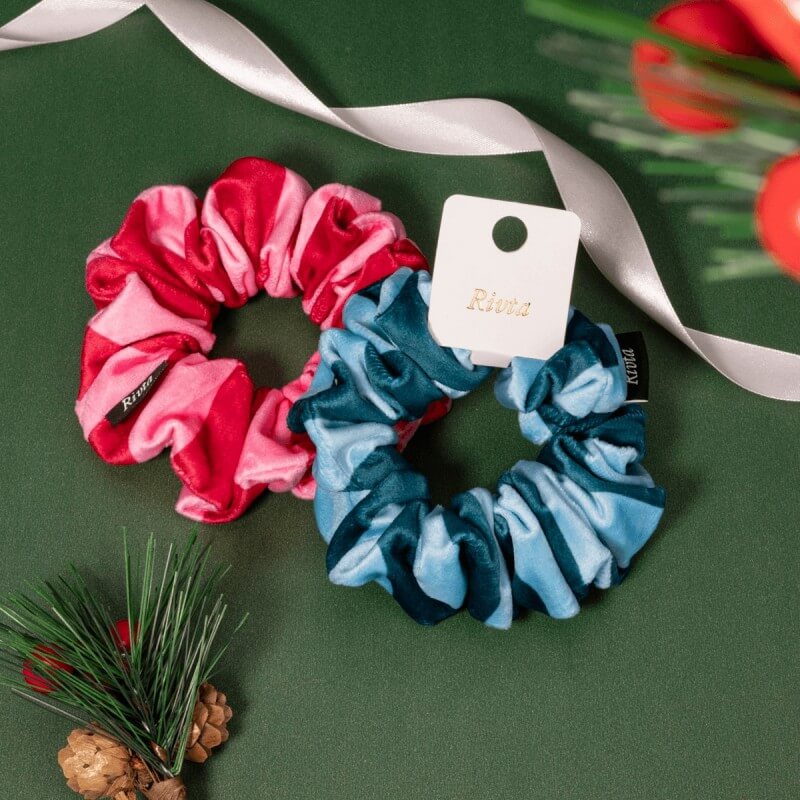
Logo label approval is one of the most important scrunchie details because the product is small. The practical rule is simple: the logo size must fit the scrunchie, otherwise it will not look good. A label that works on a pouch or headband may look oversized on a scrunchie. A label that is too small may disappear in the folds.
Woven label and printed label are the most common routes. The buyer should approve label size, label position, logo color, fold type, seam position and whether the label must be visible when packed. If the buyer wants only package branding, the approval sheet should say that no product logo is needed and that branding will sit on the backing card, hangtag or polybag sticker.
| Logo route | What to approve | Common problem |
|---|---|---|
| Woven label | Label size, fold, seam position, logo color and visibility. | Label looks too large or stiff on the scrunchie. |
| Printed label | Print size, color, placement and wash or rub expectation if required. | Logo is unclear or mismatched with fabric shine. |
| Hangtag or backing card logo | Artwork, card size, hole position and brand hierarchy. | Buyer expected product branding but only packing was quoted. |
| No product logo | Confirm package-only branding and carton wording. | Supplier assumes plain product while buyer expects branded presentation. |
What packing details should be confirmed?

Individual polybag and backing card are the most common packing details to confirm early. The buyer should also say whether hangtag, sleeve, belly band, pouch set packing, carton mark or barcode is needed. Packing changes quote, sample proof, print timing and shipment handoff.
For scrunchie campaigns, packing often does more than protect the product. It explains the brand, presents the gift and controls how the product sits inside a pouch, mailer, retail display or launch kit. If packing is undecided, the buyer should ask for product quote plus packing options instead of hiding the decision until after sample approval.
| Packing item | Buyer approval | Why it matters |
|---|---|---|
| Individual polybag | Bag size, single or set packing, sticker if needed. | Affects labor, warehouse handling and protection. |
| Backing card | Card size, artwork, hole position, logo and product orientation. | Controls retail or gift presentation. |
| Hangtag / sleeve | Artwork, material, attachment point and market version. | Adds print and approval steps. |
| Pouch set packing | Which scrunchie goes with which pouch or accessory set. | Changes packout labor and final inspection. |
| Carton mark / barcode | SKU, color, market, barcode and carton wording. | Supports shipment and warehouse handoff. |
How should quantity split and timing be written?
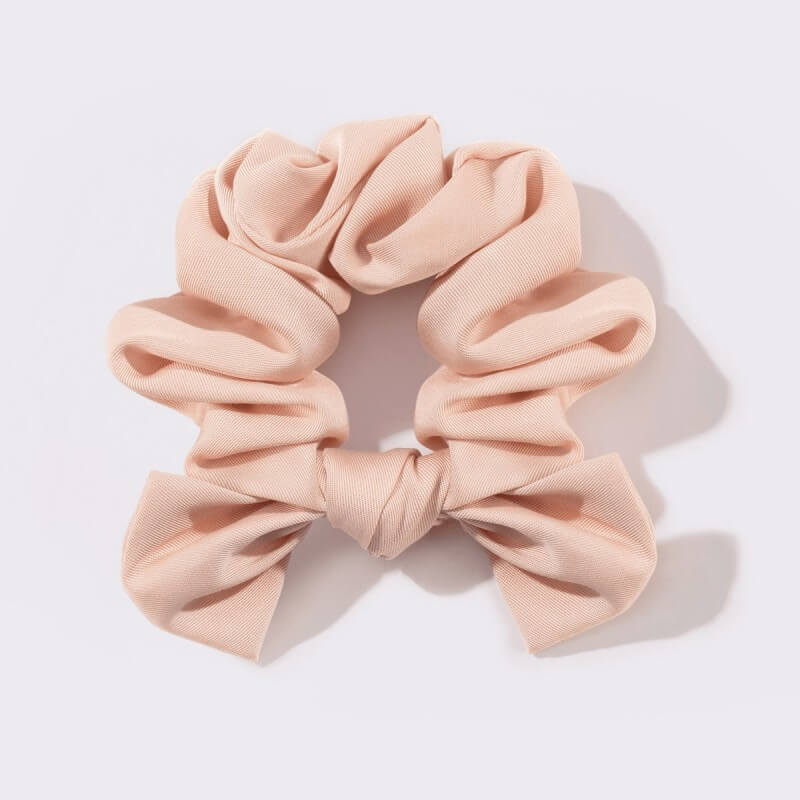
Quantity should be split by material, color, logo version, packing version and market when relevant. A total quantity alone is not enough if the project includes several colors or a set with pouch, headband or hair towel. The supplier needs the split to judge MOQ, material purchasing, packing labor and carton plan.
Timing should include sample target, final artwork date, packing file date, bulk approval date, shipment target and launch window. Ecorivta can often review MOQ 500+ scrunchie projects, sampling around 7-10 days depending on process, and bulk production around 30-50 days depending on material availability and approval speed. Rush projects can be reviewed, but these ranges should not be treated as fixed promises.
| Timing field | What to write | Why it matters |
|---|---|---|
| Sample target | Date for first sample or route sample. | Controls material and label timing. |
| Artwork release | Date for logo label, backing card, hangtag or sticker file. | Prevents quote based on temporary branding. |
| Bulk approval | Date for material, color, label and packing approval. | Defines production start point. |
| Launch window | Campaign, retail, PR, holiday or replenishment date. | Lets supplier judge schedule realism. |
What should be sent to Ecorivta before sampling or bulk?
Send one approval file plus an artwork folder. Ecorivta’s contact page [4] asks buyers to send product, quantity, materials, logo, packaging, certificates and delivery information before quotation or project review. For scrunchies, the file should make shine, label size and packing route visible before sampling or bulk approval.
- Target price or route budget direction.
- Product use: gift, retail sale, launch kit, haircare campaign, PR mailer or set component.
- Material route: silk, rPET satin, satin, velvet, cotton, bamboo or supplier recommendation.
- Shine target: glossy, soft sheen, matte, natural texture or reference sample.
- Color reference: Pantone, brand palette, stock color or physical sample.
- Logo route: woven label, printed label, hangtag/card logo only or package-only branding.
- Logo label size and position, with temporary artwork if final file is not ready.
- Packing: individual polybag, backing card, hangtag, sleeve, pouch set, carton mark or barcode.
- Quantity split by color, material, SKU, market and packing version.
- Certificate or test requirement if the buyer needs it for onboarding or market approval.
- Sample date, final artwork date, bulk approval date, shipment date and launch window.
Request Scrunchie Material and Packing Review
How is this article different from Ecorivta scrunchies product page?
This checklist focuses on the approval-sheet task. The scrunchies product page is useful when buyers need product-level supplier information for silk, satin, velvet and rPET scrunchies. Custom branded beauty accessories [5] is useful when the buyer is comparing broader branded accessory routes. The beauty GWP accessories hub [6] is useful when the buyer needs to compare scrunchies with sibling accessory categories before building a set. This page explains what buyers should approve before sample or bulk production.
What can Ecorivta deliver for scrunchie material and packing approval?
| Buyer situation | Ecorivta can help by |
|---|---|
| Beauty brands, haircare brands, DTC teams, retail private label buyers and procurement teams sourcing MOQ 500+ scrunchie programs. | Reviewing material route, shine target, label size, packing route, quantity split and launch timing before sampling or bulk approval. |
| Projects with glossy silk or rPET satin questions, woven or printed label requirements, individual polybag, backing card, carton mark, certificate review or set-packing needs. | Recommending a buyer-ready material and packing route that fits the desired shine, logo label, presentation and timing requirements. |
| Single-piece buying, no-brand resale sourcing, urgent stock-only requests or price-only inquiries with no sample approval process. | Explaining which approval inputs are still needed before Ecorivta can support a controlled branded production route. |
Composite case: glossy material was approved before label and packing were ready
Initial brief
A beauty team asked for a glossy scrunchie for a haircare launch kit. The buyer liked the shine of silk and rPET satin routes and wanted a premium look. The first message included target quantity and a rough color family, but it did not include target price, label size, packing route or final launch date.
Problems found before sampling
After the material route was discussed, the buyer added a woven label and individual polybag with backing card. The first logo file was too large for the scrunchie and looked unbalanced in the folds. The backing card also needed a different logo hierarchy from the product label. The product direction stayed the same, but the approval file needed to be rebuilt.
Correction path
The supplier separated the project into material, shine, logo label and packing approvals. The buyer chose the glossy route first, then adjusted label size and position before sampling. Packing was split into individual polybag and backing card proof, with carton wording marked as pending until the buyer’s launch team released final files.
Lesson
The buyer changed its first brief. Future scrunchie projects included target price, shine preference, material route, logo label size, packing route and launch timing before quote comparison. The supplier could still recommend silk or rPET satin options, but the first sample no longer carried a label that did not fit the product.
Anonymous feedback from scrunchie buyers
| Buyer role | Feedback |
|---|---|
| Haircare launch manager, names withheld | “We learned that glossy material is only one part of the decision. If label size is not approved early, the final scrunchie can look less premium than the material itself.” |
| Retail private label coordinator, names withheld | “Packing affects our sell-in review. A polybag, backing card and carton mark need to be discussed before the team compares supplier prices.” |
| Subscription gift program manager, names withheld | “When scrunchies are packed into a subscription gift set, target price and launch timing must be shared early. Otherwise, the supplier may suggest a material or packing route that the program cannot approve after finance review, packing trial or final packout planning.” |
FAQ
What should a scrunchie approval sheet include?
A scrunchie approval sheet should include target price, product use, material route, shine target, handfeel, color reference, logo label size, label position, packing route, quantity split, certificate or test requirement, sample date and launch timing. It should also show whether the buyer needs individual polybag, backing card, hangtag, sleeve, pouch set packing, carton mark or barcode.
Which material works best for a glossy scrunchie?
If the buyer wants a very glossy, shiny finish, silk or rPET satin are usually the most relevant routes to review. Other materials may be useful for texture, cost or natural positioning, but they may not achieve the same shine. The buyer should send a reference photo or physical sample direction so the supplier understands the desired effect before quotation.
Why does logo label size matter so much on scrunchies?
Scrunchies are small and gathered, so logo label size must fit the product visually. A label that works on a pouch, towel or headband can look too large or too stiff on a scrunchie. Buyers should approve label size, fold, position, color and visibility before sampling or bulk production, especially when using woven or printed labels.
What packing details should be approved before bulk?
Buyers should approve individual polybag, backing card, hangtag, sleeve, pouch set packing, carton mark, barcode and market version when relevant. Packing can affect quote, labor, print lead time, carton plan and shipment handoff. If packing is not final, the buyer should ask for separate packing options instead of adding packing after the product sample is approved.
Can Ecorivta quote if the buyer has not chosen material yet?
Ecorivta can discuss route options when the buyer has not chosen material, but the buyer should still share target price, product use, shine preference, color direction, quantity and launch timing. With those details, Ecorivta can compare silk, rPET satin, satin, velvet or other routes and explain which option better fits the approval goal.
What MOQ and timing should buyers expect?
Many custom scrunchie projects can be reviewed from MOQ 500+ pieces, but the exact route depends on material, color, logo label, packing and certificate requirements. Sampling may take about 7-10 days depending on process, while bulk production may take about 30-50 days depending on material availability and approval speed. Rush projects can be reviewed case by case.
Which buyers are not a good fit for this approval sheet?
This approval sheet is not designed for single-piece buying, no-brand resale sourcing, urgent stock-only requests or price-only inquiries with no sample approval process. It is most useful for branded beauty, haircare, retail private label or GWP programs that need approved material, shine, logo label, packing, quantity split and repeatable bulk production before launch.
About the author
By Lina Lv, Brand & Product Specialist at Ecorivta | Updated May 23, 2026
Lina writes for Ecorivta with input from the sales and sourcing team, focusing on buyer-side questions around custom cosmetic bags, hair accessories, clear pouches and sewn beauty GWP programs. Her articles translate RFQ briefs, material confirmation, bulk approval, logo label sizing, packing scope, certificate review, QC evidence and shipment handoff into practical checklists for beauty brands and procurement teams. Ecorivta is operated by Rivta Culture Equipment and backed by a Dongguan factory group with long-term experience in sewn bags and beauty accessories.
If your team is preparing a scrunchie material or packing approval file, send target price, material route, shine target, logo label, packing, quantity and launch timing through the Ecorivta contact page.
Talk to Lina About Scrunchie Approval
Trademark and certification note
BSCI, Sedex, SMETA, GRS, OEKO-TEX, ISO and other certification, audit or standard names belong to their respective organizations. This article is a supplier-side sourcing guide and does not claim that every product, material, order or shipment automatically carries every listed certification or test result. Buyers should confirm current document validity, certificate scope, material coverage, label artwork, packing artwork and market rules before finalizing quotation or bulk production.
Sources
- Use Ecorivta’s scrunchies page to understand silk, satin, velvet, rPET and plant-based scrunchie routes plus logo, packing and bulk QC context. Source ↩
- Textile Exchange standards are useful when buyers need to connect recycled-material claims to defined standard scope and documentation. Source ↩
- OEKO-TEX STANDARD 100 supports discussion of harmful-substance testing within its own standard scope and should not be confused with recycled-content or shine claims. Source ↩
- Use Ecorivta’s contact page to send product route, quantity, material, logo, packaging, certificate and delivery information before quotation or approval review. Source ↩
- Use Ecorivta’s custom branded beauty accessories page when buyers need the broader accessory route around scrunchies, headbands, hair clips and packed beauty sets. Source ↩
- Use Ecorivta’s beauty GWP accessories hub when the buyer needs to compare scrunchies with sibling accessory categories before building a set. Source ↩