On 10 July 2026, an Australian lifestyle-brand founder submitted a Grade B inquiry asking whether a custom charm could be added to a cellulose acetate claw clip. That is real buyer evidence, but it is not a completed Ecorivta charm-clip case. The first useful answer is therefore a claw clip charm attachment brief: where the eyelet sits, how the chain moves, what the charm weighs and what evidence should block bulk approval.
Evidence status: Existing real evidence = the dated Australian buyer request. Needs supplement = no completed order, final attachment drawing or failure history was supplied. Must verify = eyelet construction, chain length, add-on mass, movement clearance, hardware BOM and pull-review method. Forbidden to claim = a universal pull force, pass result, completed case or compliance conclusion.
Quick Buyer Summary
- Send the exact clip shape and size before choosing an attachment point.
- Keep the eyelet, jump ring and chain clear of the spring, hinge, teeth and scalp-facing surfaces.
- Record charm, chain and complete attachment weight instead of using “lightweight” as the only instruction.
- Define a sample pull-review method and acceptance criteria before reporting a result.
- If the item is intended for children or a regulated market, state that before the hardware route is approved.
Request a claw clip charm attachment review

This article supports Ecorivta’s custom claw clip page. The custom-shape and mold brief owns shape feasibility and mold route, while the spring, teeth and finish checklist owns the base clip. This page owns the added charm connection.
Mark the Eyelet Against Every Moving Part
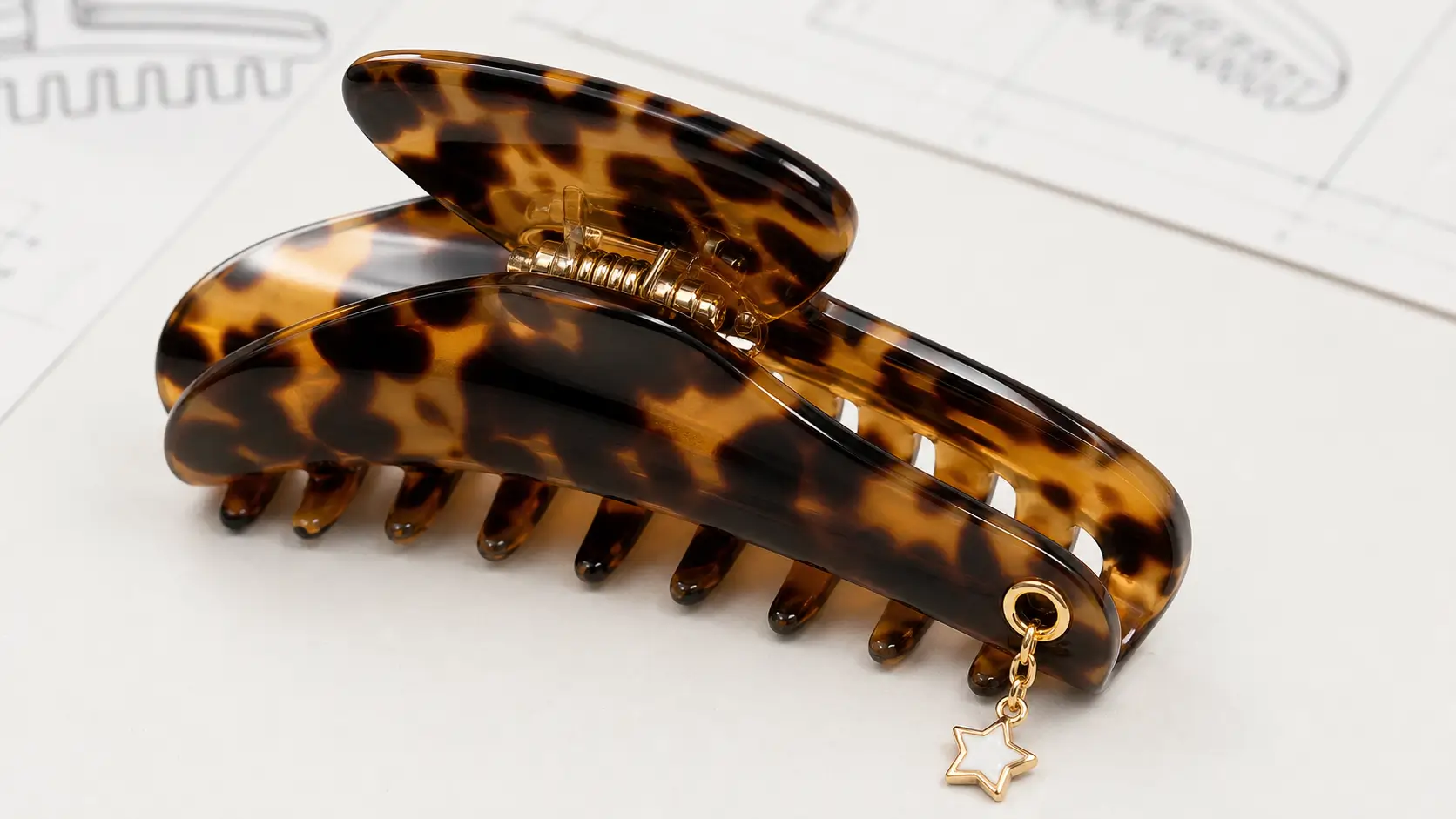
The attachment point should be reviewed while the clip opens and closes. A location that looks clean in a flat mockup may let the ring touch the spring, scrape the acetate, swing into the teeth or sit against the wearer’s head. The approval sheet should show the eyelet center, edge distance, hole or insert diameter, material thickness around the point and the path of the ring through the full opening range.
Ecorivta’s live claw-clip page currently shows a 5 cm medium square clip and a 13 cm jumbo clip. Those are approximately 50 mm and 130 mm body-length examples, not interchangeable charm platforms. For either size, the attachment drawing should record the actual body length, eyelet offset in millimetres, chain length in millimetres and complete charm assembly mass in grams; the last three values remain blank until the selected sample is measured.
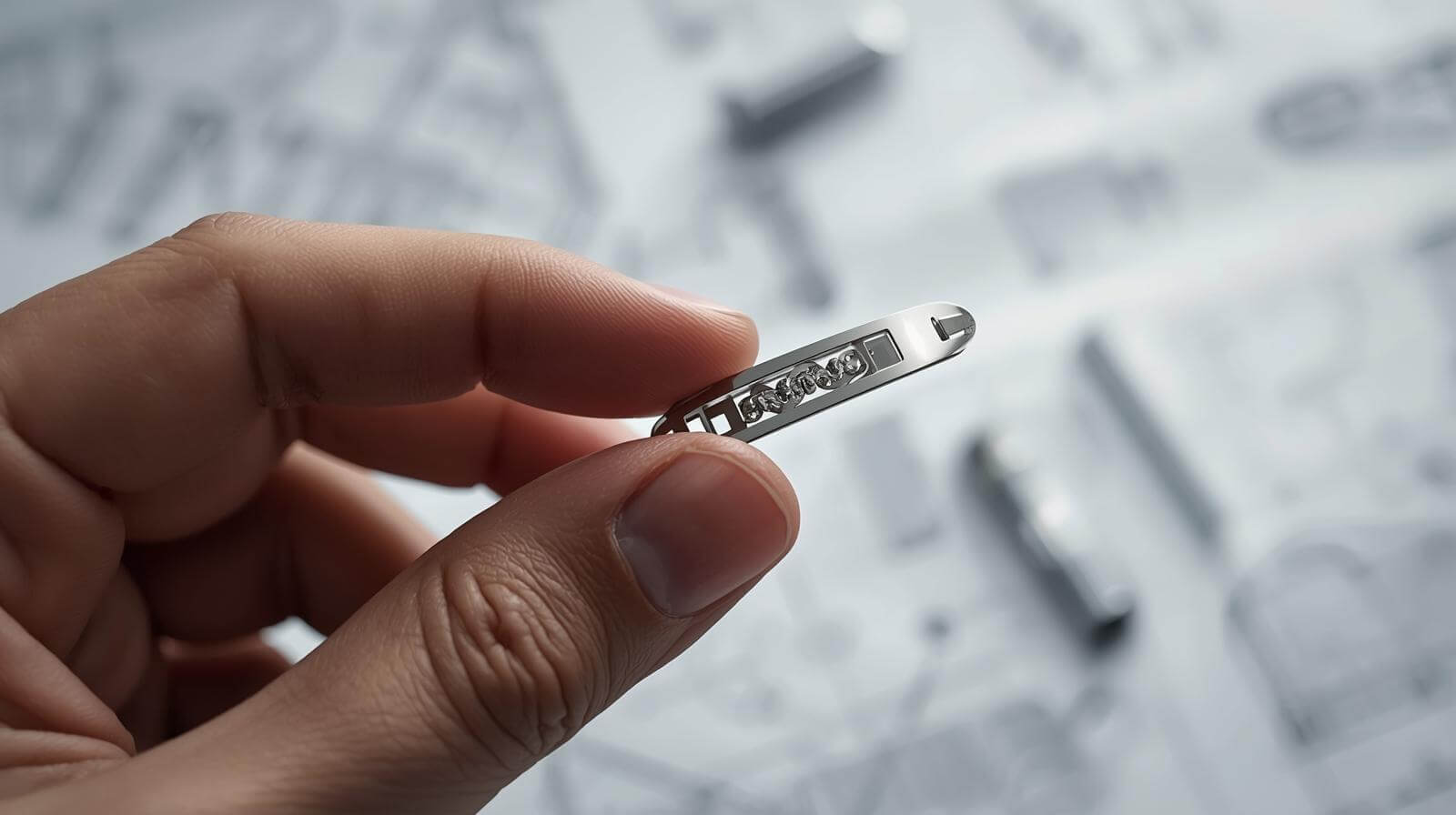
The featured claw-clip visual is an illustrative sample-planning image, not proof of an Ecorivta completed order. It shows the kind of hinge clearance and ring path a buyer should make visible before sampling.
| Attachment field | What to record | Why it can block approval |
|---|---|---|
| Eyelet position | Distance from edge, hinge, spring and nearest tooth. | Controls cracking risk, movement clearance and visual balance. |
| Eyelet construction | Drilled hole, inserted eyelet or other approved route. | Changes local thickness, edge finish and repairability. |
| Jump ring | Inner diameter, wire diameter, opening direction and finish. | Determines whether the chain binds or opens during handling. |
| Chain path | Resting position plus full open-and-close sequence. | Shows contact with acetate, hardware, teeth or scalp-facing surfaces. |
Send the eyelet position and clip drawing
If a drawing is hard to prepare, send the clip reference and marked charm position by WhatsApp.
Separate Chain Weight From Charm Appearance
A longer or heavier chain can look more decorative but may swing farther, tap the clip surface and increase leverage at the eyelet. Record the weight of the chain, charm, rings and complete add-on. Also record the chain length at rest and the maximum swing zone on the opened and closed clip.
Do not approve a chain from appearance alone. Compare at least the finished clip at rest, during opening, during gentle shake/handling and in the proposed retail packing. If chain-to-clip contact is acceptable, state where and how much; if it is not acceptable, the sample should be held.
Define the Pull Review Before Quoting a Result
“Pull test” is incomplete without the specimen, direction, fixture, rate or hold time, force, number of samples and failure definition. The buyer and supplier should agree those fields before testing. The hold condition may include ring opening, eyelet movement, acetate cracking, chain separation or damage that makes the clip unsafe or unsaleable.
EU General Product Safety Regulation (EU) 2023/988 1 requires a risk-based product-safety and traceability approach in the EU, but it does not provide one universal pull force for a claw clip charm. The intended user, market and product design must remain visible in the test brief.
If the accessory is intended for young children, U.S. CPSC Small Parts Business Guidance 2 shows why small-parts classification needs a separate product and age-grade review. This article does not describe the proposed clip as a children’s product.
Define the charm pull-review method
Review Metal and Skin-Contact Scope Separately
Hardware color does not identify the alloy or plating. Ask for the eyelet, ring, chain and charm bill of materials, finish, supplier declaration and market-specific evidence required by the buyer. ECHA Annex XVII Nickel Restriction Entry 27 3 can be relevant when nickel-release restrictions and prolonged skin contact apply, but the actual use condition and component scope still have to be checked.
The bio-acetate and spring-hardware compliance brief covers adjacent material evidence. It does not automatically cover a newly added charm assembly.
Approve the Packed Sample, Not Only the Loose Clip
The chain may be stable on a loose sample but rub against the clip during transit. Photograph the charm position on the backing card or in the pouch, identify any protective sleeve or restraint, and repeat the agreed handling check after packing. The claw clip backing-card handoff is the adjacent packing reference; this article stays focused on attachment movement.

Send the Charm Attachment RFQ
Send the clip reference, finished dimensions, material, color, charm artwork, eyelet position, ring and chain direction, complete add-on weight target, intended market and user, packing style, quantity tiers, launch date and required evidence. Unknown fields should be marked unknown so the first sample tests a decision instead of hiding one.
WhatsApp the claw clip and charm reference files or use the structured contact route below.
Send the claw clip charm sample RFQ
Claw Clip Charm Questions
Where should a charm eyelet sit on a claw clip?
It should stay clear of the hinge, spring, teeth, scalp-facing surfaces and opening path. Approve the final position on the exact clip size and geometry.
Is a heavier chain automatically more premium?
No. Extra weight can change balance, swing, noise, surface contact and load at the eyelet. Appearance and movement evidence should be approved together.
Does this article report a completed charm-claw-clip order?
No. A real buyer asked for custom charms, but the attachment method and acceptance criteria remain sample-stage decisions.
Can one pull-test force be used for every market?
No. Define intended user, market, risk assessment, specimen, fixture, direction and acceptance criteria before a result is reported.
Evidence Used in This Brief
-
EU General Product Safety Regulation (EU) 2023/988 – Referenced for product-risk, traceability and safety-information responsibilities in the EU; it does not set one universal claw-clip charm pull force. ↩︎
-
U.S. CPSC Small Parts Business Guidance – Referenced only when a product is intended for children and the small-parts rules apply; an adult beauty accessory should not be presented as a children’s product without a separate review. ↩︎
-
ECHA Annex XVII Nickel Restriction Entry 27 – Referenced for market-specific metal-component review when prolonged skin contact is relevant; actual alloy, plating and use conditions still require verification. ↩︎