A hair scrunchie material comparison should start before the buyer asks for a unit price. Silk, satin, rPET satin and velvet can all work for beauty GWP, haircare launch kits and retail gift sets, but each route creates a different balance of shine, handfeel, target price, logo clarity, packing method and documentation.
For Ecorivta, the fastest material recommendation starts with three buyer decisions: whether the scrunchie is a retail item or a gift, the launch timing and the target price. A glossy look may point toward silk or rPET satin, while a cost-controlled GWP may need a different satin route or a simpler label and card plan.
This guide is written for beauty brands, haircare brands, DTC teams, retail private label buyers and GWP programs that need MOQ 500+ production with sample-first approval.
Table of Contents
- Quick Summary
- Why should scrunchie material be chosen before RFQ?
- How do silk, satin, rPET satin and velvet compare?
- When should beauty buyers choose silk?
- When does satin work better than silk?
- When does rPET satin support a recycled-content direction?
- When does velvet make sense?
- How do logo and packing change the material decision?
- What can Ecorivta deliver for scrunchie material comparison?
- FAQ
Quick Summary
Choose scrunchie material by use case, target price and launch timing before asking for final quotation. Silk can support a premium glossy route, satin offers flexible cost and color choices, rPET satin can fit recycled-content briefs when documentation supports the claim, and velvet gives a plush seasonal feel. Ecorivta reviews material, logo, packing, certificate needs and MOQ 500+ planning before sampling.
Send Your Scrunchie Material Brief
Why should scrunchie material be chosen before RFQ?
Material choice controls more than fabric cost. It affects shine, handfeel, color depth, label size, elastic cover, packing presentation and whether the scrunchie should sit alone or match a pouch, headband, hair towel or launch kit. Ecorivta’s scrunchies page [1] shows how the same product type can move from premium silk to cost-controlled satin, recycled-content routes and plush seasonal options.
If a buyer sends only a reference photo, the supplier may recommend a beautiful route that fails price review later. If the buyer sends target price, product use and launch timing first, Ecorivta can recommend a material route that fits the campaign. For example, a retail haircare set may justify stronger shine and backing card presentation, while a beauty GWP may need a simpler label and faster material availability.
| Buyer signal | Useful for material comparison | Needs more detail first |
|---|---|---|
| Program type | Beauty GWP, retail gift, haircare launch, spa set or subscription program. | No product use or only a reference image. |
| Commercial range | MOQ 500+, target price and launch window. | Single-piece or price-only inquiry. |
| Approval needs | Logo, packing, certificate and sample-first review. | No material, logo or packing decision path. |
How do silk, satin, rPET satin and velvet compare?

| Material route | Best use | Strength | Limit to check | RFQ detail to send |
|---|---|---|---|---|
| Silk | Premium haircare gift, beauty sleep set, high-perceived-value retail gift. | Glossy, soft, premium handfeel. | Higher cost and stricter artwork/packing expectations. | Target price, shine reference, logo scale, gift set position. |
| Satin | Flexible beauty GWP, retail carded item, set matching. | Good shine and broader color route. | Quality varies by fabric weight and finish. | Color direction, label route, packing and launch date. |
| rPET satin | Recycled-content direction with glossy appearance. | Can combine shine with documented material direction. | Documentation scope must match the order and claim wording. | GRS or buyer-required document request, target market, hangtag wording. |
| Velvet | Holiday set, winter gift, plush retail bundle. | Soft, seasonal, strong tactile value. | Less glossy than silk or satin; lint and color depth need sample review. | Season, color, card style, carton protection and packout method. |
When should beauty buyers choose silk?
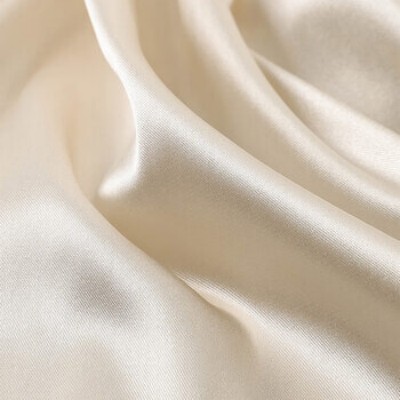
Silk works when the buyer wants a premium, glossy and soft route for a haircare gift, beauty sleep kit or retail gift set. It is often easier to justify when the scrunchie is part of a higher-value set with a pouch, eye mask, pillowcase or carded presentation. The buyer should send target price early because silk can move the route beyond a simple GWP budget.
Silk also needs careful logo planning. The scrunchie surface is small and gathered, so a large mark or fine detail can look unclear. For small products, custom branded beauty accessories [2] usually need a simplified woven label, printed label, hangtag or backing card branding instead of forcing full artwork onto the product.
| Choose silk when | Check before sampling |
|---|---|
| The launch needs premium shine and handfeel. | Confirm target price, fabric grade direction and sample expectation. |
| The scrunchie sits in a haircare, sleep or gift set. | Confirm color matching with other set components. |
| The package can carry stronger branding. | Confirm whether logo should sit on label, card or outer packing. |
When does satin work better than silk?
Satin is often the most flexible route when the buyer wants shine, color range and better cost control. It can support beauty GWP, retail carded scrunchies, subscription box items and coordinated sets where the scrunchie must match a pouch, headband or hair towel. The fabric route still needs confirmation because satin weight, finish and color can change the final appearance.
Satin can also help when the buyer has a tight launch window. If a suitable fabric or existing color direction is available, the project may move faster than a more specialized route. Ecorivta still needs logo, label size, packing and SKU split before quote confirmation because a simple satin scrunchie can become a different cost route once backing card, barcode and carton mark are added.
When does rPET satin support a recycled-content direction?
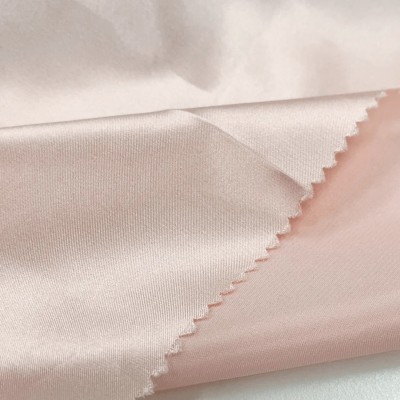
rPET satin can be a useful route when the buyer wants a glossy scrunchie and a recycled-content material direction. The important point is claim control. The RFQ should say whether the buyer needs GRS-related documentation, transaction documents, material declarations or market-specific wording review. Textile Exchange standards [3] help buyers understand how material claims connect to defined standard scope and documentation.
This route is not just a marketing label. It can affect fabric availability, color selection, MOQ, documentation lead time and hangtag wording. If the buyer needs card text such as recycled-content language, Ecorivta should review the wording against the material route and order documents before sampling. That protects the buyer from rewriting insert cards after product approval.
When does velvet make sense?
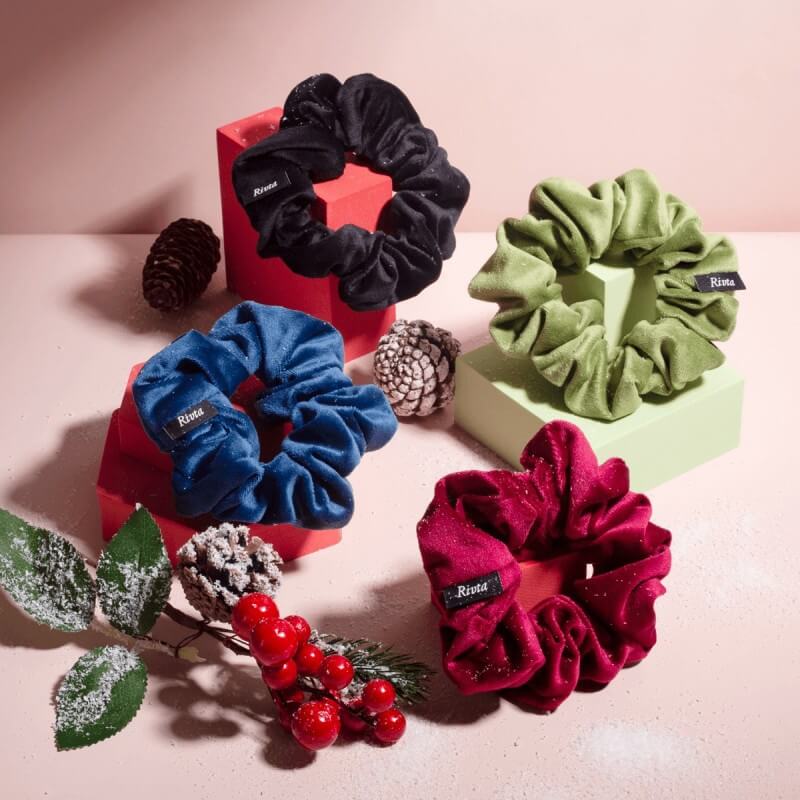
Velvet makes sense when the program needs a soft, plush and seasonal feel. It can work well for holiday beauty sets, winter haircare launches, spa gifting and retail bundles that need stronger tactile value than a flat satin route. It is less suitable when the buyer’s first priority is a high-gloss look, because velvet gives depth and softness rather than shine.
Velvet should be reviewed with color and packing together. Dark colors can look rich but need sample review for shade, surface marks and lint during packout. If the product is carded, the buyer should confirm whether the backing card, sleeve, polybag or pouch set packing protects the surface. FSC paperboard direction [4] can be reviewed when a buyer needs documented card material scope.
How do logo and packing change the material decision?
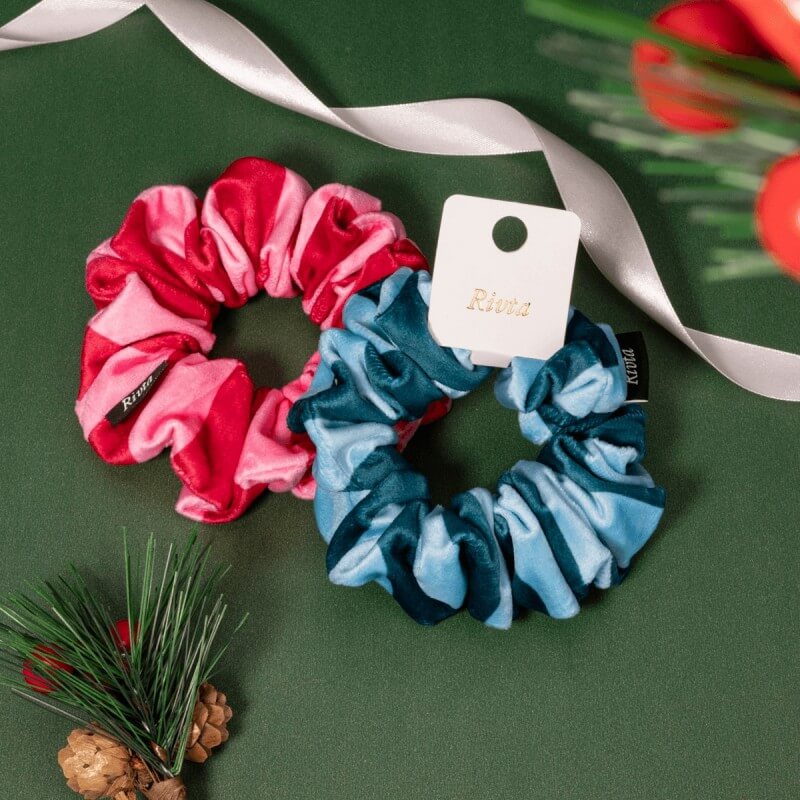
Logo and packing can change the best material route. A silk scrunchie may look premium, but if the buyer needs a large logo, barcode, backing card and low target price, satin or rPET satin may create a more balanced project. A velvet scrunchie may look strong in a holiday set, but it needs card and carton planning to protect the surface during packout.
The first RFQ should name the logo method, label size, card, hangtag, sleeve, individual polybag, carton mark and barcode if any of them are required. GS1 barcode planning [5] is a packaging handoff issue, not only a design issue. If the buyer waits to add barcode or carton mark after quotation, the quote, sample file and packout plan may need revision.
| Decision | Why it affects material | What to send |
|---|---|---|
| Logo route | Small labels need simple artwork and clear scale. | Vector file, simplified logo option, label size and position. |
| Packing route | Card, sleeve, polybag or set packing changes labor and presentation. | Backing card, hangtag, barcode, sleeve and carton mark files. |
| Set matching | Scrunchie color may need to match pouch, towel or headband. | Color reference, Pantone direction and priority component. |
| Certificate need | Document scope affects material selection and wording. | Target market, required standard and approval file deadline. |
How should MOQ, sample timing and certificate needs be written?
Many scrunchie projects can be reviewed from MOQ 500+ pieces, but the final route depends on material, color, logo, packing and documentation. Sampling may take about 7-10 days depending on the process, while bulk production may take about 30-50 days depending on material availability and approval speed. These are planning ranges, not fixed promises.
Certificate and test needs should be stated before quotation. OEKO-TEX STANDARD 100 [6] relates to tested harmful substances within its own standard scope, while recycled-content or paperboard documentation sits under different document routes. If the buyer needs a specific report, Ecorivta can help prepare order information for third-party review when required by the customer.
What can Ecorivta deliver for scrunchie material comparison?
| Buyer situation | Ecorivta can help by |
|---|---|
| Beauty brands, haircare brands, DTC teams, retail private label buyers, subscription programs and spa or hospitality gifting teams planning MOQ 500+ branded scrunchies. | Comparing silk, satin, rPET satin and velvet against product use, target price, launch window, handfeel, shine, logo label scale and retail-ready packing. |
| Coordinated sets where the scrunchie must match a pouch, headband, hair towel, eye mask or gift kit. | Reviewing color priority, material texture, packout timing and approval sequence before sampling. |
| Single-piece buying, stock-only urgent requests, no-brand resale sourcing or price-only inquiries with no target price, product use, launch timing or packing scope. | Explaining which project details are still needed before a meaningful material direction can be recommended. |
Composite case: a 2026 Q2 West Coast haircare brand changed scrunchie material route after target price review
Initial brief
In a 2026 Q2 West Coast haircare launch review, a buyer asked for a glossy scrunchie to match a pouch and headband set. The first reference looked close to silk, but the brief did not include target price, final packout, barcode need or whether the item would be sold alone or used as a launch gift.
Problems found before sampling
The first material route looked premium but exceeded the target once backing card, small woven label, individual polybag and carton mark were added. The buyer also wanted a recycled-content direction for the launch story, but the early wording did not say what document scope the market team needed. The route had to be reviewed again before sampling.
Correction path
Ecorivta rebuilt the comparison around product use, target price, launch timing and packing. Silk stayed as the premium option, but rPET satin was added as a glossy route with documentation review. Satin was kept as the cost-controlled backup. The buyer approved a simpler logo label and moved stronger branding to the backing card.
Lesson
The buyer did not need a longer material list. The buyer needed a decision order. Product use, target price and launch timing came first, then material route, logo scale, packing and documentation. Once the comparison was built around the real launch constraints, the buyer could select a route that looked right, stayed closer to budget and avoided rewriting the package claim after sample approval.
Anonymous feedback from scrunchie material buyers
| Buyer role | Feedback |
|---|---|
| Haircare assortment planner, names withheld | “The material comparison became useful when the supplier showed silk, satin and rPET satin against target price. Before that, our team kept choosing the shiniest reference without seeing how logo label, card and launch timing changed the route.” |
| DTC retention program buyer, names withheld | “We needed a scrunchie for a subscriber gift, not a retail SKU. Once that was clear, satin made more sense than a premium route because the packing and set color mattered more than fabric name alone.” |
| Spa retail gifting coordinator, names withheld | “Velvet looked strong for a winter gift set, but the supplier asked us to approve card protection and carton packing before sample sign-off. That saved us from treating the fabric choice as only a color decision.” |
FAQ
Which scrunchie material is best for beauty GWP?
The best scrunchie material depends on the campaign. Silk can fit premium haircare or beauty sleep sets, satin can fit flexible beauty GWP budgets, rPET satin can support recycled-content direction when documents support it, and velvet can work for seasonal gift programs. Buyers should choose by product use, target price, launch timing, logo route and packing scope.
Is silk always better than satin for custom scrunchies?
No. Silk can feel more premium, but satin may be better when the buyer needs broader color options, stronger cost control, faster route review or larger GWP quantities. If the scrunchie is packed with a pouch, headband or hair towel, color matching and set presentation may matter more than choosing the most premium fabric name.
When should buyers choose rPET satin scrunchies?
Buyers should consider rPET satin when they want a glossy scrunchie and a recycled-content material direction. The RFQ should state what documentation, hangtag wording or market claim review is needed. Ecorivta should confirm material scope and buyer-required files before sample approval, because wording cannot be assumed from the fabric name alone.
When does velvet work for scrunchie programs?
Velvet works well for holiday beauty sets, winter gift programs, spa retail bundles and tactile launch kits. It gives a soft and plush feel rather than a high-gloss look. Buyers should review shade, surface marks, lint, packing protection and carton handling before bulk approval, especially when the scrunchie is packed on a card.
What should buyers send before asking for a material quote?
Buyers should send product use, target price, launch timing, quantity split, color direction, preferred material, logo file, label size, packing scope, certificate or document request and shipment target. If the buyer is not sure which material route fits, Ecorivta can compare silk, satin, rPET satin and velvet against the budget and launch window.
Can Ecorivta match scrunchies with headbands, pouches or hair towels?
Ecorivta can review coordinated set planning when the buyer shares the full set components early. A scrunchie may need to match a headband, pouch, hair towel, eye mask or gift kit. The team should confirm which component controls the color priority, because fabric texture and dye route can make the same color look different across materials.
What MOQ and lead time should buyers expect?
Many custom scrunchie projects can be reviewed from MOQ 500+ pieces, depending on material, color, logo, packing and documentation. Sampling may take about 7-10 days depending on process, while bulk production may take about 30-50 days depending on material availability and approval speed. Rush projects can be reviewed case by case.
Request Scrunchie Material Route Review
RFQ contact options
Trademark and certification notice
OEKO-TEX, GRS, FSC, GS1, Pantone and other names mentioned in this article are trademarks or standards owned by their respective organizations. Ecorivta does not claim ownership of these marks. Certification, recycled-content, barcode, color and material documentation should be confirmed by order scope, buyer requirement and the relevant third-party documentation.
Sources
- Use Ecorivta’s scrunchies page to review silk, satin, velvet, rPET and plant-based scrunchie routes plus logo, packing, MOQ and sample approval context. Source ↩
- Use Ecorivta’s custom branded beauty accessories page when buyers need to compare logo routes across scrunchies, headbands, clips, keychains and other small accessories. Source ↩
- Textile Exchange standards are useful when buyers need to connect recycled-content material claims to defined standard scope and supporting documentation. Source ↩
- FSC can be relevant when buyers request documented paperboard direction for backing cards, sleeves or retail display packaging. Source ↩
- GS1 barcode planning should be confirmed before artwork approval when retail or market-version packing requires barcode handoff. Source ↩
- OEKO-TEX STANDARD 100 supports discussion of tested harmful substances within its own standard scope and should not be confused with recycled-content, material origin or performance claims. Source ↩