Quick Buyer Summary
A beach towel sample approval should verify more than color and logo position. The buyer should confirm the towel handfeel, finished size, surface, edge, logo feasibility, any self-pack pocket and the final folded presentation as one construction.
- Choose the towel face and target handfeel before treating a GSM number as the approval standard.
- Check the logo method on the actual towel texture and against the project quantity and setup route.
- If direct-on-towel branding is not practical, compare a woven label, embroidery, border detail, brandable corner pocket or packaging logo.
- A sewn corner pocket can create a self-pack route only after its opening, seam strength, fold sequence and packed dimensions are approved.
- Freeze the signed sample, measurements, material reference, artwork and packed photos for bulk comparison.
Send a beach towel sample brief
Start with the use case, handfeel and finished size
The sample should first answer what the towel must do. A fitness towel, spa gift, resort towel, poolside item and summer beauty GWP do not need the same size, surface or packed volume. Write the product role, target user, finished dimensions, material direction, target handfeel and final packing route before asking the factory to freeze a sample.
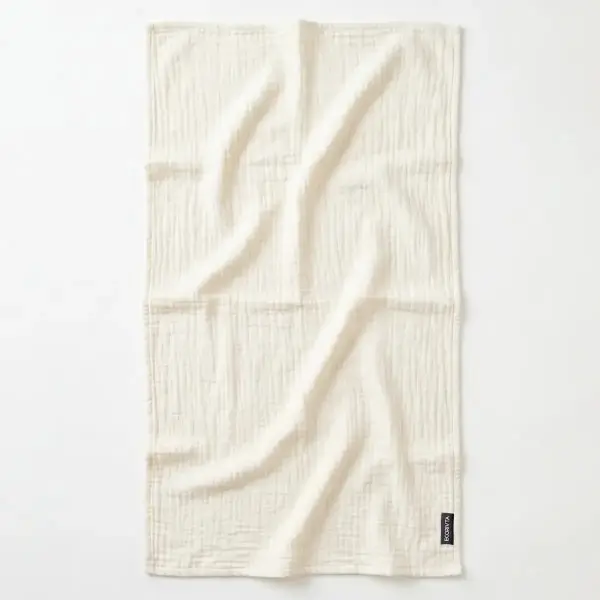
GSM is one part of the specification, not a complete description of softness or perceived quality. Pile, yarn, surface finish, density, edge construction and finishing can make two towels at a similar GSM feel different. The buyer should keep a physical material or approved towel sample as the reference instead of approving only a number.
Record the finished size in one measurement system and state whether it is measured flat, relaxed and before or after any agreed conditioning or care test. The approval sheet should also show the head and tail direction, logo side and fold direction. This prevents a logo that is correct on a flat drawing from becoming hidden or inverted after packing.
Approve the logo route after checking the towel surface
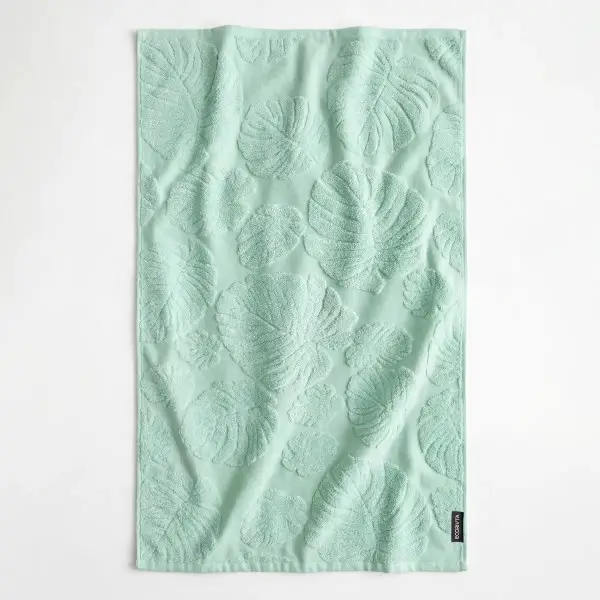
A logo file does not prove that the same artwork will reproduce well on every towel surface. Pile height, waffle texture, velour face, print area, color contrast and folded visibility all affect the result. The project quantity and the setup requirement for a particular decoration route can also make a visually preferred option impractical.
Use one physical sample to compare the real routes that fit the project. Depending on construction and quantity, those routes may include a surface print, embroidery, woven label, border detail, brandable sewn pocket, sleeve, belly band or gift-box artwork. The choice should protect the intended handfeel and presentation rather than forcing the logo onto the towel surface.
For brand-color approval, Pantone’s official physical color sample guidance 1 explains why a current physical reference is needed when moving from a digital selection to physical production. Approve towel color, logo color and any pocket or packing color separately when they use different materials.
Treat a self-pack corner pocket as a construction
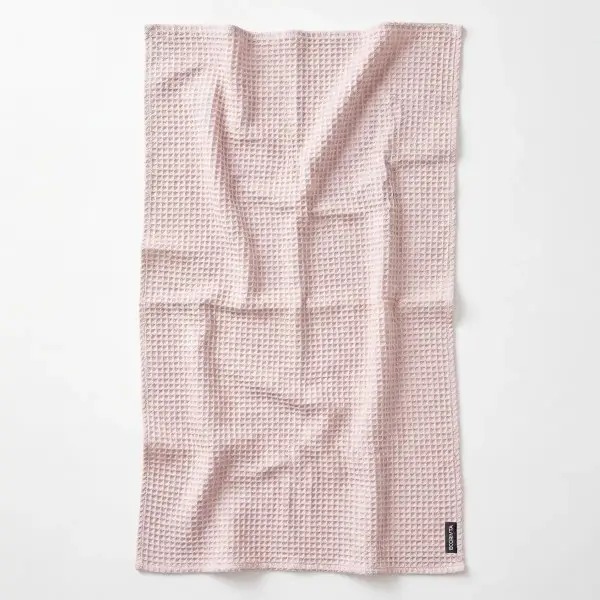
A corner pocket can give the towel a second function: the towel folds into the attached pocket for compact storage, and the flatter pocket face may offer a cleaner branding area. This is not an automatic add-on. The pocket changes sewing, corner thickness, fold sequence, logo orientation and packed dimensions.
The sample approval should record:
| Check | What to approve | Risk if missing |
|---|---|---|
| Pocket position | Exact corner, opening direction and finished pocket dimensions | The towel cannot fold into the pocket or the opening sits on the wrong side |
| Seam and edge | Attachment seam, edge finish, corner thickness and stress area | The corner becomes bulky or the pocket pulls against the towel edge |
| Fold sequence | Numbered folding method and the approved final orientation | Warehouse staff pack the towel inconsistently |
| Logo face | Logo size, color, position and visibility after self-packing | The logo is hidden, inverted or distorted |
| Packed size | Length, width, thickness and any outer bag or band | The final unit does not fit the planned gift set or carton |
Do not describe a pocketed towel as proven for repeated use, washing or a particular load unless the project has a defined method and result. AATCC publishes official textile test methods and standards 2; the buyer and supplier should define which method, condition and acceptance threshold apply instead of treating a standards library as a blanket product claim.
Freeze edge finish, fiber wording and care information
The edge route affects appearance, durability expectations, thickness and how the towel enters a pocket or outer pack. Approve whether the sample uses an overlocked edge, hem, bound edge or another specified finish, and record thread color, stitch appearance, corners and any accepted limit.
Fiber wording should match the verified material. For US-market textile labeling context, the FTC textile labeling guide 3 discusses fiber content, country of origin and responsible business disclosures for covered products. Exact labeling and care requirements depend on the finished item and target market, so the brand or importer should confirm the applicable route.
The approval file should keep the verified material name, supplier reference, color reference, finished measurements, edge route, label/care artwork and any project-defined test method together. A marketing phrase such as “premium,” “soft” or “quick dry” is not a measurable acceptance rule by itself.
Approve the final fold and packout after construction is stable
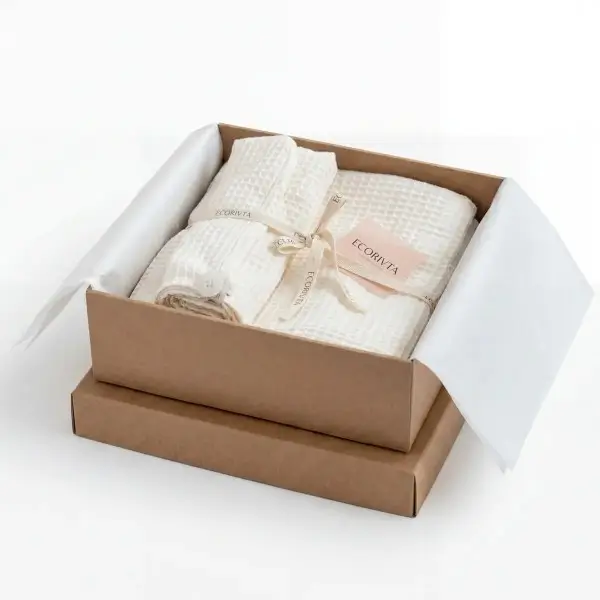
The final sample should be folded and packed exactly as the buyer expects bulk units to arrive. If the towel self-packs into a corner pocket, keep photographs of each fold step and the finished logo face. If it uses a separate polybag, sleeve, belly band, pouch or gift box, approve that route with the finished towel rather than a flat artwork file.
Record the final packed size, orientation, barcode or sticker position, insert card, quantity per carton and carton mark. If the material, towel size, pocket or edge changes, repeat the packout check because the folded volume can change.
Build one signed sample-to-bulk handoff
The signed handoff should include the physical sample, material reference, finished measurement sheet, edge and pocket details, logo file and placement, color reference, folding sequence, packed photos, packaging artwork versions, quantity split and the buyer’s approval owner.
This article is a sample-planning guide. It does not claim that one construction works for every towel, that every logo route is available at every quantity, or that a product has passed a wash, strength, absorbency or certification test without a defined project record.
Send the self-pack towel brief
FAQ
Can a logo be screen printed directly on every towel surface?
No. The actual result depends on towel face, pile or texture, artwork, color contrast, print area, quantity and setup route. Review a physical sample and compare other logo or packing routes when direct printing is not practical.
Is GSM enough to approve towel softness?
No. GSM should be reviewed with yarn, surface, pile, density, finish and edge construction. Keep a physical approved sample or material reference for bulk comparison.
Can a corner pocket also store the towel?
It can when the pocket dimensions, opening, attachment seam, fold sequence and packed orientation are designed and approved together. It is a project-specific construction, not a default feature.
What if the preferred product-level logo route does not fit the quantity?
Compare routes such as a woven label, embroidery, border detail, brandable sewn pocket, sleeve, band, pouch or gift-box artwork. The final choice should match the towel surface, budget, handfeel and packed presentation.
Should the towel be washed before sample approval?
Only when the project requires an agreed care or performance check and the method, condition and acceptance rule are defined. Do not claim wash performance from appearance alone.
Related Ecorivta pages and guides
- Custom Beach Towels — owner page for spa, resort, sun-care and beauty GWP towel programs.
- Custom Beach Towel GSM and Border Brief — choose towel face, GSM direction, border and print area before sampling.
- Custom Beach Towel Delivery Timeline — decide stock color, approval speed and freight route from the event date.
- Quality Control — use for sample, bulk and packing evidence planning.
Evidence Used in This Brief
-
Pantone physical color sample guidance – Used for the need to move from digital color selection to a current physical production reference. ↩︎
-
AATCC textile test methods and standards – Used to distinguish a defined project test method from a blanket performance claim. ↩︎
-
FTC textile labeling guide – Used for US-market textile fiber-content, origin and responsible-business labeling context; exact applicability remains project- and market-dependent. ↩︎